










- We Made Imports Zero — Now We Export’: AeroChamp CEO Dr. Srivastava on India’s Aerospace Leap
- Inside India’s Cabin Manufacturing Revolution: An ADU Exclusive with AeroChamp Aviation
- Design, Manufacture, Innovate: How AeroChamp Is Adding to India’s Aviation Ecosystem
By Sangeeta Saxena
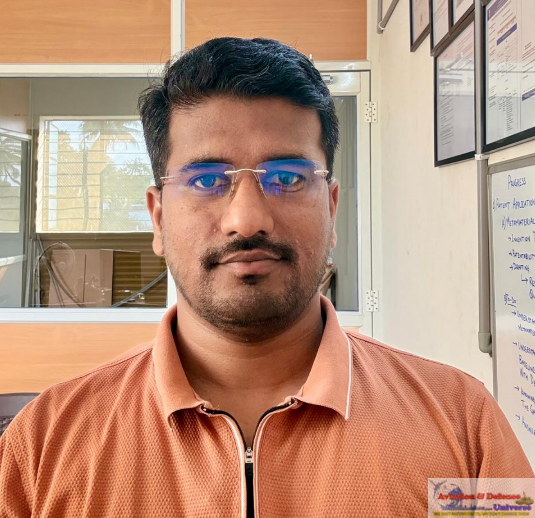
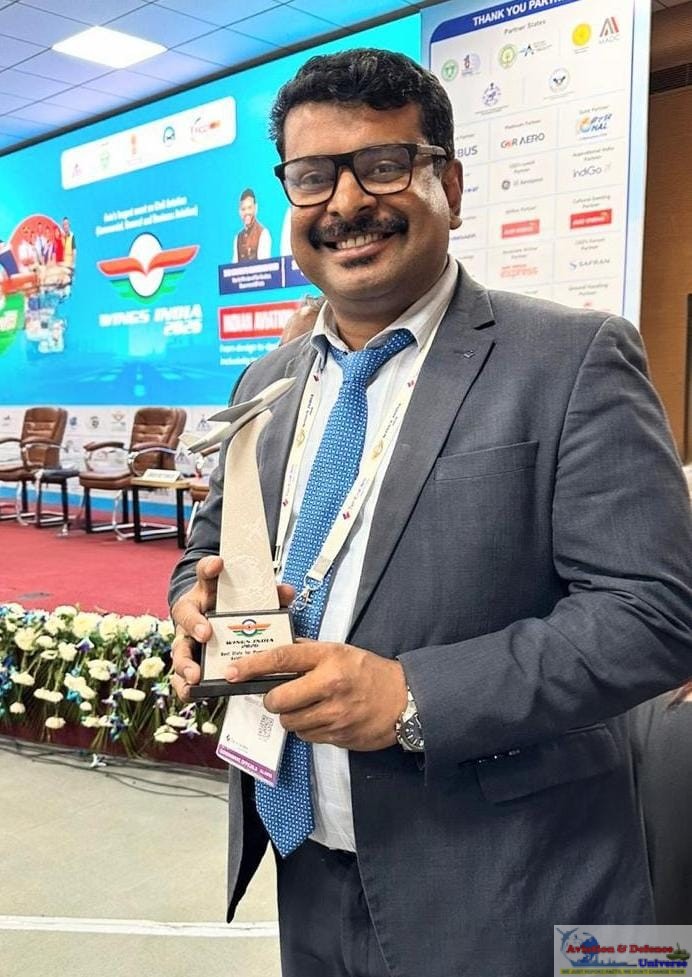
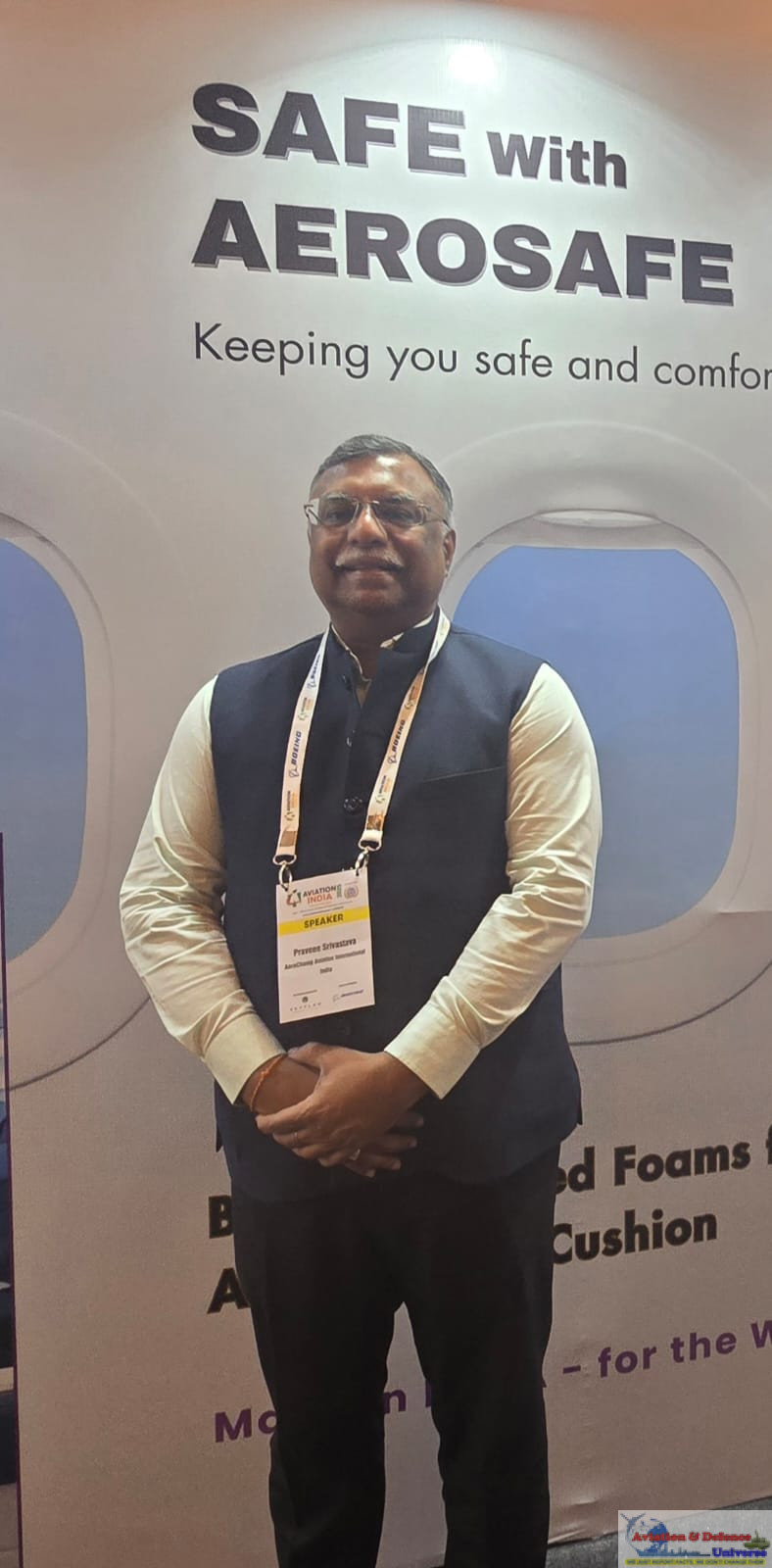
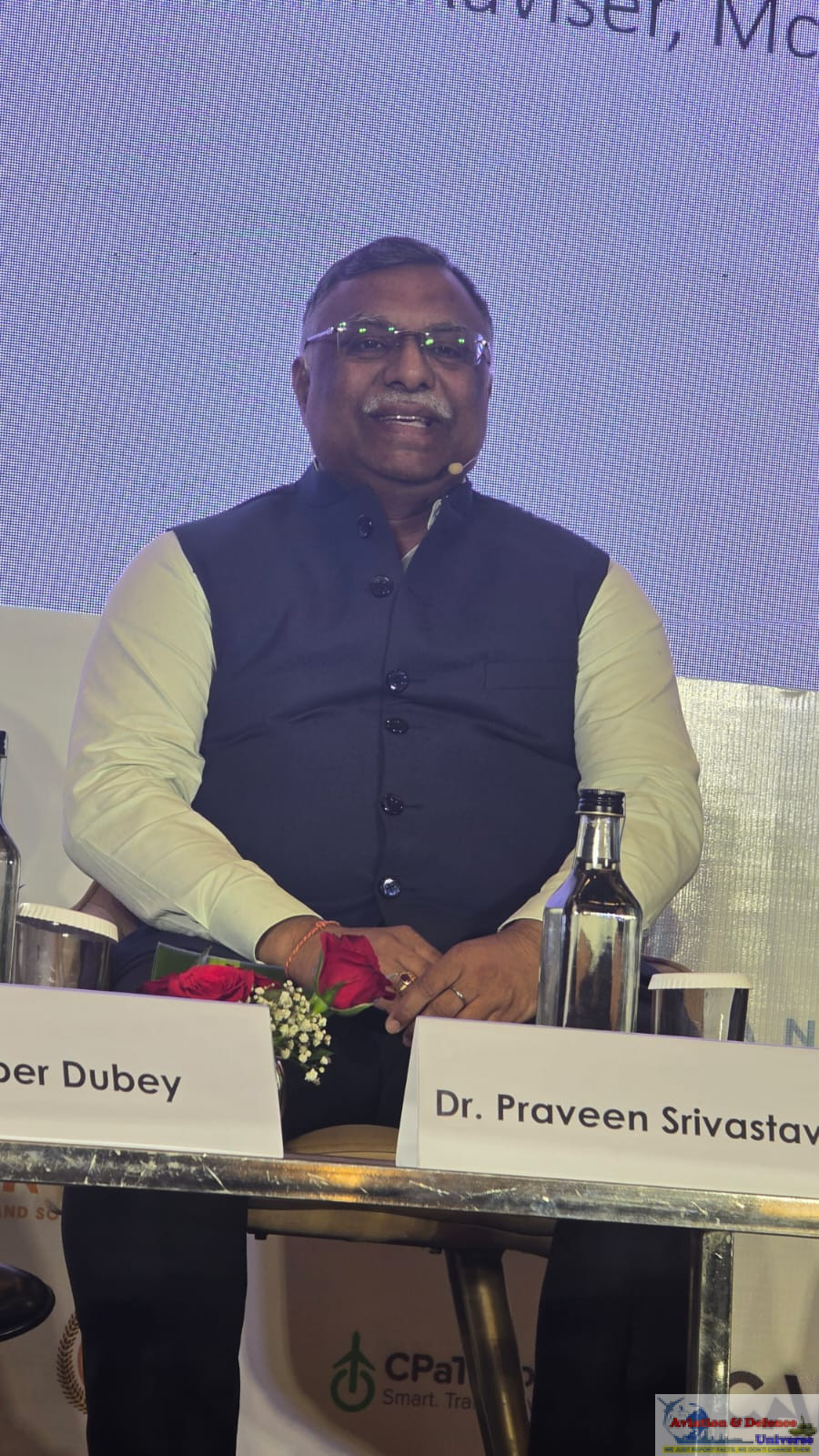
New Delhi. 14 November 2025. In an era when India is rapidly transitioning from an aviation maintenance hub to a manufacturing-led aerospace power, AeroChamp Aviation is one of the companies defining this new trajectory. Leading this movement is Dr. Praveen Srivastava, Founder and CEO of AeroChamp Aviation, whose vision connects Make in India with global opportunities across civil and defence aviation. From cabin interiors and aerospace foams to advanced plastic components and VIP conversions, AeroChamp has emerged as a quiet but powerful catalyst in India’s emerging aerospace manufacturing landscape. In this conversation with ADU, Dr. Srivastava traces his entrepreneurial journey, India’s growing indigenous capabilities, and the opportunities ahead for cabin interior manufacturing both in India and abroad.
 ADU. What is new at your booth this time? I’m seeing a lot more than what you were showcasing earlier.
Dr. Praveen Srivastava. Thank you for talking to me. My pleasure. I completed my PhD in 2011 and kept wondering why India was only maintaining aircraft rather than manufacturing anything. Those were very early days, long before Make in India became the national conversation. I always believed we should start manufacturing something substantial. When I got the opportunity, I set up my company in 2018 after years of working with major MROs as COO and Senior Vice President.
ADU. Which MROs were you previously associated with?
Dr. Praveen Srivastava. I worked with Airworks, Indamer Aviation and Safran. I lived in Singapore and Abu Dhabi, setting up major projects there. But I always wanted to return to India and create something of my own. That’s how AeroChamp Aviation was born, specialising in cabin interiors.
ADU. You mentioned focusing on manufacturing rather than just repairs. How did that evolve?
Dr. Praveen Srivastava. The natural path would have been repair, modification or upgrades. But my focus was manufacturing. We experimented with designing seats in India, but certifying a seat requires 16G dynamic testing — each test costs around ₹1.5 crore. So instead of complete seats, we began manufacturing parts and components, and we became a DGCA-approved Design Organisation (DOA) and Production Organisation (POA).
ADU. Your aerospace foam collaboration is being discussed widely. Tell us more.
Dr. Praveen Srivastava. Our aerospace foam brand, AeroSafe, is a collaboration with Sheila Foam — owners of big brands like Sleepwell and Curlon. They weren’t into aerospace foam earlier. Together we developed certified aerospace-grade foam. In just one year, we have almost stopped all foam imports into India, as refurbishment centres and manufacturers now buy from us. We are also exporting to Europe.
 ADU. What other cabin interior components are you manufacturing?
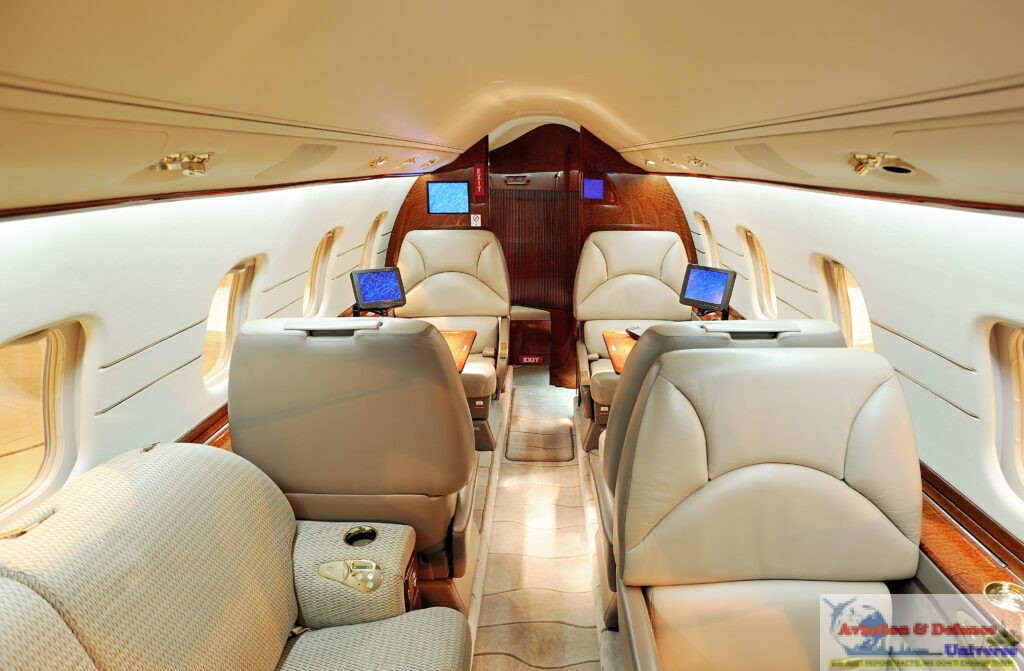
Dr. Praveen Srivastava. We now manufacture complete seat cushions and are in discussions with seat OEMs to supply bottom and back cushions. We also build thermoformed plastic parts — mill tables, fairings, back covers and more. Our manufacturing base is in Pune and our corporate office is in Navi Mumbai.
ADU. You also support defence aviation extensively. What work are you doing with the forces?
Dr. Praveen Srivastava. We support the Indian Navy, Air Force and Coast Guard — including DRDO and HAL. For HAL’s new ALH Dhruv NG, the entire cabin is being built by us, and will soon receive civil-type certification. It will be displayed at Wings India. We also manufacture position lights for various defence platforms.
ADU. Your VIP aircraft conversion work overseas is impressive.
Dr. Praveen Srivastava. Yes, through our office in Dubai (Jebel Ali), we recently converted a defence freighter into a full VVIP cabin for the Ethiopian Air Force. This was an MI-17 platform. Earlier, during my Airworks tenure, I led seven helicopter VIP conversions for the Indian forces.
 ADU. Russia’s aviation influence in Africa continues. Did you see that during the Ethiopian project?
Dr. Praveen Srivastava. Absolutely. Russian platforms dominate Kenya, Uganda and Ethiopia. Russia sells the aircraft and trains local teams to maintain them — making them reliable partners for these countries.
ADU. What is completely new at AeroChamp this year?
Dr. Praveen Srivastava. Foam, plastics, and a fully Indianised supply chain. We first made imports zero — and now we’re exporting. We specialise purely in cabin interiors and are among the leading DOAs in India.
ADU. Your certifications come from DGCA and defence bodies both?
 Dr. Praveen Srivastava. Yes. DGCA grants permanent DOA and POA approvals. For defence, DGQA and RCMA give project-specific clearances. We work closely with them because many of our programmes support defence aviation. For any minor or major cabin modification, we require an EASA- or FAA-approved Design Organisation Approval (DOA) or a Designated Engineering Representative (DER) to issue the Supplemental Type Certificate (STC). Once the STC is obtained—based on the OEM’s engineering recommendations and technical backing—it is taken to the local regulatory authority, whether DGCA in India or GCAA in the UAE. These authorities review and endorse the STC before a Part 145 MRO is permitted to execute the work on the aircraft.
ADU. Where do you see AeroChamp going from here?
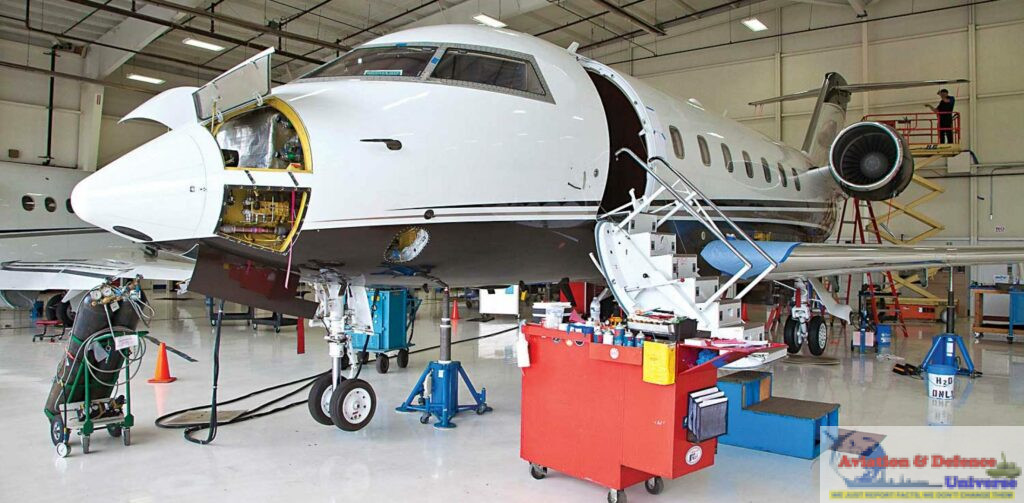
Dr. Praveen Srivastava. God has been kind. We’re on a strong growth trajectory. If everything goes as planned, we aim to list the company by 2028–29. The work in our industry falls into three categories. The first is refurbishment, involving soft goods and some sidewall panels. The second is upgrade and modification, which is more technical and generates higher revenue. The third is completion, where you install the entire cabin interior.
The business jet interiors industry in this region is still nascent. We have the skills, manpower and technical knowledge, but these must be further developed to handle higher-level modifications. If nurtured properly, I believe that 10 to 20 years from now the region will be ready for a full-fledged completion centre. And AeroChamp will be matching steps with this.
ADU. Is there sufficient market demand to justify creating such capabilities?
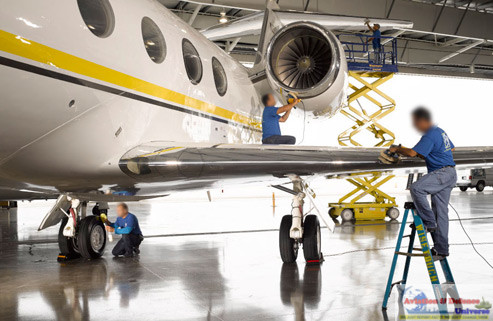 Dr. Praveen Srivastava. Based on my research, business jets operating in this region require refurbishment every six to seven years due to heat, humidity and the overall climate. If there are around 3,000 business jets here, and even if only 25% go in for upgrades or modifications, that is 750 aircraft—each with an average spend of no less than a million dollars. That alone justifies building capacity.
Singapore already has a refurbishment centre, and earlier everyone had to take their aircraft to Europe or the USA. Today, European refurbishment companies are exploring expansion into Dubai, and I am confident that within the next year or two we will see a major refurbishment and modification centre here.
Additionally, IFE systems require replacement every 8–10 years due to rapid technological advances. Aircraft still flying with CD players or wired systems urgently need upgrades to Wi-Fi-enabled IFE. This alone creates enough demand for at least two or three interior modification shops in the region.
ADU. Are there challenges unique to service providers in this part of the world?
Dr. Praveen Srivastava. Yes, several. First, material availability and lead times are major challenges. Most interior material suppliers and technology partners are based in Europe or the US, making unscheduled refurbishment or rapid modification impossible.
Second, time zone differences complicate coordination. Purchasing managers must often make late-night calls to align with Western suppliers. Local representatives would greatly ease this and enhance confidence among refurbishment centres.
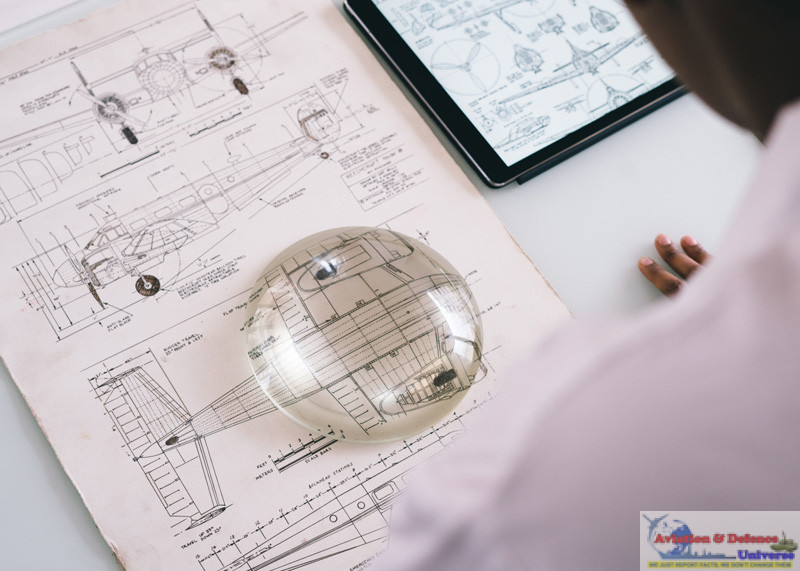 Third is the lack of designers and design innovators in India. India’s fast-growing aviation ecosystem still faces a critical gap in one of the most essential areas of cabin modernisation: specialised designers and interior design innovators for business and regional jets. While the country has strong engineering talent and rising manufacturing capability, the niche discipline of aviation interior design—where aesthetics, ergonomics, certification requirements, material science and luxury customisation intersect—remains underdeveloped. Unlike Europe or the US, where dedicated aviation design studios produce world-class concepts for VIP, VVIP and business jets, India has very few professionals trained in aircraft cabin design, human-factors engineering, monument development or aviation-grade material application. As a result, MROs and refurbishment houses often rely on overseas designers, increasing project timelines and costs. Bridging this gap will require targeted design education, industry-academia collaboration, internships with global design houses, and OEM-driven mentorship so that India can build a sustainable ecosystem of cabin design specialists capable of supporting both domestic and international refurbishment markets.
Fourth, there is no schedule or CMM for replacing soft goods. Refurbishment centres must prepare procedure sheets, get them approved by the regulator, and establish durability themselves. Developing something like a wood-lacquering capability requires extensive trials because issues like cracking, clouding or delamination can ground an aircraft and lead to major costs. Here, OEMs must step forward to guide and support local capability development.
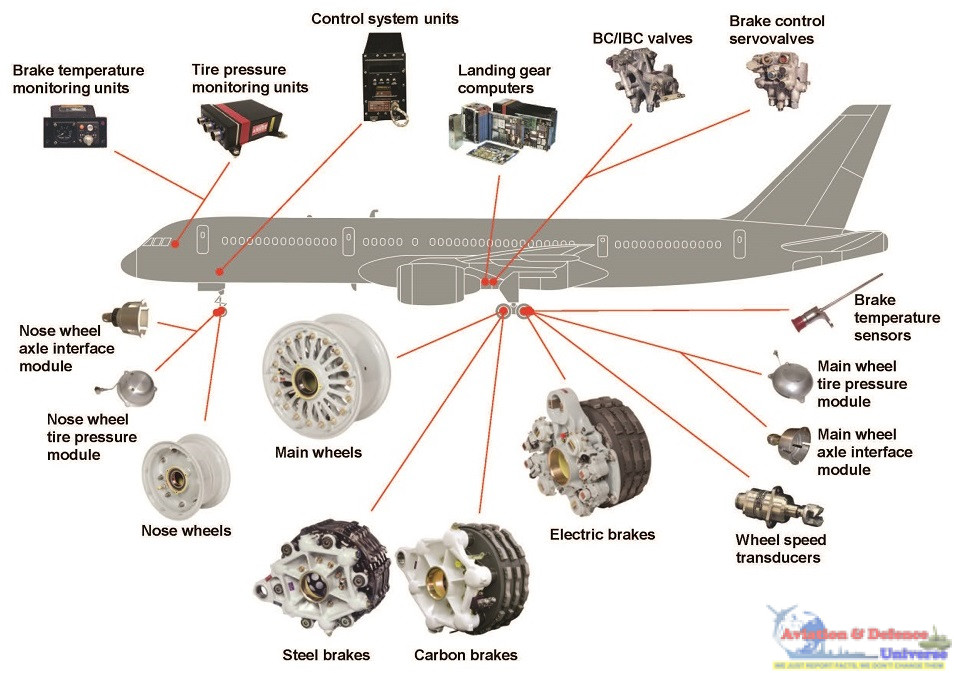 From creating India’s first aerospace-grade foam to manufacturing complete cabins for HAL and exporting interior components to Europe, AeroChamp Aviation embodies the Make in India spirit with global benchmarks. It represents some of the leading MROs and component repair shops for the Middle East and Asia region. They share a long term relationship with leading MROs across USA, Europe and Indian sub-continent. AeroChamp is a distributor of special-purpose consumables which are required for regular operation and maintenance of aircraft. It has established itself as a leading design centre for aircraft components and sub-assemblies. Their capability includes 3D scanning of components, engineering drawings, 3D modeling, valication and manufacturing. It is a distributor of special-purpose consumables which are required for regular operation and maintenance of aircraft.
An aircraft is a reflection of personality, taste and style. A company-owned aircraft can project a corporate image to their clients and makes a powerful statement about the individual and their corporate values. An individual may want to blend lifestyle, work, and personal style all together into the overall exterior and interior appearance of his aircraft. Aerochamp ensures it becomes a stop shop for all the above activities.
Dr. Praveen Srivastava’s journey reflects a thoughtful blend of engineering expertise, entrepreneurship and national mission — proving that India can not only maintain aircraft, but design, certify and manufacture them. As India advances toward becoming an aviation manufacturing hub, entrepreneurs like him are shaping a world-class ecosystem one component at a time.
As told to Sangeeta Saxena