






















- Technology, Jointness and Atmanirbharta: The Three Pillars of India’s Defence Vision
- Building a Self-Reliant and Smart Military: Rajnath Singh’s Vision for India’s Defence Future
By Sangeeta Saxena
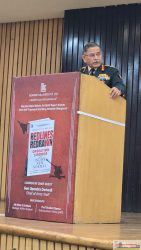
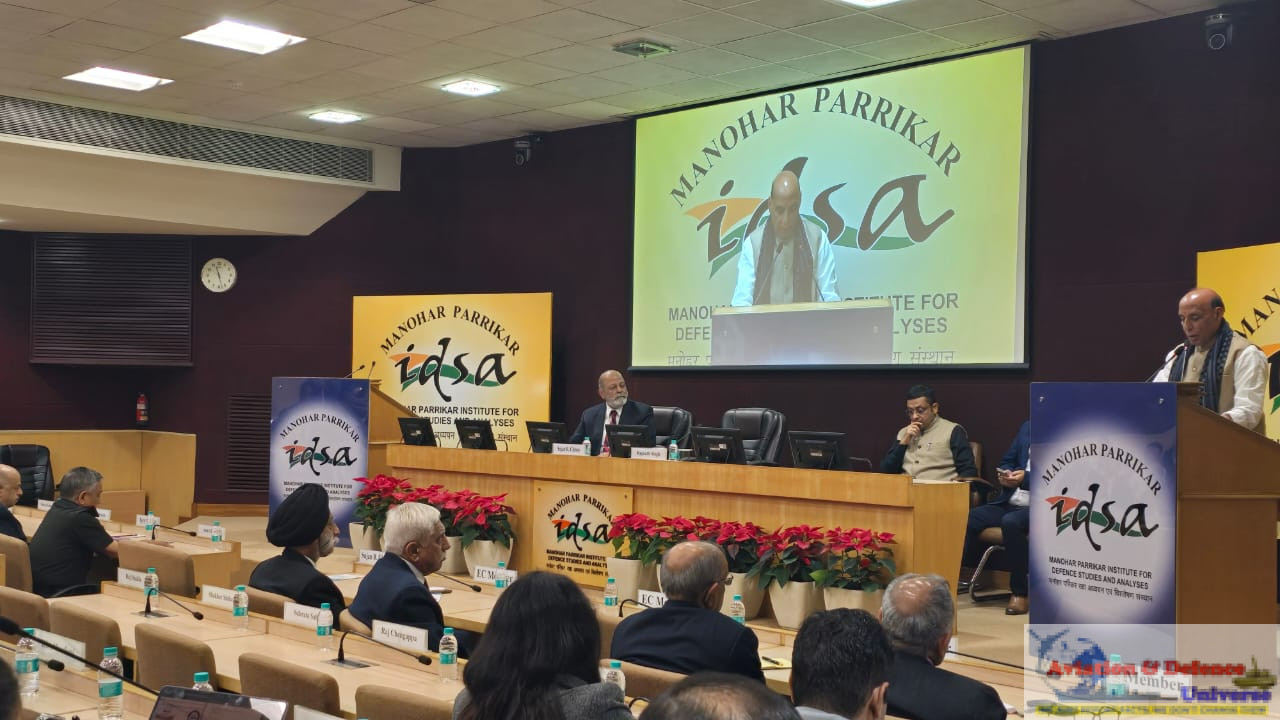
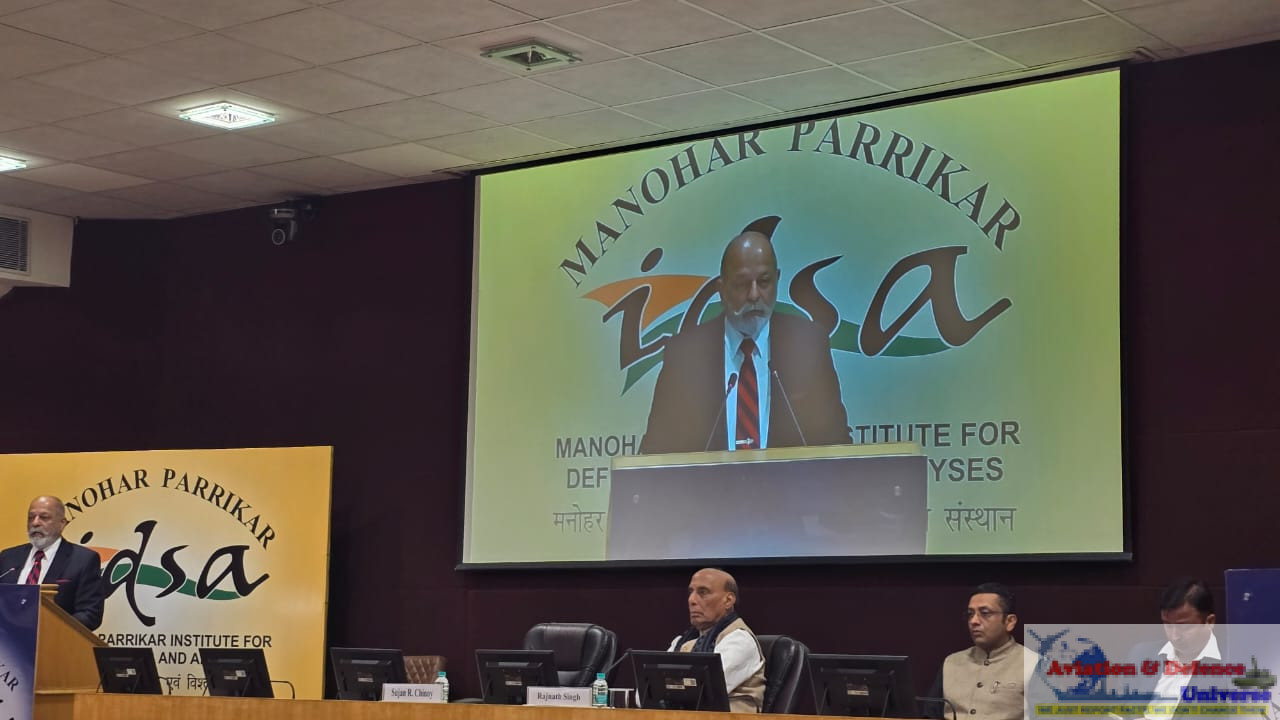
New Delhi. 11 November 2025. At the Delhi Defence Dialogue 2025, Defence Minister Rajnath Singh delivered a thought-provoking address that set the tone for India’s next chapter in defence capability development. Speaking on the theme “Harnessing New Age Technology for Defence Capability Development”, he emphasised that the future of national security lies not just in adopting advanced technologies, but in transforming the entire ecosystem of defence planning, procurement, and performance. Drawing on lessons from Operation Sindoor and ongoing global shifts in warfare, he underscored the need for innovation, integration, and institutional agility to keep pace with technological change. The address marked a clear call for India to move from being a consumer of global innovations to becoming a creator and leader in defence technology.
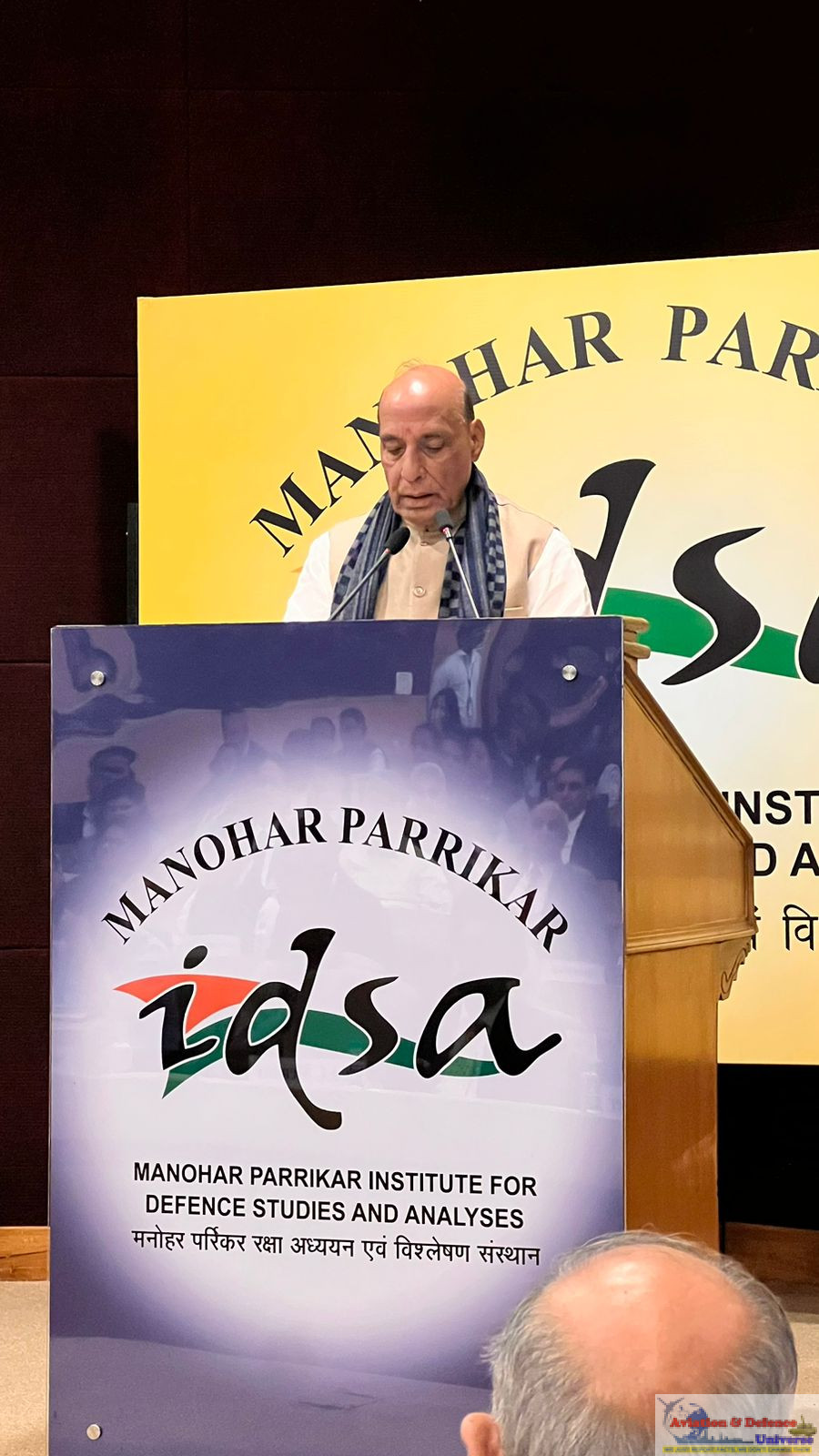
 He stated, “The character of warfare and technology has been changing in every era. From the discovery of gunpowder to the advent of aviation, from the turn of radar to the age of cyber and space, each generation has witnessed its own technological revolution. It may be true that change feels faster today, but that is only a matter of scale and perception. Technology has always evolved steadily and persistently, and more often than not, for the better. What truly matters is not just the pace of technological change, but the pace at which we are able to absorb it — be it artificial intelligence, machine learning, or quantum computing. These transformative technologies are making bold strides in redefining the future of warfare.”
India’s armed forces are undergoing a profound transformation as they march steadily toward becoming technology-intensive, future-ready entities. The focus is no longer confined to conventional hardware but has expanded to encompass artificial intelligence, robotics, cyber capabilities, quantum computing, and space-based assets. This shift marks a decisive move from manpower-heavy structures to technology-driven force multipliers, enabling faster decision-making, enhanced situational awareness, and precision in operations.
Rajnath Singh outlined how the character of warfare has evolved from the industrial to the information and cyber age, urging India’s defence establishment to adapt accordingly. “The power of technology is not limited to devices or algorithms; it redefines every process, every system, and every decision that contributes to national security,” he said. From artificial intelligence and machine learning to quantum computing and predictive analytics, India’s armed forces are increasingly adopting new-age systems to enhance operational readiness and decision-making. The Defence Minister emphasised that the focus must be on creating a defence architecture that is agile, anticipatory, and adaptive, where data moves faster than doubt, and decisions are guided by intelligence and efficiency rather than inertia.
The integration of unmanned systems, network-centric warfare tools, and digital command-and-control platforms is reshaping the nature of India’s military preparedness. Driven by initiatives like Integrated Capability Development Plan, Defence Space Agency, and indigenous R&D under DRDO and iDEX, the armed forces are embedding advanced technologies into every aspect of operations — from logistics and surveillance to combat systems. This evolution not only strengthens deterrence and responsiveness but also reflects India’s strategic intent to ensure technological dominance in an era where data, networks, and innovation define the battlefield of the future.
 India’s defence modernisation journey is increasingly focused on filling critical capability gaps through systematic upgradation of equipment and reforming the procurement process. The armed forces are replacing ageing platforms with state-of-the-art systems — from next-generation fighter jets, submarines, and armoured vehicles to advanced communication, surveillance, and electronic warfare systems. The emphasis is on ensuring that modernisation is not piecemeal but part of a cohesive, long-term capability development plan aligned with operational priorities. At the same time, the Ministry of Defence has streamlined procurement through initiatives like Defence Acquisition Procedure (DAP) 2020, digital procurement platforms, and greater transparency in contracting. By encouraging joint ventures, technology transfer, and indigenous production, India is bridging time and technology gaps that have historically delayed force modernisation. The focus is on speed, self-reliance, and strategic foresight — ensuring that the armed forces are equipped not only for today’s threats but also for the evolving challenges of tomorrow.
Acknowledging the complex challenges of defence modernisation, Rajnath Singh highlighted the need for smart procurement systems and transparent decision frameworks. He noted that technology must be viewed as both a force multiplier and a resource optimiser, ensuring that every rupee and resource invested enhances capability and accountability. The minister observed that India must find a balance between foreign acquisition and domestic self-reliance, advocating for a procurement model that favours meaningful technology transfer over simple importation. By promoting digitalised logistics, automated maintenance, and integrated data networks, the government aims to ensure that the right equipment reaches the right place at the right time — enhancing both efficiency and combat preparedness.
 Atmanirbhar Bharat and the Make in India drive have emerged as the twin pillars of India’s defence transformation, aimed at building a self-reliant and globally competitive defence ecosystem. The government’s policies now prioritise indigenisation across the entire spectrum — from design and development to production and export of advanced defence systems. Initiatives such as the Positive Indigenisation Lists, Defence Production and Export Promotion Policy (DPEPP) 2020, and Innovation for Defence Excellence (iDEX) are empowering Indian industries, MSMEs, and start-ups to innovate and collaborate with the armed forces. The push for indigenous manufacturing has already led to the localisation of key platforms such as fighter aircraft, drones, naval vessels, armoured vehicles, and missile systems. By nurturing public-private partnerships and encouraging technology transfer from global OEMs, India is not just reducing its dependence on imports but positioning itself as a net exporter of defence technology. The Atmanirbhar Bharat vision, thus, signifies more than self-sufficiency — it represents India’s strategic aspiration to achieve technological sovereignty and shape its own destiny in the global defence landscape.
Central to Rajnath Singh’s address was the reaffirmation of India’s commitment to Atmanirbhar Bharat in defence manufacturing. He made it clear that self-reliance does not preclude global partnerships, but rather seeks to strengthen them through indigenous innovation and co-development. “India’s Atmanirbharta in defence manufacturing does not rule out foreign collaboration, but it does emphasise meaningful transfer of technology,” he asserted. Initiatives such as iDEX and the Technology Development Fund (TDF) are already nurturing startups and MSMEs to create cutting-edge solutions in autonomous systems, advanced materials, and space-based surveillance. Singh also stressed the importance of digital sovereignty, stating that “true strategic autonomy will come only when our code is as indigenous as our hardware.” The vision is to make India not only self-sufficient in manufacturing but also a global hub of defence innovation.
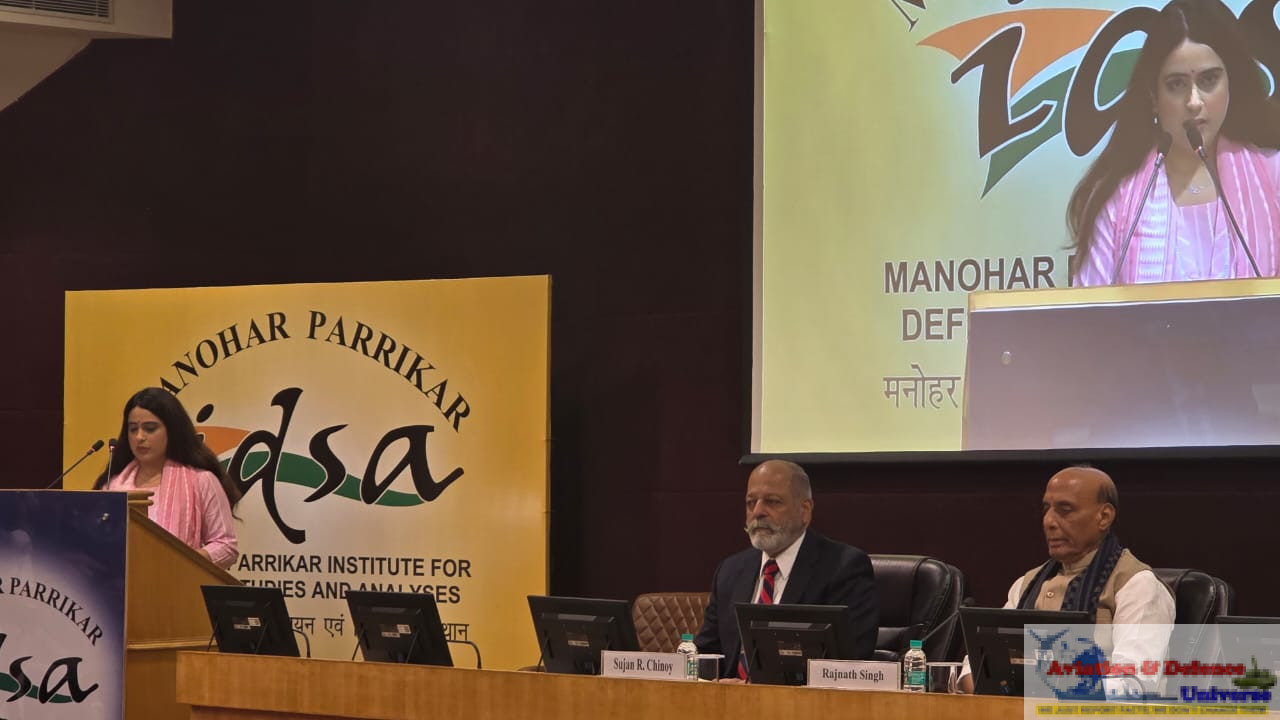 The Minister reiterated, “True strategic autonomy will come only when our code is as indigenous as our hardware. We are therefore encouraging secure, indigenous software stacks, trusted semiconductors, and homegrown AI models trained on Indian data. Technology must never replace human judgement; it must amplify it. India must lead the conversation on the responsible and ethical use of military technology. Harnessing new technology for defence capability development is not merely about upgrading our arsenal — it is about transforming our entire approach to national security.”
 “Technology must be an instrument of efficiency, integration and empowerment. It must make our forces faster in decision, sharper in response and stronger in outcome. Our task is not only to acquire new technology, but to create the conditions where it can thrive — through sound processes, agile institutions and collaboration that unites soldiers, scientists, startups and strategists. That is how India will move from being a consumer of technology to a creator of technology, and from adapting revolutions made elsewhere to shaping revolutions born here , ” he declared.
Defence Minister Rajnath Singh’s address at the Delhi Defence Dialogue 2025 was not merely a reflection on technological progress but a strategic blueprint for India’s defence transformation. By linking innovation to institutional reform, and technology to ethical responsibility, he positioned India’s military modernisation as both a national imperative and a global statement. His call for synergy among soldiers, scientists, startups, and strategists encapsulated a vision of collective empowerment through technology. As India moves from technology adoption to technology leadership, Rajnath Singh’s message was clear — the nation’s strength will be defined not by what it buys, but by what it builds.