

























- Future Force in Focus. DSEI 2025 Showcases Cutting-Edge Autonomous Systems
- Counter-UAS, AI, and Electronic Warfare Dominate the Tech Highlights
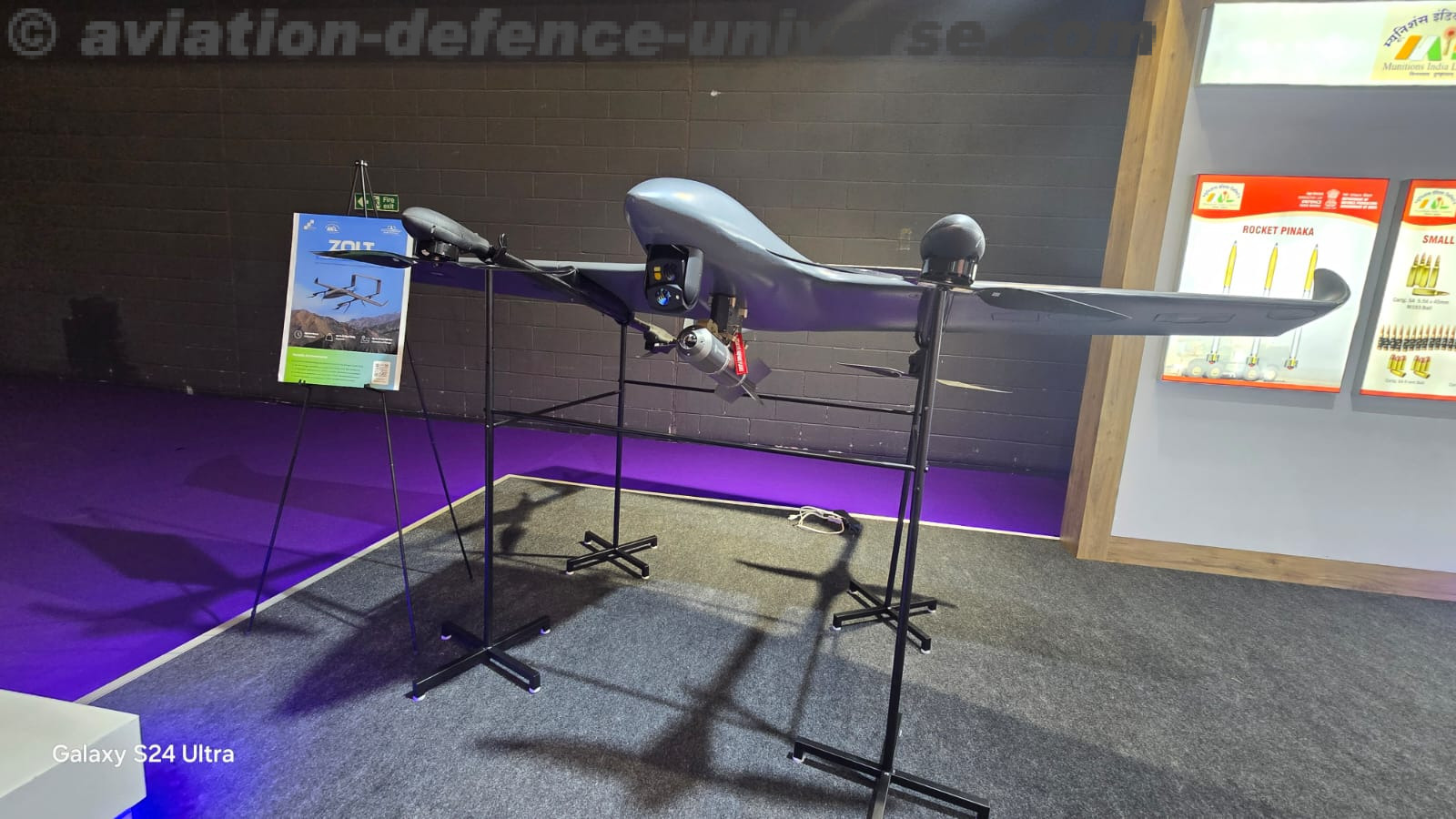
- Indian battle tested and armed drones by IdeaForge on display
By Sangeeta Saxena
Excel Centre, London. 10 September 2025. The opening days of DSEI 2025 in London have been defined by an impressive showcase of unmanned systems and innovative defence technologies. From AI-driven autonomy and modular unmanned aerial systems (UAS) to drone ecosystem components and integrated mission systems, the exhibition highlighted how next-generation platforms are reshaping the global battlespace. Exhibitors including IdeaForge, Thales, SPX Communication Technologies, Persistent Systems and Red Cat Holdings, to name some, presented state-of-the-art solutions that underline the growing importance of innovation in military operations.
Artificial Intelligence featured prominently in unmanned solutions on display, with exhibitors demonstrating how AI enhances operational efficiency, accelerates decision-making, and expands capabilities across the land, maritime, and aerial domains. The show floor saw a variety of drones for combat and intelligence roles, including FPV (First-Person View) drones, small UAVs designed for one-way attack missions, and high-performance autonomous drones applicable to both military and civilian environments.
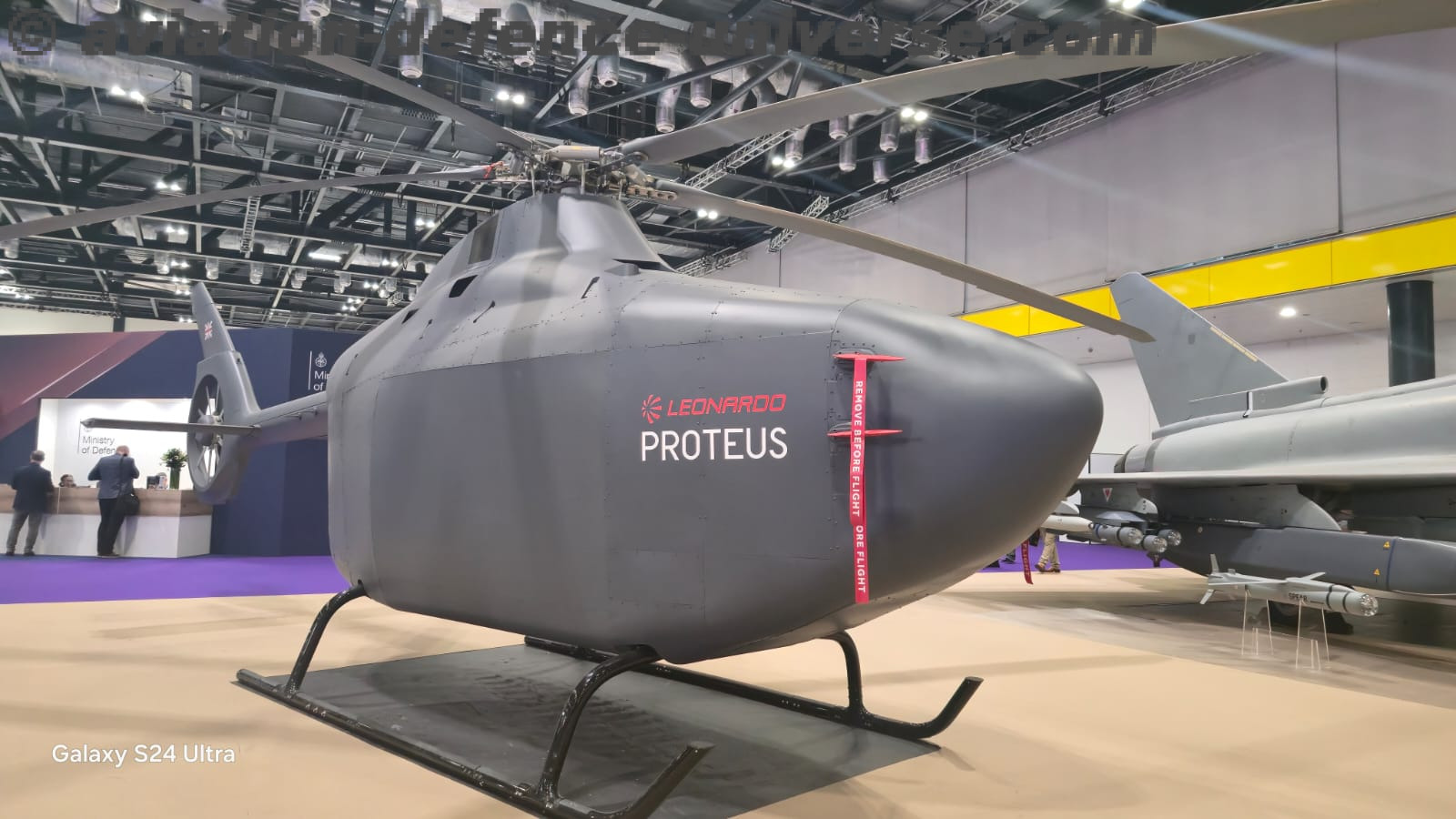 The UK MoD’s Proteus Technology Demonstrator program drew particular interest, unveiling a large, modular, 3-tonne Vertical Take-Off and Landing (VTOL) UAS purpose-built for maritime missions, underscoring the UK’s focus on scalable, flexible unmanned systems.
A rich array of components supporting drone innovation was also highlighted at DSEI 2025. These included high-performance infrared zoom lenses designed for ISR applications, micro and nano miniature connectors developed for compact UAVs, and precision fuel level sensors tailored for both UAV and VTOL operations. Together, these technologies are strengthening the reliability and performance of next-generation unmanned platforms.
Exhibitors also demonstrated advanced systems designed to enhance unmanned missions across domains. SPX Communication Technologies showcased its HFDF (High Frequency Direction Finding) system to improve situational awareness, while the BLACKTALON Ecosystem introduced a comprehensive solution to detect, track, and neutralise hostile drones. Thales presented electronic warfare technologies capable of passive detection, surveillance, and radar jamming, and Persistent Systems unveiled its Wave Relay® MANET solution, offering robust mobile networking capabilities for unmanned assets.
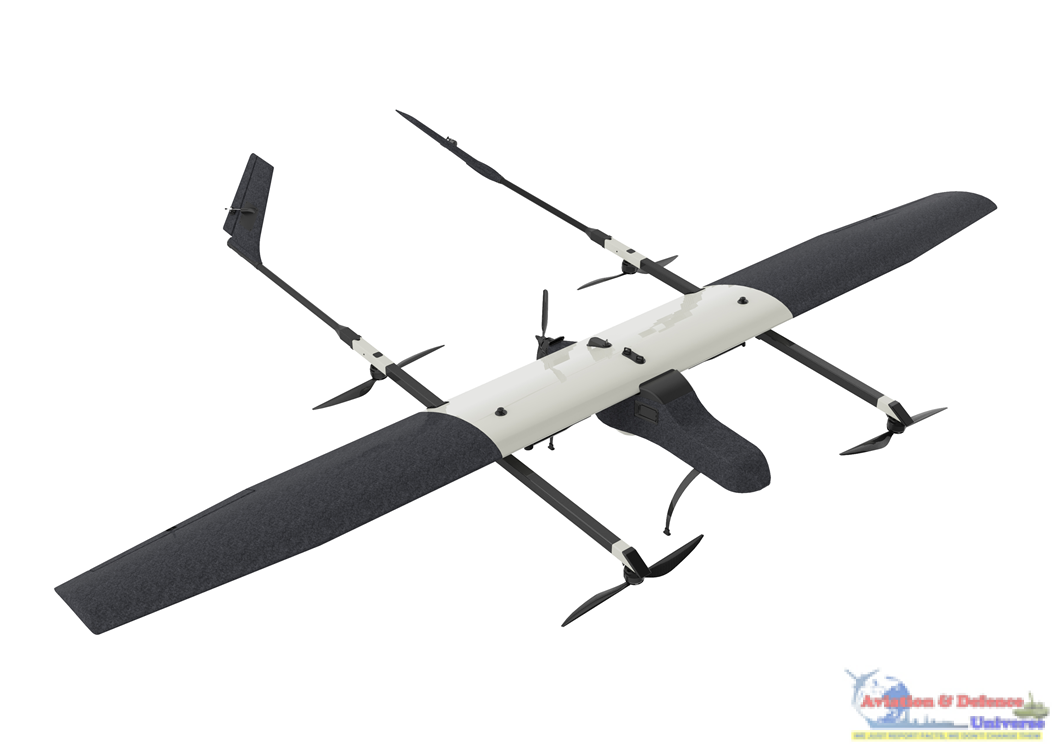
India’s pioneer drone manufacturer IdeaForge is showcasing its next-generation UAV solutions at one of the world’s leading defence and security exhibitions. Visitors can see the tactical UAV ZOLT at Booth A-130 (India Munitions), along with the battle-tested all-terrain SWITCH and the versatile NETRA V4 PRO at Booth S6-150 (iRed). From long-endurance surveillance missions to rapid tactical operations, these UAVs are designed to deliver unmatched situational awareness and actionable intelligence, enabling defence forces to operate smarter, faster, and with greater effectiveness.
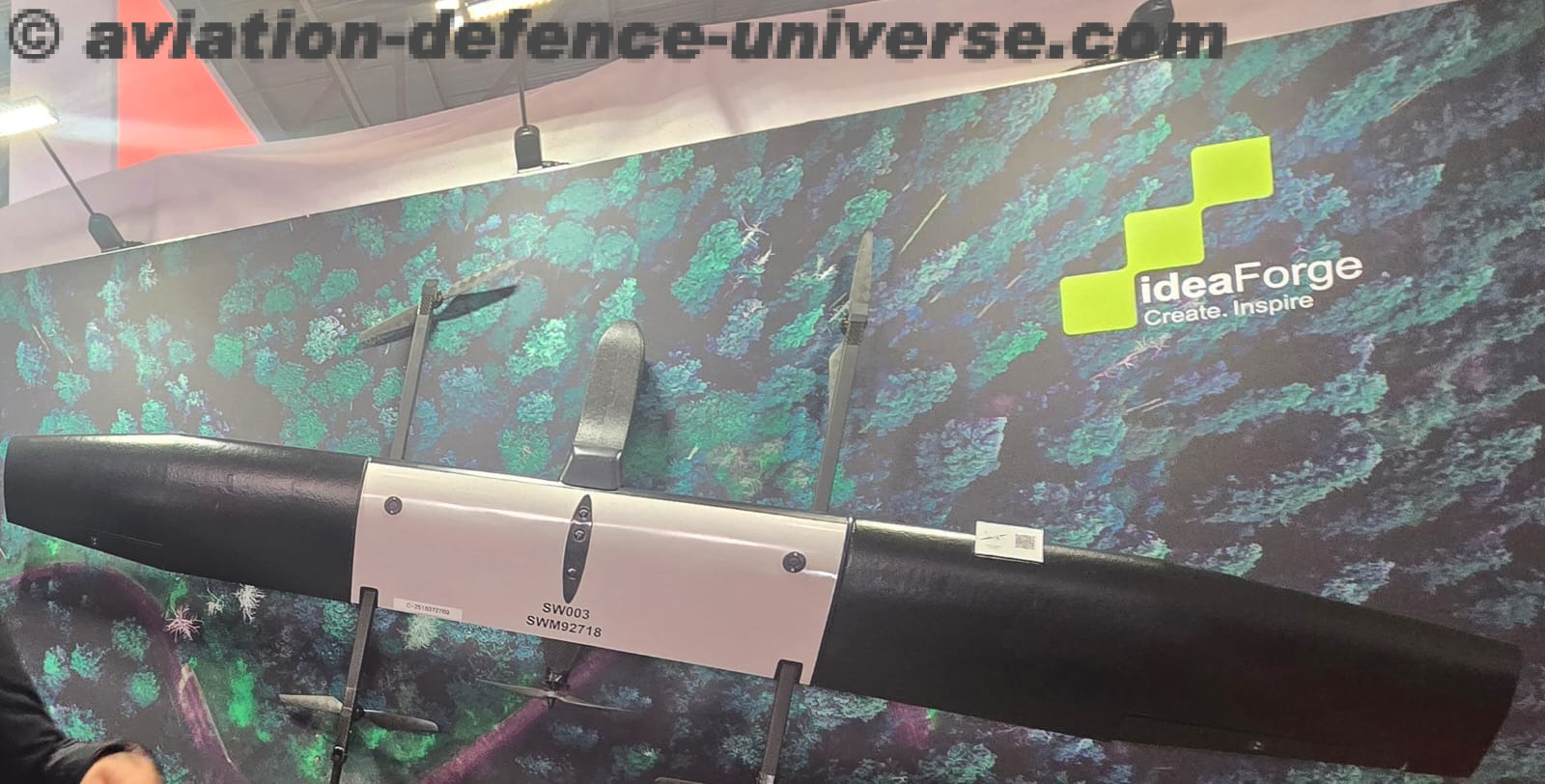
Unmanned systems and innovative technologies are becoming indispensable in modern-day warfare, offering militaries enhanced endurance, flexibility, and survivability in contested environments. By removing humans from direct danger zones, these systems reduce risk while extending operational reach and persistence. Autonomous drones and UAS platforms can conduct surveillance, electronic warfare, or strike missions at scale and at a fraction of the cost of manned systems, while modular designs ensure adaptability for diverse mission sets. In an era of rapid technological change, unmanned solutions are not just force multipliers—they are shaping the future of combat operations and national security.
Anti-drone, or counter-unmanned aircraft system (C-UAS) technologies, emerged as a prominent focus at DSEI 2025, with several companies unveiling new systems and upgrades. The ongoing conflict in Ukraine has heavily influenced the evolution of C-UAS solutions, underscoring the urgent need for affordable, flexible, and rapidly deployable defences against small, low-cost, and potentially swarming drones. Exhibitors responded with an impressive range of hard-kill, soft-kill, and integrated systems designed to address this fast-evolving threat.
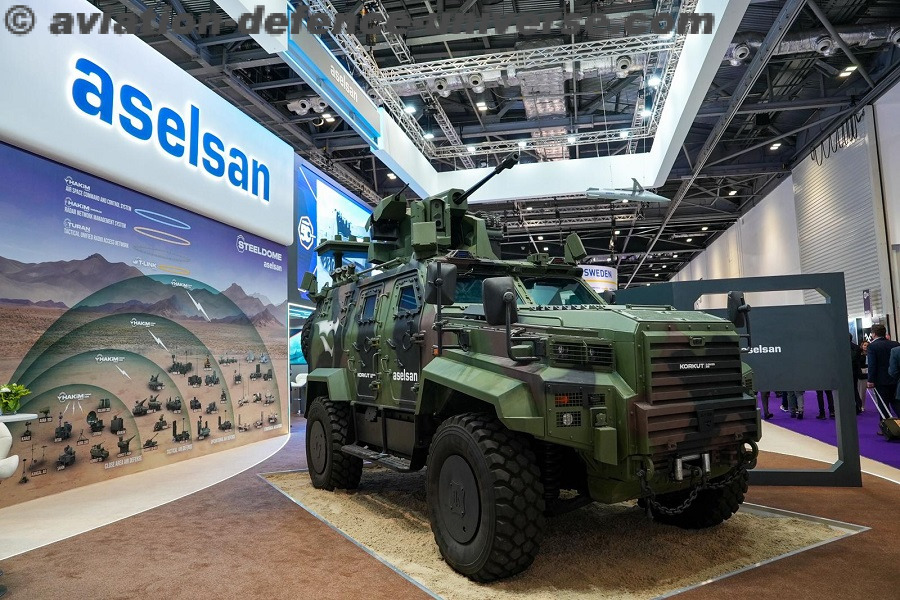 Among the hard-kill systems showcased were Türkiye’s ASELSAN KORKUT 100/25 SB, a vehicle-mounted platform armed with a 25 mm automatic cannon firing ATOM programmable airburst ammunition capable of neutralising mini and micro drones at ranges beyond 1,000 metres. Estonian firm Frankenburg Technologies introduced the Mk1, an “Ultra Short-Range Air Defence Missile” designed to take down one-way and loitering munitions, with claims of faster production times and lower costs compared to existing solutions. Moog’s Reconfigurable Integrated-weapons Platform (RIwP) demonstrated modularity, with one variant mounted on a Foxhound protected patrol vehicle that combined a 30 mm cannon with Starstreak or Martlet missiles for short-range drone defence. Meanwhile, Sweden’s Saab Nimbrix attracted attention with its low-cost, fire-and-forget missile designed to defeat both individual drones and swarms, boasting a range of up to 5 km and an air-burst capability.
Soft-kill systems also featured prominently. IPG Photonics presented the Crossbow Mini, a compact 3 kW laser directed energy weapon tailored for C-UAS operations against Group 1 and 2 drones, able to neutralise targets up to 1,300 metres away. From the Czech Republic, RETIA unveiled a layered anti-drone solution integrating radar for early detection with electronic warfare tools to disable small drones without kinetic engagement.
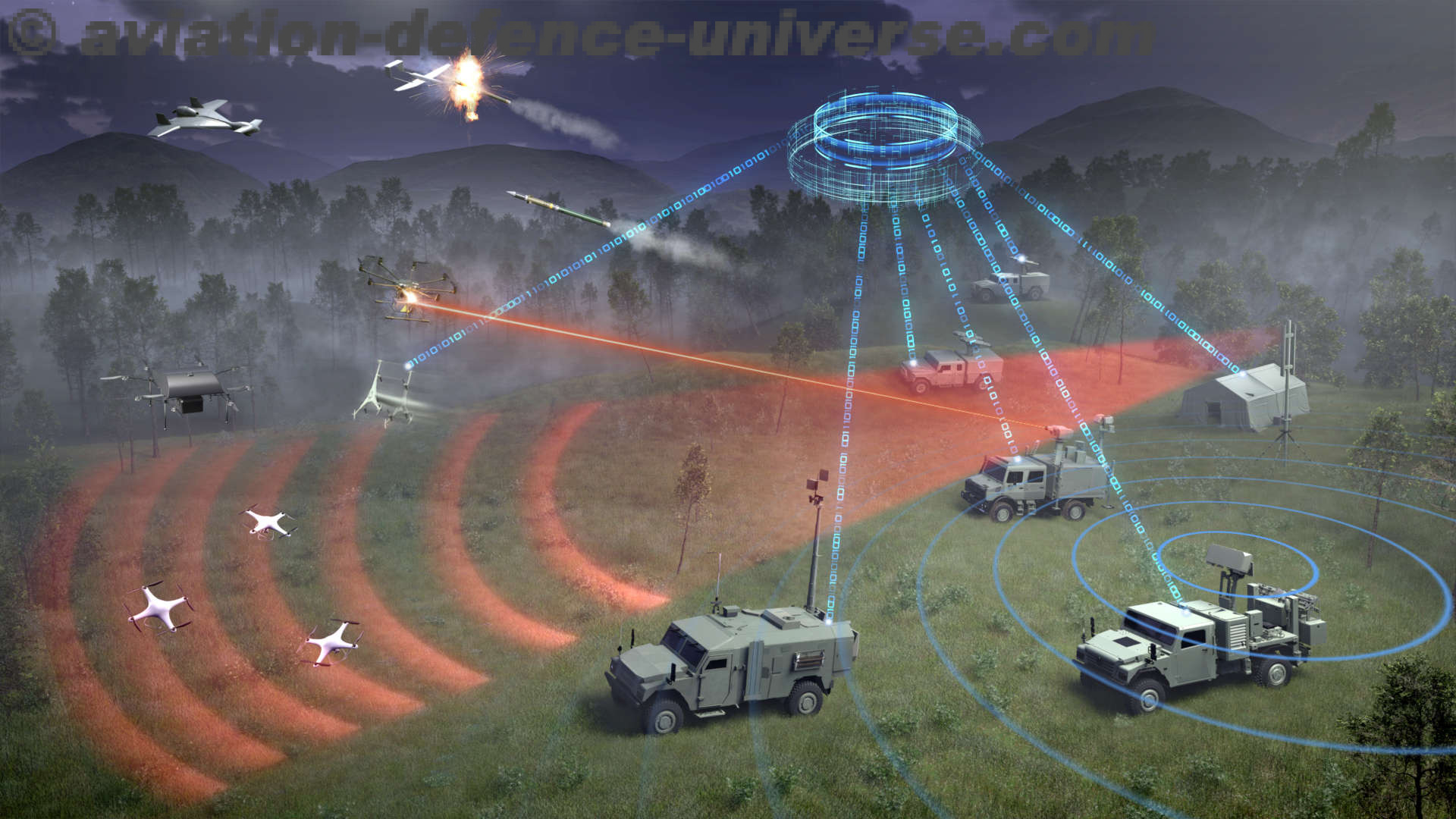
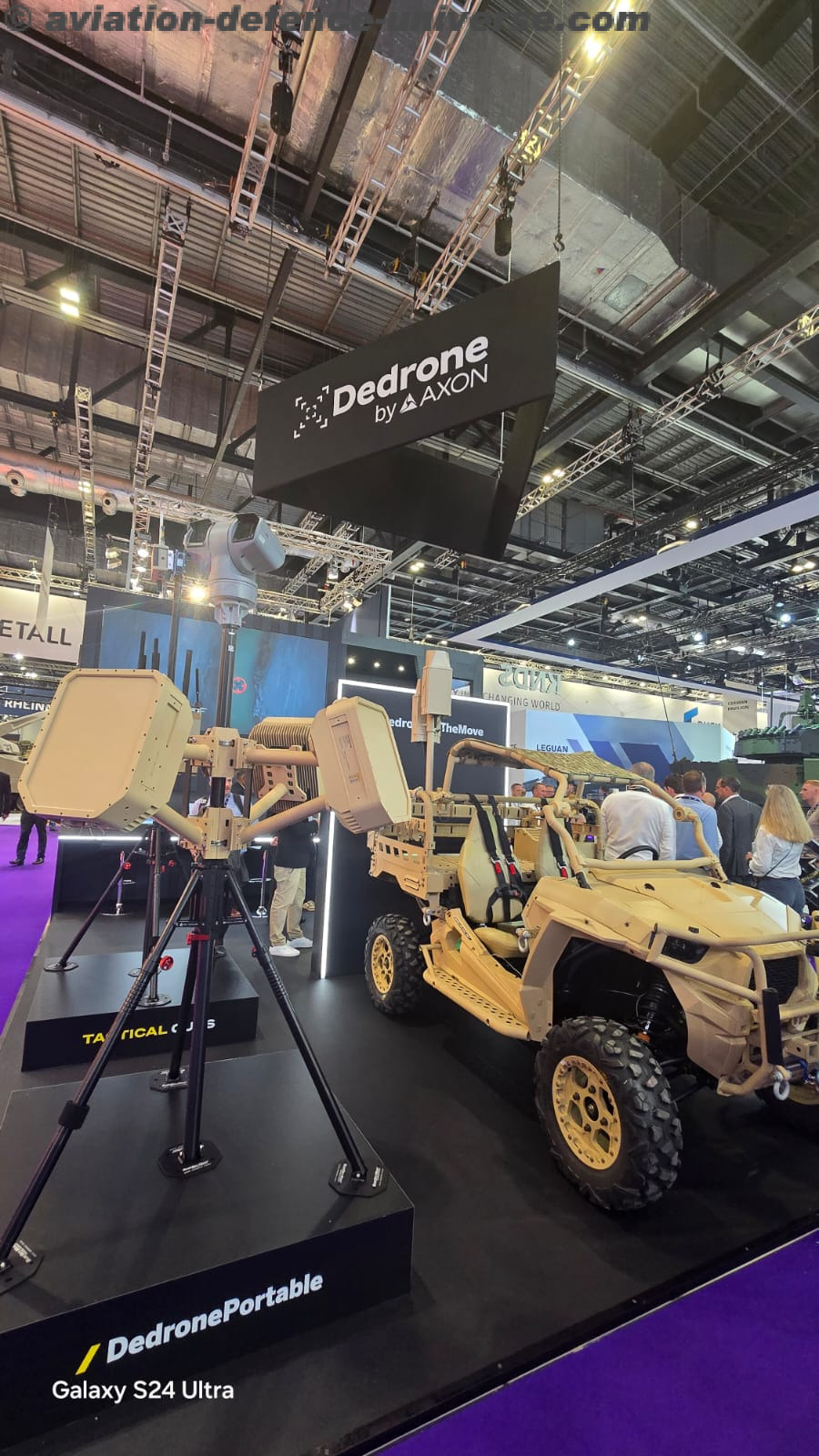
The show also emphasised integrated and layered systems that blend multiple technologies into unified solutions. Allen-Vanguard’s Securis was displayed as a trailer-based C-UAS system developed through a consortium approach, combining RF defeat from Allen-Vanguard, RF detection from Metis, radar from Blighter, and optical tracking from OpenWorks Engineering. MBDA’s Sky Warden, presented as part of the company’s broader layered air defence portfolio, offered an effective response to low-altitude drone threats. Meanwhile, Dedrone showcased its approach to open, networked C-UAS systems, advocating for unified airspace security across allied and military forces.
Supporting technologies rounded out the C-UAS landscape. Flare Bright introduced Extera, a Flight Termination System (FTS) essential for ensuring the safety of drone testing in constrained airspace. Babcock and CiTech also used DSEI 2025 to announce a partnership on a rapidly deployable hub capable of housing 5G communication, intelligence, surveillance, reconnaissance (ISR), and C-UAS systems, providing a flexible and scalable option for future operations.
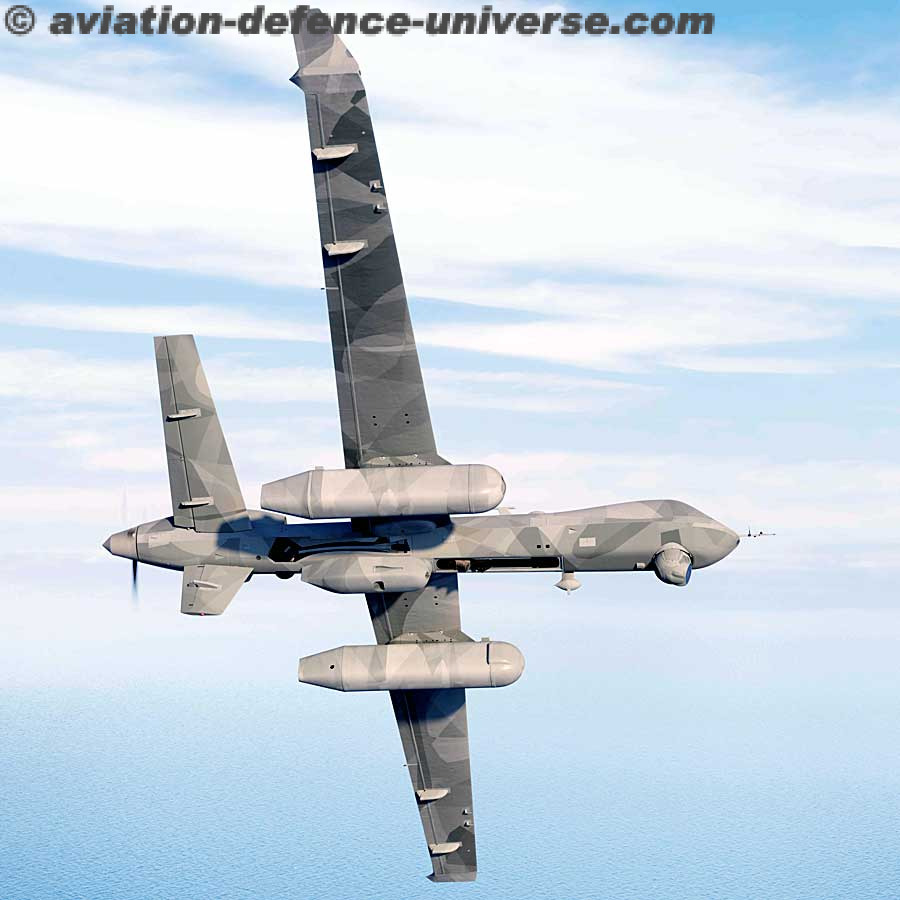
General Atomics Aeronautical Systems, Inc. (GA-ASI) is partnering with Saab to develop Airborne Early Warning and Control (AEW&C) capability for its line of MQ-9B Remotely Piloted Aircraft, which includes the SkyGuardian and SeaGuardian models, the United Kingdom’s Protector, and the new MQ-9B STOL (Short Takeoff and Landing) model currently in development. GA-ASI plans to fly AEW on MQ-9B in 2026
Drones have become defining tools in the ongoing Russia-Ukraine war and the Hamas-Israel conflict, transforming the nature of modern combat. In Ukraine, drones are being used extensively for surveillance, artillery targeting, electronic warfare, and direct attack missions, with both sides deploying cheap, commercially adapted quadcopters as well as more sophisticated long-range UAVs for precision strikes. Loitering munitions, or “kamikaze drones,” have proved particularly effective in overwhelming air defences and striking high-value targets. Similarly, in the Hamas-Israel war, drones have been employed for reconnaissance, delivering explosives, and bypassing traditional defence systems. Hamas has used swarms of low-cost drones to attack Israeli positions and infrastructure, while Israel has leveraged advanced UAVs for intelligence, surveillance, and targeted operations. These conflicts underscore how drones—ranging from improvised consumer models to advanced military platforms—have become central to asymmetric warfare, offering cost-effective, flexible, and persistent capabilities that are reshaping battlefield dynamics.
In modern warfare, drones are indispensable assets for tasks like intelligence gathering, surveillance, and direct combat, offering operational advantages over manned aircraft by reducing risk to personnel. To counter this pervasive threat, specialized counter-drone systems (C-UAS) are used to detect, track, and identify enemy drones, employing technologies such as radar, LiDAR, and AI. Interceptor drones and other interceptor systems can then neutralize these threats through kinetic or non-kinetic means, such as deploying smaller drones or directed energy weapons, thereby establishing defensive capabilities to protect critical assets and combat personnel.
Taken together, these innovations at DSEI 2025 highlighted the increasing sophistication and urgency of counter-drone technologies. As drones continue to proliferate on the battlefield, the defence industry is clearly mobilising to deliver layered, adaptable, and cost-effective solutions that can meet the challenges of modern and future conflicts.
DSEI 2025 has reaffirmed its role as a premier platform for defence innovation, spotlighting how AI, autonomy, drones, and modular UAS platforms are transforming the character of warfare. By showcasing cutting-edge capabilities across intelligence, surveillance, electronic warfare, and counter-UAS, the exhibition demonstrated the growing dominance of unmanned systems in the future force structure. As the defence landscape evolves, these technologies will be central to strengthening alliances, ensuring deterrence, and securing military advantage in the decades ahead.