














- South Asia’s Shifting Axis: Bangladesh Between Continuity and Change
- From Strain to Strategy: Rethinking India–Bangladesh Relations
- Neighbourhood Dynamics: Navigating a New Political Phase
By Jai Kumar Verma
New Delhi. 12 March 2026. Bangladesh today stands at the cusp within a decisive geopolitical moment, where domestic political transition intersects with shifting regional power equations. Long influenced by its complex history with India, Dhaka’s foreign policy is once again under scrutiny as new leadership dynamics reshape its strategic outlook. The evolving role of the Bangladesh Nationalist Party (BNP), the legacy of Sheikh Hasina, the interim influence of Muhammad Yunus and the emerging leadership posture of Tariq Rahman will all shape Bangladesh’s external relations. Issues such as water-sharing agreements, regional multilateralism through South Asian Association for Regional Cooperation (SAARC), and even the potential extradition of Sheikh Hasina, the central question remains whether bilateral ties will regress into confrontation or mature into pragmatic cooperation grounded in mutual strategic necessity.
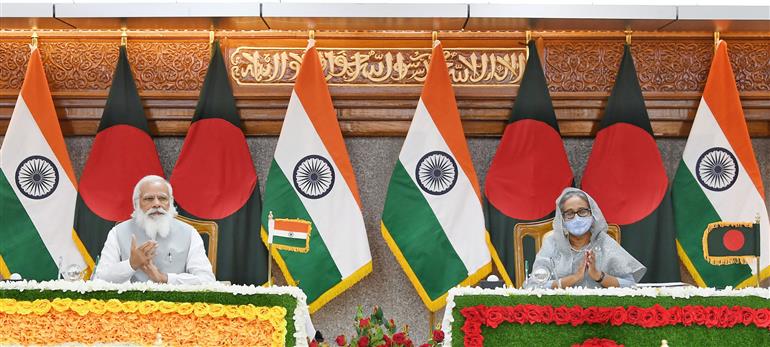 Historically, relations between Bangladesh and India have oscillated depending on which political force held power in Dhaka. Sheikh Hasina’s Awami League maintained close strategic and security ties with New Delhi, emphasizing counterterrorism cooperation, connectivity projects, and regional trade integration. Conversely, the BNP, particularly during its earlier periods in power, was widely perceived as adopting a more nationalist and at times anti-India posture. Its alliances with Islamist political actors and its sharper rhetoric on sovereignty often generated friction with India.
India’s primary concerns in Bangladesh are stability, security cooperation in the sensitive north-eastern region, and preventing external powers, especially China from gaining overwhelming influence. Support for the BNP, despite its past anti-India rhetoric, suggests that India may believe it can moderate the party’s policies through engagement rather than confrontation.
How the BNP acts in the future will depend on several factors. First, the party must balance its traditional nationalist base with the economic necessity of maintaining functional ties with India, Bangladesh’s largest neighbour and a key trading partner. Second, global economic pressures require Dhaka to secure energy, infrastructure investment, and export markets, areas where India plays an important role. Third, the geopolitical rivalry between India and China leaves limited space for outright hostility towards New Delhi. Therefore, even if past BNP governments projected a more sceptical stance towards India, a future BNP-led administration may adopt a more pragmatic line, less ideologically confrontational and more transactionally cooperative.
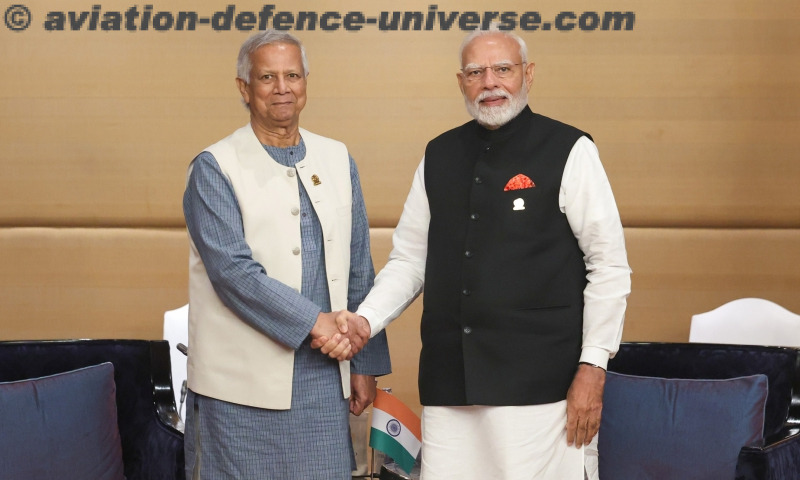 In the interim period of Mohammed Yunus as Chief Advisor of Bangladesh from 8 August 2024 until his resignation on 16 February 2026 raises serious strategic concerns. His outreach to Pakistan and China were a shift away from traditional security cooperation with India. His statements were indifferent of Indian security sensitivities, particularly regarding regional connectivity and border management. Yunus’s statements about India’s North-eastern states during his visit to China as well as in his farewell address were offensive and were against Indian interests. In his farewell speech he linked India’s Northeast “Seven Sisters” with Nepal and Bhutan framing Bangladesh’s sea access as a gateway for them. For India, Bangladesh is not just a neighbour but a critical partner in stabilizing the eastern subcontinent. Any Dhaka tilt that appears to dilute counterterror cooperation or embolden anti-India rhetoric inevitably generates anxiety within India’s strategic establishment. Equally troubling were the reports of attacks on Hindu minorities during Yunus regime. While internal law and order is Bangladesh’s sovereign matter, the protection of minority communities carries regional implications. The cooperation between Yunus-aligned factions and Jamaat-e-Islami Bangladesh has further amplified apprehensions. The concern is less about partisan politics in Dhaka and more about whether such alignments could erode the secular and security foundations that have underpinned bilateral stability over the past decade.
 After Tarique Rahman was sworn in as Bangladesh’s prime minister following a landslide election victory, the ceremony in Dhaka was attended by South Asian leaders and represented by Speaker of the Lok Sabha Om Birla, reiterating diplomatic engagement. India’s Foreign Minister had earlier visited Dhaka to meet Rahman, reinforcing dialogue ahead of the transition. At the oath ceremony, Birla met Rahman and delivered a letter from Prime Minister Narendra Modi inviting him, along with his wife and daughter, to visit India, signalling intent to strengthen bilateral ties under the new leadership. Tarique Rahman is son of former President Ziaur Rahman who was the founder of the BNP and former Prime Minister Khaleda Zia, returned to Bangladesh after spending 17 years in exile in London. His comeback has generated significant public expectations.
India’s strategic interests in Bangladesh are closely linked to stability in its north-eastern states and West Bengal, regions sensitive to cross-border security dynamics. The Northeast, long affected by insurgency, would face serious risks if political forces in Dhaka were perceived to encourage irredentist narratives such as a “Greater Bangladesh” extending into Indian territory. Past experience also shapes perceptions: during the 2001–06 BNP-led government, when Jamaat-e-Islami was an ally, several north-eastern insurgent groups reportedly found shelter in Bangladesh, with alleged links to Pakistan-based networks.
In 2009 Sheikh Hasina arrested and gave insurgents of North-eastern states to  India. At present the situation is different although the past record of BNP is not very encouraging but Rahman has not gave any anti-India statement. Vikram Misri Indian Foreign Secretary met Jamaat-e-Islami (J-e-I) Chief Shafiqur Rahman, who is also leader of opposition. The meeting is important as it is the first contact of Indian Foreign Secretary with J-e-I Chief.In recent months there were several positive interactions between India and BNP. Modi had sent a letter to Rahman on the sad demise of Khalida Zia and in his letter he expressed deep condolences on the passing of Khaleda Zia, remembering her as a stateswoman of exceptional determination and steadfast principles. He reflected warmly on their meeting in 2015, noting her clarity of purpose and unwavering commitment to her nation. He also extended his best wishes to Rahman, voicing confidence in his ability to provide strong and thoughtful leadership during this pivotal time.
Nazrul Islam Khan, a standing committee member of the BNP and chief coordinator for the 2026 election, conveyed his appreciation to Modi for acknowledging the people’s mandate. He remarked that India’s recognition of the election outcome, as a fellow democracy, was a positive and encouraging gesture. He added that he hopes bilateral ties will grow stronger under the leadership of Tarique Rahman. Taken together, these remarks indicate a shared intent on both sides to steer clear of tensions and instead foster a practical and cooperative partnership.
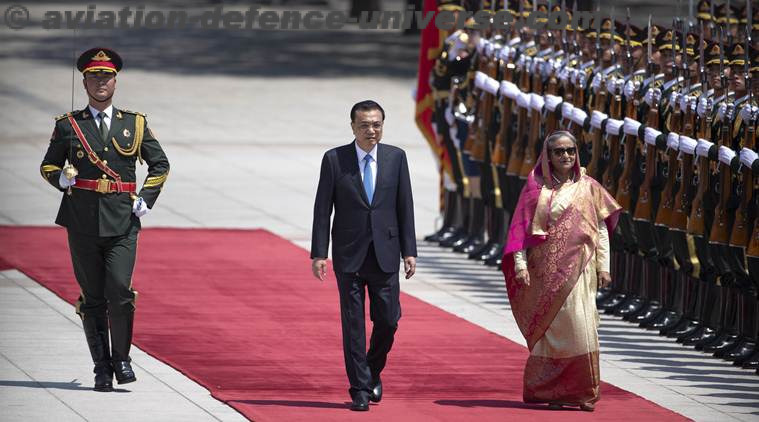 The relations between Bangladesh and China would continue to remain strong as China has emerged as a major infrastructure financier in Bangladesh through ports, bridges, and energy projects. Rahman is likely to continue engaging China, given the scale of investment. Nonetheless Dacca should be careful not to become victim of Chinese debt trap. Rahman should also keep Indian sensitivities in mind. In past BNP had close relations with Pakistan but as Rahman wants rapid progress of the country pauper Islamabad may not be of much use.
Relations between India and Bangladesh are likely to stay generally positive, but a few delicate matters could strain ties. One potential flashpoint involves any possible legal request concerning former Prime Minister Sheikh Hasina, whose political rivalry with Tarique Rahman, is well known. However, any extradition decision would be guided by established legal frameworks and bilateral agreements rather than personal or family disputes.
Water sharing remains a major unresolved concern. The Teesta River is crucial for agriculture in northern Bangladesh, yet a comprehensive water-sharing agreement has not been finalized, partly due to political sensitivities in the Indian state of West Bengal. Although the two countries concluded the 1996 Ganges Water Treaty, broader river management arrangements remain incomplete.
 Bangladesh’s foreign policy balancing is another factor. While India seeks to maintain close strategic ties, China has expanded infrastructure investments, the United States promotes its Indo-Pacific strategy, and Turkey and other middle powers offer alternative partnerships. Dhaka’s leadership will need careful diplomacy to avoid great-power rivalry complicating regional stability.
Notwithstanding these problems it is expected that the relations between Delhi and Dacca which were nose-dived during the time of Mohammed Yunus would improve because structural interdependence suggests eventual stabilization. Geography dictates proximity; economic logic favours cooperation. The Bangladesh watchers suggest that there should be depoliticization of bilateral Issues. Water-sharing, border management and trade disputes should be handled institutionally rather than rhetorically. There is economic dependence between both the countries hence more economic Integration is required and for that connectivity through rail, road & ports should be enhanced.
(Jai Kumar Verma is a Delhi-based strategic analyst and Life Member of United Services Institute of India and member of The Manohar Parrikar Institute for Defence Studies and Analyses. The views in the article are solely the author’s. He can be contacted at editor.adu@gmail.com)