



















Ranjit B Rai
 The adage that the fate of nations is decided by who controls the seas reflects the strategic reality that maritime dominance shapes trade, military reach, and political influence. Control of sea lanes and safe navigation are essential for secure commerce and access to resources. They enable the projection of influence and force beyond borders and the imposition of blockades. Historically, empires such as the Dutch (17th century), the British (18th century), and the United States of America (19th century) leveraged naval supremacy to build global networks and deter rivals, thereby becoming the lone superpower with its military industrial complex (MIC). The world’s history has been interspersed with major and minor wars, but the exponential technological leaps in the range and accuracy of rocketry, drones, and aerial-delivered weaponry in the first quarter of this century have been superlative, alongside the all-pervasive Internet, Quantum computing, especially in communications, and Artificial Intelligence (AI). It is a truism that technological changes revolutionize warfare and reshape the international landscape, as part of what is referred to as the ‘Revolution in Military Affairs’ (RMA). We live in an era where technological progress doesn’t just move quickly – it compounds.
 The US military industrial complex (MIC) leads but the new kid on the block is China rising, as a military and economic power having absorbed lessons from the USA’s wars which expended much of US’s energy, namely in Lebanon with a multinational force (1982–1984) with US Marines, Op Urgent Fury to invade Grenada (1983), air strikes in Libya (1986 and 2011 against ISIS), in Panama in Op Just Cause (1988-1999) — the Gulf War (Desert Shield/Desert Storm 1990–1991) and US/UN operations in Somalia 1(992–1994). Since 2022, the US, with NATO, has provided major advisory intelligence, funds and weapons to Ukraine, against Russia, and on 28th February, the US joined Israel in Op Roaring Lion (Satan in the bible) with its Op Epic Fury, and is pounding Iran with air power to effect a change of the regime and destroy Iran’s nuclear facilities. The United States has deployed a massive carrier strike group force (USS Gerald R. Ford, Abraham Lincoln, and soon George H.W. Bush), but is operating out of range of Iran’s missiles. Iran has no Air Force or submarines of consequence, or the story may be different.
The world is witnessing massive advances in aviation, air-fighting assets, drones, and air-launched weapons, as well as the widespread use of space and satellites. This indicates that aerospace power and an air-led sea strategy, articulated by Italian airpower theorist Giulio Douhet, are taking over from Macinder’s heartland and Mahan’s maritime strategy. In ‘The Geographical Pivot of History’, British geographer Sir Halford John Mackinder (1861-1947) posited that whoever controlled the ‘heartland’ could command landlocked central Eurasia—because of its immunity to sea power, but in the latter 19th century, Admiral Alfred Thayer Mahan (1840–1914), an influential U.S. strategist, scripted ‘The Influence of Sea Power Upon History’, that national greatness is fundamentally linked to maritime supremacy, arguing that control of the sea through a powerful navy, merchant marine, and overseas bases are essential for economic and military dominance. Mahan proved right, but rapid advances in air warfare and the emergence of space as an important domain have transformed the international security matrix, making aircraft carriers susceptible to attack. To that extent, Italian Colonel Giulio Douhet, in Command of the Air, argued that air control was essential to accomplishing a military mission through strategic bombing, thereby destroying an enemy’s morale and industrial capacity. His key ideas focused on rapid, offensive air strikes to break an enemy’s ability to resist, and stated, ‘to acquire the command of the air means victory: to be beaten in the air means defeat’. Technology in this century has advanced at rates never before seen. Moore’s law showed that transistor density (now in semiconductor chips) doubled every 18-24 months in this century, and this metric has accelerated beyond belief due to the huge improvements in computing and universal connectivity. Incidentally Giulo was punished and reinstated.
 This does not preclude that Jointness among the army, navy, and air force is paramount in war, because integrated operations, planning, intelligence, logistics, and command can produce results that no single service can achieve alone; land forces with boots on ground can hold terrain, airpower assures quick action over large swaths and achieves tempo and precision strikes, and naval forces can still control sea lines and project power. When synchronized and led by air power over land and the seas, they create complementary capabilities—persistent surveillance, rapid maneuvers, layered strike, and resilient supply chains—that multiply combat effectiveness, reduce friendly casualties, close kill chains faster, and enable a nation to shape the battlespace across domains from inland and coastal spaces and to deeper waters, with jointness. This calls for an air-led sea strategy. China is scripting one for Taiwan and the South China Sea.
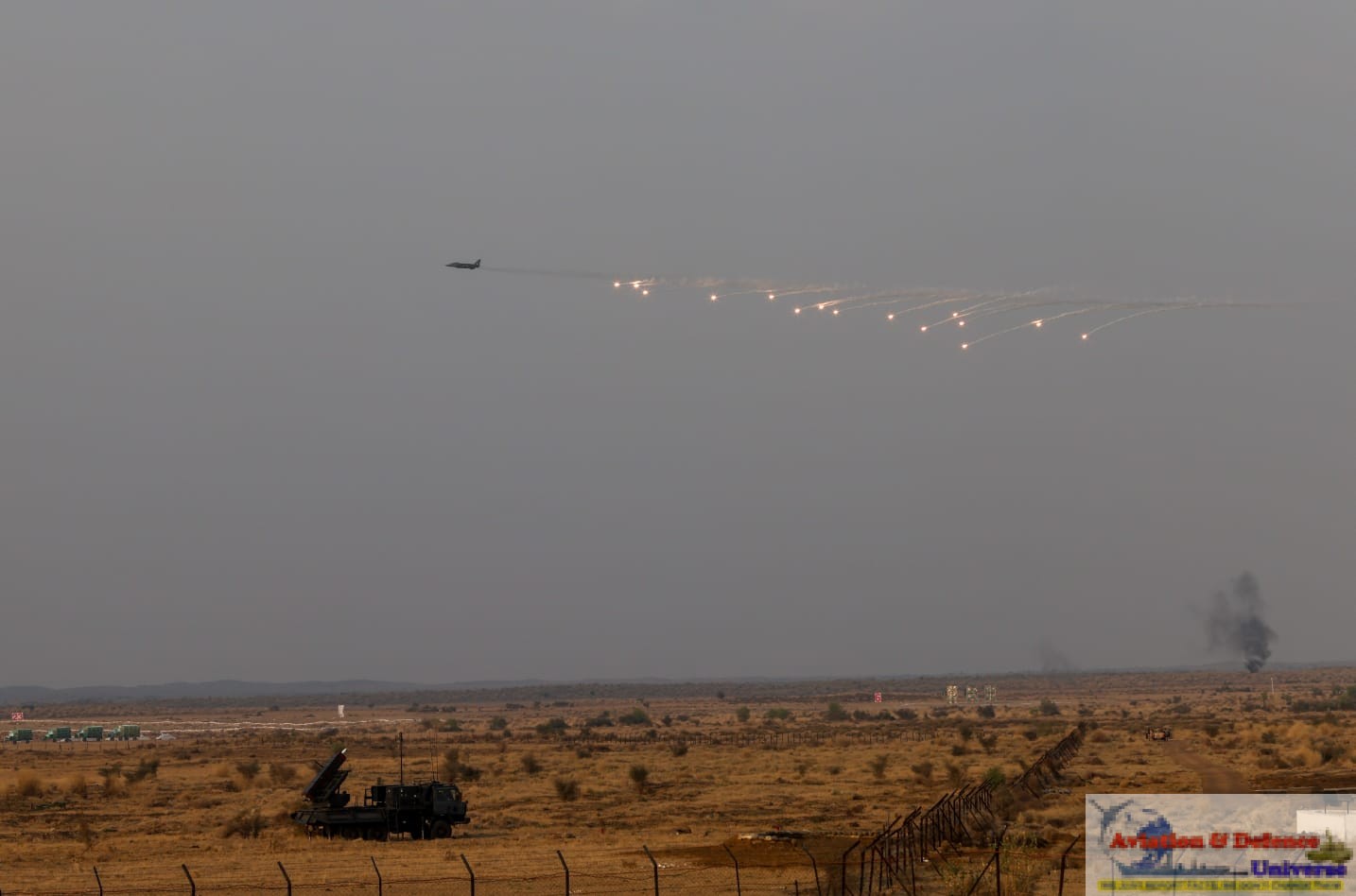
Keeping the above in view, this author proposes that, at least for the remainder of the 21st century, the saying “Command of the sea decides the fate of nations; needs to be modified to Command of the air decides who commands the sea”. The roles for navies and air forces are inverting, and aerospace power is becoming the primary layer of defence. The Navy’s fleet size alone is not decisive, especially in confined seas, as seen in the Israel-US war against Iran in the Hormuz Strait. The war has escalated, with the aerial domain assuming a dominant role. Aerospace is now the high ground in intelligence gathering, weapon direction, war planning, and execution. Control of the air is not an end in itself but is the gateway to influence, deter, and accomplish military missions across all domains. Synergistic capabilities, led by air power on land and at sea, provide commanders with persistent surveillance, rapid maneuvering, layered strikes, and resilient supply chains. Aerial capabilities multiply combat effectiveness, reduce friendly casualties, close kill chains faster, and enable a nation to shape the battlespace across domains from the hinterland to coastal spaces and to deeper waters with air-to-air refueling. The sub-surface domain of enemy submarines can also be efficiently prosecuted through the synchronized use of airpower, including dipping sonars by helicopters, sonar-buoys, blue-green lasers, and advanced intelligent weapons, such as autonomous submarine-seeking torpedoes launched from the air. India has this capability with its Boeing P-8Is and MH-60Rs. The war between Russia and Ukraine, in its fourth year, and Israel’s Roaring Lion and the USA’s Epic Fury in the Middle East are best captured by W. B. Yeats’s short 1904 poem ‘The Second Coming’, which highlights the uncertainty of war. Yeats wrote, “Things fall apart; the Centre cannot hold; Mere anarchy is loosed upon the world…The best lack all conviction, while the worst are full of passionate intensity. The darkness drops again”.
The world’s economy is reeling from the effects of the wars and competition between the USA and China. The lesson for nations, and India in particular, is that air strategy with aerospace power is scoring over maritime power and land strategy, especially if boots on the ground are not envisaged. Aerial power’s hour came to India in the form of the IAF attack on the Balakot terror camps on 26th February 2019, and Op Sindoor 7/8th May, 2025. The Navy did not actively participate with its weapons. The global order is becoming less Westphalian—and the gains of interdependence are being undone. Great power states are asserting influence territorially and diplomatically, often prioritising state interests over supranational rules. Many international norms are being rolled back by powerful states like the USA, Israel, and even China, which is non-compliant with international courts and treaties. And, above all, there is an uncertainty about what this century has in store for our societies and geopolitics. The saying Oil wins Wars, may prove right again.
Cmde Ranjit B Rai served as DNO and DNI and is the author of India’s Elephant and China’s Dragon Navy ISBN 978-93-49934-75-3. The views are personal to the author.