


























- Airport leaders, AAI officials, and regional carriers discuss the next decade of Indian aviation at Aviation India & South Asia 2025
- From Delhi to Goa, from metro hubs to tier-two skies — India’s aviation ecosystem is racing to meet its 1600-aircraft future
By Sangeeta Saxena
New Delhi. 31 October 2025. India’s aviation growth story is one of ambition meeting acceleration. At the Aviation India & South Asia 2025 summit, an engaging panel brought together the country’s top aviation voices — from airport operators and regional carriers to the Airport Authority of India (AAI) — to discuss the infrastructure challenges, connectivity gaps, and policy dynamics shaping the skies ahead. What emerged was a candid and layered conversation about India’s meteoric rise in aviation and the critical need for balance between pace and preparedness.
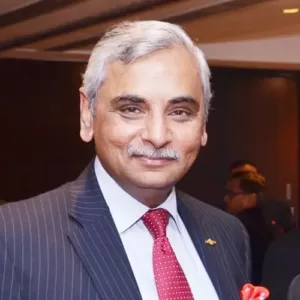
 The discussion between Vipin Kumar Chairman Airports Authority of India, Videh Kumar Jaipuria CEO Delhi International Airport Ltd., Mohit Jajoo CEO & Executive Director BJK Airports and Gautam Salaskar Head- Inflight Operations & Ground Operations Fly91, Moderated by Chloe Greenbank, Airports Editor, Aviation India, revealed a fascinating duality — of progress that is globally admired, yet racing against its own growth curve.
“Well both yes and no,” said Videh Kumar Jaipuria, CEO DIAL, when asked if India’s infrastructure is keeping pace with aviation expansion. “Yes, because the way the airport operators have come up, like AI, GMR, Adani and others — the role they are playing in. We are one of the best airport infrastructures in any developing country across the globe. And when I say no, because the pace of aircraft induction is just leapfrog. We were like 600 aircraft stagnant for about 10-12 years. And now we are going up 600 aircrafts to almost 1600 new aircrafts.”
With this dramatic expansion underway, operators stressed that forecasting and planning are key to avoiding bottlenecks. “If you look at infrastructure development, there is always a cycle. You typically have to forecast what is the infrastructure demand going to be five years down, because any infrastructure takes 5-7 years. We were stagnant at a capacity of about 75 million. We have just gone to 100 million and expandable to 125 million. Now, aircraft supplies have to keep pace. Most of the aircrafts are coming only in 2027. So, obviously the infrastructure currently available is more than the current requirement that is there for the airlines. But come closer to 2027-2028, possibly we will need to go for other expansions. So, it is always going to be a cycle like that, ” he added.
 Indian airports today stand as some of the most modern and efficient in the developing world, reflecting a remarkable transformation over the past two decades. From world-class terminals like Delhi’s IGI Airport (GMR), Mumbai’s CSMIA (Adani), and Hyderabad’s Rajiv Gandhi International (GMR) to the upcoming Navi Mumbai International Airport, India’s aviation infrastructure now rivals global benchmarks in design, efficiency, and passenger comfort. With state-of-the-art facilities, biometric-enabled DigiYatra processing, AI-driven airside operations, and sustainability initiatives such as solar-powered terminals and electric ground fleets, Indian airports have evolved into global transit hubs. Airports like Delhi, Bengaluru, and Hyderabad consistently rank among the world’s best for passenger satisfaction and operational excellence. Yet, while India’s metros are world-class, the next challenge lies in scaling this quality to tier-two and regional airports under AAI’s UDAN scheme — ensuring that the “India experience” in aviation is uniform from Kochi to Kohima. In essence, Indian airports today are not just gateways to destinations — they are symbols of a confident, connected, and globally competitive India.
Vipin Kumar Chairman Airport Authority of India (AAI), highlighted the organisation’s scale and adaptability. “This is an organisation which was established in 1995. Because of this huge network, we are having around 20,000 people in different sectors… We have all that flexibility that as per the requirement, we can move the officers and manpower from one place to another. We are having three training centres exclusively for ATCs… and we have the flexibility also to get support from other destinations. We plan in advance, we invest in that, and we develop the skills,” he emphasised.
 Bringing a regional lens to the conversation, Fly91’s Gautam Salaskar who Heads tnflight and Ground Operations for the Goa based airline, described the operational realities of connecting tier-two and tier-three cities. “We operate from Goa into tier-two cities like Jalgaon, Sindhudurg, Sholapur — connecting them to Hyderabad, Bangalore, and Pune. But people want to get to Mumbai. And if you cannot connect your tier-two and tier-three cities to the financial capital of the country, it’s counterproductive, ” he said.
Reiterating the urgency of better planning for smaller aircraft operations at new airports, he stated, “With the new infrastructure coming up in Mumbai, the least we expect is that airport should have been planned with the intent to allow the ATRs… Incidentally, the intent as of now is to not let the ATRs come there. So, how will your tier-two and tier-three cities get there?” Fly91’s story also highlighted the human dimension of regional flying Gautam pointed out, “We literally realise the pain that the people over there go through if our plane doesn’t land on time — because it’s our plane that sometimes carries the food, the milk, the perishable goods. Everything is designed for an A320. An ATR that can turn around in 15 minutes has to take GPU service and pay for an hour because that’s the concept. There has to be a mindset change. When you design a certain policy, you must keep in mind regional connectivity. So, yes, the slot allocation is a cause of concern for us. If that could come our way, if there were opportunities to operate slots, that is predominantly a roadblock for now. The moment we get them, we know we are going to have to operate more flights.”
Appreciating the airports for electric sustainability he said, “At all of our airports, we have sustainable, all-electric equipment already in place, with enough charging stations. Even smaller airports like Jharsuguda have electric charging infrastructure. We don’t face that issue at all.”
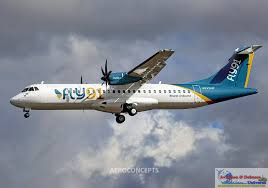 For low-cost and regional airlines in India, airport facilities present a mix of opportunities and operational challenges. While the rapid modernisation of major airports has elevated passenger experience, regional carriers often struggle with limited infrastructure, slot constraints, and high operating costs at metro hubs. Many smaller airports under the UDAN (Ude Desh ka Aam Nagrik) scheme still operate with minimal facilities, restricted operating hours, and limited parking and turnaround bays, forcing airlines to adapt schedules and routes creatively. In some cases, regional airlines flying turboprop aircraft like ATR-72s or Q400s find that airport layouts and ground-handling systems are optimised for larger jets, creating inefficiencies. Despite these hurdles, regional carriers appreciate the growing support from the Airport Authority of India (AAI) in building new terminals, improving night-landing capabilities, and introducing electric ground support systems even at smaller airfields. For them, the biggest ask is not luxury but reliability, accessibility, and fair slot allocation — essentials that make the difference between a profitable route and a grounded dream in India’s fast-evolving aviation map.
 When asked whether the balance of power between airlines and airports was shifting, Videh Kumar Jaipuria who heads Delhi International Airport clarified, “There’s no conflict between airlines and airports. The two are the same. When we design an airport, we come later — after you have got enough capacity. The idea is to create infrastructure to meet demand after talking to airlines, and to meet their cost expectations by striking that balance.” He pointed out that lessons from India’s privatisation cycle are being applied intelligently. “The private players bring a commercial mindset, which makes the business sustainable and reduces passenger fees. The second thing they bring is innovation. It is much faster for a private player to adopt new technologies and experiment. Fail fast, succeed fast, and move ahead. Most Indian airports now are ahead of many international airports — in technology adoption, in digital infrastructure, and in traveller experience, ” he proudly noted.
Airport operators in India face a complex set of challenges as the country’s aviation sector expands at an unprecedented pace. The foremost concern is capacity planning — keeping infrastructure development aligned with the rapid induction of new aircraft and surging passenger numbers. Building or upgrading terminals, runways, and air traffic systems takes years, while airline growth often outpaces projections within months. This mismatch creates operational bottlenecks, congestion, and pressure on slots at metro airports. Additionally, operators must strike a delicate balance between cost efficiency and passenger experience, maintaining financial viability under regulated tariffs while investing in technology, sustainability, and customer comfort. Land acquisition, environmental clearances, and inter-agency coordination add further layers of delay. The shortage of trained manpower, particularly in ground handling and ATC services, and the need for 24×7 operations at regional airports compound these issues.
 Mohit Jajoo CEO & Executive Director BJK Airports “There’s no single handler at any airport across the country. Even at smaller airports, there are three handlers — one private, one government-owned, and one airline self-handling. Because there are many handlers, so the infrastructure put in by all the handlers cannot be adequate. Because, say, for example, we are handling Dharamshala Airport and there are three handlers there . There are some limitations. But, the time is changing. Now, the diversification also. Because, you know that, if you have to survive… sector, you will have to have different scheduling also. So, the monetization of land is required. And for that, some amendments in the Act also are required.”
As India’s airports race toward handling over a billion passengers annually, operators are tasked with delivering not just capacity, but resilience — ensuring that the nation’s aviation growth remains safe, seamless, and sustainable. The growth of private sector airports in India has been one of the most transformative chapters in the country’s aviation story. Over the past two decades, private operators such as GMR, GVK, Adani, and Zurich Airport International have redefined India’s airport landscape, bringing global standards of design, efficiency, and passenger experience. Starting with the modernisation of Delhi’s IGI Airport and Hyderabad’s Rajiv Gandhi International Airport, the model has since expanded to major hubs like Mumbai, Ahmedabad, Lucknow, Jaipur, Mangalore and Guwahati, with NOIDA International Airport and Navi Mumbai International Airport poised to be the next big leaps.
 Vipin Kumar explained, “This Regional Connectivity Scheme was started in 2017. Some operations became unsustainable once the funding ended. Some modifications are required in that scheme. The budget announcement will take 100-plus new destinations under RCS. With RCS 2.0, we will ensure operations continue even after the VGF is over.” These Public-Private Partnership (PPP) models have enabled massive investments in terminal expansion, airside infrastructure, cargo handling, and sustainability initiatives—areas that were once constrained by public funding. Private airports have also been pioneers in adopting biometric systems, digital check-ins, solar energy integration, and AI-driven operations, setting new benchmarks for global competitiveness. Today, private sector participation accounts for nearly 60% of India’s total air passenger traffic, underscoring how their vision and execution have not only transformed travel but also turned India into one of the fastest-growing aviation markets in the world.
 The conversation concluded with reflections on India’s emerging role as an aviation hub. “India needs to be selective in the way air service agreements are done. The focus should be on becoming the preferred hub for Indian travellers. Once that happens, international connectivity will automatically expand.” He added, “Delhi today is connected to more European destinations than most Southeast Asian hubs, including Singapore. We’ve seen traffic from Phuket to Delhi to Europe, and even Australia to Delhi to Europe — all because of improved hub connectivity, ” he added.
The session painted a vivid picture of India’s aviation ecosystem — ambitious, resilient, and constantly adapting. From airport operators planning a decade ahead to AAI’s nationwide manpower strategy, from Fly91’s regional battles for slots to ground handlers embracing sustainability, the collective message was clear: India’s aviation growth story is unstoppable, but must remain synchronised across all stakeholders. As the panel summed up, “Ultimately, the passenger is the beneficiary. With the changing time, new changes should come. We should adopt and adapt whatever is beneficial to the society. In an industry where skyward ambition often meets runway constraints, India’s aviation leaders are ensuring that the country’s journey from 600 to 1600 aircraft — and beyond — remains both sustainable and soaring.