













- Praveen Iyer on Akasa Air’s Journey, Expansion Plans, and the Road Ahead
- From Pets to Profits: Akasa Air’s Strategy for Sustainable Expansion
- “We’re Building an Airline for the Future — Efficient, Scalable and Loved by Flyers”
By Sangeeta Saxena
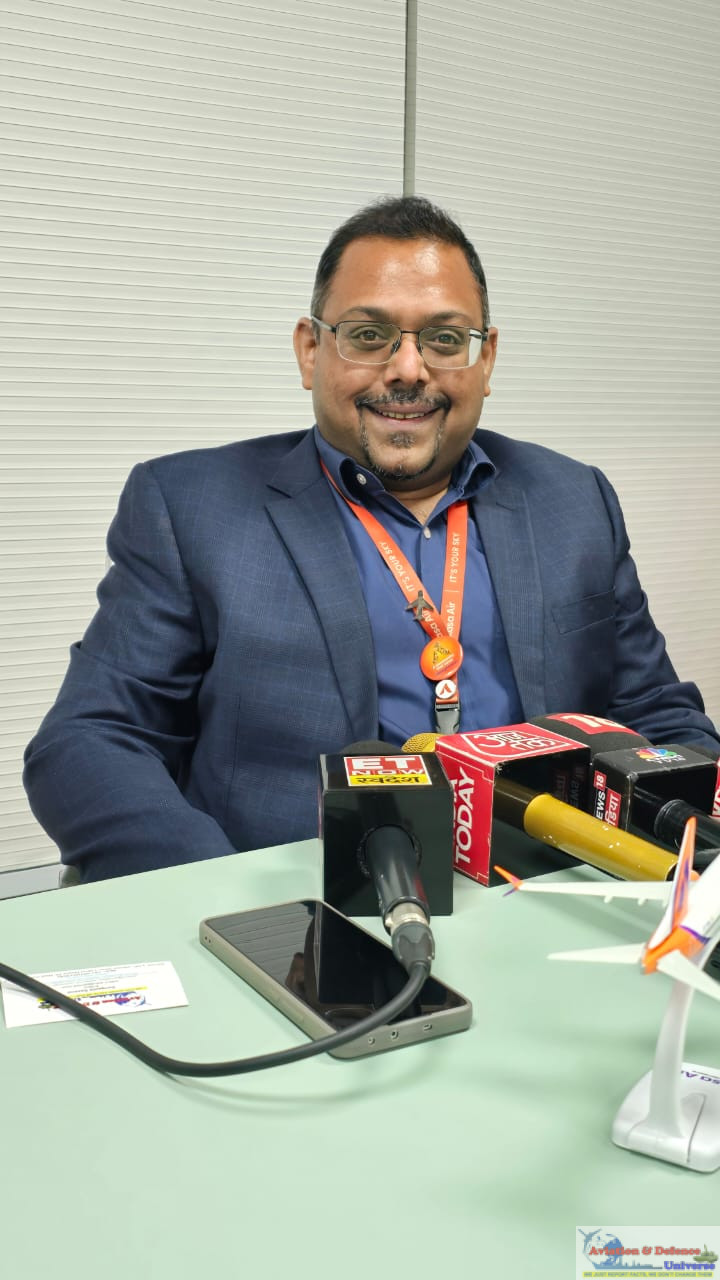
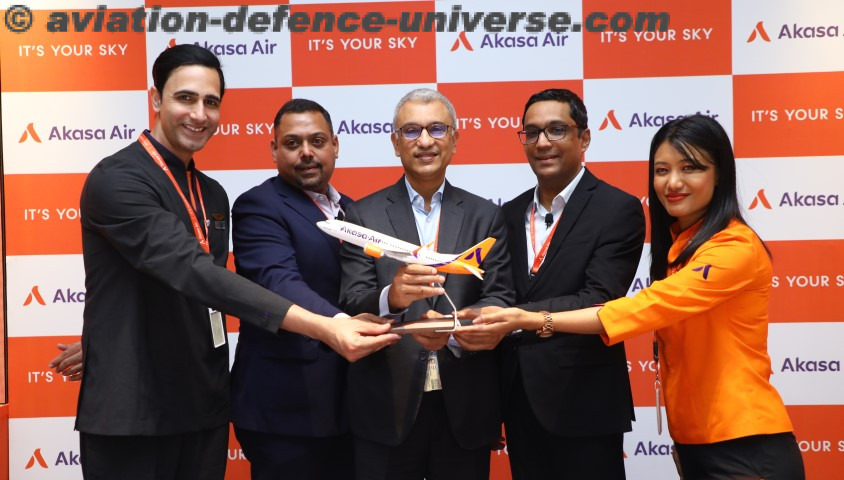
New Delhi. 10 November 2025. Baby steps have turned into giant leaps for an airline that is, technically, still in its infancy. In a candid interaction with the media, Praveen Iyer, Co-Founder and Chief Commercial Officer of Akasa Air, painted a vivid picture of the carrier’s swift ascent and ambitious future. Barely three years since its first flight, Akasa has transformed from a promising newcomer into one of India’s fastest-growing airlines—crossing 22 million passengers, operating over 130,000 flights, and building a fleet of 30 Boeing 737 MAX aircraft. With 27 billion ASKs and 145,000 tonnes of cargo already under its belt, the airline’s achievements belie its young age. From adding new frequencies out of Delhi and Mumbai to preparing for operations from Noida and Navi Mumbai’s upcoming airports, Akasa’s story, as Iyer described it, is one of calculated growth, customer-centric innovation, and the confidence of a brand that has found its rhythm in India’s dynamic aviation landscape.
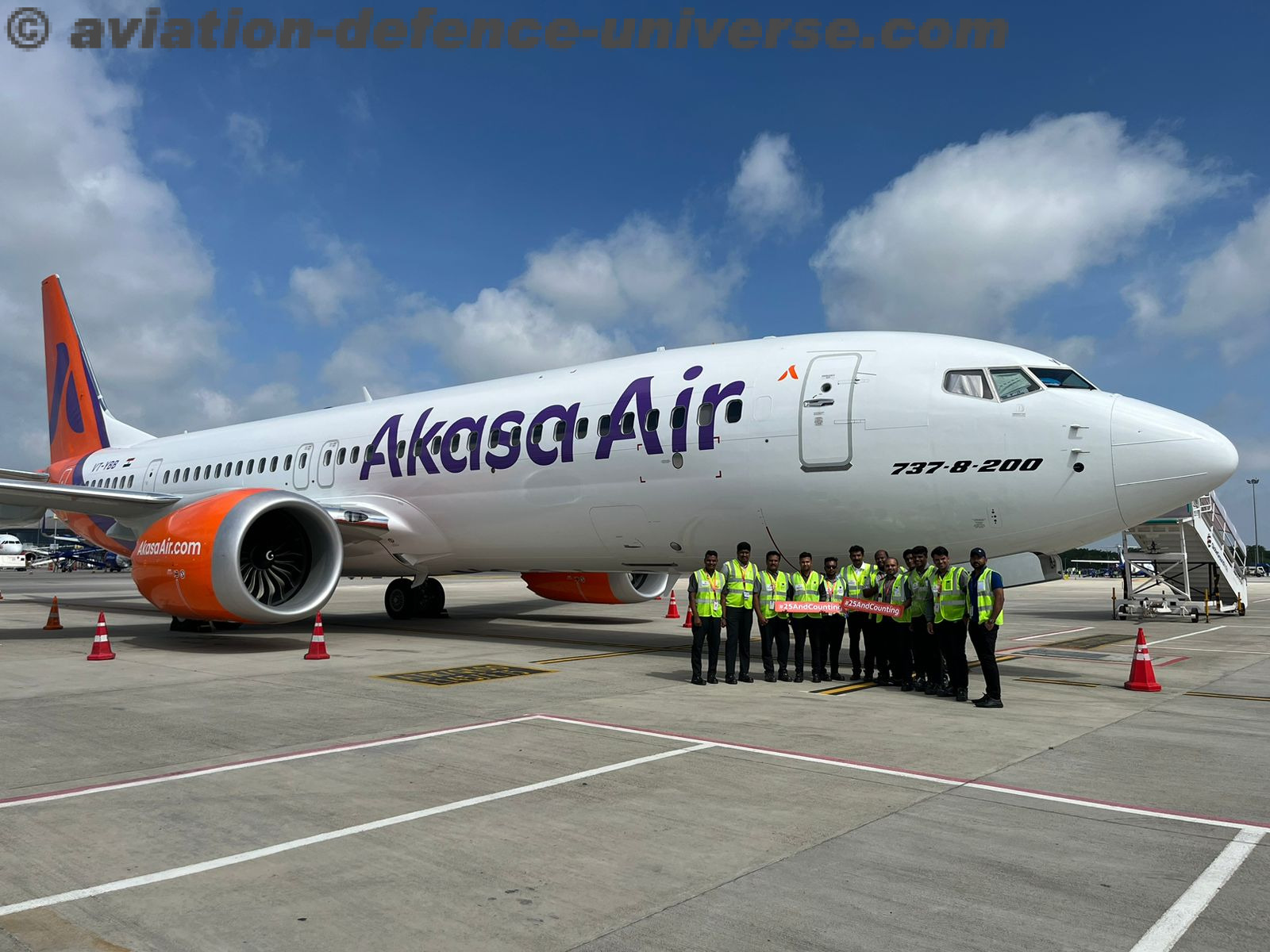 It’s been a little over three years since Akasa Air took to the skies, and the airline’s growth story has been remarkable. “We absolutely love the response and the feedback we are getting from the customers,” said Praveen Iyer, Co-Founder and Chief Commercial Officer. In this short period, Akasa has flown close to 27 billion ASKs, carried over 22 million passengers, and operated around 130,000 flights with a fleet of 30 aircraft. The airline has also transported more than 145,000 tonnes of cargo, a figure that reflects both operational efficiency and network strength. “We are approaching the 10,000 pets very soon. We are at 9,600 thereabouts,” Iyer added proudly, reinforcing Akasa’s image as “an extremely pet-friendly airline” that continues to redefine passenger experience in India’s skies.
What excites Akasa’s leadership even more is the growth opportunity ahead. “As we take the delivery of our subsequent aircraft, a market which is often incapacitated—the north of India and even the west of India, the key metros—we see expansion there in the form of two new airports coming up with both Noida and Navi Mumbai,” Iyer said. The timing, he added, couldn’t be better. “It was not a script we wrote. In fact, the original script that we wrote didn’t have Mumbai for a long time, but we do have 30 plus departures out of Bombay and now 24 out of Delhi. We still don’t have international departures out of Delhi, but very soon we will.” The synergy between Akasa’s fleet deliveries and India’s new infrastructure projects, he noted, is “an excellent dovetail that makes the future extremely promising.”

Looking at the wider market, Iyer pointed to India’s extraordinary demand potential. “The CAGR between 2019 till about 2024 in terms of ASKs for the industry has been no more than 2.5 to 3%, and that just goes to show the latent demand that’s going to build up by virtue of the capacity not being enough for us to fulfil the India need,” he explained. While domestic capacity remains tight, “international has seen the CAGR grow at about 6, 7, 8%, thanks to a lot of these bilaterals that have been utilised and the rights being exhausted between various countries.” For Akasa Air, this unmet demand—both domestic and global—is the runway to its next phase of expansion.
Akasa Air has earned a distinctive reputation as India’s most pet-friendly airline, pioneering a thoughtful policy that allows pets to travel both in the cabin and in the cargo hold. With over 9,600 pets flown so far and the milestone of 10,000 soon approaching, the airline has set a new benchmark in inclusive air travel. Each flight permits up to two pets in the cabin, with the combined weight of the pet and its carrier not exceeding 10 kilograms, ensuring comfort and safety for all passengers. “We make it a point that pet parents are so cooperative because we understand there are people who may be uncomfortable around pets,” said Praveen
 Iyer, Co-Founder and Chief Commercial Officer of Akasa Air. Larger animals are allowed in the cargo section, with the same limit of two per flight to prevent stress and ensure their wellbeing. “They get scared of us more than we do,” Iyer noted, underscoring the airline’s compassionate approach. This balance of empathy, regulation, and innovation has made Akasa’s pet policy a symbol of its broader philosophy—an airline that cares for every passenger, even the four-legged ones. On Akasa’s much-talked-about pet policy, Iyer was unapologetic yet pragmatic, “Some may not book us because of pets, but many book us because of it. We allow no more than two pets per flight, always caged, and passengers are free to change seats. It’s about education and empathy.” He added that the airline’s customer-centric flexibility has turned the initiative into a success story.
Looking ahead, Iyer said Akasa Air remains financially healthy and future-ready. The airline is steadily charting its path toward a public listing, signalling growing maturity in India’s fast-evolving aviation sector. As Co-Founder and Chief Commercial Officer Praveen Iyer explained, the airline is looking at an IPO window of two to five years, with a clear focus on building a financially sound and operationally strong foundation before taking that leap. “We just want to run a very good airline — one that’s profitable, well-run, with happy employees and happy customers,” he said. The company’s long-term vision, he added, is about sustainability and strength over speed, ensuring that growth is organic and aligned with India’s expanding aviation ecosystem. Akasa’s strong ancillary revenue performance — including robust cargo operations — and consistent profitability trajectory underscore its readiness for the next phase. Backed by fresh funding and a growing fleet of Boeing 737 MAX aircraft, Akasa Air’s march toward an IPO reflects not just an airline’s ambition, but a homegrown aviation success story taking steady, confident strides toward global recognition.
 Ancillary revenue is central to Akasa’s model. “Ten, fifteen years back, if you tell somebody, book a seat, pay for it, book a meal, pay for it, keep the next seat free—it was very difficult to sell,” Iyer said. “Now we are seeing people automatically book their seats, wanting to have a meal.” On the proposed change to allow free cancellation within 48 hours of booking (up from 24): “It does make a slight difference to ancillary, but it’s minimal. Bulk of the booking activity happens in the 0–5, 0–7 day window. It’s a very good thing for the customer. Imagine the flexibility… It’s important to promote bookings in general in the industry. We’re absolutely fine with the change.”
On cargo operations of the company he informed,“130,000 departures so far, 145,000 tonnes of cargo—which means we’re carrying more than one tonne per flight, which is way above the industry standards as well.” With new Flight Duty Time Limitations (FDTL) and rapid growth, crew planning is under scrutiny. “The hiring process has already started. We’ve started hiring first officers because we want them by May–June 2026,” Iyer said. “Even if the plan shifts by a quarter, that doesn’t mean you put a freeze on your action. In this industry, you need to plan well in advance. It is okay to be excess. It is a crime to be short.”
 Reiterating CAT-III readiness and winter ops he stated, “We have the CAT III pilots to address those. If we had some shortfall, Calicut shouldn’t have been started. We have started Calicut and will soon announce Calicut–Jeddah operations as well.” The FDTL transition impact? “It did impact some of the OTPs for all the airlines around the first 3 or 4 days. Things are back to normal. Just a transition issue.”
Responding to a question on navigation interference and spoofing, he backed the system’s response: “We have been very agile and very proactive… Right from the government’s involvement to the way this is being driven by the regulator. How you safeguard yourself is what matters. I think we are doing a very good job at safeguarding this.”
On cyber security Iyer stated, “We have a very strong data and tech investment. Our cyber security service is always on the watch, including messages that come to me which come as spoof. We take this extremely seriously.” Reflecting on new investors (including a major tech group) and funding, “The funding is already done. We are well funded now. We are waiting for security clearance so that they can be inducted into the board. ” Commenting on airport charges and PPP airports Iyer reiterated “As infrastructure is built, these processes will continue. A significant portion is passed on as UDF; if you see your ticket, you’ll be surprised how much is taxes versus airline.”
 Construing on market structure and “duopoly” fears, Iyer’s take was disarming, “I have a very strong view about this. I say duopoly is good. Duopoly is good because they are focussing on their own. We can be the fringe players trying to build our base out of various points. There is so much of market demand that I don’t think it should affect any of us. It should not worry you as a customer. I don’t think any of us will complain about a bad deal while flying.”
He confirmed that Dibrugarh is a market that the airline will start operations to pretty soon, apart from Navi Mumbai and Noida International Airports. “We are evaluating several other markets — Chandigarh, Dehradun, Coimbatore, Trivandrum — and we will continue to evaluate those. And mind you, domestic is a market where you see increases, you see demand going up, demand soaring up. We will see how each of these states evolve, and based on that, make an investment. And the good part about our asset is, it’s movable. So we can redeploy them when we see an opportunity, and choose not to, or choose to participate,” Praveen reiterated.
On being asked about was Akasa planning flights to Sri Lanka and Maldives which are major holiday destinations for Indians, he responded, “ Yes both Srilanka and Maldives even Nepal and Bangladesh. But like I said, are we going to release aeroplanes for this? No. We are waiting for our deliveries to kick in, and then we will expand into some other countries.”
 Iyer said , “ I would like to urge the consumers to book in advance. Don’t kill that segment. That becomes that much more, you know, the worst nightmare for a revenue manager is bite your nails to see whether the demand is going to pick up or not. So, book in advance, get a good deal, travel with your family, fly more, continue to fly, it’s your sky. So the 226 is all order booked. And they will fall under the sale and leaseback model. At some stage in the future, would we want to not activate SLB, but own them? Who knows? And are you doing it through some leasing company? So, like Airways Corporation or something like that? POC, yeah. A lot of leasing companies.”
His real irritation is last-minute booking habits and put forth, “This 50% bookings in the 0–7 day window is not good for the consumer. If you plan in advance, if you book in advance, there are some amazing deals even today. It’s our responsibility—and yours—to educate the customer. Book in advance, get a good deal, travel with your family, fly more, continue to fly, it’s your style.” What a catchline to end the roundtable with.
Akasa Air’s media roundtable didn’t sound like a carrier apologising for constraints or selling dreams on credit. It sounded like an airline methodically threading together slots, fleet, code-shares, ancillaries, pets, pilots, and policy into something that looks rare in Indian aviation: ambition with discipline.