

















- Flying Higher: Air India’s Global Ambition and Fleet Strategy Take Centre Stage
- Beyond the Fleet: Air India Bets Big on MRO, Training to Sustain Aviation Growth
- Leadership in the Skies, Compassion on the Ground : Air India’s mantra
By Sangeeta Saxena
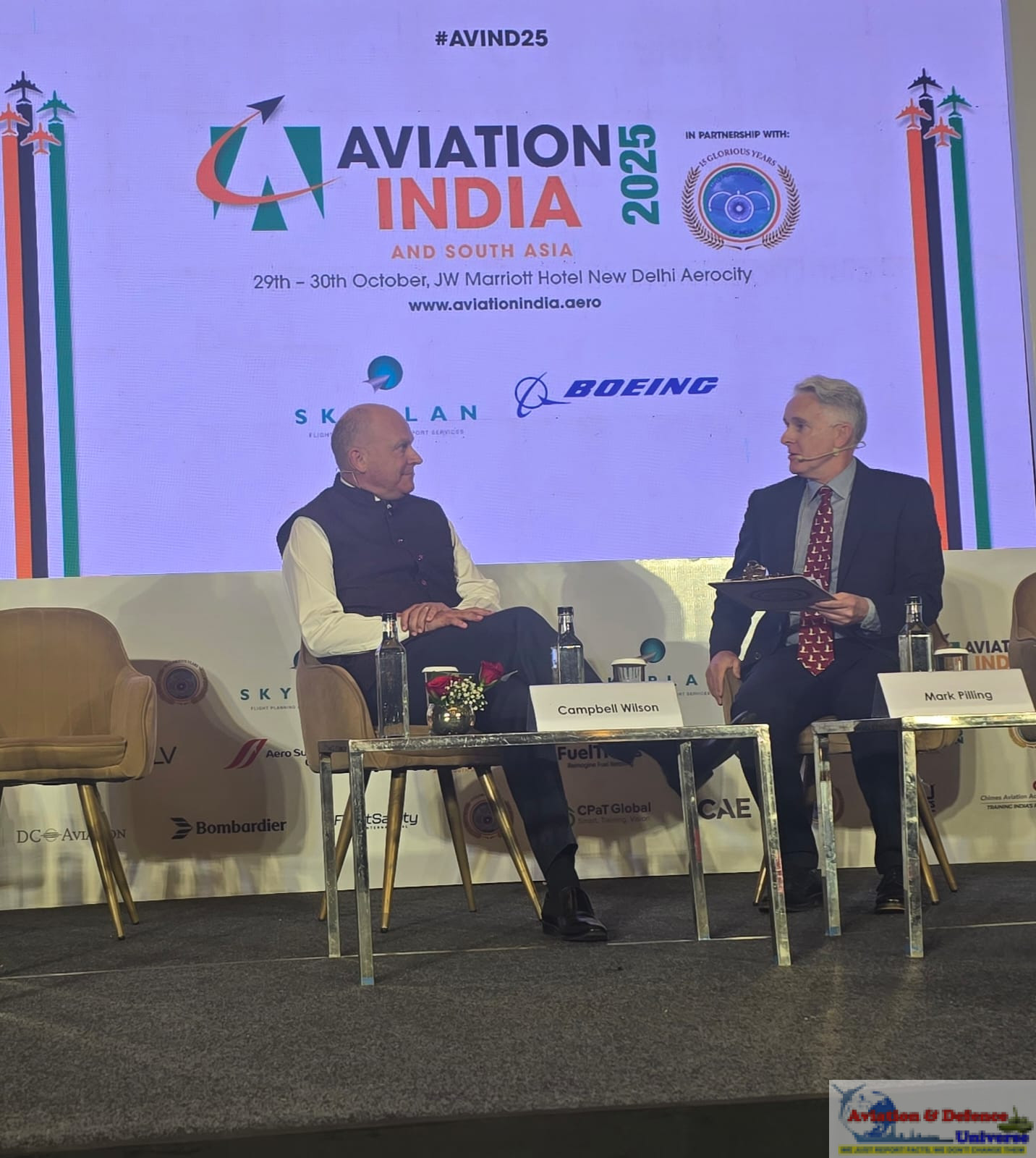
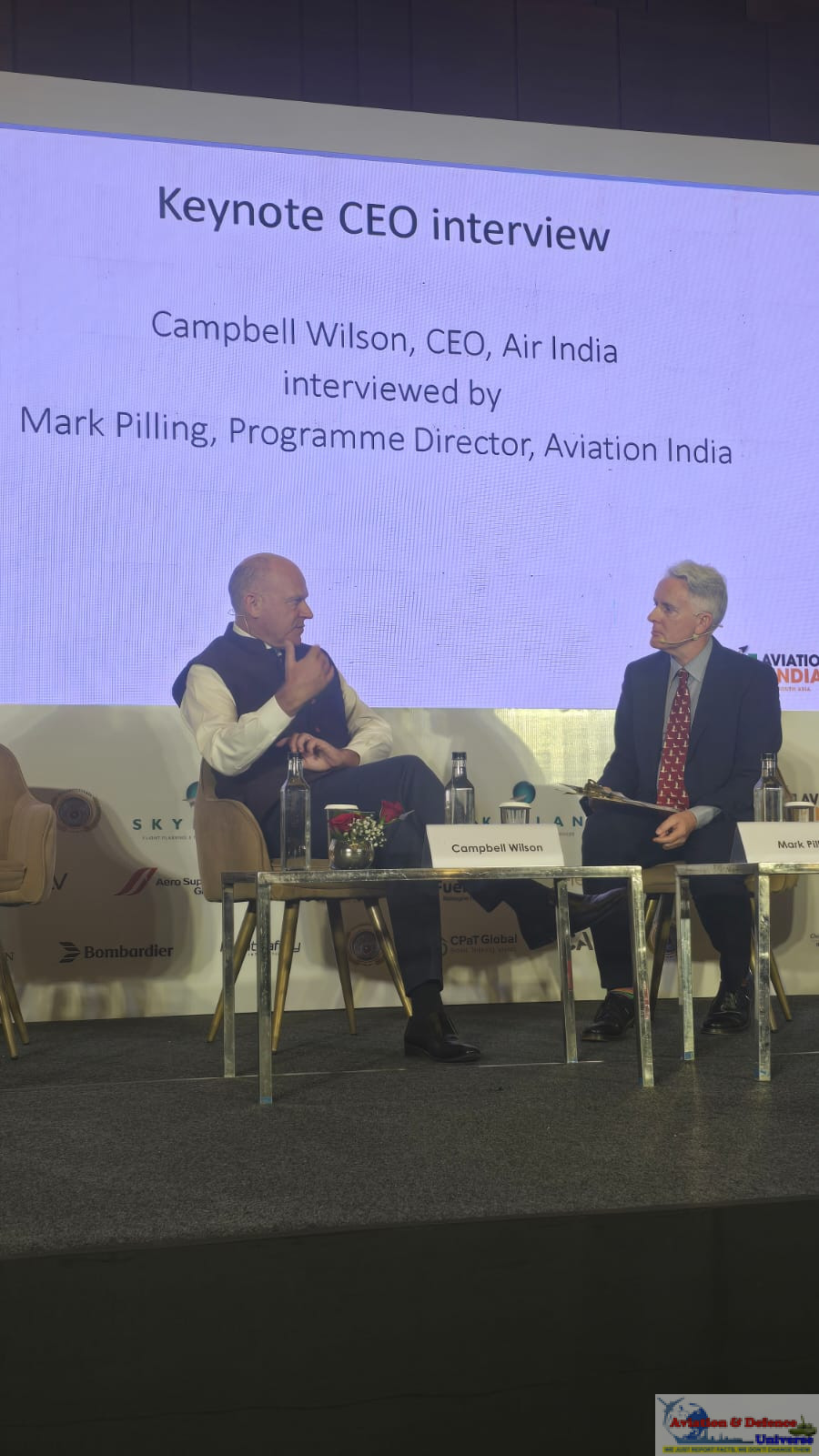
New Delhi. 30 October 2025. There was expectancy in the conference hall at Aviation India 2025 and the audience sentiments were palpable with the memory of the 12th June Air India crash at Ahmedabad, as Campbell Wilson, CEO of Air India, outlined the national carrier’s ambitious transformation. Speaking candidly during a fireside chat with Mark Pilling , Programme Director , Aviation India, Wilson laid bare the scale, complexity, and passion fuelling Air India’s journey from a legacy airline into a globally competitive aviation powerhouse. His remarks revealed a rare blend of vision, strategy and emotional authenticity, especially in the wake of recent tragedy.
 “For us to compete with the likes of Emirates, Singapore Airlines, Qatar Airways, Turkish—you need to be as good,” said Wilson. “You need to benchmark against these people and aspire to be even better.” He urged attendees to experience the Air India A350, adding, “I think you will find that the product stacks up very competitively to any one of those airlines… the added advantage, of course, is that it’s a non-stop service from India to New York, London, and eventually anywhere else we fly.” With a target of nearly 50 international destinations, Wilson emphasized that Air India’s transformation is not just about better service, but also convenience and time—crucial for the vast Indian diaspora.
Addressing the tragic events of June 12, Wilson expressed deep sorrow: “It’s absolutely devastating for the people involved… for the families and those involved, for the company, the staff.” He shared how Tata had established a trust to provide interim compensation and how more than 600 people were on the ground in Ahmedabad to support the affected.
“We’re doing absolutely everything we can to support those affected,” he said. “The interim report indicated that there was nothing wrong with the aircraft, the engines, or the operation of the airline… but our focus is on those affected and making sure that we help them in the best way we can.”
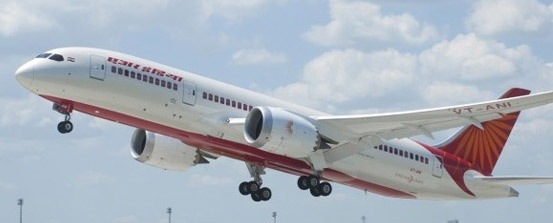 Wilson reiterated that Air India’s transformation is a long-haul commitment. “The transformation would take five years… and supply chain challenges may stretch that by six months or so.” The numbers are staggering. From just over 100 aircraft to nearly 300 today, and a firm order of 524 more, Air India is expected to take delivery of one aircraft every six days. “2026 is when we truly start seeing… the new Air India properly emerge,” Wilson said. The wide-body fleet will see a ramp-up, with new deliveries every six weeks and refurbishment of all 787s and 777s. “The first wide-body aircraft with that new product comes out, let’s hope, in January 2026,” he noted, adding that building and certifying a new first-class seat takes nearly seven years.
Transformation goes beyond aircraft. Wilson detailed the parallel expansion of infrastructure: “We need to prepare the organisation… building simulators, training academies for crew, engineer schools, MRO base, HR, marketing, IT—everything.” He acknowledged the challenges: “The pool of talent that is experienced in working with large global airlines… is just not as developed as it is in places that have matured earlier.” Yet, he saw promise: “It’s incredibly exciting and incredibly fulfilling because we are seizing this opportunity which is maybe once in a generation.” Air India’s investment in pilot training, simulators, and MROs is strategic. “To be entirely reliant on third-party providers carries a very significant degree of risk,” Wilson noted, especially given India’s evolving ecosystem.
On the matter of liberalisation, Wilson cautioned against premature moves. “If the pace of liberalisation is 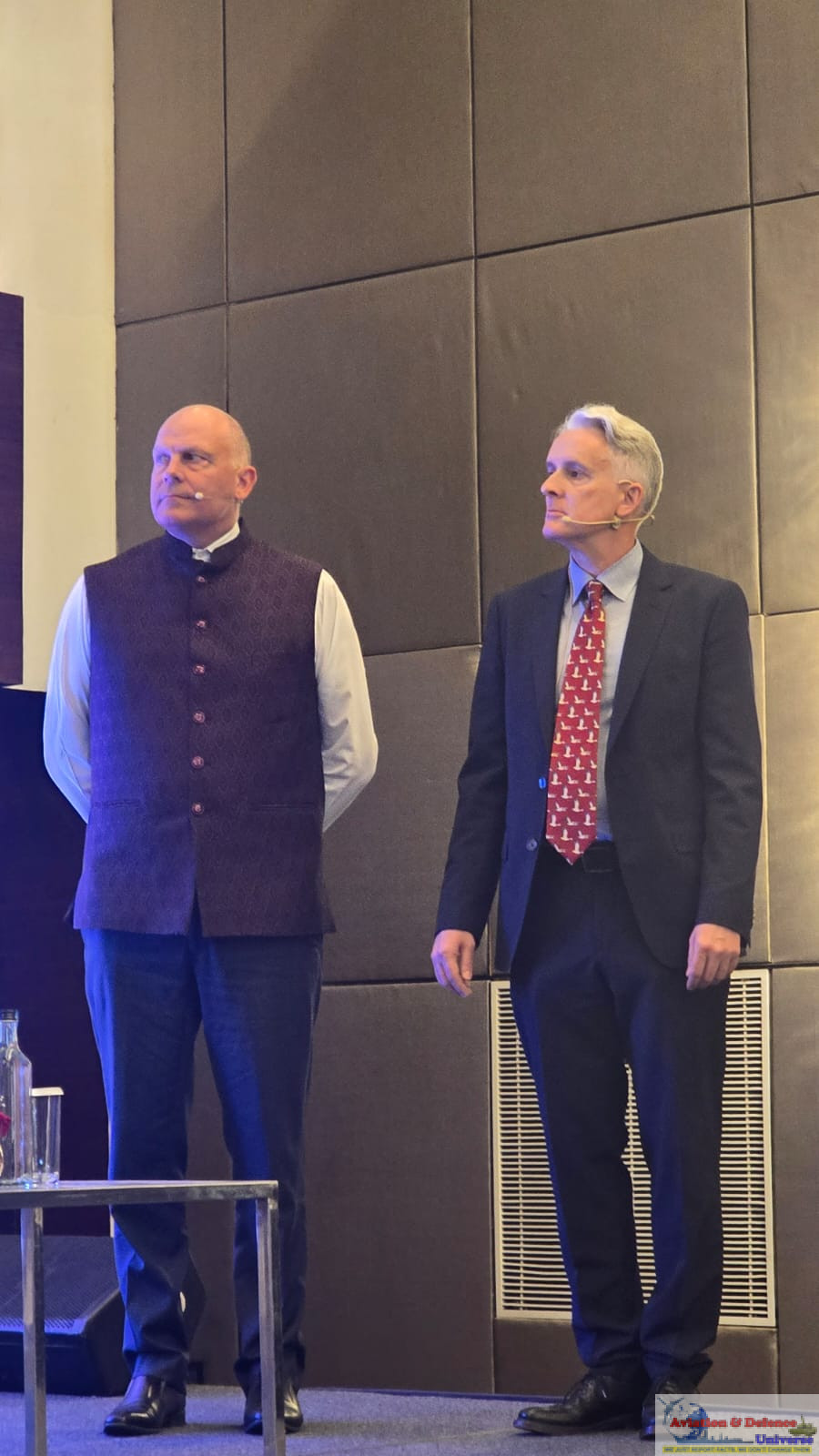 too much, it completely undercuts the investment pace that we’re making,” he said. “India is still, in some respects, a developing country the pace is not dictated to by the most developed.” He argued for a balanced approach that enables Indian carriers to mature and meet market expectations. The year posed unexpected challenges. “Aside from AI171, there was the war with Pakistan… the Israel-Iran conflict… the continuing closure of Pakistan airspace… constraints on H1B visas… 50% tariff by Mr. Trump,” Wilson listed. These, he said, were unprecedented shocks. “It is challenging, but… the shareholders are committed to the vision. We just have to navigate the challenges as they come.” Financially, the impact has been significant. “It’s been reported that the airspace approaches that we face alone will be in the order of 4,000 crore… 4,500 billion US dollars.”
And yet, despite the turbulence, the momentum is palpable. “The 350 is already present on a number of routes… by 2027, 2028, it will be even more so,” Wilson said. From a fragmented industry to one consolidating under vision, capital, and execution, Air India’s transformation story is unfolding in real time. As Wilson concluded, “Now is the time to execute, execute, execute.”
As Air India embarks on its most ambitious transformation in history, one of the less visible—but most crucial—pillars of its revival lies in its training and maintenance infrastructure. Under CEO Campbell Wilson’s leadership, the airline has moved decisively to develop a self-sustaining aviation ecosystem, anchored in pilot training, cabin crew development, and MRO (Maintenance, Repair & Overhaul) capability. “The reason we’re investing in these areas,” Wilson explained, “is because we see them as absolutely strategic—what enables the airline, the growth, the quality, and consistency of culture we want.” He noted that relying solely on third-party providers poses “a significant degree of risk, especially for an airline of this size and growth base.” Air India’s new joint venture with Airbus for a pilot training academy features over 10 simulators, with additional partnerships planned for narrowbody and widebody fleets. The airline is also expanding its engineering schools, MRO bases, and training academies, aiming to train thousands of new pilots, engineers, and cabin crew to support its fleet of 524 incoming aircraft.
 Given India’s still-developing aviation training ecosystem, Air India’s initiative fills a critical national gap. “The pool of talent experienced in working with large, world-class airlines is still not as developed here,” Wilson observed. “We’re trying to move a lot of parts at the same time, but it’s incredibly exciting and fulfilling because this is a once-in-a-generation opportunity to transform India’s aviation landscape.” The airline’s ecosystem strategy aligns perfectly with the national push for Atmanirbhar Bharat—self-reliance in aviation technology, engineering, and human capital. By reducing dependency on foreign maintenance facilities and external training programs, Air India is not just preparing for its own future but also strengthening India’s aviation industry as a whole.
As Air India races forward on its multi-year transformation journey, its strategic playbook is unfolding on the world stage with unprecedented scale. From historic fleet orders to international route expansion and wide-body revival, the Tata-owned carrier is positioning itself not just as India’s flag-bearer but as a serious global player. The roadmap is bold, the numbers are staggering — and the intent unmistakable. Air India is not simply returning to the skies; it is redefining India’s presence in global aviation.
In one of the most ambitious re-fleeting efforts ever undertaken, Air India has placed firm orders for 540 aircraft, spanning narrow-bodies and wide-bodies from both Airbus and Boeing. According to CEO Campbell Wilson, the airline will continue taking delivery of one new aircraft every six days for the next several years — a pace of growth that rivals the world’s top carriers.
This aggressive induction strategy is more than just about numbers. It reflects a deliberate move to standardise, modernise, and optimise the fleet for efficiency, passenger comfort, and network flexibility. “The fleet coming in now will replace older aircraft and fuel our expansion,” Wilson explained at the Aviation India & South Asia 2025 summit.
 One of the most exciting phases begins in 2026, when Air India’s wide-body operations — long seen as the crown jewel of full-service international flying — will truly take flight again. “From 2026 onwards, we start to ramp up wide-body inductions,” Wilson said, “with a new wide-body arriving every six weeks for the next two years.” The airline’s Boeing 787 Dreamliner fleet is undergoing full refurbishment, with all 26 aircraft to be upgraded by mid-2027. In parallel, the Boeing 777 fleet will also see cabin refurbishments between late 2026 and early 2028, providing consistent international product quality. This transformation will align the Air India passenger experience with global premium benchmarks and allow it to compete head-to-head with the Gulf majors and Southeast Asian giants.
The timing of Air India’s global ambitions couldn’t be better. As the world emerges from post-pandemic recovery, Air India is reclaiming its place in key high-yield global routes — with a focus on hubs like London, North America, and Southeast Asia.
“Every airline in the world landing in London sees it as more than a destination — it’s a symbol of international credibility,” Wilson noted. The launch of new routes to the U.S., Canada, and Europe, alongside resumed connections to Asia, underscores a wider strategy to capture diaspora travel, connect business hubs, and offer direct, non-stop services out of India — a value proposition long underserved.
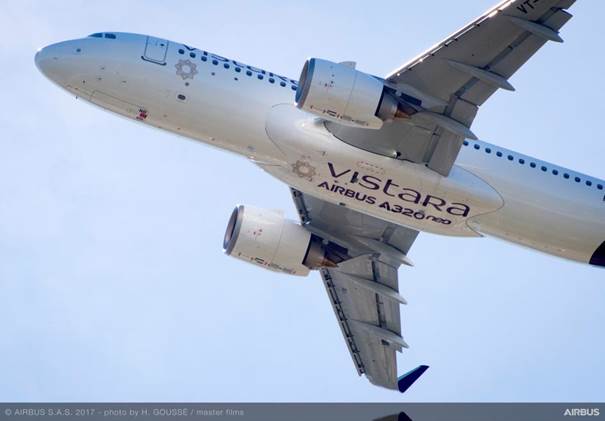 Beyond hardware, Air India’s transformation is equally structural. In the past 18 months, it has merged four airlines (Air India, Air India Express, Vistara, and AirAsia India), inducted over 100 aircraft, replatformed 140+ IT systems, consolidated 63 offices and hired over 9,000 new personnel. The consolidation of multiple entities into a unified airline under the Tata Group is enabling operational synergies, integrated branding, and seamless connectivity — critical ingredients in building a truly global Indian airline. Air India’s aspirations are not just commercial — they are symbolic. As India emerges as the world’s third-largest aviation market, it needs a carrier that can represent the country’s modern spirit, service quality, and global standing. The new Air India is designed to fulfil this role. “We are laying the foundations for an airline that is resilient, relevant, and revered,” said Wilson, summing up the vision. From aircraft deliveries and wide-body revival to premium passenger experience and global branding, Air India is positioning itself not just for growth — but for leadership.
As Air India embarks on its most ambitious transformation in history, one of the less visible—but most crucial—pillars of its revival lies in its training and maintenance infrastructure. Under CEO Campbell Wilson’s leadership, the airline has moved decisively to develop a self-sustaining aviation ecosystem, anchored in pilot training, cabin crew development, and MRO (Maintenance, Repair & Overhaul) capability.
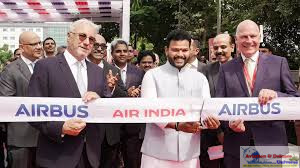
“The reason we’re investing in these areas,” Wilson explained, “is because we see them as absolutely strategic—what enables the airline, the growth, the quality, and consistency of culture we want.” He noted that relying solely on third-party providers poses “a significant degree of risk, especially for an airline of this size and growth base.” Air India’s new joint venture with Airbus for a pilot training academy features over 10 simulators, with additional partnerships planned for narrowbody and widebody fleets. The airline is also expanding its engineering schools, MRO bases, and training academies, aiming to train thousands of new pilots, engineers, and cabin crew to support its fleet of 524 incoming aircraft.
Given India’s still-developing aviation training ecosystem, Air India’s initiative fills a critical national gap. “The pool of talent experienced in working with large, world-class airlines is still not as developed here,” Wilson observed. “We’re trying to move a lot of parts at the same time, but it’s incredibly exciting and fulfilling because this is a once-in-a-generation opportunity to transform India’s aviation landscape.”
The airline’s ecosystem strategy aligns perfectly with the national push for Atmanirbhar Bharat—self-reliance in aviation technology, engineering, and human capital. By reducing dependency on foreign maintenance facilities and external training programs, Air India is not just preparing for its own future but also strengthening India’s aviation industry as a whole.
As Campbell Wilson observed, “There are other things we would like to do… but we’ve already got a huge amount on our plate and we want to make sure that we don’t stretch ourselves too thin.” The focus now is on execution — building each layer of capability before scaling further.
In essence, Air India’s transformation is as much about the skies as it is about the ground. Aircraft, after all, may define an airline’s image, but infrastructure defines its longevity. By investing in MRO and training from the ground up, Air India is ensuring that its ascent is not just spectacular — but sustainable.
As the conversation drew to a close, it became evident that Campbell Wilson’s leadership philosophy is grounded as much in empathy as it is in execution. His reflections at Aviation India 2025 offered a poignant reminder that transformation in aviation is not merely about fleet size, route expansion, or tech integration—it is about people, purpose, and resilience. From confronting crisis with transparency to spearheading Air India’s unprecedented scale-up, Wilson reinforced the airline’s dual commitment: to honour its legacy while shaping a bold, global future. His remarks set a dignified tone for the summit—one where compassion, ambition, and accountability converge to define the next era of Indian aviation.