












- CEO Aloke Singh on Scaling Smart: How Air India Express is Redefining LCC
- From Merger to Momentum: Air India Express Charts Its Next Leap
- The Tata Group’s low-cost arm is growing fast — focused, disciplined, and ready for a 189-seat future.
By Sangeeta Saxena
New Delhi. 03 November 2025. India’s low-cost aviation segment is witnessing a new wave of transformation — and at its forefront is Air India Express, the value-driven arm of the Tata-owned Air India Group. Under the leadership of Aloke Singh, Managing Director & CEO, the airline has grown into the third-largest narrow-body operator in India, combining the agility of a start-up with the discipline of a global network carrier.
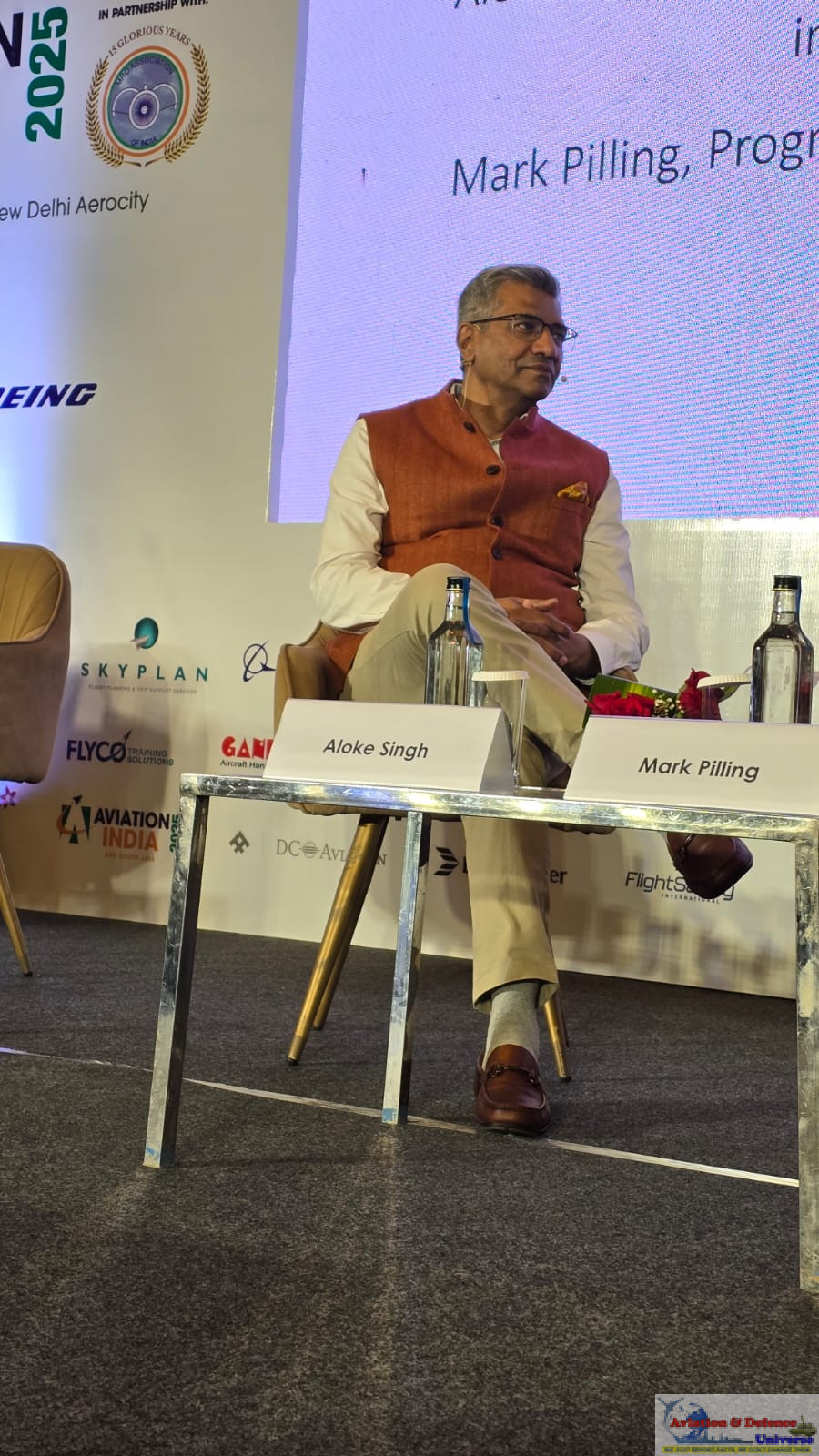 Speaking to Mark Pilling, Programme Director of Aviation India 2025, Singh outlined how Air India Express has evolved from a niche international player into a strategic low-cost powerhouse focused on small cities, short-haul international routes and the fast-growing domesticcorridor. With a clear vision, a unified team, and a scalable model, Singh’s narrative reflected a company balancing rapid expansion with operational precision.
“The important thing is that this scale and size we have reached in a very short period of time — just a matter of about 20 odd months,” said Singh, underscoring how the merger of AirAsia India and Air India Express has already begun delivering synergies. With over 110 aircraft, an integrated operations control system, a common crew pool, and a fleet of Boeing 737 MAXs being retrofitted for uniformity, the airline’s focus is on doubling capacity within five years — and doing so profitably.
“We will stay true to the LCC model — focusing on efficiency and agility,” Singh emphasised. Air India Express, the original Air India Express, was a niche carrier. It was primarily short-haul international and a very narrow corridor. AirAsia India was all domestic but sub-scale, and then we merged the two entities together, ” he remarked.
The reimagined Air India Express is no longer a small-scale regional player but the low-cost arm of the Tata aviation ecosystem, complementing the full-service Air India. It now caters to India’s fastest-growing passenger segment — leisure travellers, SMEs, and value-conscious fliers — by keeping costs low and efficiency high.
“Our focus primarily is what we call the Metro to Tier 2 and Tier 3 systems — which is the bulk of the India domestic market. Anything which is in the range of about five to six hours from India will be in the Air India Express focus.” The strategy is simple yet sharp — while Air India flies long-haul and premium routes, Air India Express owns the short-haul and regional space, strengthening the group’s presence end-to-end.
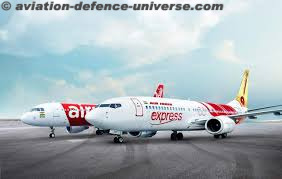 A peep into this airlines history and it’s journey of twenty years , tells a story which can be told and retold. Air India Express was inaugurated on 29 April 2005 with three simultaneous flights from Thiruvananthapuram, Kochi, and Kozhikode, marking the launch of India’s first international low-cost carrier. Conceived as a subsidiary of Air India Limited, it aimed to provide affordable, point-to-point connectivity for the Indian expatriate community in the Middle East and Southeast Asia, responding to the global rise of budget airlines. In January 2013, the airline relocated its headquarters to Kochi and established a maintenance base in Thiruvananthapuram, maintaining profitability even as its parent company, Air India, faced financial strain. On 8 October 2021, as part of the government’s privatisation drive, Air India, Air India Express, and 50% of AISATS were sold to Talace Private Limited, a special-purpose vehicle of the Tata Group, for ₹18,000 crore, bringing the airline back under Tata ownership.
“The value segment that we are focused on is really about cost — how do we keep the cost structure low, how do we make sure that we are more efficient, more agile. Air India Express operates with a lean structure — a hallmark of global low-cost success stories. Almost everything in our setup is outsourced — our engineering is completely outsourced except for line maintenance. Our management is outsourced. We were surprised that the structure we have got is really, really efficient — and we want to keep it that way, ” Aloke explained.
The airline’s Integrated Operations Control Centre (IOCC) is co-located, and its flight crew share common seniority and career paths, allowing for rapid fleet and route flexibility. If there is a route that demands a different model, the airline can switch that very quickly. When the legal merger took effect, the transition was seamless. They were literally integrated overnight. There was absolutely no disruption, as per Singh.
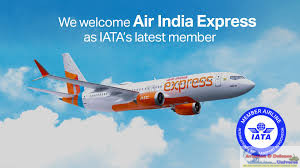 “For us, the transformation plan broadly has the same pillars — operations, financials, and people. With 57 Boeing 737 MAX aircraft undergoing refitting to increase seating capacity and standardise configuration, the airline is driving cost per seat lower — a key differentiator in the price-sensitive Indian market. We want to get the volume under control. On the 737, we will have 189 seats, one class. We will go up almost 30% in seat capacity — giving us a huge unit cost advantage. The focus on scalability is matched with a disciplined operational approach. We will stay true to the LCC model — focusing on efficiency and agility,” he stated.
In 2023, Tata Group initiated the consolidation of its four airlines into two — a full-service carrier (Air India and Vistara) and a low-cost carrier (Air India Express and AirAsia India, rebranded as AIX Connect). The merger, approved by the Competition Commission of India, was completed on 1 October 2024, with AIX Connect transferring its aircraft and crew to Air India Express. The rebranded Air India Express, unveiled on 18 October 2023, introduced a new logo, livery, and website, positioning itself as a dynamic, budget-friendly carrier with a focus on non-trunk routes, ancillary revenue, and short-haul international connectivity. By the time of the merger, the airline’s fleet had reached 88 aircraft, expected to grow to 100 by the end of 2024, supported by a 7,000-strong workforce — symbolising a new chapter in the Tata Group’s vision for an integrated aviation ecosystem.
The synergy with Air India ensures that both brands reinforce each other — one serving premium customers, the other connecting Bharat’s growing middle-class traveller base. With shared systems, procurement, and training infrastructure, Air India Express benefits from the Tata Group’s scale economics while retaining its entrepreneurial independence.
 “Our flights can be sold as an Air India flight number globally, but not vice versa. It is better for a full-service entity to sell the low-cost product — the customer proposition becomes simpler. Almost one-third of our traffic today is connected through the group. Network planning is done jointly. Overlaps are minimal — probably not more than 5 to 7% in terms of city pairs , ” informed Singh.
“Domestic India is critically important, but we can’t be everywhere. We would rather focus capacity on a narrower set of routes and grow to significance. Air India Express is expanding with discipline — focusing on depth before breadth. Our pan-India market share is about 11.5%, but on the city pairs we operate, we want to be at least one-third of the capacity. It’s better for us to grow deep first and wide later,” he observed. The airline’s hubs at Bangalore, Navi Mumbai, and Delhi are being developed strategically, with Navi Mumbai expected to become a major operational base when the new airport opens.
As India’s aviation ecosystem continues to expand, Air India Express stands as a vital pillar of the Tata Group’s unified airline vision — connecting emerging cities, democratising air travel, and powering India’s rise as a global aviation hub. With Aloke Singh steering the low-cost carrier through a phase of high-velocity growth and integration, the airline is set to embody the group’s larger transformation philosophy — synergy without sameness, growth with discipline, and ambition rooted in efficiency.
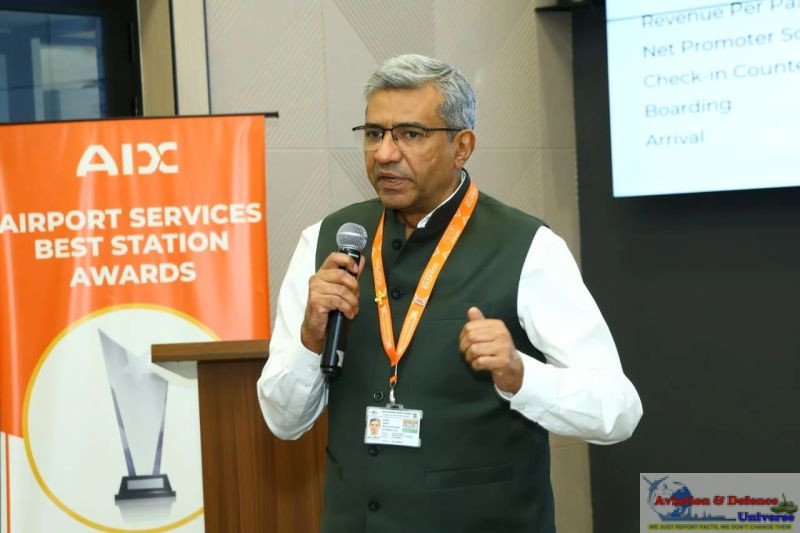 “The scale and size we have reached in just 20 months — that’s our biggest success,” said Aloke Singh, emphasising the rapid progress of Air India Express since its merger and transformation under the Tata Group. “We will stay true to the LCC model — focusing on efficiency and agility,” he asserted, underlining the airline’s commitment to maintaining a lean and responsive operating structure. “Almost everything in our setup is outsourced — we are lean by design,” Singh added, highlighting the carrier’s focus on cost optimisation and operational flexibility. With a clear and disciplined growth strategy, he noted, “It’s better for us to grow deep first and wide later,” reflecting the airline’s focus on strengthening its core markets before broad expansion. “One-third of our traffic today is connected through the group — synergy, not overlap,” Singh concluded, illustrating how Air India Express’s growth is rooted in collaboration within the Tata aviation ecosystem.
“It’s better for us to grow deep first and wide later,” Singh concluded — a simple yet strategic reflection of how Air India Express plans to own the skies that connect Bharat to the world.