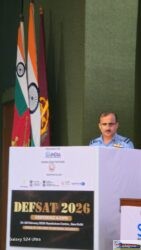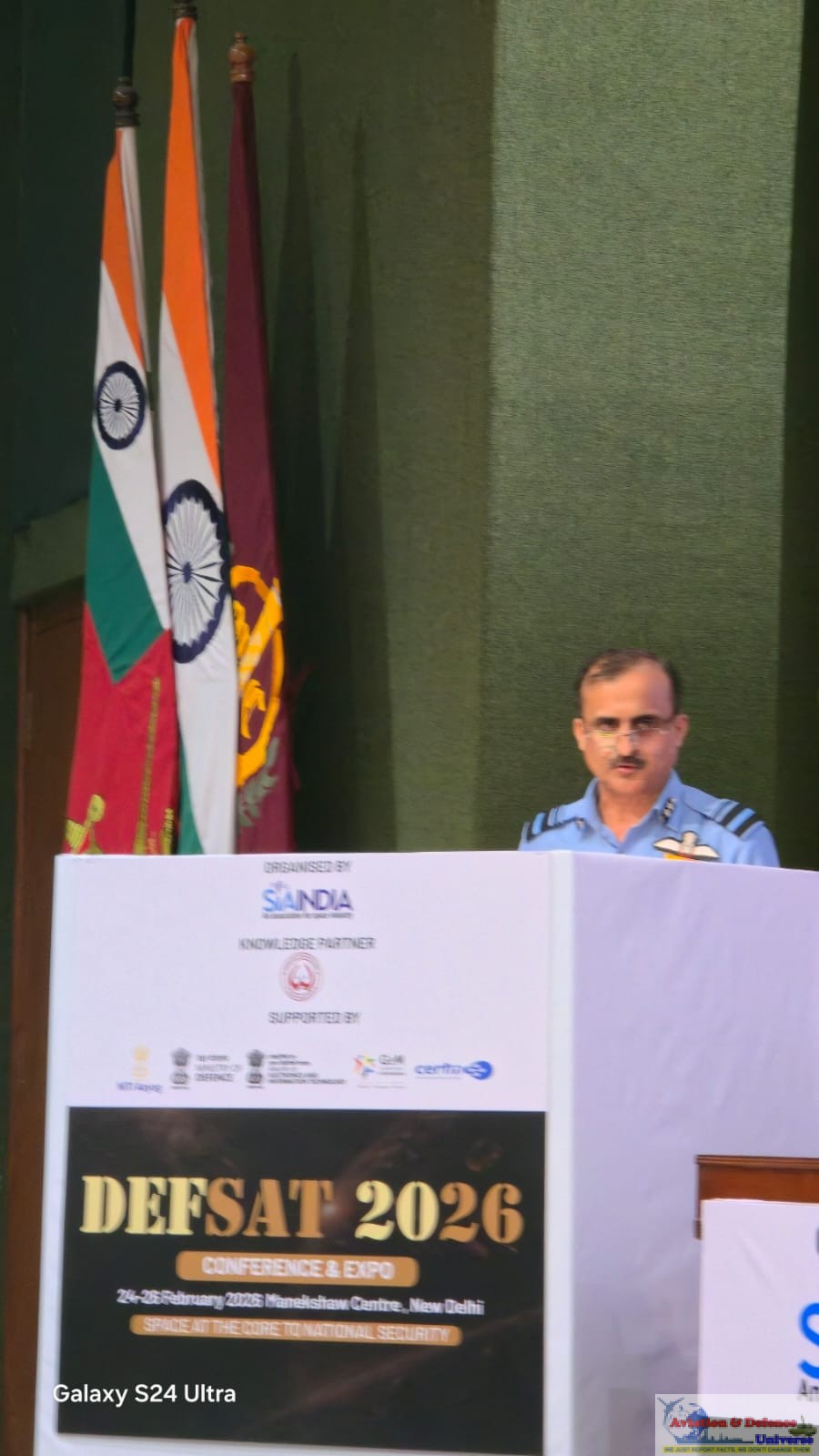

























- SIA-India announces its flagship DEFSAT 2026 Conference & Exposition, scheduled from 24th–26th February 2026 at the Manekshaw Centre, New Delhi
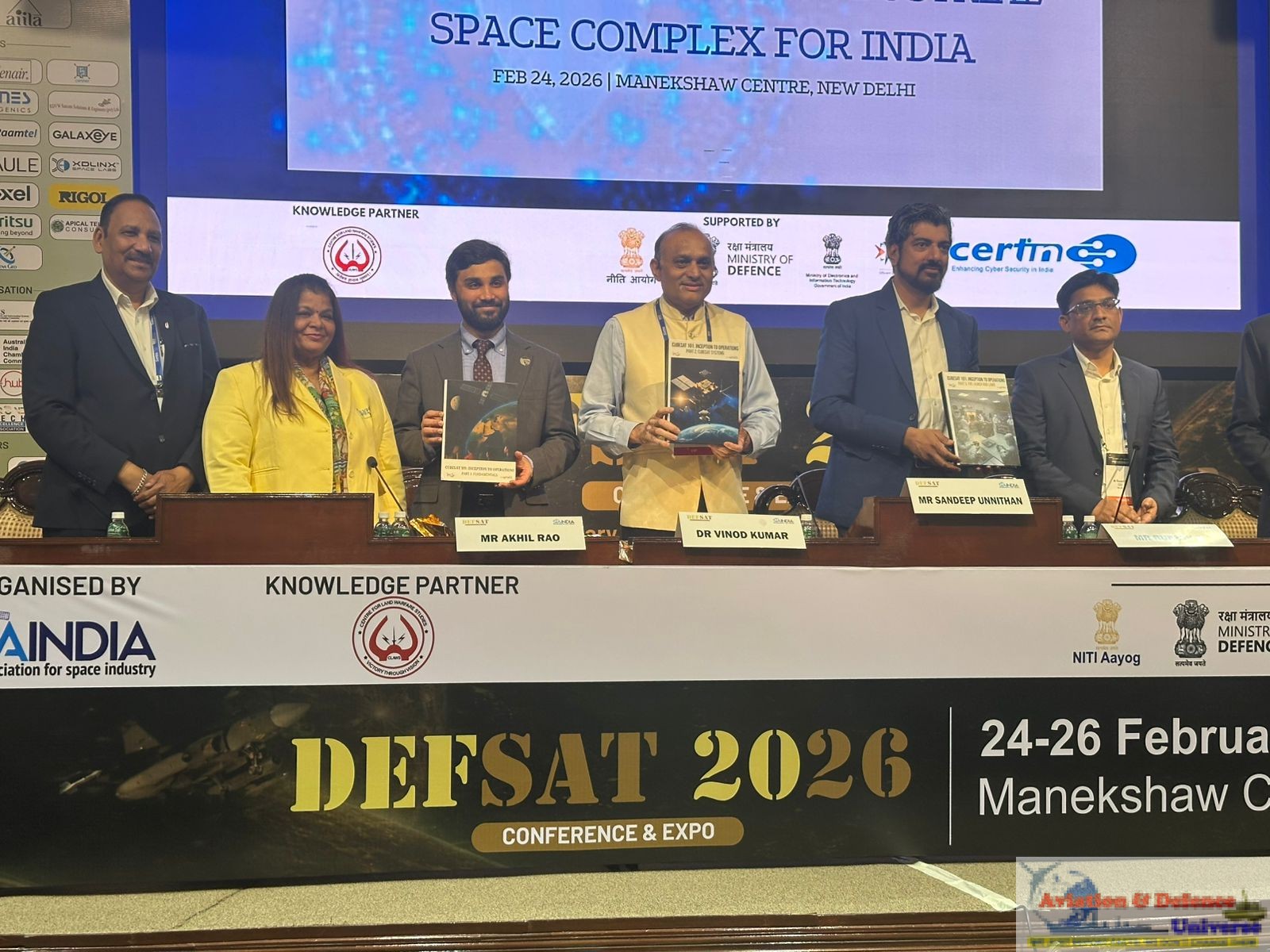
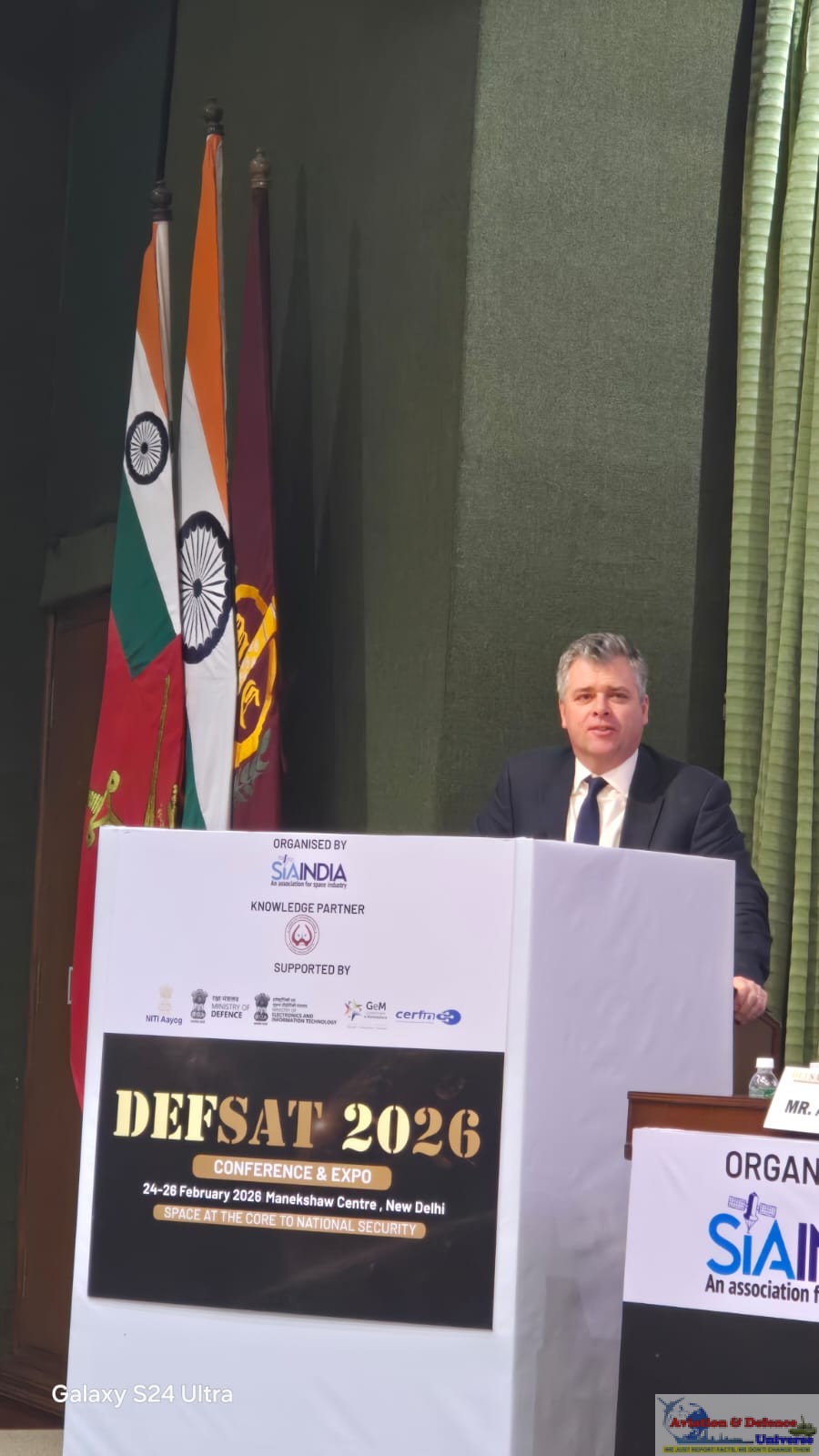
New Delhi . 22 January 2026. The 4th edition of DEFSAT adopts the theme “Space at the Core of National Security,” as SIA-India announces its flagship DEFSAT 2026 Conference & Exposition, scheduled from 24th–26th February 2026 at the Manekshaw Centre, New Delhi. The event will convene over 1,000 stakeholders from the Armed Forces, government, industry, academia, and the diplomatic community, including global defence attaches, to deliberate on a forward-looking roadmap for India’s defence–space doctrine.
Space has become central to national security, underpinning surveillance, secure communications, navigation, and decision-making across military and internal security operations, while increasingly emerging as a contested operational domain in its own right. Today, an estimated 70–80% of modern military operations rely directly on space-based capabilities for intelligence, command and control, precision targeting, and logistics, with more than 50 countries operating satellites for military or dual-use purposes.
Globally, several hundred military and dual-use satellites are operating, with open-source estimates placing the number of dedicated military satellites at around 600 worldwide led by the United States, China, and Russia. India currently operates a limited but critical set of defence and dual-use satellites, driven by the Space-Based Surveillance (SBS-III) programme, which involves the rapid development and launch of 52 dedicated surveillance satellites. This accelerating militarisation of space makes satellites indispensable yet increasingly vulnerable to cyber, electronic, and ASAT threats, reinforcing the need for trusted nations to collaborate on resilience, secure supply chains, and strategic autonomy, an imperative reflected in DEFSAT 2026’s dedicated Indo-global sessions bringing together global military leadership and industry.
From dialogue to doctrine, SIA-India has recently constituted the Strategic Defence Space Group (SSG), spearheaded by Lt Gen (Dr) PJS Pannu (Retd), PVSM, AVSM,VSM, a high-level, multi-stakeholder body shaped through multiple precursor roundtables. DEFSAT 2026 marks a strategic first with the formalisation of this Group, established to steer India’s long-term military space preparedness and institutionalise space as a warfighting and security domain.
The SSG brings together senior leadership from the armed forces, government, industry, and academia, creating a structured and enduring platform for national coordination across policy, capability development, and operational doctrine. It will also guide the design of escalation dynamics and contested-space scenarios for IndSpaceX 4.0, India’s first industry-led defence-space wargame tabletop exercise.
“The DEFSAT 2026 agenda reflects a shared assessment emerging from extensive strategic roundtables: defence today cannot afford an inward-looking lens. In an era of shifting geopolitics, security partnerships increasingly shape supply-chain resilience, access to critical technologies, and regulatory alignment. The Strategic Defence Space Group institutionalises a mechanism to translate strategic cooperation and global dialogue into doctrine, capability, and operational readiness.”
— Anil Prakash, Director General, SIA-India
Cyber operations, the fifth domain of warfare, can degrade battlefield effectiveness within hours by targeting satellite infrastructure, even without kinetic engagement, as seen in recent conflicts. Cyber intrusions, electronic warfare, and spoofing have disrupted precision strikes, unmanned platforms, and command networks across multiple theatres. As the quantum era emerges, these risks intensify: while quantum communications promise secure links, quantum computing threatens legacy satellite encryption. In this context, a concentrated three-day cyber campaign in May 2025 following Operation Sindoor, which alone accounted for over 1.5 million targeted attacks on India’s critical infrastructure, underscores a stark reality that space systems now sit at the intersection of cyber, electromagnetic, and emerging quantum vulnerabilities, making quantum-safe architectures essential to national security and long-term resilience.
“DefSat 2026 seeks to anchor a necessary shift in thinking: recognising space as critical infrastructure alongside articulating a coherent space–military doctrine. This marks an inflection point, strengthening fiscal, regulatory, and structural frameworks to accelerate growth and resilience, following strategic precedents set by leading countries. In today’s security environment, resilience is built not by avoiding disruption, but by designing systems that can function and adapt even under pressure.”
— Subbarao Pavuluri, President, SIA-India
Defence, homeland security, and civil defence operations in India increasingly require close coordination, with space-based capabilities acting as a common enabler. Satellites support border surveillance across over 15,000 km of land and maritime frontiers. Dedicated DEFSAT sessions on Internal Security, Homeland Security, and Civil Defence Operations will examine how integrated, space-enabled frameworks can strengthen coordination, decision-making, and operational continuity across these domains.
As India advances toward becoming a serious defence-space power, DEFSAT 2026 with CLAWS as knowledge partner, sends a clear signal of intent, that the nation will secure its space future through foresight, coordination, indigenous capability, and strategic resolve.
For those interested in the future of defence capabilities and the evolving landscape of space technology, register now at www.defsatindia.com