
















- A Handshake the World Watched: Modi received Putin personally
- A Strategic Partnership Expanding tom mobility between the people
- Commercial, Technological and Cultural Bonds That Go Beyond Geopolitics
- A Defence Partnership Built on Trust, Technology and Strategic Convergence
By Sangeeta Saxena
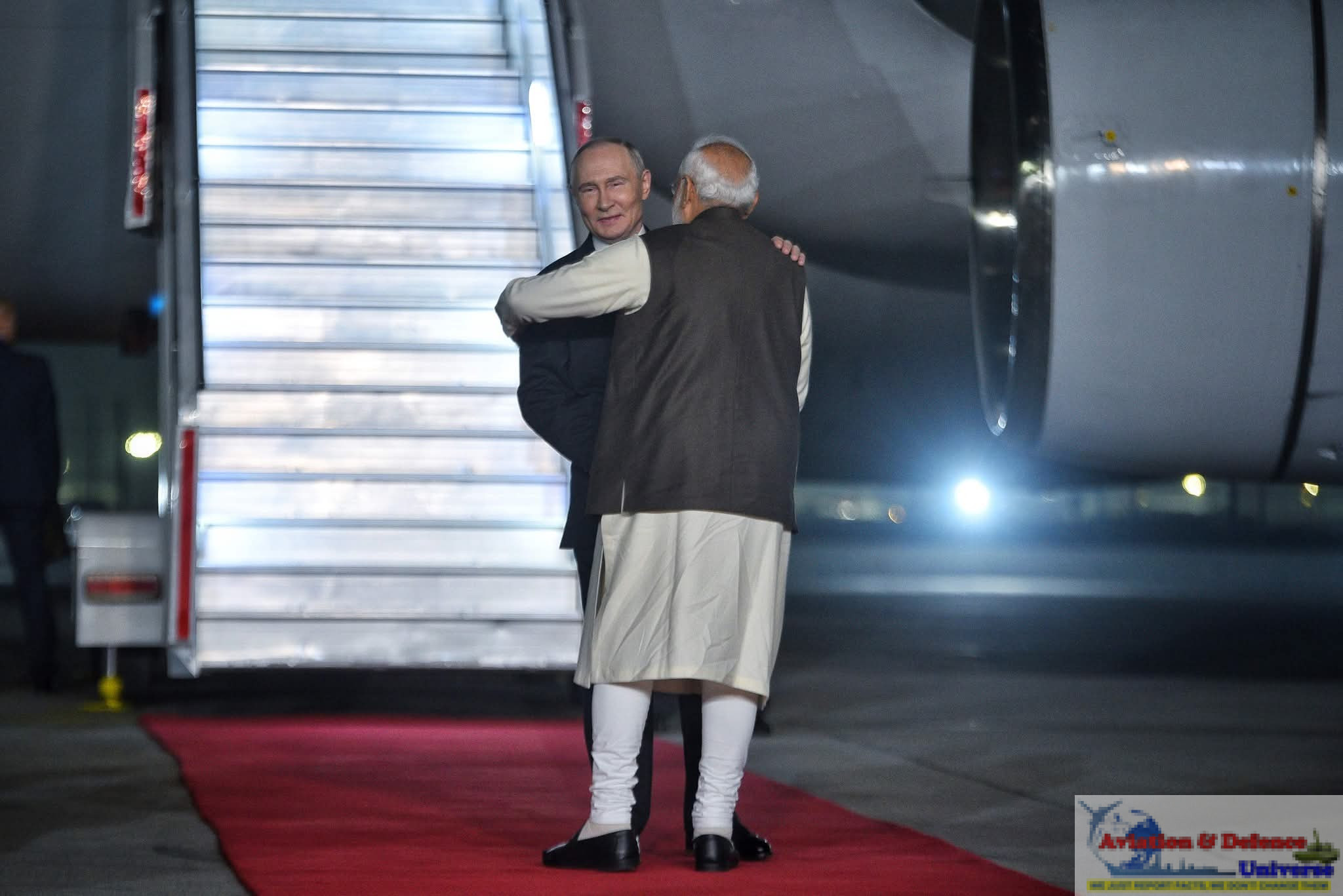
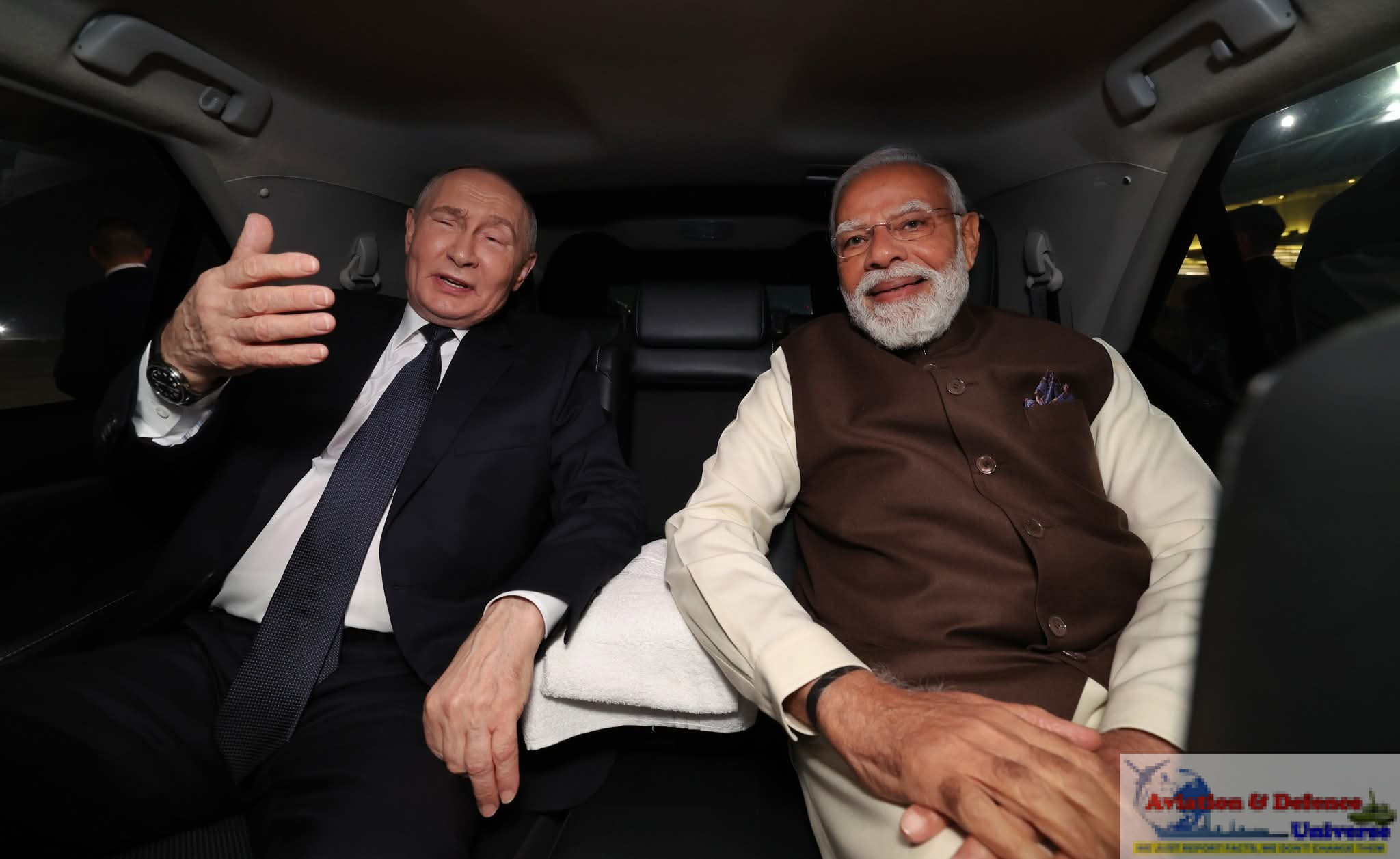
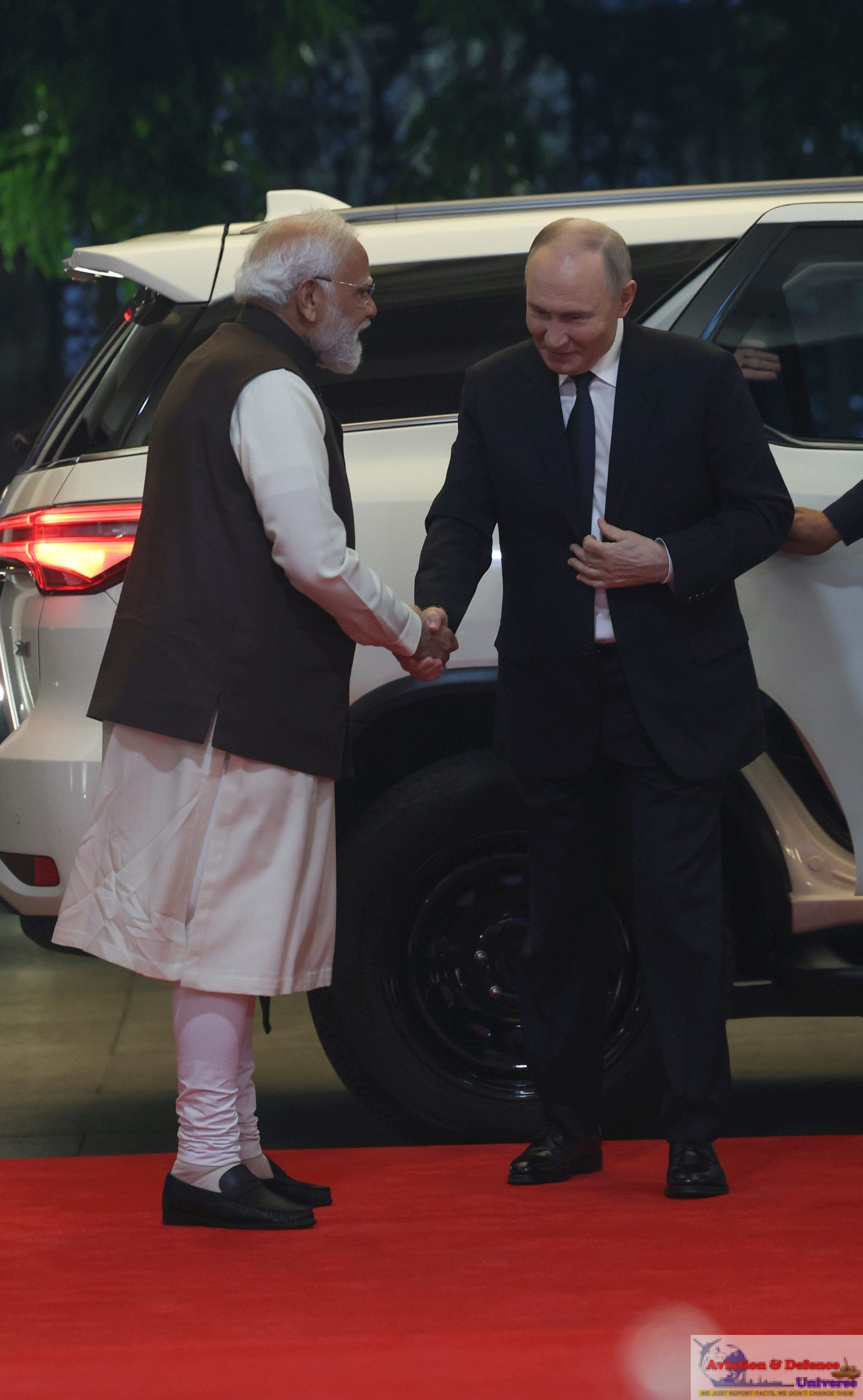
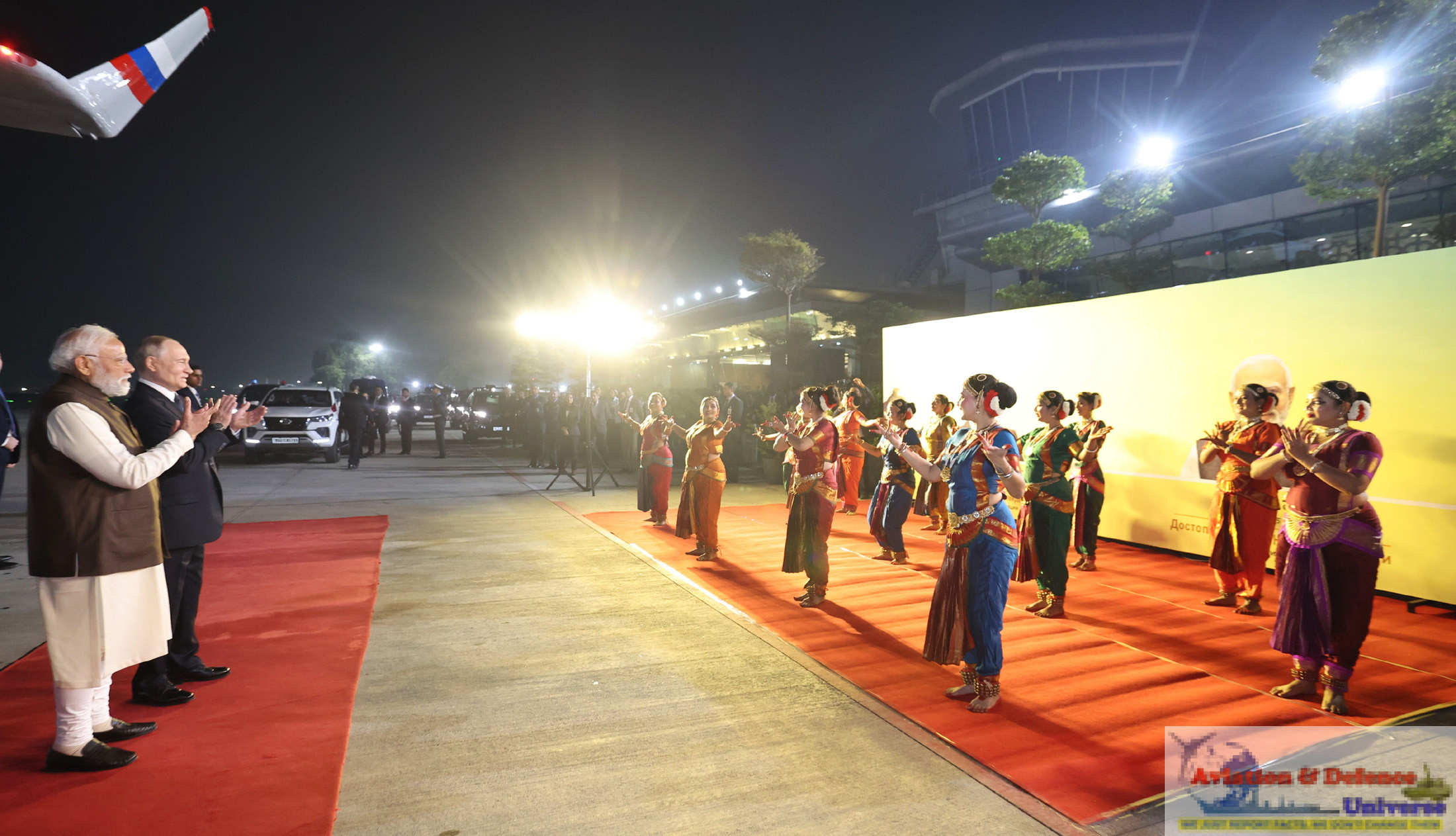
New Delhi. 04 December 2025. President Vladimir Putin arrives in India to a warm and grand reception by Prime Minister Modi, who waived off protocol to receive his friend both in need and indeed, as he stepped on the Indian soil. A visit the world Is closely watching. In a moment charged with diplomatic significance, Russian President Vladimir Putin arrived in New Delhi today, touching down at the Palam Technical Area to begin one of the most keenly observed international visits of the year. As the aircraft’s door opened, Prime Minister Narendra Modi stood at the foot of the staircase, extending a warm personal welcome—an unmistakable signal of the importance India attaches to this high-profile engagement.
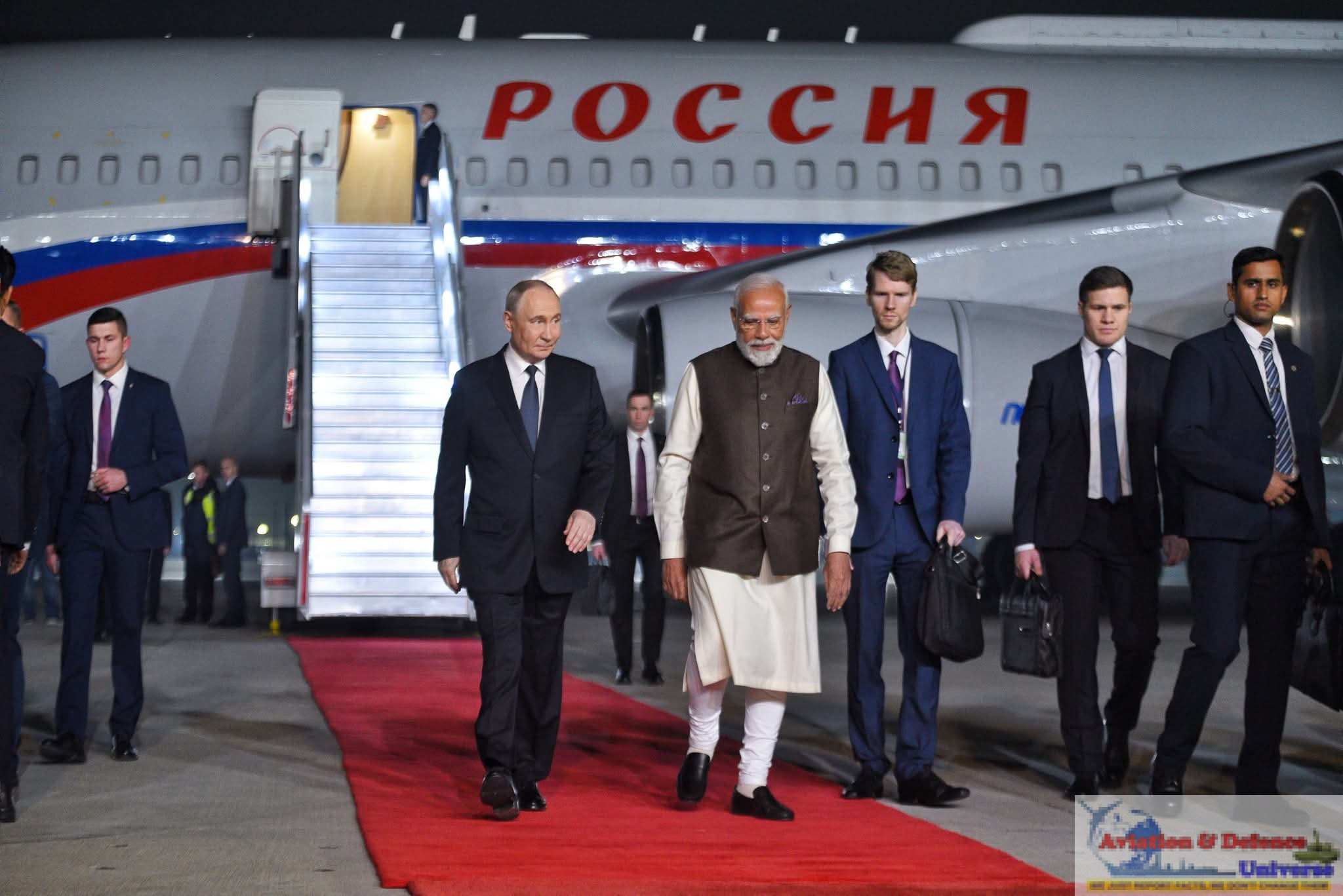 The tarmac reception was marked by precision, ceremony and symbolism. Against the backdrop of the winter sky, the two leaders exchanged a strong hug, firm handshake and warm smiles, capturing global attention as cameras from every major international network focused on New Delhi. The visit comes at a pivotal moment in world affairs, with geopolitical alignments shifting and global power centres recalibrating their strategic bearings.
For India and Russia, this visit represents not just another chapter in a long-standing partnership, but an opportunity to redefine their cooperation for a rapidly changing era. Defence, energy, nuclear collaboration, connectivity, trade mechanisms and regional security are all expected to feature prominently in the talks. But beyond the agenda lies an unmistakable sense of anticipation: the world is watching two influential nations signal how they intend to shape the future.
 India and Russia share a deeply rooted historical relationship that spans more than seven decades, built on mutual trust, geopolitical alignment and people-to-people goodwill. From the early years of India’s independence, the former Soviet Union emerged as one of its most steadfast partners—supporting India’s industrialisation, infrastructure development, scientific research and space ambitions. Iconic projects such as the Bhilai Steel Plant, collaborations in nuclear energy, early space cooperation and India’s first astronaut’s space flight have all laid the foundation for a strategic partnership that endured through the Cold War and beyond. The USSR consistently backed India during critical moments, including UNSC deliberations on Kashmir and during the 1971 Indo-Pak conflict, cementing a sense of reliability that continues to shape bilateral ties today. Over time, cultural exchanges—from literature and cinema to education and tourism—further strengthened this bond, making India–Russia relations one of the most enduring and trusted partnerships in global diplomacy.
The two share a relationship that is both historic and forward-looking, anchored in mutual trust and strengthened through decades of cooperation across defence, technology, trade and culture. As the global landscape undergoes rapid transformation, the partnership continues to evolve—deepening in strategic relevance while broadening into new domains such as mobility, talent exchange and niche technology collaboration.
The defence-centric relationship between India and Russia remains the bedrock of their bilateral ties. For over five decades, Russia has been India’s most dependable partner in building military capability, supplying advanced fighter aircraft, submarines, tanks, air defence systems and missile platforms. Joint projects such as the BrahMos supersonic cruise missile underscore a rare level of technological collaboration and mutual confidence.
 Beyond legacy procurement, the partnership has matured into co-development and co-production aligned with India’s vision of Aatmanirbhar Bharat. Russian willingness to support domestic manufacturing, offer long-term spares and lifecycle support, and collaborate on futuristic technologies reinforces the central role of this cooperation in India’s national security architecture. In an era marked by complex geopolitical shifts, the India–Russia defence relationship continues to provide stability across Eurasia and the Indo-Pacific.
India and Russia also share a dynamic relationship across trade, energy, science and culture. Commercial exchanges have grown substantially in recent years, particularly in hydrocarbons, nuclear power, pharmaceuticals and diamonds. Russia has become a critical energy partner, supplying crude oil at scale and collaborating in major infrastructure ventures.
 On the technology front, cooperation spans space exploration, cyber research, artificial intelligence and advanced materials. ISRO and Roscosmos continue to expand joint missions, while scientific institutions on both sides are increasingly partnering on next-generation research.
Culturally, the connection is deep and enduring. Russian literature, arts and education have left an imprint on generations of Indians, while yoga, Bollywood and Indian cuisine enjoy remarkable popularity in Russia. These people-to-people ties are nurtured through student exchanges, tourism, cultural festivals and academic collaborations—adding a human dimension that strengthens bilateral understanding.
Complementing the strategic and commercial foundations of the relationship, the India–Russia Mobility Partnership Agreement if happens will mark a transformative step in bilateral cooperation. Designed to facilitate safe, legal and mutually beneficial migration, the agreement should enable skilled professionals, students and technical specialists to move more freely between the two nations.
 The framework supports India’s growing workforce participation in Russian sectors such as IT, healthcare, infrastructure and engineering, while opening pathways for Russian experts to contribute to India’s expanding innovation and research ecosystems. By institutionalising talent mobility, both countries aim to meet labour market needs, encourage knowledge transfer and create opportunities for long-term socio-economic collaboration. More importantly, the mobility agreement should modernise the India–Russia relationship—aligning it with global shifts toward talent-driven growth and positioning the partnership for relevance in the next decade.
From defence to technology, from energy to culture, and now from mobility to workforce integration, India and Russia continue to define a partnership that is both time-tested and adaptive. As both nations navigate a rapidly changing global order, their collaboration is evolving to meet new challenges—rooted in trust, strengthened by shared interests, and guided by a vision for mutual prosperity.
 From Washington to Brussels, Beijing to Tokyo, analysts, diplomats and strategists have their eyes trained on New Delhi today. Putin’s arrival underscores the enduring weight of India–Russia ties, even as global dynamics grow increasingly complex. For India, the visit is a delicate but powerful assertion of strategic autonomy; for Russia, it is a reaffirmation of a partnership that remains resilient across decades.
As President Putin’s motorcade rolled out of the airbase and the city prepared for high-level engagements, one thing became clear: this is not just a bilateral visit, but a moment of global consequence—one that will influence equations far beyond the borders of India and Russia.