

















- Beyond Western Umbrellas: The Emerging Muslim-Majority Security Architecture
- Saudi–Pakistan Defence Pact and the Prospect of an Islamic Collective Defence Bloc
- Strategic Drivers, Fault Lines and Implications for India
By Jai Kumar Verma
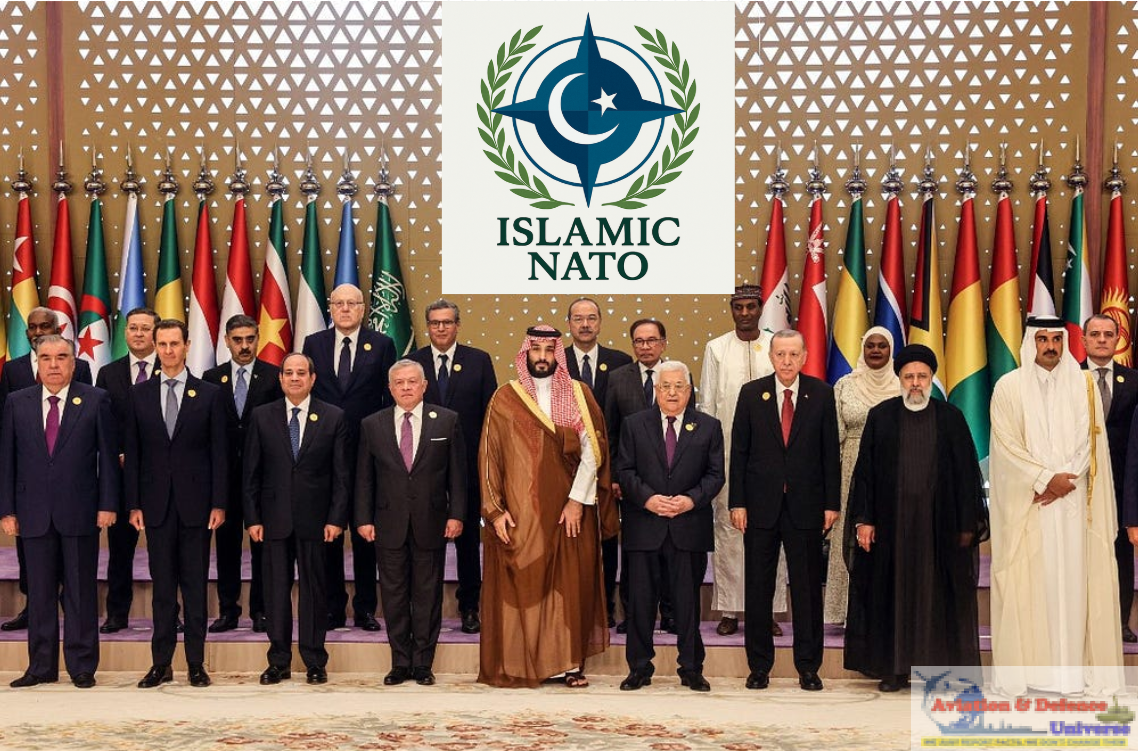
New Delhi. 29 January 2026. The idea of an “Islamic NATO” has moved from speculative discourse to serious geopolitical consideration amid shifting global power equations and growing uncertainty over traditional security arrangements. Recent developments—most notably the signing of a Saudi–Pakistan Strategic Mutual Defence Agreement and reports of Turkey’s exploratory engagement—have lent momentum to the concept of a collective defence framework among key Muslim-majority states. Though still informal and evolving, the proposed alignment reflects a broader search for strategic autonomy beyond Western-led security umbrellas at a time when U.S. commitments and alliance cohesion are under scrutiny. By potentially combining Turkey’s military-industrial strength, Pakistan’s strategic deterrence, and Saudi Arabia’s financial and political influence, the emerging framework signals a possible recalibration of regional security architectures across West Asia and South Asia—while raising important questions about feasibility, internal contradictions, and implications for India.

Combining Turkey’s military-industrial capabilities, Pakistan’s strategic and nuclear deterrence, and Saudi Arabia’s financial and political clout, the proposed bloc represents a potential recalibration of power across West Asia and South Asia. However, the idea also raises critical questions about feasibility, internal contradictions and its wider regional consequences, especially for India.
Pakistan and Saudi Arabia have long maintained a close security partnership, often described as having a strategic mutual defence character, under which both sides committed themselves to cooperation in training, intelligence sharing, force deployment, and mutual assistance in times of need. This understanding, developed over decades of military collaboration, laid the conceptual groundwork for later collective security ideas in the Muslim world. In September 2025, Pakistan and Saudi Arabia signed a Strategic Mutual Defence Agreement (SMDA) in Riyadh. Under this pact, an attack on one will be treated as an attack on both, a principle directly modelled on NATO’s Article 5 collective defense clause. This has led analysts and some media outlets to describe the emerging grouping if expanded as a potential “Islamic NATO” or a Muslim-majority collective defense bloc. The SMDA demonstrated how a core group of Islamic states could pool military capabilities under Saudi leadership, with Pakistan providing professional military expertise and manpower. The partnership also reflected shared threat perceptions, particularly regarding regional instability and regime security in the Gulf.
The SMDA is the baseline and multiple reports suggest that Turkey is in advanced talks to join the alliance. Turkish Foreign Minister Hakan Fidan has also clarified that while discussions have indeed taken place with Pakistan and Saudi Arabia regarding enhanced defence and security cooperation, no formal accession or binding agreement has been concluded so far. He noted that the process remains exploratory and incremental, reflecting the sensitivity of regional geopolitics. Turkey’s interest in joining such a pact is driven by a mix of strategic, political, and economic considerations. Regionally, it would strengthen Ankara’s influence in the Muslim world and allow it to shape emerging security architectures alongside key actors like Saudi Arabia and Pakistan. Turkey also views the alliance as a way to enhance its own regional security and deterrence at a time when there are questions about U.S. reliability and the future of NATO commitments, especially under the Trump administration.
 Strategically, participation could enhance defence cooperation, intelligence sharing, and access to Gulf resources, while supporting Turkey’s growing defence industry through arms exports and joint projects. Politically, it aligns with Turkey’s ambition to position itself as a leading power in Islamic and Middle Eastern affairs, balancing Western alliances with autonomous regional leadership. As a NATO member with the second-largest military, Turkey’s inclusion brings real military heft. Ankara also has a fast-growing domestic defence industry (drones, naval tech, missiles). Turkey has been expanding its defence ties with both Pakistan (building warships, upgrading F-16 jets, joint drone work) and Saudi Arabia (recent naval meetings). An alliance of Muslim-majority countries gives Turkey a potential leadership role in the Muslim world, appealing to President Erdoğan’s broader geopolitical vision.
Saudi Arabia’s interest in an “Islamic NATO” is primarily driven by its security concerns, regional leadership ambitions, and evolving foreign policy priorities. From a strategic perspective, Riyadh seeks a collective defence framework that can help deter external threats, particularly from Iran and its network of regional proxies. A multilateral security arrangement involving capable Muslim states would allow Saudi Arabia to share the security burden, reduce overdependence on Western military support, and enhance deterrence through pooled capabilities. The pact signals reducing dependence on the U.S. security umbrella amid shifting U.S. focus and relations. Playing a central role in a collective defence pact boosts Riyadh’s leadership credentials in the Sunni Muslim world.
Politically, such an alliance would reinforce Saudi Arabia’s leadership role in the Islamic world. By anchoring a collective defence mechanism, Riyadh can shape the strategic agenda of Muslim-majority states and counter rival centres of influence, notably Iran and, to some extent, Turkey. As Saudi Arabia has vast oil revenues, it can fund and support defence cooperation which would enhance its political influence. Economically and institutionally, Saudi Arabia benefits from partnering with states like Pakistan and Turkey, which bring military manpower, operational experience, and defence-industrial expertise. Collective security arrangements could protect critical energy infrastructure and trade routes, vital to Saudi economic interests and Vision 2030 goals. Overall, Riyadh views an “Islamic NATO” as a flexible tool to enhance security, leadership, and strategic autonomy in a volatile region.
Pakistan’s interest in expanding the Strategic Mutual Defence Agreement (SMDA) with Saudi Arabia into a broader collective defence framework as an “Islamic NATO” stems from longstanding strategic, political, and economic motivations. For Pakistan, deeper defence ties fortify its security position beyond South Asia. The SMDA enhances Islamabad’s cooperation with Saudi Arabia a major regional power and positions Pakistan as a pivotal military partner in the wider Muslim world. Because Pakistan is the only Muslim-majority nuclear-armed state, its involvement gives such an alliance a significant deterrent dimension, even though the agreement itself does not explicitly detail nuclear arrangements. Extending the pact to include other states like Turkey could further expand collective security depth and create interoperability among member forces, bolstering Pakistan’s conventional and strategic deterrence in a region still marked by Pakistan–India rivalry.
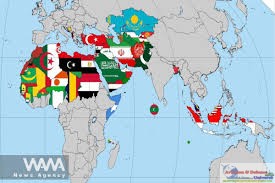 Politically, an enlarged defence framework elevates Pakistan’s profile within the Islamic world and counterbalances India’s growing diplomatic and economic engagement with Gulf states. Saudi Arabia and other Gulf partners have cultivated closer ties with India in recent years; a deeper military alliance with Pakistan places Islamabad back into the centre of strategic deliberations in West Asia. New Delhi has publicly stated it is assessing the implications of the Saudi–Pakistan defence pact on its security calculus, indicating regional concern.
Economically, Pakistan’s fragile situation, reliant on IMF programmes and Gulf financial support makes deepened security cooperation attractive. Riyadh has historically provided financial aid, oil facilities, remittances from expatriate Pakistanis, and potential investment. Formalising defence ties could unlock further economic assistance and infrastructure financing that Islamabad needs to stabilise its economy. Additionally, expanding defence ties with Turkey which has a more advanced defence industry offers Pakistan’s nascent military industrial base opportunities for technology transfers, joint production, and export markets, potentially bolstering its defence manufacturing sector.
Overall, Pakistan sees an “Islamic NATO” not only as a deterrent architecture but also as a means to deepen strategic relevance, strengthen diplomatic leverage, and support its economy amid internal and external pressures. The emergence of a potential “Islamic NATO” has significant strategic and diplomatic implications for India, even if the concept remains informal and evolving. From a security perspective, India would closely monitor any collective defence arrangement involving Pakistan, as it could indirectly strengthen Islamabad’s deterrence posture and internationalise aspects of the India–Pakistan rivalry. While such a grouping is unlikely to be overtly directed against India, enhanced military coordination, intelligence sharing, and political solidarity among key Muslim-majority states could complicate India’s strategic calculations, particularly in times of crisis.
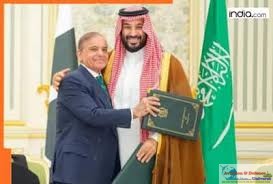
Diplomatically, an “Islamic NATO” could affect India’s engagement with the Gulf and West Asia. New Delhi has invested heavily in building strong economic, energy, and strategic partnerships with Saudi Arabia, the UAE, and other regional powers. A security bloc in which Pakistan plays a prominent role might limit India’s ability to mobilise unequivocal support from these countries on sensitive issues such as terrorism and Kashmir. India may also bolster its own partnerships with Russia, Israel, U.S., Japan, Australia, and Gulf states as a counterweight to this emerging bloc. Overall, India is likely to respond by deepening bilateral ties rather than confronting the idea directly, while maintaining vigilance to ensure that any emerging Islamic security architecture does not undermine its core national interests.
Nonetheless, the concept of an “Islamic NATO” faces several structural, political, and strategic problems that limit its viability as a cohesive collective defence alliance. The foremost challenge is the lack of unity within the Muslim world. Deep ideological, sectarian, and geopolitical divisions, particularly between Saudi Arabia and Iran, and competing leadership ambitions of Saudi Arabia and Turkey, make consensus on threat perception and command structures extremely difficult. Without a shared definition of adversaries, a collective defence commitment risks remaining symbolic rather than operational.
Another major challenge is asymmetry in capabilities and interests among potential members. States differ widely in military strength, economic capacity, and strategic priorities, raising questions about burden sharing and credible mutual defence. External pressures also pose problems. An Islamic military bloc could trigger concerns among global powers such as the United States, Russia, and China, all of whom have stakes in the Middle East. It may also alarm regional actors like India and Israel, potentially increasing geopolitical polarisation. Turkey’s existing NATO membership complicates dual-alignment potentially straining ties with Western allies.
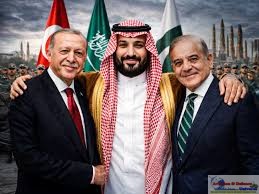
For India, the evolving alignment warrants close scrutiny rather than alarm. Though unlikely to be overtly directed against New Delhi, any framework that enhances Pakistan’s strategic leverage or introduces new layers of political solidarity in the region could affect India’s security calculus. At the same time, India’s expanding economic footprint, strong bilateral ties with Gulf states, and diversified strategic partnerships offer meaningful counterweights. Ultimately, the proposed “Islamic NATO” is more likely to function as a loose coordination mechanism and political signal than as a treaty-bound military alliance. Its trajectory will depend less on rhetoric and more on whether its proponents can overcome internal contradictions and translate intent into enduring institutional capability.
(Jai Kumar Verma is a Delhi-based strategic analyst and Life Member of United Services Institute of India and The Manohar Parrikar Institute for Defence Studies and Analyses. The views in the article are solely the author’s. He can be contacted at editor.adu@gmail.com)