


















- OrbitArch: India’s Young Innovators Tackling Future of Space Safety
- AI, LiDAR and Decluttering Space : OrbitArch’s Bold Plan from Dubai Airshow 2025
- As 20 Years Old, They Are Safeguarding Space
By Sangeeta Saxena
Dubai. 01 December 2025. OrbitArch’s vision for autonomous satellite protection won not only global attention at Dubai Airshow but also hearts of visitors. It is a story of students who dared to dream from the classroom of the cosmos, hoping to transform space situational awareness. ADU took a peep into the plan of these twenty year olds to safeguard space.

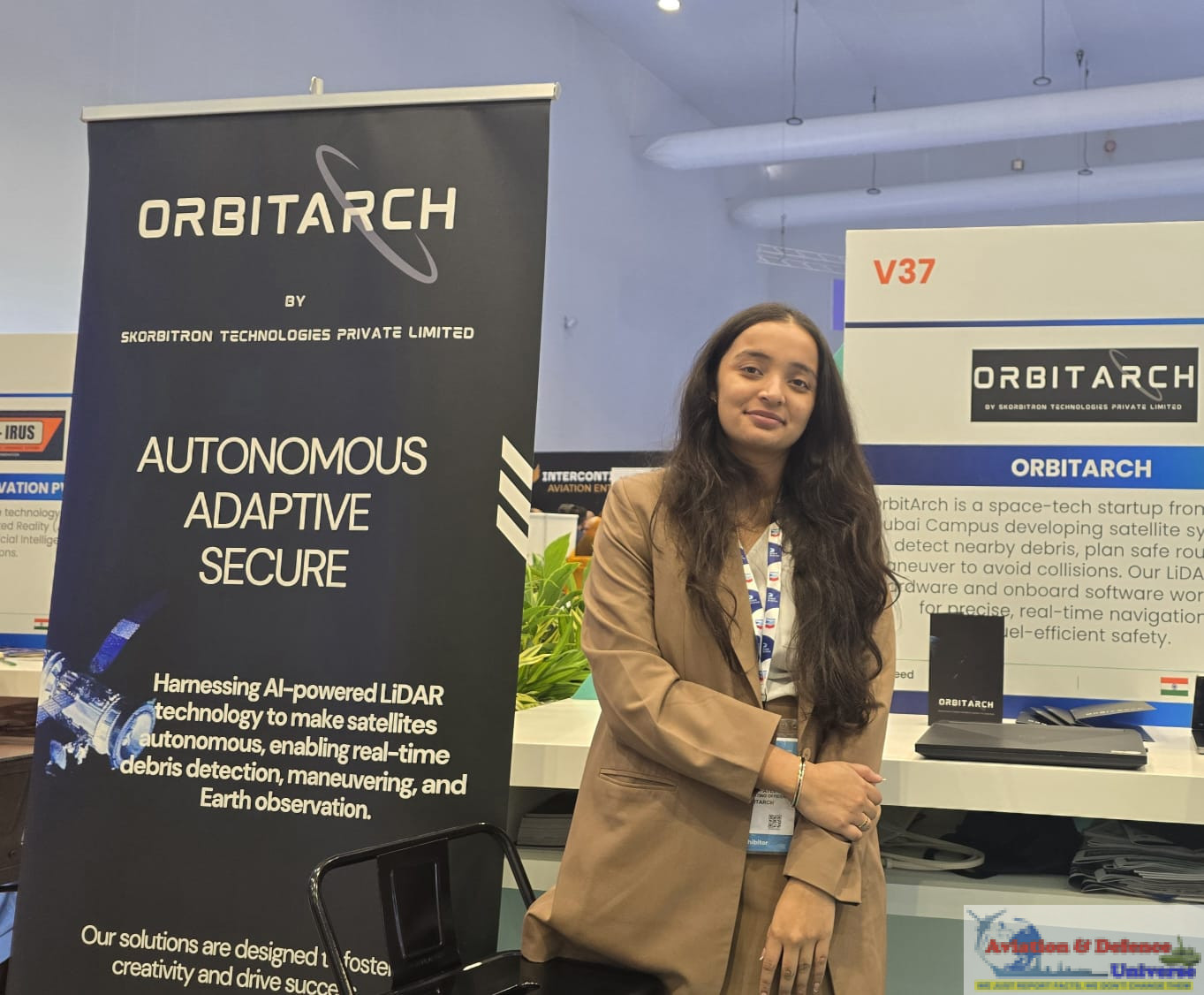
At the Dubai Airshow 2025, the Inspiration Zone became a showcase of some of India’s most promising young innovators. Among them was OrbitArch, a deep-tech space start-up founded by three 20-year-old engineering students from BITS Pilani, already capturing global attention for tackling one of the most urgent challenges in modern space operations—space debris.
In this candid conversation, Editor ADU speaks with Sachi Patel, Co-Founder & Chief Operating Officer of OrbitArch, to understand how the team is building advanced AI and LiDAR-based technologies to prevent satellite collisions, why global space agencies are collaborating with them, and what lies ahead as they move toward in-orbit testing and commercialization.
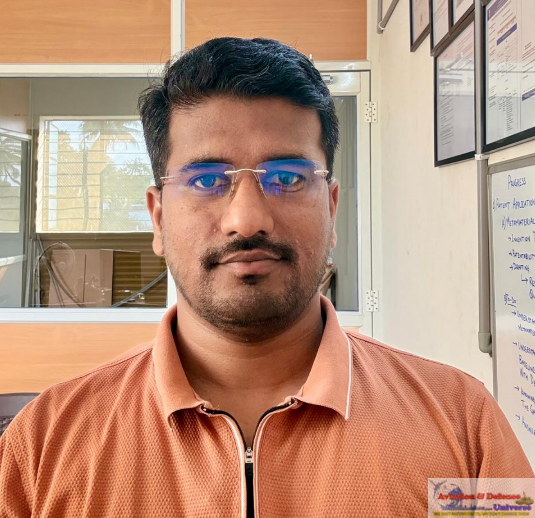
ADU. We are here at OrbitArch with Co-Founder and COO Sachi Patel at the Inspiration Zone at Dubai Airshow 2025. This is the Indian Start-up Area. What exactly is OrbitArch?
Sachi Patel. OrbitArch stands for “Architects of the Orbit.” Our aim is to solve the growing global problem of space debris. Today, millions of particles are floating in space and more than 60 percent of them cannot be tracked by ground-based radar systems. These radars require enormous infrastructure and financial resources, which even many governments cannot fully support.
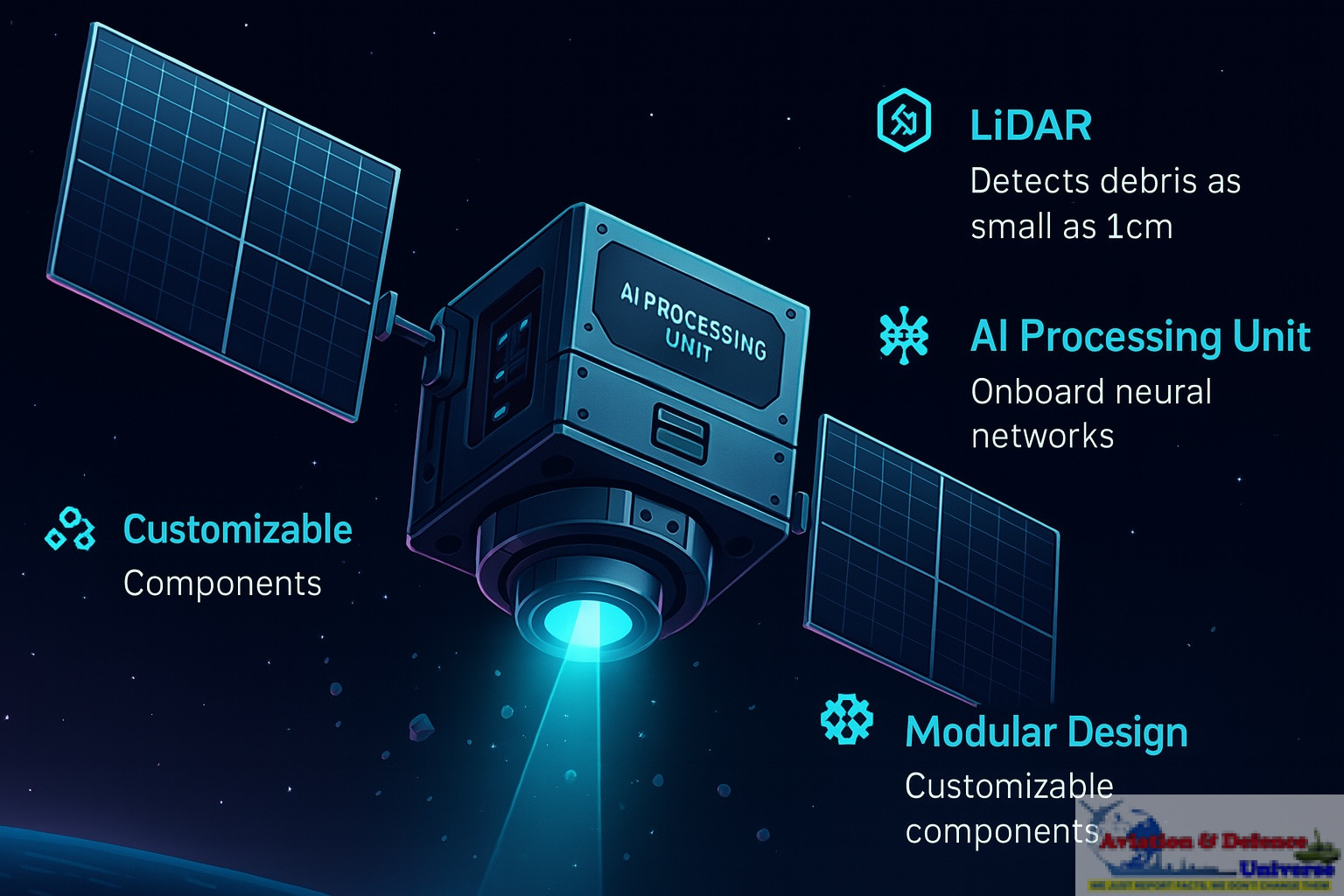
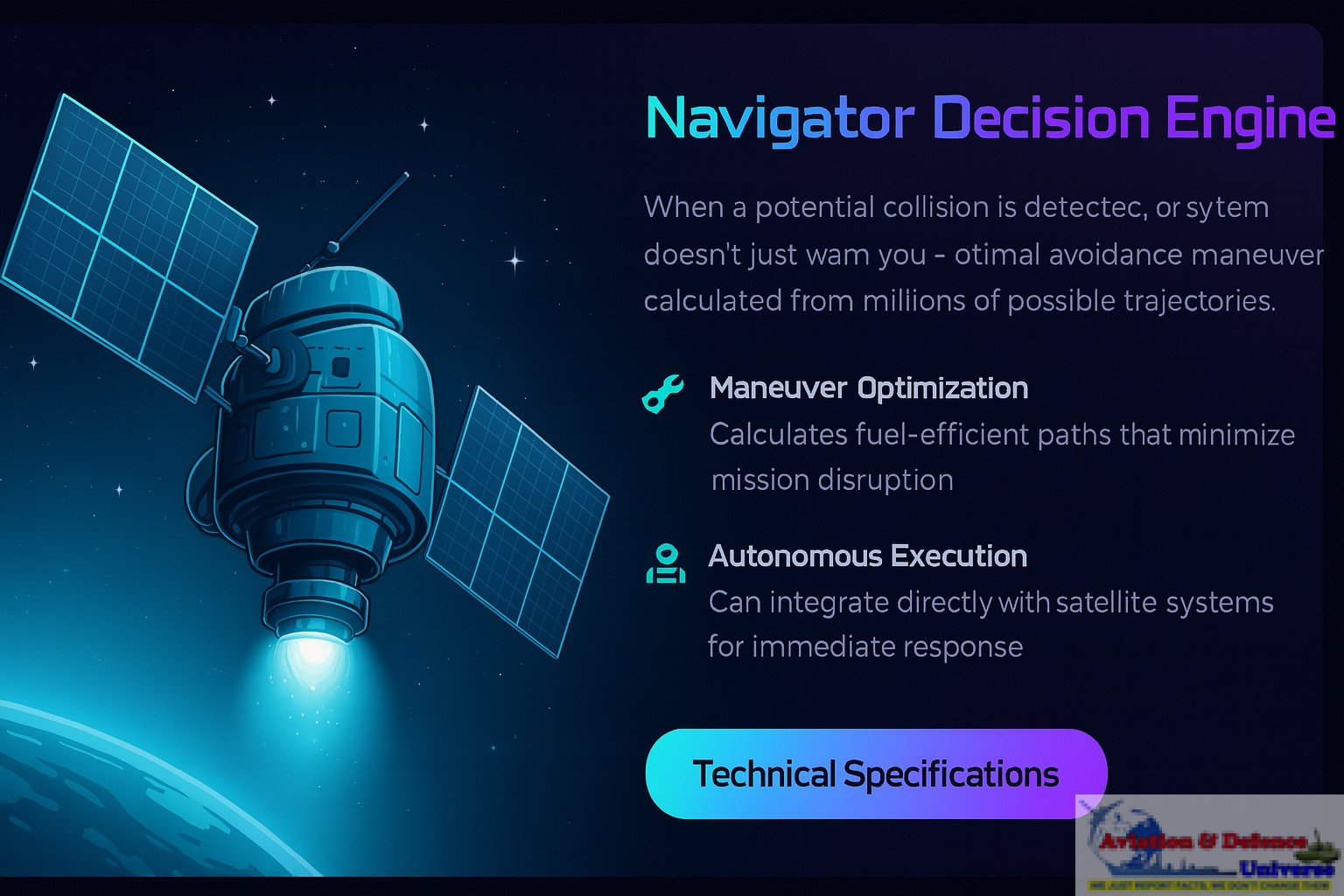
Our solution is to build AI models and a proprietary LiDAR sensor capable of detecting debris smaller than 10 centimetres—something even the most powerful ground-based radars cannot do. The LiDAR sensor becomes the “eyes” of the satellite, enabling real-time debris detection. Our AI then predicts debris trajectories and recommends the safest manoeuvres, whether it is a slight tilt or a complete orbit change.
ADU. What stage has your technology reached so far?
Sachi Patel. We are currently incubated at BITS Pilani, and our AI models are at TRL 5. The models are almost ready and will be tested in orbit within the next two weeks in collaboration with “Take Me to Space,” an Indian company. The hardware side—our LiDAR system—requires deep R&D. We plan to explore single-photon LiDAR technology to achieve maximum precision and speed. Our hardware demonstration will be mounted on our own satellite during the Q2 2026 ISRO PSLV launch, where we’ll conduct LiDAR testing in space.
ADU. You mentioned that OrbitArch has multiple revenue streams. Can you explain them?
Sachi Patel. Yes, we are starting with two major streams which are LiDAR Customisation and SSA (Space Situational Awareness) Platform . The former meaning tailored LiDAR solutions for satellite operators. The latter has two components. The first one is AI Licensing which means our models are trained on data from the European Space Agency. We are the youngest signatories of the Zero Debris Charter and have a patent filed for our approach. Operators can receive alerts up to 24 hours before a potential collision along with optimal manoeuvre suggestions. The second one is SaaS Model which is a subscription service where operators get continuously updated debris data and analytics. By 2027–28, once we have multiple hardware units in orbit, we plan to license our proprietary debris database globally.
ADU. What does your global presence look like at this early stage?
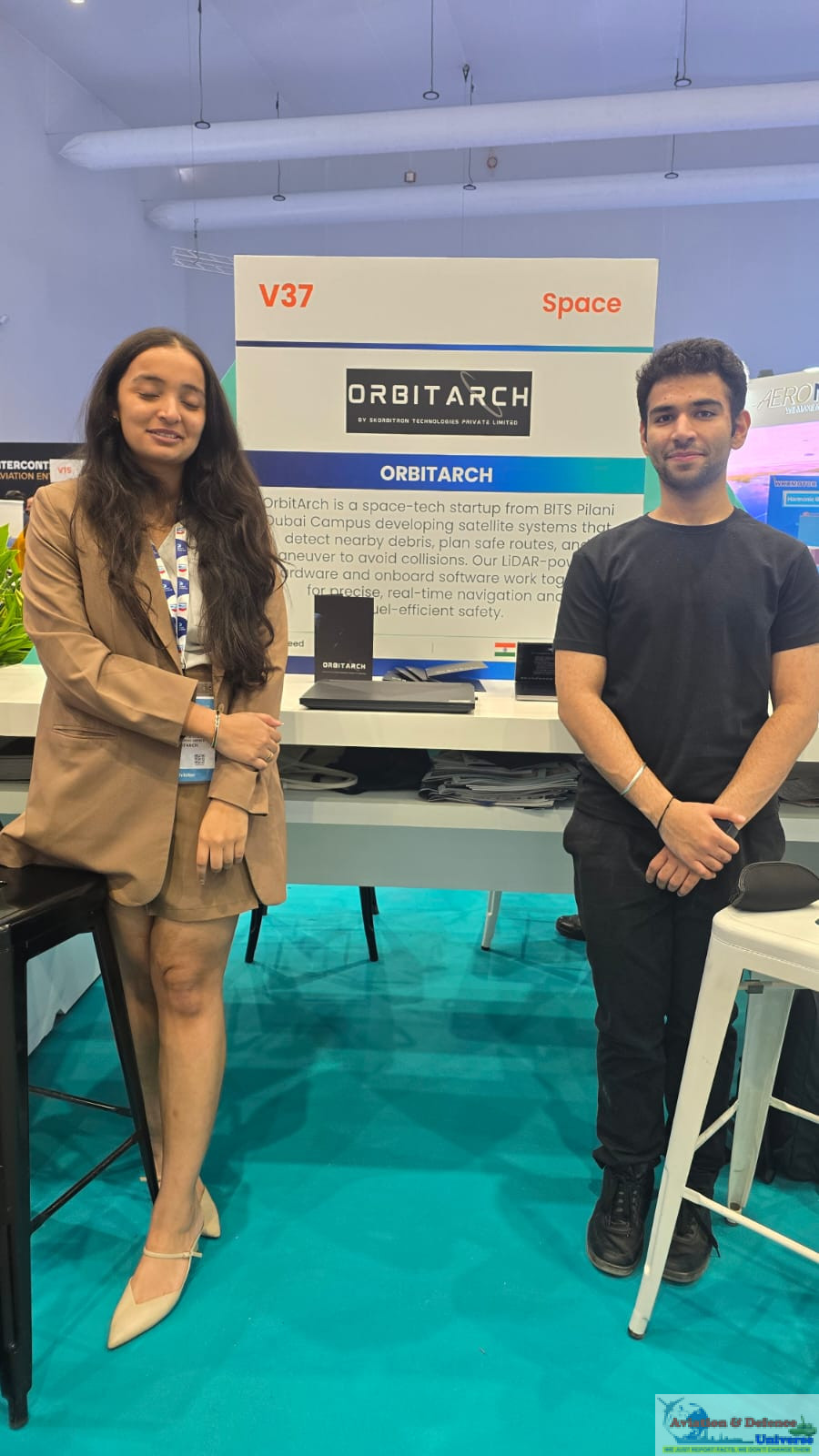
Sachi Patel. We are registered in India but operationally active in Dubai. We already have partnerships in the MENA region, two collaborations in Europe, and an MoU in the US. And of course, India remains our home ground.
ADU. It is remarkable that you and your co-founders are still students. How young is your team?
Sachi Patel. All three of us are in our third year of engineering at BITS Pilani. We are all 20 years old—none of us has turned 21 yet. We are proud of how far we have come, especially securing patents in India and applying for a WIPO patent. We work hard because we believe solving the space debris crisis is critical for the future of global space operations.
ADU. Sachi how did the idea germinate and how did this venture begin ?
Sachi Patel. OrbitArch was founded in 2024 under Skorbitron Technologies by a group of passionate engineers and space-tech enthusiasts. All of us shared a single vision—to make Earth’s orbit safer and more sustainable. We saw the rapidly growing problem of space debris and realised that the world needed far more advanced tools to manage space traffic. That is how OrbitArch was born.
ADU. What exactly is OrbitArch building to address the space debris challenge?
Sachi Patel. We are developing cutting-edge AI-powered solutions for space traffic management. Our technology combines predictive analytics, real-time collision risk assessment, and autonomous satellite maneuvering. The goal is to enable satellites to actively avoid debris instead of depending solely on ground-based tracking systems, which have limitations. Through OrbitArch, we want to ensure that satellites can operate safely and efficiently despite the increasing congestion in Earth’s orbit.
ADU. How does Skorbitron Technologies contribute to OrbitArch’s capabilities?
Sachi Patel. Being part of Skorbitron Technologies allows us to merge advanced LiDAR technology with machine learning. This is one of our biggest differentiators. LiDAR gives satellites the ability to “see” their surroundings in space, while AI interprets that data in real time to plan collision-avoidance manoeuvres. This combination allows us to provide truly autonomous, real-time collision avoidance—something the industry urgently needs.
ADU. OrbitArch is also aligned with global sustainability efforts. Can you tell us about that?
Sachi Patel. Yes, we are proud signatories of the ESA Zero Debris Charter. This is a global initiative aimed at drastically reducing space debris and preserving orbital pathways. By being part of this mission, we are committed not only to innovation but also to responsibility—ensuring that future generations can continue exploring and utilising space safely.
OrbitArch represents a new generation of Indian innovators redefining the boundaries of space technology. With AI-powered collision prediction, onboard LiDAR detection, and global partnerships already taking shape, the start-up is positioned to become a key player in Space Situational Awareness and satellite safety. As they prepare for their first in-orbit tests and future ISRO-backed launches, OrbitArch stands as a powerful example of how young Indian entrepreneurs are contributing to a safer, more sustainable space ecosystem.
As told to Sangeeta Saxena / Interview was taken at Dubai Airshow 2025