













- Afghan Minister in Delhi: Talks Signal Strategic Reset
By Jai Kumar Verma
New Delhi. 24 October 2025. The just-concluded visit, of the Acting Foreign Minister of Afghanistan, to  India marks a pivotal moment in the evolving regional dynamics of South and Central Asia. Coming at a time when Afghanistan has re-emerged as a critical geopolitical crossroads, the visit signifies New Delhi’s intent to reassert its strategic engagement with Kabul amid intensifying global and regional interests. With the United States seeking a military foothold in the region, Pakistan continuing its pursuit of “strategic depth,” and China eyeing both Afghanistan’s untapped mineral wealth and the insulation of its Xinjiang policy from cross-border influences, the Minister’s interactions in India assume heightened significance. This visit not only reflects India’s long-standing support for a stable and sovereign Afghanistan but also signals a recalibration of regional alliances in a post-withdrawal landscape fraught with both opportunity and risk.
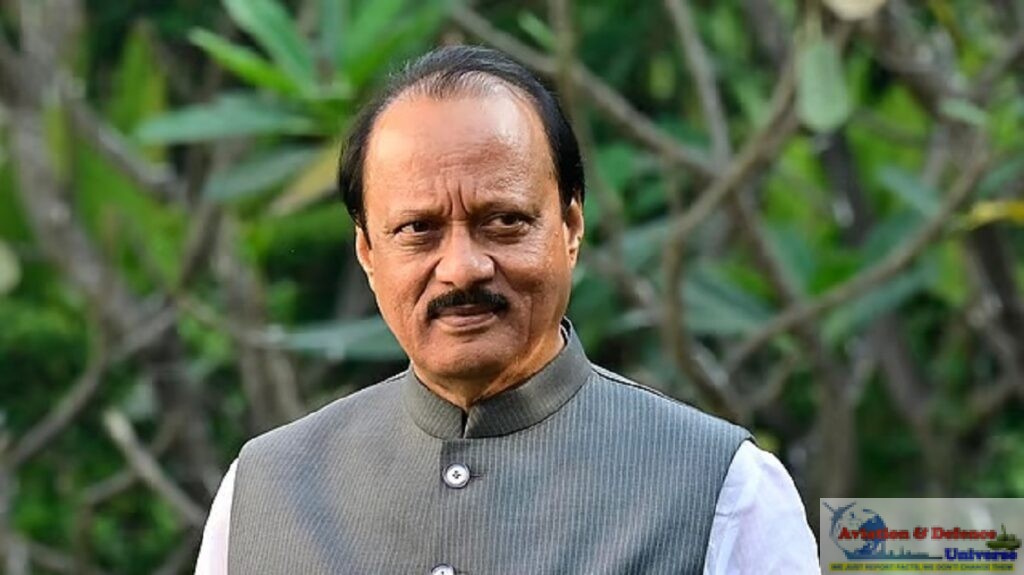
Afghanistan’s Acting Foreign Minister Amir Khan Muttaqi made a long‑anticipated eight-day visit to India from 9th October to 16th October 2025. This visit is historic because it is the first time a senior minister from the Taliban‑led government has come to India since the Taliban took over in 2021. The trip shows that even with political complexities, both countries are interested in talking and cooperating with each other. India gave warm welcome to the visiting Minister. United Nations put several sanctions including travel ban on Taliban leadership and key individuals associated with terrorist activities, human rights violations, or threats to international peace and security. These sanctions are enforced under UN Security Council Resolution 1988, which focuses specifically on the Taliban and its affiliates. On September 30, 2025, the UN Security Council’s Taliban Sanctions Committee gave him a temporary travel exemption hence he could visit to India. Although India has not officially recognised the Taliban government, but the visit shows a careful attempt to engage with them.
Tensions between Afghanistan and Pakistan have worsened following recent Pakistani airstrikes on Kabul, which reportedly killed civilians. In response, Afghan forces launched retaliatory attacks on Pakistani border posts in which several Pakistani soldiers were killed, injured and captured. These clashes have further strained an already fragile relationship. Amid this backdrop, the Afghan Minister’s visit to New Delhi highlights India’s strong intent to stay engaged in Afghanistan’s future and support regional stability. The timing of Pakistan’s airstrike in Afghanistan is also important as it occurred when Afghanistan’s Minister was in India.
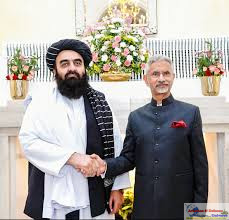
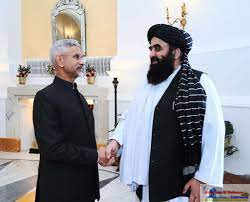 On 10 October, 2025, India’s External Affairs Minister S. Jaishankar and Muttaqi met in New Delhi and discussed multiple issues. The joint statement pledged to upgrade India’s technical mission in Kabul to a full Embassy when the situation allows. Both agreed to work against cross‑border terrorism as they are suffering with the menace of cross border terrorism. It was a direct refence of Pakistan as both India and Afghanistan shares border with Pakistan. India and Afghanistan also agreed to deepen cooperation on trade, health, education and infrastructure, India increased humanitarian aid, and set up a trade committee to foster stronger economic ties. While countries like the US, China, and Pakistan focus on their own interests in the region, India’s move signals that it wants to be a responsible and active player in shaping the region’s future.
India also promised to assist with humanitarian aid and decided to supply ambulances, CT & MRI machines; vaccines; cancer medicines and render assistance to earthquakes victims and help the displaced or repatriated Afghans. Pakistan forcibly repatriated Afghans who were residing in Pakistan from several years. Afghan Minister also invited Indian companies to explore mining opportunities in Afghanistan. China is already trying to exploit Afghan minerals. As of 2025, Afghanistan’s untapped mineral resources are estimated to be worth over $3 trillion. According to the US Geological Survey and Afghanistan’s Ministry of Mines, these include large amounts of gold, copper, lithium, iron ore, rare earth elements, coal, and marble. It was decided to have more flights between Kabul and New Delhi and people to people contacts would be strengthened. More visas would be issued to Afghan students and the travel for business and medical would be liberalised. India reaffirmed its support for Afghanistan’s sovereignty, independence, and territorial integrity.
The reports suggest that Muttaqi asked India to allow trade through the Attari‑Wagah border and supported using the Chabahar port route for trade between Afghanistan and India. The visiting Afghan Minister also met with Indian business groups and members of the Afghan community living in India. These meetings focused on strengthening trade ties, encouraging investment in Afghanistan, and addressing the needs and concerns of the Afghan diaspora.
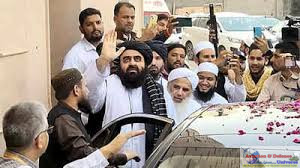 On October 11, the Afghan Minister visited Darul Uloom Deoband in Uttar Pradesh. He was warmly welcomed by the seminary’s leaders, scholars, and students. He was also granted the Sanad (certificate) to teach Hadith, and given the title “Qasmi,” showing his academic link with Deoband. Muttaqi said he wants stronger ties with India and more diplomatic visits. He also anticipates that more visas would be granted to Afghan students so that they can study in Darul Uloom. The Afghanistan watchers claim that Afghan Minister’s visit to Darul Uloom was a diplomatic effort of India while it was projected as the visit was on the request of visiting Afghan Minister. It was religious diplomacy.
Deoband follows the Deobandi school of Sunni Islam, which many Pashtuns in Afghanistan and Pakistan also follow. When the USSR invaded Afghanistan in 1979, countries like the USA, Saudi Arabia, and Pakistan supported resistance forces. Saudi Arabia, using its funds, also helped spread Wahhabism and sent preachers to Pakistan where in Pakistani Madrassas spread Wahhabism. Over time, this Wahhabi influence entered some Deobandi seminaries, especially in the Pashtun areas, changing parts of the original Deobandi tradition.
The upgradation of technical mission in Kabul to a full embassy is a signal that Delhi wants more robust diplomatic ties between India and Afghanistan. Although Delhi has not recognised Taliban government officially but meetings, travel and talks between representatives of both the countries clearly indicate that there is real cooperation between both the countries. Afghan people, especially traders, patients, and students, expect that now their visits would be eased and they would get more visas for medical care, study and for business purposes. The visit also indicated that the international community, via the UN, is willing to allow Taliban officials limited travel under some conditions.
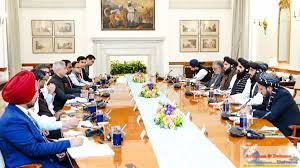 The current visit was successful but still there are few issues which needs urgent attention. Delhi has still not officially recognised the Taliban government. The recognition is important because it means it accepts that group is the legitimate ruler of that country. It strengthens international relations as well as domestic ties. In India few people criticise the Taliban government because of its poor human rights record and how the Taliban treat women, education, and freedoms in Afghanistan. Terrorism and extremist groups are also a worry. India will want guarantees that Taliban would not allow terrorist groups to use their territory against India.
The current visit is not just a diplomatic visit but the ordinary people of both the countries are affected by the result of this significant visit. The local Afghans are happy as now they would get better access to Indian health care, education, and trade. It could bring relief, especially for those suffering after earthquake and forced repatriation from Pakistan. The Indians are also glad as it reduced threat from cross‑border terrorist activities, and more trade opportunities. It also demonstrates how diplomacy can work even without political recognition. It also clarified that dialogue, humanitarian assistance, and trade can continue even in difficult situations.
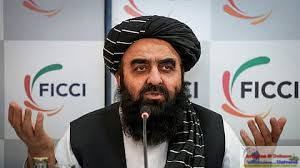 In a region marked by shifting alliances and deep uncertainty, the renewed engagement between India and Afghanistan signals a cautious but meaningful step towards stability and cooperation. While formal recognition remains off the table for now, India’s outreach reflects a strategic balance as it engaged Kabul without endorsing or surrendering its principles. For Afghanistan, India remains a trusted partner with a long history of development, support and cultural ties. As both countries navigate complex regional dynamics, their efforts to find common ground through dialogue, trade, and humanitarian cooperation offer a glimmer of hope in an otherwise troubled neighbourhood. It can also be considered as a diplomatic victory of India as Pakistan which considered Afghanistan as its strategic extension got a jolt when Afghan forces attacked Pakistani posts and killed Pakistani border guards. India also successfully countered China’s efforts to win over one more India’s neighbour.
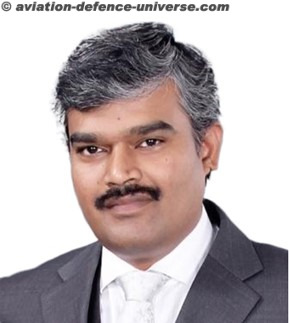
Jai Kumar Verma is a Delhi-based strategic analyst and member of United Services Institute of India and The Manohar Parrikar Institute for Defence Studies and Analyses. The views in the article are solely the author’s. He can be contacted at editor.adu@gmail.com)