



















- Edge of Escalation: A Month After US–Israel Strikes on Iran
- A Region on Edge: What One Month of Conflict Means for the World
- Controlled Escalation, Uncontrolled Impact: Fallout on India
By Jai Kumar Verma
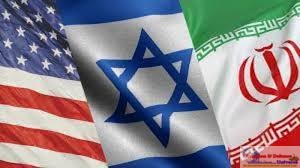
New Delhi. 31 March 2026. One month into the escalating confrontation between the United States, Israel and Iran, the conflict has moved beyond a limited exchange of strikes to become a defining geopolitical flashpoint of 2026. What began as targeted military action under Operation Epic Fury has evolved into a sustained phase of calibrated escalation, marked by missile exchanges, proxy engagements and growing global economic repercussions. The crisis is reshaping regional power equations, testing global alliances and raising critical questions about deterrence, energy security and strategic stability.
For countries like India, the conflict is not a distant crisis but a development with direct economic, diplomatic and security implications. From energy security to diaspora safety and diplomatic balancing, the unfolding crisis raises critical questions for New Delhi. In this context, understanding the overt narratives and covert motives behind the US–Israel strikes on Iran becomes essential to grasp both the present turmoil and its future implications.
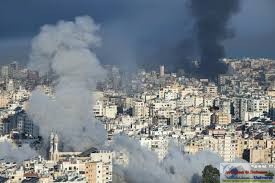
The Middle East once again finds itself at the centre of global attention as tensions between the United States, Israel, and Iran erupt into open confrontation. What began as a series of calculated airstrikes under escalating hostilities has now evolved into a conflict with far-reaching consequences, not only for the region but for the entire world. The joint military operation, marked a dramatic escalation, targeting Iran’s nuclear facilities, military infrastructure, leadership, and triggering swift retaliation in the form of missile and drone attacks across the Middle East.
Yet, beneath the surface of official justifications lies a deeper, more complex story. Are these strikes purely about nuclear non-proliferation and regional security, or do they reflect broader geopolitical ambitions, ranging from energy dominance to regime transformation? As global oil prices surge and strategic chokepoints like the Strait of Hormuz come under pressure, the ripple effects are being felt far beyond Tehran and Tel Aviv.
While U.S. strategic thinking often treats adversaries through a uniform lens, equating Iran with states like Venezuela oversimplifies reality. Venezuela’s leadership, despite its socialist rhetoric, largely operates within pragmatic political survival frameworks rather than ideological sacrifice. In contrast, Iran’s political culture is deeply influenced by Shia Islam, where the concept of martyrdom, rooted in the Battle of Karbala and commemorated during Ashura, symbolizes resistance against oppression even at great cost. This historical and religious ethos helps explain why Iran may endure severe destruction yet continue resisting a militarily superior power, viewing sacrifice not as defeat but as moral defiance.
Overtly the United States and Israel have justified their actions primarily on security grounds. They declared that at the heart of the conflict lies Iran’s nuclear program. For Israel in particular, a nuclear-armed Iran is viewed as an existential threat. Thus, the strikes are framed as a preventive action to stop nuclear proliferation. Both US and Israel also alleged that Iran’s missile and military capabilities are extremely dangerous not only for Israel but for whole of Middle East especially U.S. military bases in the region. Neutralizing this capability has been presented as another key justification for military action.
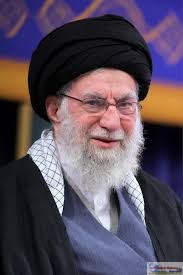
While the official narrative focuses on security, several deeper motivations are widely discussed. One of the most debated underlying objectives is the possibility of weakening Iran’s political leadership. Targeted strikes on leadership and strategic infrastructure often signal an intent that goes beyond deterrence. Iran appeared weakened by internal protests, economic sanctions, and declining regional allies; thus, the U.S. and Israel perceived a strategic window to initiate military strikes. A weakened Iran could open the door to a more Western-aligned political order. The other covert reason is the energy geopolitics. Iran occupies a critical position near the Strait of Hormuz, through which a significant portion of the world’s oil supply passes. Control or influence over this region translates into global energy leverage. Ensuring that this chokepoint remains under friendly or stable control is a major strategic priority for global powers.
Israel wants to maintain its regional dominance through military superiority. A strong or nuclear-capable Iran would disrupt this balance. For the United States, the conflict also serves as a demonstration of continued global military dominance, especially at a time when emerging powers are challenging its influence. The other reason for the aggression was the domestic political calculations. Military conflicts often intersect with domestic politics. Strong external action can consolidate leadership authority, shift public attention, and influence political narratives at home. Though rarely acknowledged, such considerations often play a role in major military decisions.
The Present Scenario: A Region on Edge
The current situation is marked by active but contained conflict. Airstrikes, missile exchanges, and drone warfare have become frequent, yet a full-scale war has not broken out. At the same time, global economic tremors are already visible. Oil prices have surged, financial markets have shown volatility, and supply chains are under stress.
Iran’s response to recent U.S., Israel actions has reportedly extended beyond Israel, its primary target, to a broader regional theatre. Missile and drone attacks, direct or through proxies, have been reported across Gulf states such as Saudi Arabia, United Arab Emirates, Qatar, Kuwait, Bahrain, Jordan and Oman largely due to their ties with the U.S. Iran proxy-linked incidents have also affected Iraq, Syria, Turkey and Lebanon. Cyprus, Azerbaijan and Palestinian territories in West Bank were also attacked. The overall pattern suggests a widening conflict focused on strategic infrastructure, military bases, and key regional allies rather than a localized confrontation. Iran’s key proxies include Hezbollah (Lebanon), Houthis (Yemen), and Shiite militias in Iraq/Syria.
The Strait of Hormuz has emerged as a focal point, with disruptions threatening global energy flows. The situation remains fluid, with both sides avoiding total war while continuing strategic pressure.
Future Scenarios: What Lies Ahead
Several possible trajectories could shape the future of this conflict.
Controlled Escalation
The most likely outcome is a prolonged period of limited conflict, sporadic strikes, indirect confrontations, and ongoing diplomatic manoeuvring. This would mean sustained instability without a decisive resolution.
The chances of Full-Scale Regional War
A more dangerous possibility is the expansion of the conflict into a wider regional war involving Gulf nations and non-state actors. Such a scenario could severely disrupt global energy supplies and trigger a broader geopolitical crisis. However, the chances of all-out war are remote as USA though mobilising troops but chances that US troops enter in Iran is remote. At the height of the Iraq War, the United States deployed around 160,000 troops in the country, representing one of its largest overseas military commitments in recent decades. Given that Iran is geographically larger and militarily more complex than Iraq, any comparable ground invasion would likely require much greater force levels, entailing significant logistical challenges and a high risk of casualties. This helps explain why, despite ongoing military mobilisation, the likelihood of U.S. troops entering Iran remains low. A large-scale deployment could provoke domestic backlash, as American public opinion has historically been sensitive to prolonged conflicts and rising military casualties. Thousands of Americans are protesting nationwide against the ongoing Iran war, criticizing government policies and fearing escalation. Demonstrations remain largely peaceful, with citizens demanding diplomacy, accountability, and an immediate end to military action. On the other hand, Iran is also facing a serious internal crisis, with high inflation, rising poverty, and shortages of food, medicine, and energy, worsened by war disruptions, sanctions, and supply chain breakdowns. Sustained external pressure combined with internal unrest could destabilize Iran’s political system. However, history suggests that regime change is difficult without prolonged intervention. Hence Iran would also welcome an honourable ceasefire.
Reports about “backdoor negotiations” to end the ongoing conflict are partly true but often exaggerated or misrepresented. There are reports that countries such as Pakistan, Turkey, and Egypt are involved in indirect diplomatic efforts and mediation attempts, including hosting talks and relaying messages between the United States and Iran. However, there is no confirmed evidence of formal or direct peace negotiations, and Iranian officials have repeatedly denied claims of active talks with the U.S., calling some reports misleading. Therefore, while mediation efforts are real, many circulating claims about ongoing “secret negotiations” or imminent agreements are unverified or overstated, and in some cases amount to misinformation rather than established fact.
India faces a complex economic challenge as tensions in the Gulf threaten its energy security and trade stability. A significant share of India’s crude oil imports passes through the strategically vital Strait of Hormuz, making any disruption a direct risk to fuel availability and prices. Rising oil costs can quickly translate into inflation, higher transportation expenses, and broader macroeconomic stress. At the same time, maritime insecurity increases insurance premiums and shipping delays, affecting supply chains for both imports and exports. Iran has allowed a few Indian vessels safe passage through the Strait, offering limited reassurance, though the overall situation remains fragile and unpredictable.
Another major concern is the safety and welfare of the Indian diaspora in the Gulf region. Millions of Indians live and work across countries such as United Arab Emirates, Saudi Arabia, and Qatar, contributing significantly through remittances. Any escalation in hostilities could expose them to security risks, job losses, or displacement, potentially necessitating large-scale evacuation efforts similar to past crises. Beyond humanitarian concerns, such disruptions could also impact India’s foreign exchange inflows and domestic economic stability. Ensuring their safety while maintaining strong bilateral ties with host nations will be a critical priority for Indian policymakers during this volatile period.
Diplomatically, India must carefully balance its relationships with key global and regional players, including the United States, Israel, and Iran. India maintains strong ties with the USA as a strategic partner, Israel for defence cooperation, and Iran for energy and connectivity, creating a complex diplomatic balancing act in current global tensions. This situation tests India’s long-standing policy of strategic autonomy, requiring it to safeguard national interests without alienating any side.
At the same time, the crisis presents opportunities: India could emerge as a credible neutral interlocutor, enhancing its global diplomatic profile. Additionally, the disruption may accelerate efforts toward energy diversification, including renewables and alternative suppliers. Shifts in global supply chains could also create openings for Indian industries to expand, positioning the country to benefit economically even amid geopolitical uncertainty.
In conclusion, the ongoing tensions in the Gulf region present India with a delicate mix of risks and opportunities. While threats to energy security, trade routes through the Strait of Hormuz, and the safety of its diaspora remain pressing concerns, India has so far managed the situation with cautious pragmatism, aided in part by gestures such as Iran permitting limited passage of Indian vessels.
The US–Israel–Iran conflict, one month on, reflects the complexity of modern warfare—where military action, economic pressure, ideological narratives and geopolitical ambition intersect. While the situation remains short of full-scale war, its ripple effects are already global, influencing energy markets, regional alliances and strategic calculations far beyond West Asia. For India, the crisis underscores the importance of strategic autonomy, resilience in energy planning and proactive diplomacy. As the conflict continues to unfold, the central challenge for the international community will be to prevent escalation while navigating a rapidly shifting geopolitical landscape that is increasingly defined by uncertainty rather than stability.
(Jai Kumar Verma is a Delhi-based strategic analyst and Life Member of United Services Institute of India and Member of The Manohar Parrikar Institute for Defence Studies and Analyses. The views in the article are solely the author’s. He can be contacted at editor.adu@gmail.com)