

























 Baba Kalyani, CMD , Bharat Forge Ltd.
“The Union Budget 2026 reflects the hallmark of Prime Minister Modi’s stable, strong and visionary leadership, anchored in policy continuity, fiscal discipline and a clear focus on building long-term national capabilities. I congratulate the Hon’ble Finance Minister on her ninth successive Budget, which strikes a careful balance between macroeconomic stability and sustained investment-led growth. The articulation of a multi-pronged growth framework and the three kartavyas reinforces the commitment to building a competitive, inclusive and future-ready economy. At a time of heightened geopolitical and supply-chain uncertainty, these measures are bound to strengthen India’s economic resilience and global positioning, sending a strong signal to both Global and Indian investors. Through this budget, the government’s bet on Manufacturing is reinforced; special emphasis on modern infrastructure, high-speed rail corridors, healthcare and cities as engines of growth, is timely and strategic. The progression of the semiconductor programme to ISM 2.0 through ecosystem development, alongside the announcement of rare-earth corridors across eastern and southern India, will significantly strengthen domestic supply chains. Equally important is the focus on green competitiveness, with meaningful allocations for carbon capture and decarbonisation, aligning sustainability with industrial performance. Aligned with the geo-strategic realities, the defence sector emerges as a key pillar of this Budget. With defence receiving the second-highest allocation with about 25% increase in the modernisation budget, the emphasis is firmly on upgrading platforms, systems and technologies, while improving procurement efficiency. The message to industry is clear: deepen long-term capability, technology and Aatmanirbharta or self-reliance. I laud Madam Minister’s special thrust on Information Technology Services for companies setting-up Data Centers and Cloud Services from India; the 22yr tax holiday for such investments is a well-thought initiative aimed at Global leadership in this segment. Finally, the focus on university-industry clusters and AI-led productivity will help India fully leverage its demographic dividend. Overall, the Budget provides industry the confidence to invest, innovate and partner in building a globally competitive Indian conomy.”
Ankur Kanaglekar, Vice-President – India, Thales
“Thales welcomes the Government of India’s Union Budget for 2026-27, highlighted by a landmark allocation of ₹7.8 lakh crore for defence, representing a 15% increase over the previous year. This seeks to reinforce the nation’s commitment to modernising and strengthening the armed forces. The announcements around exemption of basic customs duty on component and parts for manufacture of civilian, training, and other aircraft and on the raw materials imported for manufacture of parts to be used in maintenance, repair and overhaul by defence sector units, further signal India’s long-term strategic intent for strengthening civil aerospace and defence industrial capabilities. As India advances towards its vision of Viksit Bharat by 2047, Thales remains committed to the ‘Make in India’, ‘Innovate in India’, and ‘Export from India’ strategy. We will continue to forge deeper partnerships with Indian industry and develop cutting-edge technologies especially in artificial intelligence & cyber to address future challenges. We firmly believe that our collective efforts will strengthen India’s industrial base and firmly establish the nation as a major for global aerospace & defence manufacturing.”
Ankit Mehta, CEO Ideaforge
“We congratulate the Finance Minister for presenting a pragmatic Budget that continues to prioritise Defence capital outlay while strengthening India’s domestic manufacturing ecosystem, electronics base, and semiconductor capabilities. Proposed measures such as the India Semiconductor Mission 2.0, the expanded Electronics Components Manufacturing Scheme, and support for advanced technology R&D signal a strong focus on building strategic supply chains and indigenous high-tech capability. With Defence capital expenditure in FY27 rising to ₹2.19 Lakh Crore, almost 22% higher than last year, the government has signalled a strong commitment to modernisation and long-term capability building. This provides clear guidance for frontier technologies and positions ideaForge to continue leading in indigenous UAVs, electronic warfare systems, and advanced aerial platforms, while contributing to India’s vision of a Viksit Bharat and a forward-moving Bharat.”
Aravind Melligeri, Executive Chairman & CEO, Aequs Limited 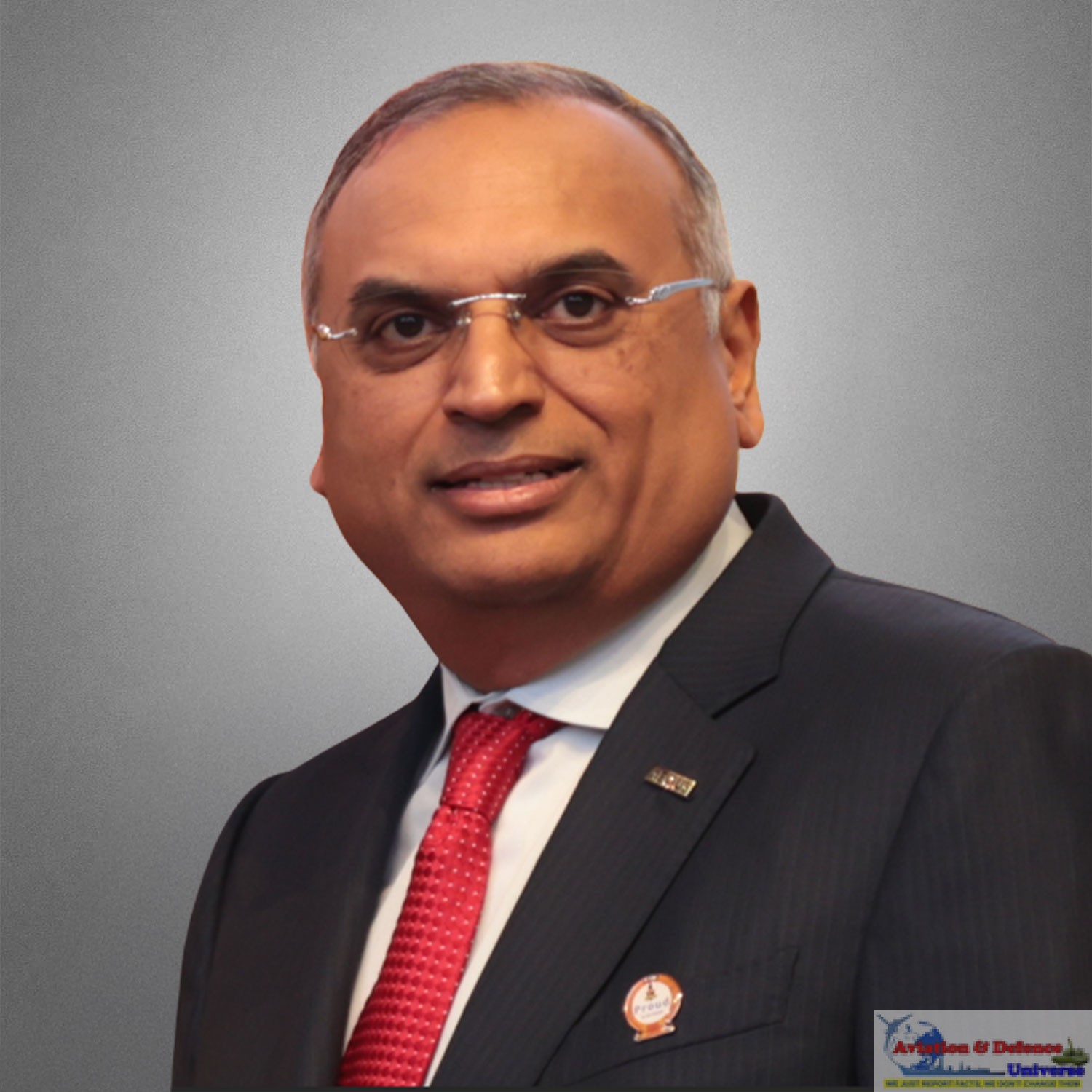
“The decision to allow eligible SEZ manufacturing units to sell into the Domestic Tariff Area at concessional duty is a significant boost for companies that have created large-scale capacities in both the consumer and aerospace & defence sectors. At a time of global demand volatility and trade disruptions, this pragmatic measure will help improve capacity utilization, support operating efficiencies, and provide greater flexibility for capital-intensive manufacturing operations. For strategic sectors such as Aerospace and Defence, a more permanent framework for domestic sales from SEZs, would further strengthen India’s ability to meet growing indigenous demand while also becoming globally competitive. More broadly, the Budget’s sustained focus on manufacturing-led growth, infrastructure development, and global competitiveness reinforces long-term policy clarity and investor confidence. Initiatives such as India Semiconductor Mission 2.0, the expanded Electronics Components Manufacturing Scheme, customs duty exemptions for aircraft components and MRO-related raw materials, and the substantial increase in defence spending, with indications of up to a 20% hike, collectively support deeper localization, modernization, and private sector participation. Together, these measures will create a stable and enabling framework for companies to scale investments, deepen capabilities, and integrate India more firmly into global manufacturing value chains.”
Amit Mahajan, Director, Paras Defence & Space Technologies Limited
“We welcome the Union Budget 2026 as a strategic and forward-looking blueprint for India’s technological and defence renaissance. The substantial allocation of ₹7.84 lakh crore to the defence sector, including a capital outlay of over ₹2.19 lakh crore, underscores the Government’s sustained commitment to defence modernisation, indigenisation and capability expansion. This decisive fiscal push strengthens long-term demand visibility for domestic defence manufacturers and accelerates India’s transition from a buyer to a builder of advanced defence systems. We commend the Government’s emphasis on fostering a robust manufacturing and innovation ecosystem, thereby accelerating the country’s Viksit Bharat vision and enhancing India’s competitive edge across defence, semiconductors and allied high-technology domains. The prioritisation of capital expenditure, coupled with policy continuity around self-reliance, signals a structurally supportive environment for companies operating across strategic electronics, optics, surveillance and space-enabled defence solutions.The ₹40,000 crore outlay under the expanded India Semiconductor Mission, with a renewed focus on end-to-end capabilities and supply-chain depth, represents a critical enabler for next-generation defence platforms that are increasingly semiconductor-intensive. When viewed alongside rising defence capital allocations and import-substitution thrusts, this Budget lays the foundation for a multi-year upcycle in indigenous defence production, positioning future-ready players to scale with confidence and technological depth.”
Jaikaran Chandock, Director, Balu Forge Industries Ltd.
“Budget 2026 lays down an ambitious roadmap for India’s manufacturing sector, anchored by a record ₹12.2 trillion infrastructure capex and a clear strategy to expand manufacturing’s share of GDP. The enhanced focus on structural reforms, revitalising legacy industries and scaling advanced sectors signals a shift from incremental support to broad-based capacity building and competitiveness. In addition, the allocation of ₹5.95 lakh crore to the defence sector for defence research, land systems and equipment further strengthens the manufacturing outlook, particularly for precision engineering and high-value domestic production. Looking forward, the challenge now is in execution, translating intent into implementation that lowers input costs, accelerates skilling, and deepens technology adoption across supply chains. If realised effectively, this Budget could be a catalyst for manufacturing to not only generate sustainable employment but also elevate India’s position as a globally competitive manufacturing hub in the coming decade.”
Rajendra Chodankar, Chairman & CEO – RRP Group of Companies
“The Union Budget 2026-27 demonstrates a sustained commitment to strengthening national security and industrial self-reliance. The allocation of ₹2,19,306.47 crore for Capital Outlay on Defence Services provides the necessary financial foundation for the systematic modernization of our Armed Forces. By maintaining a framework where a significant majority of capital procurement is reserved for the domestic industry, the government is fostering a predictable environment for long-term industrial growth. For manufacturers, this substantial capital expenditure enables the scaling of advanced technological research and the expansion of indigenous production lines, which is essential for reducing external dependencies and building a resilient, self-reliant defence supply chain.”
Rinkesh Roy, Joint Managing Director and CEO, JSW Infrastructure Ltd.
“We congratulate the Honourable Finance Minister and the Government of India on a decisive and forward-looking Budget that firmly positions infrastructure as the foundation of India’s growth. The thought through push towards port modernisation, inland waterways, coastal shipping, and logistics corridors will make India competitive and marks a structural change. The additional focus on expanding national waterways, strengthening east coast connectivity, container manufacturing, and digitalisation of ports aligns closely with our vision of building integrated, port-led logistics ecosystems. Creating seamless linkages between ports, evacuation infrastructure, and industrial clusters is a must to achieve the uninterrupted growth. Equally encouraging is the emphasis on green ports, sustainability-linked financing, ship repair, and smart-port technologies, which will enhance India’s maritime competitiveness while supporting long-term, sustainable growth. Overall, Budget 2026–27 reinforces India’s ambition to emerge as a global maritime and logistics hub and provides strong momentum to port-led industrial development.”
Sanjay Choudhari, Chairman, SBL Energy Limited
“The Union Budget 2026-2027 points to a clear strategic response to the growing global trade tensions and supply-chain vulnerabilities. By establishing dedicated rare earth corridors across mineral-rich states and supporting downstream processing, research, and manufacturing, the government is addressing one of India’s most critical dependencies – access to strategic materials dominated by global monopolies. This initiative not only strengthens domestic capabilities but also provides a significant boost to the mining sector, incentivising exploration, commercial-scale extraction, and integration with downstream industries. Apart from this, the parallel push to strengthen manufacturing across priority sectors, including the creation of dedicated chemical parks, reflects a shift from fragmented capacity to integrated industrial ecosystems. To sum it all up, these measures reduce import dependence, build supply-chain resilience, and position India as a more reliable and competitive player in global manufacturing networks.”
Krishanu Acharya, Co-Founder & CEO, Suhora Technologies
“The Union Budget 2026 builds on the groundwork laid over the last few years by backing specific enablers for technology and space-led growth. Continued support for emerging technologies through initiatives like the IndiaAI Mission and the ₹10,000 crore SME Growth Fund for startups and MSMEs strengthens the overall innovation ecosystem. The 15% increase in the defence budget to ₹7.85 lakh crore is a particularly strong signal for the space sector, as defence remains one of the largest and most strategic users of space-based capabilities. We are hopeful that the increased allocation in defence will accelerate greater adoption of satellite data analytics for ISR, terrain surveillance and maritime domain awareness to not only enhance operational readiness but also create sustained demand for indigenous space technologies. This, in turn, will help the domestic space ecosystem mature faster, from upstream satellite capabilities to downstream analytics and applications. For companies like Suhora Technologies, working across space, geospatial and data-driven domains, these measures indirectly support product innovation, talent creation and long-term collaboration with defence stakeholders, enabling Indian technology firms to scale and engage more meaningfully with global markets.”
Siddhartha Sagar, Director, Avantel Limited
“The Union Budget 2026 strongly reinforces India’s push toward innovation-led and self-reliant growth across pharma, technology, manufacturing, defence and aviation. The focused support for biopharma, deep tech, semiconductors and AI ecosystems, along with continued incentives for domestic manufacturing and defence and aerospace capability building, creates a strong foundation for long-term value creation. These measures are expected to accelerate indigenous technology development, strengthen supply chains and open new high-value opportunities. For Avantel, the budget direction is well aligned with our focus on advanced technologies and strategic sectors, and we view it as a positive catalyst for the broader industry and our growth journey.”
As told to Sangeeta Saxena