




















- From Deterrence to Doctrine: Operation Sindoor in Retrospect
- Lessons from India’s Most Significant Security Operation of 2025
- The Operation That Changed the Rules of Engagement
By Maj Gen (Dr.) Ashok Kumar, VSM (Retired)
 New Delhi. 30 December 2025. Operation Sindoor emerged as one of the most consequential security developments of 2025, redefining India’s strategic outlook and dominating the national security discourse through the year. Beyond its immediate operational objectives, the operation exposed the evolving nature of regional conflict, particularly the unprecedented depth of China’s support to Pakistan in intelligence, surveillance, and operational coordination. It highlighted how modern conflicts are no longer limited to bilateral engagements but are shaped by covert alliances, technology-enabled warfare, and strategic convergence among adversaries. Operation Sindoor also re-emphasises India’s need to reassess the long-held assumption of managing separate threats on its northern and western fronts, reinforcing the reality of a unified China–Pakistan challenge. As the year closed, Operation Sindoor stood not merely as a military episode but as a strategic wake-up call, prompting renewed emphasis on integrated threat assessment, preparedness across domains, and a recalibrated national security calculus for the decade ahead.
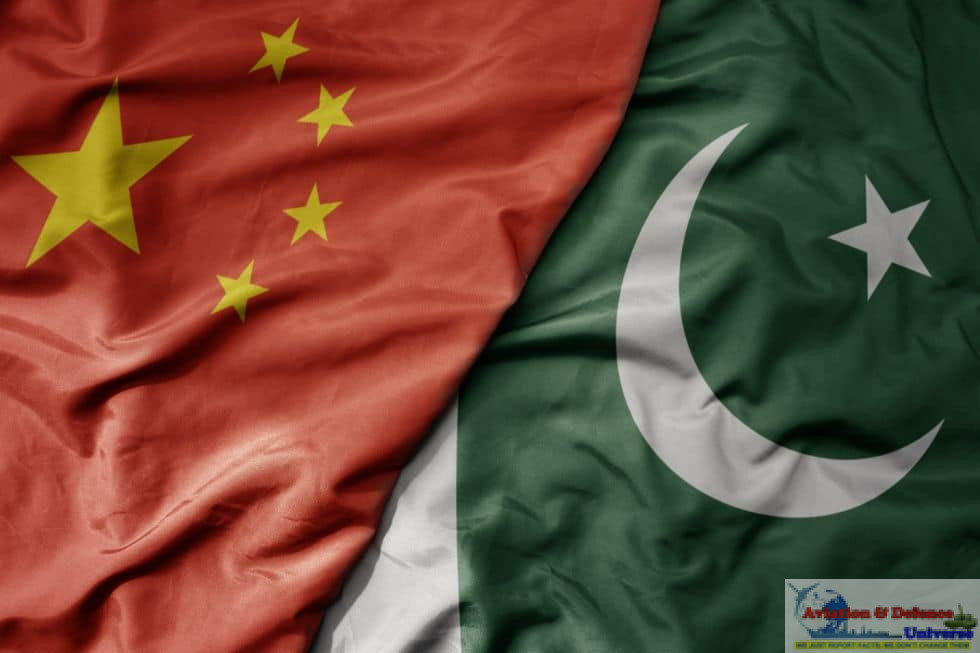
Operation Sindoor marked a significant inflection point in South Asia’s strategic landscape by exposing the depth and nature of China’s involvement in Pakistan well beyond the long-projected narrative of economic cooperation. While Beijing’s investments in the China–Pakistan Economic Corridor (CPEC) and Gwadar Port were often portrayed as primarily commercial initiatives, China’s unprecedented support to Pakistan during Operation Sindoor revealed a far more consequential reality. Reports of Chinese assistance through advanced military equipment, surveillance inputs, operational coordination, and even conflict planning reiterated that the China–Pakistan relationship has evolved into a tightly integrated strategic partnership. This development signals a decisive shift, with Pakistan increasingly functioning as a strategic extension of Chinese regional ambitions, raising serious implications for India’s national security and long-term threat assessment.
While China has been supporting Pakistan on multiple counts but its support to Pakistan during Operation Sindoor was unprecedented. China not only supported Pakistan with best of its equipment and surveillance inputs but it reportedly supported Pakistan in conduct of operations as well during Operation Sindoor as China is also supposed to have aided Pakistan actively in conflict planning . It goes to prove that China’s support is not limited only to economic co-operations wherein it is developing CPEC through our occupied territory known as POJK but also linking it to Gwadar port to develop alternate connectivity for helping it strategically to reduce its vulnerability of traversing a long route through IOR and also passing through Malacca Strait, a known choke point. It is now clear that China has turned Pakistan as a vassal state resulting in sovereignty of Pakistan being only notional. This transition has not happened overnight but has taken decades wherein Pakistan has compromised on its sovereignty due to its existential anti-India stance and China has exploited that to a full extent. Sequential analysis of connected events therefore will be in order to understand this relationship which needs to be factored by India in its security calculus.

The Chinese government came into existence on 01 Oct 1949, a little over two years after Pakistan and India got independence in Aug 1947. China took first 10 years of its current regime to develop its capacities remaining focused on annexing Xinjiang (1949), supporting North Korea (1950-1953) in Korean war, annexing Tibet (1950-1959) which was followed thereafter by turning its attention to India. The border differences had started emerging after Chinese construction of major highway got reported resulting in China coming up with 1959 claim line once the issue was raised. Differing stances of India and China on border issues resulted in Chinese attack in 1962. And here comes the entry of Pakistan opening itself to Chinese in an unprecedented manner.
Pakistan having attempted to capture J&K through 1947-48 war had miserably failed though it was able to occupy close to one third of J&K due to declaration of ceasefire and drawl of ceasefire line (CFL). It was now eyeing new opportunities to further its national agenda of annexing entire J&K. Pakistan was watching the activities of China critically specially initial overdrive of China to annex large swath of territories of Xinjiang, Tibet, etc. It smelled an opportunity from 1959 onwards when China started its anti-India activities in form of a new claim line in 1959 without any objective justification. Since the new claim line emerged after construction of Xinjiang-Tibet Highway (G219) by China, it was obvious that China had the clear intention of developing this axis to improve the linkages with Tibet and Xinjiang. Having seen China succeeding in 1962 war against India, Pakistan ceded Shaksgam Valley, which was part of J&K, to China in 1963. This was followed by enhanced relationship between Pakistan and China regularly. Pakistan assumed that India has weakened due to losses in 1962 war and therefore attempted to capture J&K again in 1965 war. Pakistan lost badly due to India responding not only in POJK but extended the fight in Punjab state of Pakistan as well. It is beside the point that we lost our gains during Tashkent agreement including strategically captured Haji Pir pass.
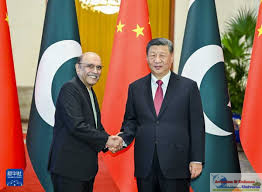
Pakistan continued relying on China as well as the West after 1965 war for equipping and other support but could not leverage the same during 1971 war wherein it was broken in two parts resulting in West Pakistan becoming current day Pakistan and East Pakistan emerging as an independent nation as Bangladesh. Pakistan, however, realised that it needs to focus on West less and more on China as it became land connected with China. It adopted the strategy of POJK being almost a no-go for India due to agreeing for CPEC corridor through POJK and placing of forces and resources of China in POJK in garb of security threat to POJK based CPEC related infrastructure being created by China.
Having found unprecedented support from China during Operation Sindoor , Pakistan is heavily dependent on China for its support and furthering of its anti-India effort on every possible opportunity. The latest salvo of Pakistan relates to support of China on its unfounded claim of Arunachal Pradesh being part of Chinese territory. All mutual support and economy based efforts have not made any major impact on Pakistan’s economy which is in doldrums and does not indicate any possibility of growth in near to mid-term.
If the relationship has not yielded economic revival of Pakistan despite support from world’s second largest economy, what is being attempted by Pakistan and China? If the trend appearing during Operation Sindoor is extrapolated, one can find the possibility of an agreement emerging between China and Pakistan on the lines Pakistan did with Saudi Arabia which was termed as mutual defence pact. Though China may not commit itself in such a binding pact but this is what is going to be attempted by Pakistan at any future date. Such an arrangement will pose unprecedented challenges for India for which India needs to prepare for it right from this stage. The era of China and Pakistan being two fronts is already over and both these should be seen as a single united front. National security strategy should factor this reality as and when it comes up. In fact, these are some of the reasons for which a formal national security strategy should not be written as it offers less advantage by bringing clarity on response action but does away with inherent strategic flexibility which is available in its absence at present.
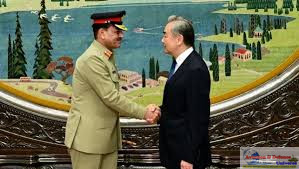
It’s high time that China and Pakistan’s relationship should be seen beyond economic aspirations and they should be seen as our adversaries and part of the same basket while evaluating the threat matrix. The events surrounding Operation Sindoor make it clear that China’s engagement with Pakistan can no longer be viewed through a purely economic lens. Decades of gradual alignment—rooted in Pakistan’s enduring anti-India posture and China’s opportunistic strategic calculus—have culminated in a relationship where Pakistan’s sovereignty appears increasingly constrained by Chinese interests. Despite massive Chinese investment, Pakistan’s economy remains fragile, suggesting that Beijing’s priorities are driven more by strategic leverage than economic revival. The trajectory now points toward deeper military and security coordination, potentially even informal defence arrangements, posing unprecedented challenges for India. It is therefore imperative that India’s security planning fully internalises the reality of China and Pakistan operating as a unified strategic front. Moving forward, threat assessments, military preparedness, and diplomatic posture must be recalibrated to address this consolidated adversarial axis, recognising that the era of viewing China and Pakistan as separate challenges has decisively ended.
(Maj Gen Ashok Kumar, VSM (Retd) is Director General Centre for Joint Warfare Studies (CENJOWS), a Kargil war veteran and a defence analyst. He specialises on neighbouring countries with special focus on China. The views in the article are solely the author’s. He can be contacted at editor.adu@gmail.com).