





























- Winning Without Firing a Shot: Narratives as Weapons
- Why the Battle for Perception Will Decide Future Conflicts
- The Invisible Battlefield: The New Frontline of War
By Sangeeta Saxena
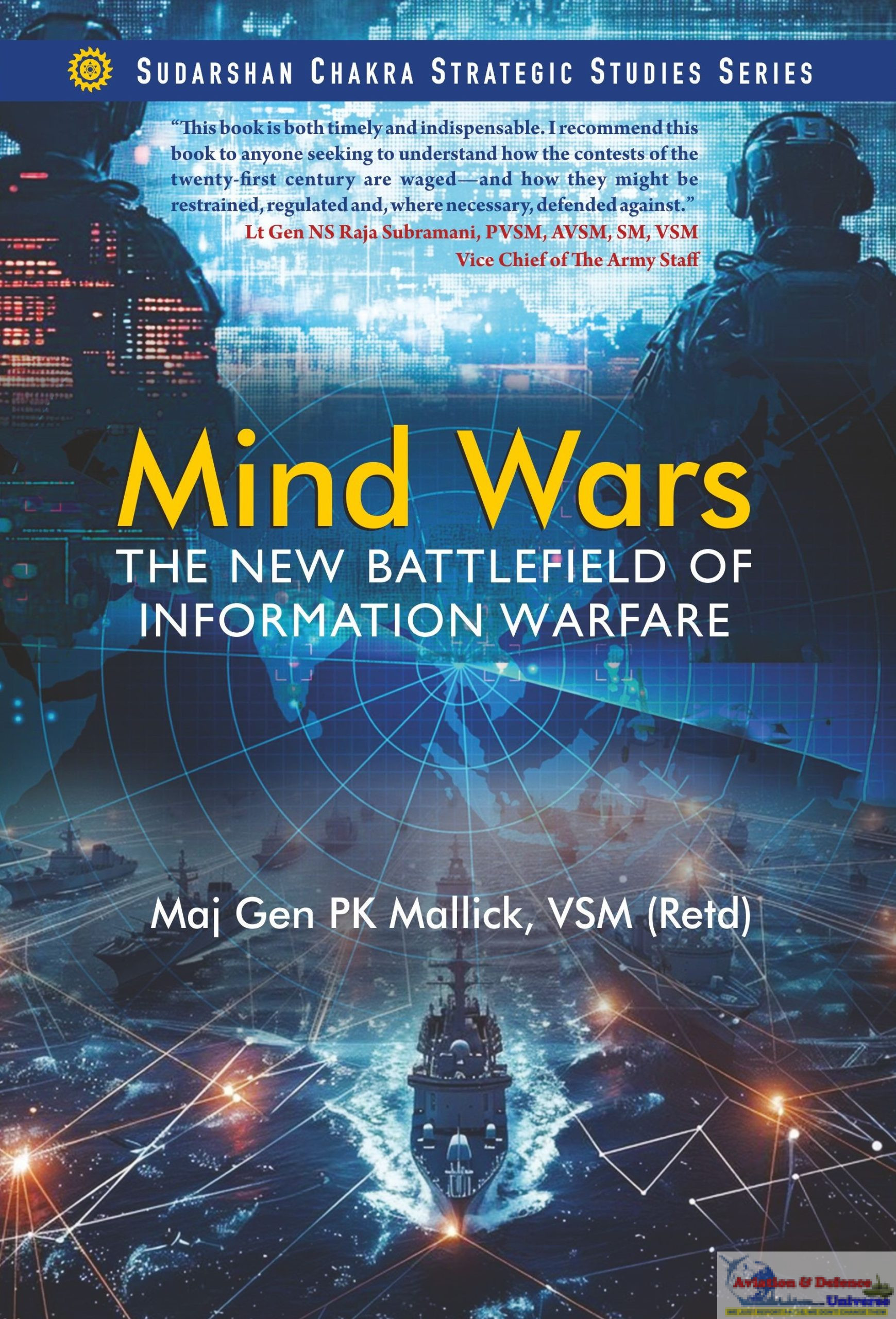
New Delhi. 14 December 2025. In an era where conflicts are increasingly shaped by perception rather than firepower, Mind Wars: The New Battlefield of Information Warfare arrives as a timely and incisive exploration of how wars are being fought in the cognitive and informational domains. Authored by Maj Gen PK Mallick, VSM (Retd.) and published by Pentagon Press, the book argues that modern conflict no longer begins with the movement of troops or the launch of missiles, but with the shaping of narratives, manipulation of public opinion, and strategic exploitation of information ecosystems. By weaving together history, theory, technology, and contemporary case studies, Mind Wars demonstrates how information has become both a weapon and a battlespace in its own right.
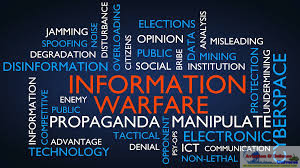 This chapter-wise analytical review of Mind Wars: The New Battlefield of Information Warfare examines the book’s content, relevance, language, and its alignment with India’s evolving defence and national security challenges. Mind Wars is a timely and deeply researched examination of Information Warfare as the defining battlespace of contemporary and future conflict. The book argues convincingly that wars are no longer fought only with tanks, aircraft, and missiles, but increasingly through narratives, perception management, cyber-enabled influence, and cognitive manipulation. For India, which faces persistent hybrid threats from both state and non-state adversaries, the book offers more than theoretical insight. It provides a strategic lens to understand, counter, and effectively leverage information power as an instrument of national security.
The opening chapter establishes a strong intellectual foundation by positioning information as the primary strategic asset of modern conflict. Drawing on the ideas of Alvin and Heidi Toffler, the author demonstrates how the battlefield has expanded beyond physical domains to include media, cyberspace, and public perception, effectively blurring the traditional distinction between peace and war. This perspective resonates deeply with India’s experience of cross-border disinformation campaigns, narrative warfare during military standoffs, and social media-driven polarisation. The discussion on managing public expectations during military operations mirrors India’s real-world challenges in crisis communication. The language of this chapter is clear, authoritative, and accessible, making complex strategic ideas comprehensible to policymakers, military officers, and strategic analysts alike.
In the second chapter, the book rigorously defines Information Warfare and distinguishes it from Cyber Warfare while explaining its broader strategic depth. By tracing its roots from ancient Indian texts such as the Mahabharata and the teachings of Sun Tzu to Cold War-era propaganda, the author anchors Information Warfare as an enduring yet evolving phenomenon. The inclusion of Indian historical examples and South Asian security dynamics significantly enhances the book’s relevance for Indian readers. The treatment of the India–Pakistan rivalry and China’s narrative strategies makes this chapter particularly valuable for defence planners. One of the book’s strongest contributions here is its conceptual clarity in presenting information simultaneously as a weapon and a battlespace.
 The historical evolution of Information Warfare is examined through ancient, medieval, and modern conflicts, demonstrating that psychological dominance often precedes kinetic victory. References to India’s psychological operations during the 1971 Bangladesh War underscore the country’s own legacy in this domain and reinforce the argument that Information Warfare is not alien to India but remains under-institutionalised within its formal doctrine. The author uses engaging historical anecdotes to simplify complex strategic lessons, making this section both informative and readable.
A significant portion of the book is devoted to explaining the Information Environment and its physical, informational, and cognitive dimensions. The emphasis on the cognitive layer, where the human mind becomes the primary terrain of conflict, is particularly important. In India’s open, democratic, and multilingual society, this domain is especially vulnerable to manipulation. The analytical frameworks presented in this section are directly applicable to safeguarding electoral integrity, civil-military trust, and broader societal cohesion. The use of structured models and diagrams enhances comprehension and offers practical value for military and policy planners.
The chapter on the components of Information Operations provides a comprehensive operational toolkit by breaking down cyber operations, psychological operations, electronic warfare, military deception, and operations security. This section highlights a critical gap in India’s current approach, namely the fragmented handling of cyber capabilities, psychological operations, and strategic communication. The book implicitly argues for a joint and integrated command structure, an idea that aligns well with India’s ongoing theatre command reforms. The language here is technical yet disciplined, making it particularly suitable for professional military education and doctrinal development.
One of the most forward-looking sections of the book examines cyber-enabled information operations and emerging technologies such as artificial intelligence, deepfakes, bots, social media algorithms, and quantum technologies. The author convincingly shows how technology has democratised and accelerated influence warfare, allowing both state and non-state actors to conduct operations at scale. Given India’s massive digital population and rapidly growing AI ecosystem, this discussion is especially relevant. The book warns that technological strength without cognitive resilience can become a strategic vulnerability. The focus on individualised warfare and micro-targeting is particularly significant in the Indian context, where political leaders, military personnel, and even their families can be subjected to targeted psychological pressure.
The analysis of narratives and cognitive warfare through country studies of China, Pakistan, and Russia provides concrete adversarial models. China’s doctrine of cognitive warfare and Pakistan’s long-running narrative campaigns against India are examined with clarity and depth. Rather than advocating alarmism, the book balances critique with strategic learning and implicitly urges India to move from reactive rebuttals to proactive narrative shaping in both regional and global contexts.
The book also addresses ethical dilemmas inherent in Information Warfare, including the tension between truth and effectiveness, free speech and security, and state power and democratic norms. For the world’s largest democracy, this discussion is particularly significant. Instead of advocating censorship, the author emphasises resilience, education, and institutional reform as sustainable defensive measures. The tone in this section is measured and reflective, encouraging informed debate rather than prescribing rigid solutions.
 In its concluding chapters, Mind Wars calls for a whole-of-government and whole-of-society approach to Information Warfare, integrating military institutions, intelligence agencies, academia, media, and the technology sector. This aligns closely with India’s need for an institutionalised Information Warfare doctrine, specialised professional cadres, and deeper civil-military fusion in the information domain. The book closes with a stark yet motivating message that the war for information is already underway and that preparedness remains a conscious strategic choice.
Overall, Mind Wars offers a comprehensive and structured treatment of Information Warfare with strong relevance to India’s security environment. It balances theory, history, technology, and policy while maintaining clear and professional language suited for strategic audiences. The book directly addresses India’s challenges in hybrid and grey-zone warfare, adversarial narrative strategies from China and Pakistan, social media-driven polarisation, cyber and cognitive vulnerabilities, and civil-military information alignment. It is particularly well-suited for defence and security policymakers, military officers, joint planners, strategic communication professionals, intelligence analysts, and scholars of national security.
For India, a nation navigating complex hybrid threats from state and non-state adversaries while safeguarding democratic values and social cohesion, the insights offered in Mind Wars are particularly relevant. The book provides a structured framework to understand how information warfare operates across physical, informational, and cognitive dimensions, and why dominance in these spaces is increasingly decisive in determining strategic outcomes. It serves as both a warning and a guide for policymakers, military leaders, and strategic thinkers seeking to prepare for the conflicts of the future.
The foreword of Mind Wars: The New Battlefield of Information Warfare, written by Lt Gen NS Raja Subramani (Retd), sets a powerful strategic tone for the book and firmly establishes why information warfare has moved from the periphery to the centre of modern military and national security thinking. He underscores that in an era where ideas, narratives, and perceptions travel faster than kinetic force, the struggle for influence over minds has become as decisive as control over territory. The foreword positions the book as both timely and indispensable, highlighting how Maj Gen PK Mallick successfully bridges the ancient contest for hearts and minds with the radically modern realities of algorithms, artificial intelligence, and pervasive digital ecosystems. Lt Gen Subramani particularly commends the book’s rare balance of encyclopaedic breadth and operational clarity, noting that it not only explains core concepts such as the information environment and the compression of strategic, operational, and tactical levels, but also translates them into practical domains like cyber-enabled information operations, psychological warfare, narrative and cognitive warfare, and the weaponisation of social media.
A defining strength identified in the foreword is the book’s consistent emphasis on the human dimension—credibility, cultural understanding, and narrative craft—reminding readers that technology amplifies influence but does not replace human judgment or vulnerability. The foreword also values the book’s comparative analysis of major state and non-state actors, its candid engagement with ethical and legal dilemmas, and its pragmatic policy recommendations focused on institutional coordination, cognitive resilience, and democratic safeguards. Overall, the foreword frames Mind Wars as both a strategic reference and a call to action, urging policymakers, military professionals, scholars, and informed citizens to recognise that the battlefield of the mind is real, contested, and decisive in shaping national futures.
Mind Wars makes a compelling case that the struggle for control over information, perception, and belief systems is already underway and will define the character of future warfare. By systematically unpacking the evolution of information warfare, its operational components, and the role of emerging technologies, the book equips readers with the intellectual tools needed to recognise and counter cognitive threats. It also confronts the ethical challenges inherent in information operations, particularly for democratic societies, advocating resilience, institutional preparedness, and strategic clarity over reactionary measures.
For India, the book’s relevance is unmistakable. It aligns closely with the country’s defence and security challenges, including adversarial narrative campaigns, cyber-enabled influence operations, and the need for integrated civil-military information strategies. Ultimately, Mind Wars underscores a critical truth: in modern conflict, the side that shapes perception shapes reality. For those tasked with safeguarding national security in an increasingly contested information environment, this book is essential reading and a call to action.
 The Sudarshan Chakra Strategic Affairs Series represents a focused body of work dedicated to examining the evolving nature of war, security, and statecraft in the 21st century. Rooted in Indian strategic thought yet globally informed, the series explores how technology, information, and power intersect across modern battlefields. It seeks to bridge theory with operational and policy relevance for practitioners and scholars alike. The book fits squarely within this vision, addressing the cognitive and informational dimensions of contemporary conflict.
This book makes a compelling case that the struggle for control over information, perception, and belief systems is already underway and will define the character of future warfare. By systematically unpacking the evolution of information warfare, its operational components, and the role of emerging technologies, the book equips readers with the intellectual tools needed to recognise and counter cognitive threats. It also confronts the ethical challenges inherent in information operations, particularly for democratic societies, advocating resilience, institutional preparedness, and strategic clarity over reactionary measures.
For India, the book’s relevance is unmistakable. It aligns closely with the country’s defence and security challenges, including adversarial narrative campaigns, cyber-enabled influence operations, and the need for integrated civil-military information strategies. Ultimately, Mind Wars : The New Battlefield of Information Warfare, highlights a critical truth: in modern conflict, the side that shapes perception shapes reality. For those tasked with safeguarding national security in an increasingly contested information environment, this book is essential reading and a call to action.
Mind Wars : The New Battlefield of Information Warfare
Publisher: Pentagon Press
Author: Maj Gen PK Mallick, VSM (Retd.)
Publication Date: December 2025
Genre: National Security / Military Strategy
Pages: 278
ISBN: 978-81-993527-0-4
Price: Rs. 1295/-