












- Honda regenerative fuel cell (RFC) system provides advanced energy storage capable of supporting human life on the lunar surface
- Astrobotic Vertical Solar Array Technology (VSAT), a component of the Astrobotic LunaGrid power system, advances lunar power infrastructure
- Honda and Astrobotic will conduct a feasibility study for the integration of the RFC into LunaGrid
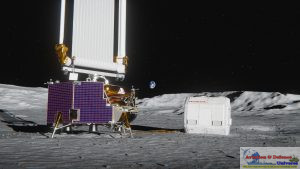 TORRANCE, Calif., and PITTSBURGH, September 29, 2025 – American Honda Motor Co., Inc. and Astrobotic Technology, Inc. today announced a joint development agreement aimed at developing a scalable and integrated power solution for sustained lunar surface missions. The joint feasibility study will explore how the Honda regenerative fuel cell (RFC) system can be integrated with Astrobotic’s Vertical Solar Array Technology (VSAT) and LunaGrid service to provide continuous power, even during prolonged periods of darkness on the Moon.
The Honda RFC system, known as a circulative renewable energy system, is designed to continuously produce oxygen, hydrogen, and electricity using solar energy and water. During the lunar day[1], the RFC system stores solar power as hydrogen and converts it into electricity during the lunar night[2]. After generating electricity, the only byproduct of the fuel cell is water, which is recycled into the Honda high-pressure water electrolysis system to create a closed-loop energy cycle.
Astrobotic is creating a scalable power infrastructure service, called LunaGrid, designed to supply sustained lunar surface power for a wide range of lunar missions and customers. A key component of LunaGrid is the Astrobotic VSAT, a solar-powered system that is deployable, self-leveling, and capable of sun tracking for optimal energy capture. Astrobotic is developing a 10 kW VSAT system, along with the Extra-Large Vertical Solar Array Technology (VSAT-XL), which would generate 50 kW of power to support the growing power requirements of planned lunar missions.
Feasibility Study Will Integrate the Honda RFC and Astrobotic VSAT Systems
Honda and Astrobotic plan to conduct a feasibility study that will focus on three key objectives:
- Conducting detailed illumination studies to assess power generation and storage requirements at different sites where the LunaGrid system will be deployed
- Evaluating the scalability of the Honda RFC system for LunaGrid’s use
- Assessing hardware and software integration with the Honda RFC and Astrobotic VSAT to define RFC system requirements that ensure reliable operation in future deployments
A key advantage of the Honda regenerative fuel cell system is its ability to provide continuous power during the lunar night. By integrating the Honda RFC with the Astrobotic VSAT, the combined system could significantly extend power availability beyond the lunar night, which would enable expanded mission capabilities, support a sustained human presence on the Moon, advance lunar surface infrastructure development, and power future commercial industries.
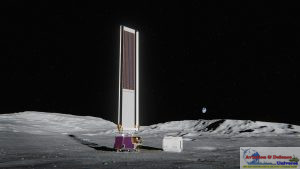 During the study, Honda and Astrobotic will also simulate one-year solar illumination profiles at various lunar South Pole sites using both the Astrobotic 10 kW and 50 kW VSAT systems. These simulated illumination profiles will determine how much sunlight the VSAT solar panels will receive on the lunar surface to power the water electrolysis during the day, enabling the RFC system to convert the stored hydrogen into electricity throughout the night. Based on the modeled solar energy production, Honda will size its regenerative fuel cell system to meet the energy storage needs of various lunar mission scenarios.
Perspectives from Honda and Astrobotic Leaders
Derek Adelman, chief engineer, Space Development Division, American Honda Motor Co., Inc.:
“The collaboration between Honda and Astrobotic marks a pivotal step toward creating scalable power solutions for long-term lunar surface missions. Powered by core Honda technologies, our regenerative fuel cell system is designed to provide efficient energy storage and regeneration to support sustained human life on the Moon as well as advance zero-emission applications on Earth.”
Bobby Rolley, Astrobotic’s Lunar Power Systems Architect:
“Astrobotic’s LunaGrid is being developed to deliver reliable, continuous power for lunar surface missions, revolutionizing the economics of exploration. By enabling survival through the harsh lunar night and extending mission durations from days to years, LunaGrid will significantly boost mission performance and data return per dollar invested. Our collaboration with Honda is a major move in this vision, as their scalable energy storage technology will enhance both LunaGrid and our Vertical Solar Array Technology (VSAT), expanding our overall power generation and storage capabilities.”