












- India–Italy Defence Ties Deepen as Adani, Leonardo Partner for Helicopter Manufacturing
- Leonardo’s Global Rotorcraft Expertise Meets Adani’s Industrial Ecosystem in India
By Sangeeta Saxena
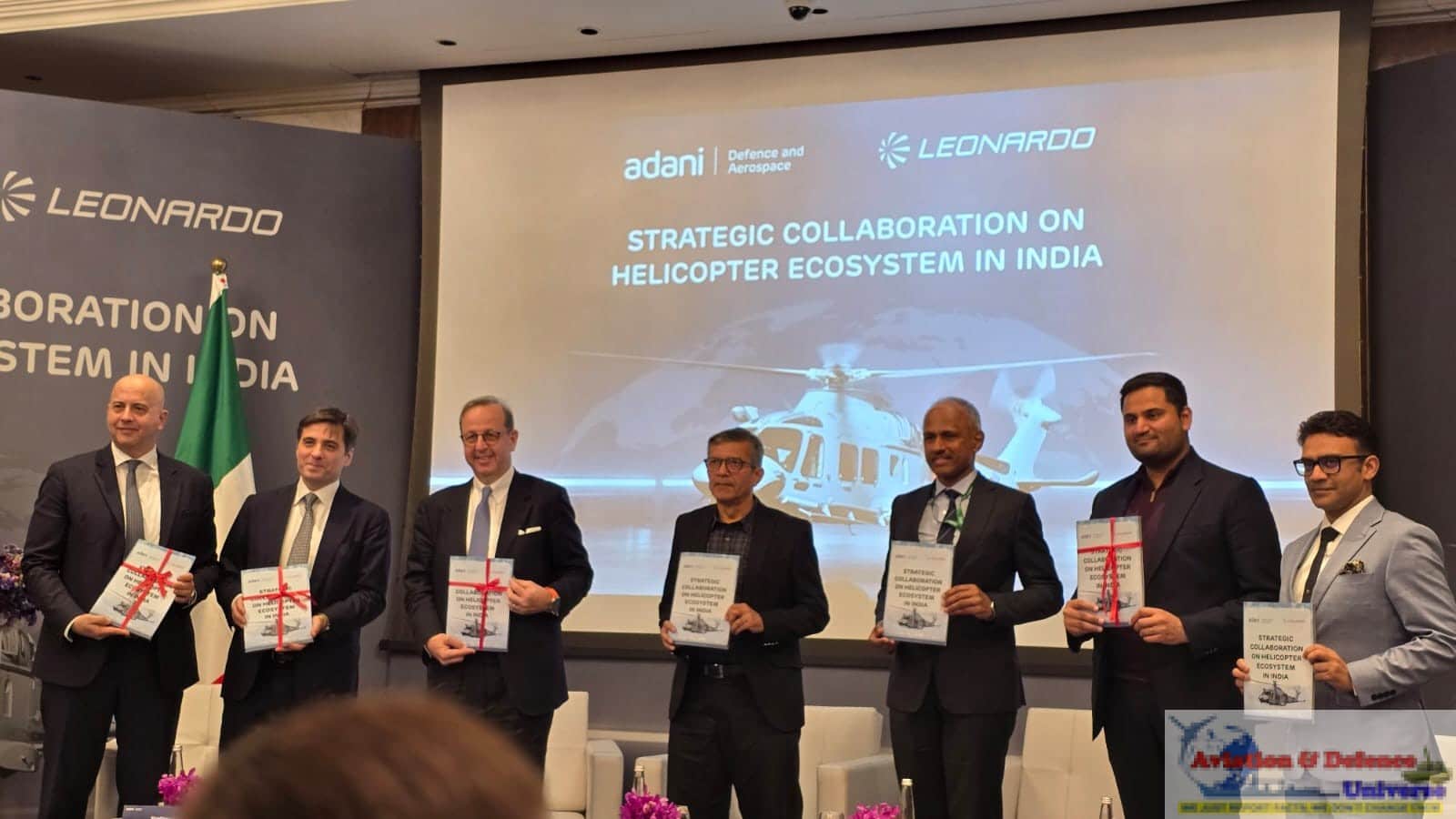
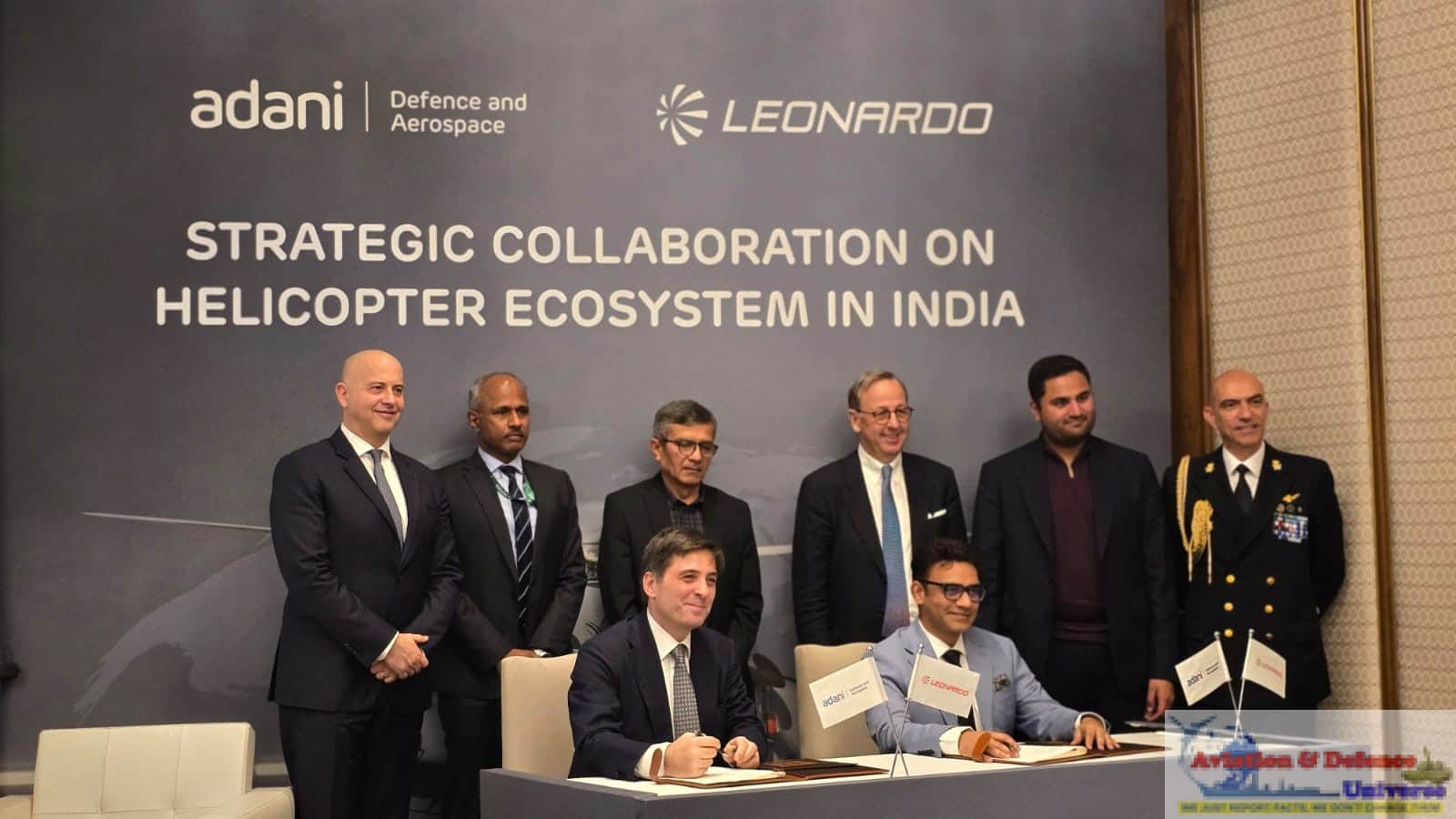
New Delhi. 03 February 2026. Leonardo and Adani Defence and Aerospace formally opened a new chapter in India’s helicopter and aerospace manufacturing story with the signing of a landmark Memorandum of Understanding in the presence of senior government leaders, industry heads and the Ambassador of Italy to India. The event brought together strategic vision, industrial ambition and diplomatic warmth, underlining how India’s defence modernisation, self-reliance push and global partnerships are converging to create a new helicopter ecosystem on Indian soil.
The ceremony was attended by Indian Defence Secretary Rajesh Kumar Singh, DG Acquisitions, MoD India A Anbarasu and Antonio Enrico Bartoli, alongside leadership from Leonardo and Adani Defence, marking the MOU as both an industrial and geopolitical milestone.
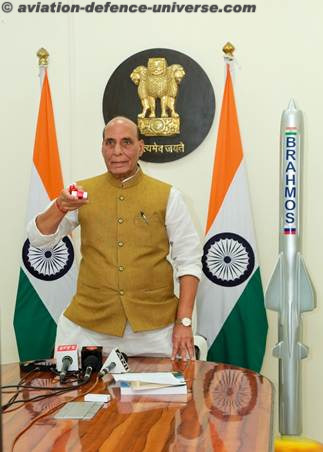
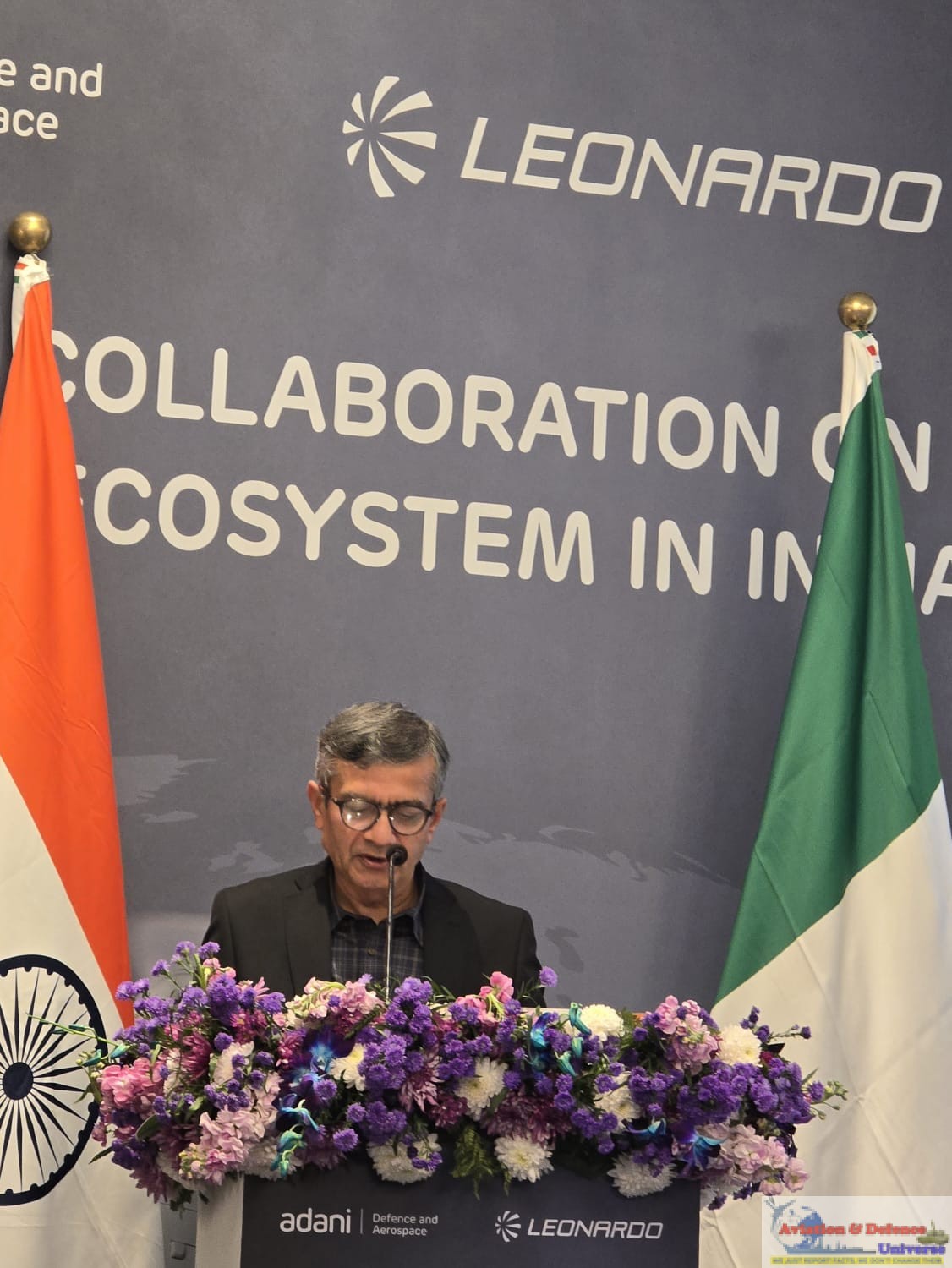 Rajesh Kumar Singh, Defence Secretary of India emphasised, “The Rotary Wing aviation segment occupies a critical space in India’s defence preparedness. The entry of capable private sector players and international partners strengthens this ecosystem, enhances self-reliance, and creates the competitive field that we need.” Summing up the broader vision, he said, “Collaborations like this will play an important role in achieving a diversified, technologically advanced defence industrial base in this country.”
The partnership is a natural progression of the deepening India–Italy strategic engagement that has expanded in recent years beyond diplomacy into tangible defence-industrial cooperation. Italy, through Leonardo, has consistently positioned itself as a long-term, reliable partner willing to share technology, build industrial capability and participate in India’s self-reliance journey as an equal.
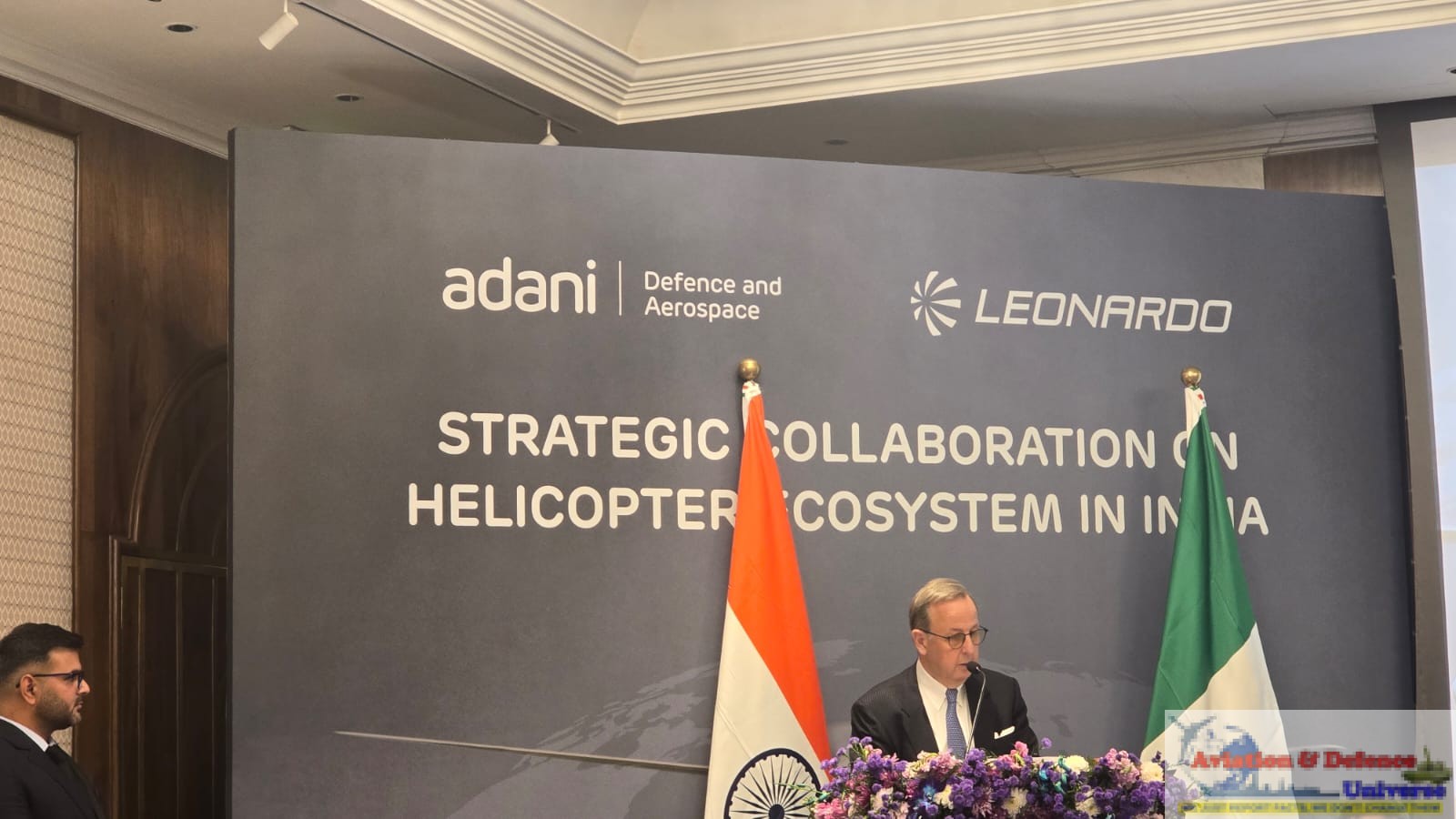
Ambassador Antonio Bartoli, Ambassador of Italy to India said, “Two global champions of the defence industry are opening a new chapter in their relationship. It is a chapter of two worlds into action. In the field of defence, Italy is a partner India can rely on, a reliable partner and a long-term partner.” He added, “By joining forces, Adani and Leonardo will increase investments and industrial exchanges, contributing to the creation of trusted and resilient value chains between the two countries.” Emphasising the depth of bilateral ties, he noted, “When one says strategic partnership, it doesn’t mean just a slogan, it means 360 degree partnership in all sectors, but this sector is particularly important because it is not only about security and money, it is about political trust among friends.”
 Leonardo’s aerospace legacy meets Adani’s rapid aerospace expansion is the story in one line. Founded over decades as a global aerospace and defence leader, Leonardo brings deep expertise across helicopters, avionics, digital systems, mission systems and pilot training. With over 4,500 platforms in service globally and a footprint spanning multiple continents, Leonardo’s rotary-wing portfolio is known for survivability, safety-by-design and advanced technology integration.
The Ambassador highlighted how the recently concluded FTA negotiations and the intensified Indo-Mediterranean engagement, including frequent Italian naval port calls, reflect a broader security and resilience agenda. This MOU, he noted, is not just about helicopters, but about creating trusted value chains and political trust between two strategic partners.
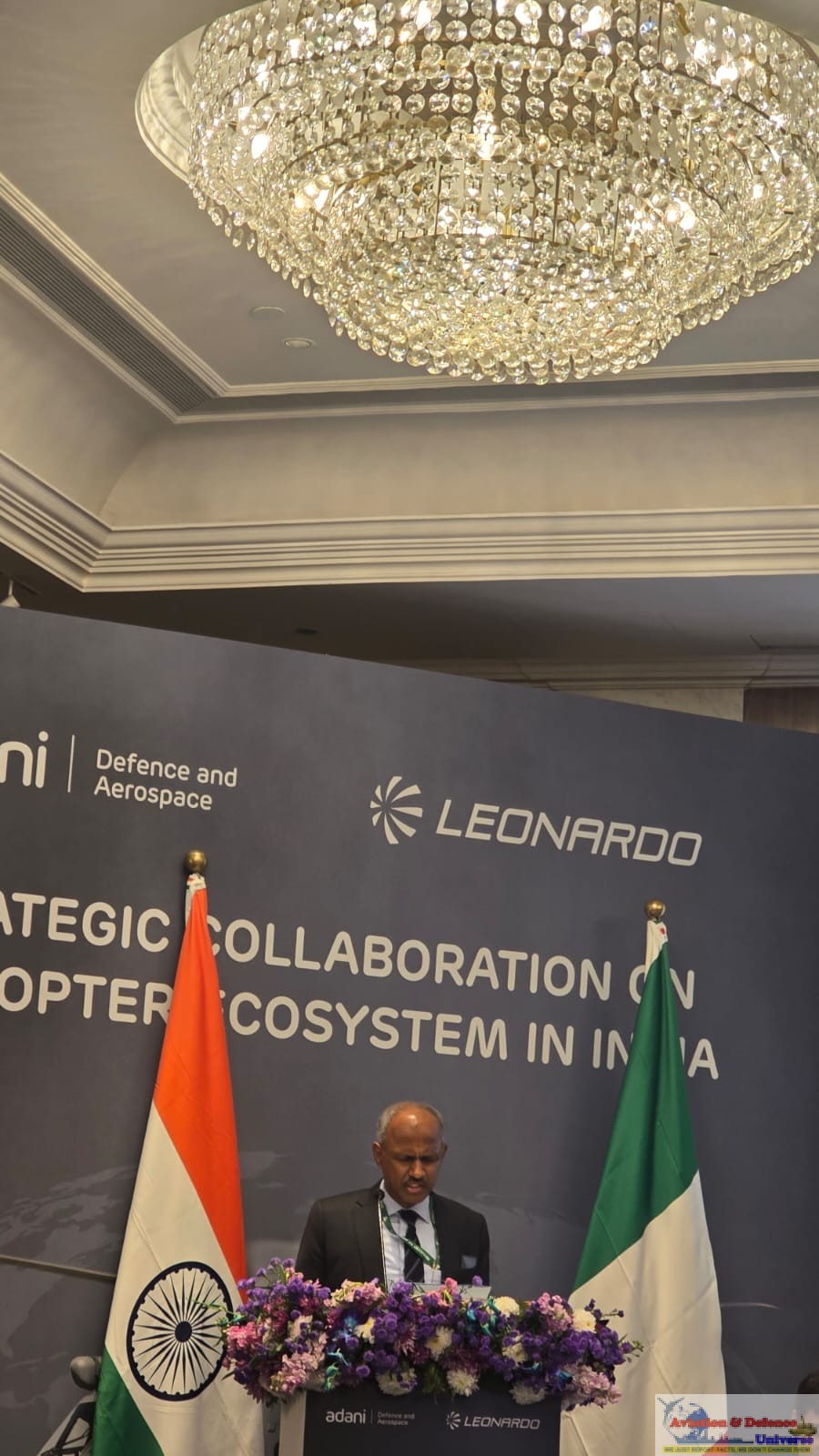 A. Anbarasu, Director General Acquisition, Department of Defence, Ministry of Defence, described the development as, “This is not just a marriage, this is a kind of a strategic marriage.” He further explained the policy shift underway, saying, “We are moving away from a transactional approach to procurement towards a transformational approach to capability building.” Highlighting the budgetary direction, he noted, “75% of this modernisation budget will be for domestic procurement. This is a clear signal to our MSMEs, our both government and private sector units.”
Adani Defence, meanwhile, has rapidly emerged as one of India’s most ambitious private sector aerospace players with advanced facilities in Hyderabad, Bengaluru and Hosur, already engaged in UAVs, avionics, electronics and helicopter MRO. The Leonardo partnership follows closely on the heels of Adani’s fixed-wing collaboration with Embraer, signalling its intent to build an integrated fixed-wing and rotary-wing aerospace ecosystem in India.
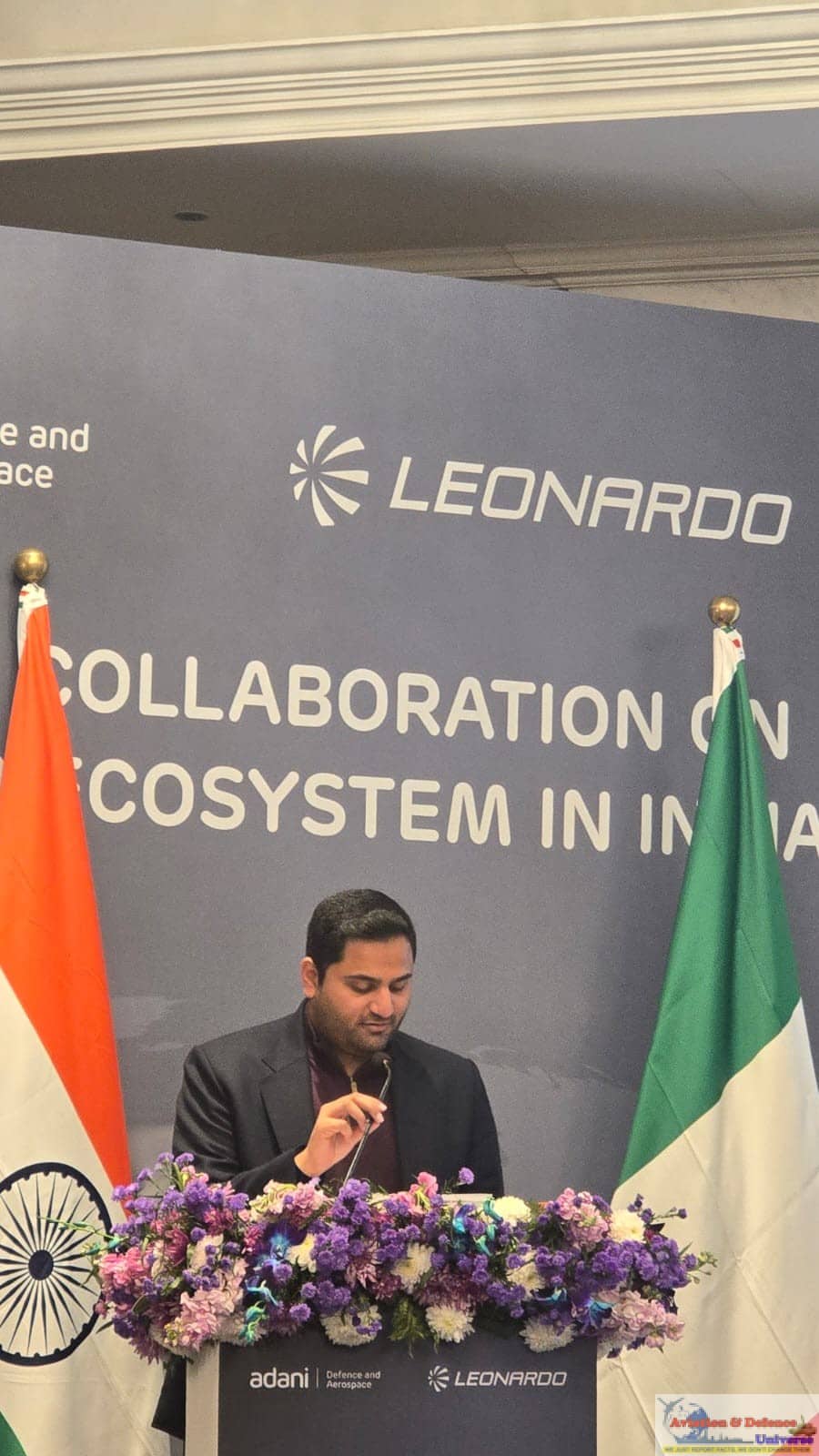 Jeet Adani, Director, Adani Defence and Aerospace observed, “We stand at a moment that carries meaning far beyond a corporate announcement. It is a moment that speaks to India’s confidence, to our aspirations as a nation.” He added, “Together, we will build an ecosystem on Indian soil that brings magic. Our helicopter capabilities will grow here, be sustained here, and be strengthened for generations.” Emphasising the societal dimension, he said, “It is time for our people to experience these services with the assurance that they are supported by an ecosystem built in India for India.”
Adani Defence and Aerospace’s foray into aerospace is being framed as an ecosystem build rather than a single-product play—leveraging industrial bases in Hyderabad, Bengaluru and Hosur for avionics, electronics, unmanned systems and helicopter MRO and then layering partnerships on top to scale capability. The group has signalled intent to stitch fixed-wing and rotary-wing pathways into one integrated national capability, pointing to collaboration with Embraer as part of that broader aerospace arc, alongside its helicopter-focused collaboration with Leonardo. Put together, the strategy reads as “manufacture + MRO + training” with partnerships accelerating technology access, supply-chain depth and platform readiness—positioning India not only to operate aircraft, but to industrialise the support and build ecosystem around them.
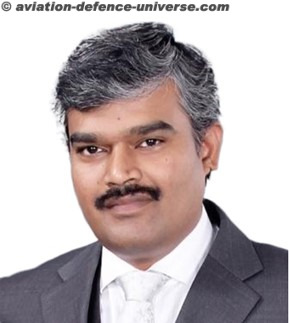
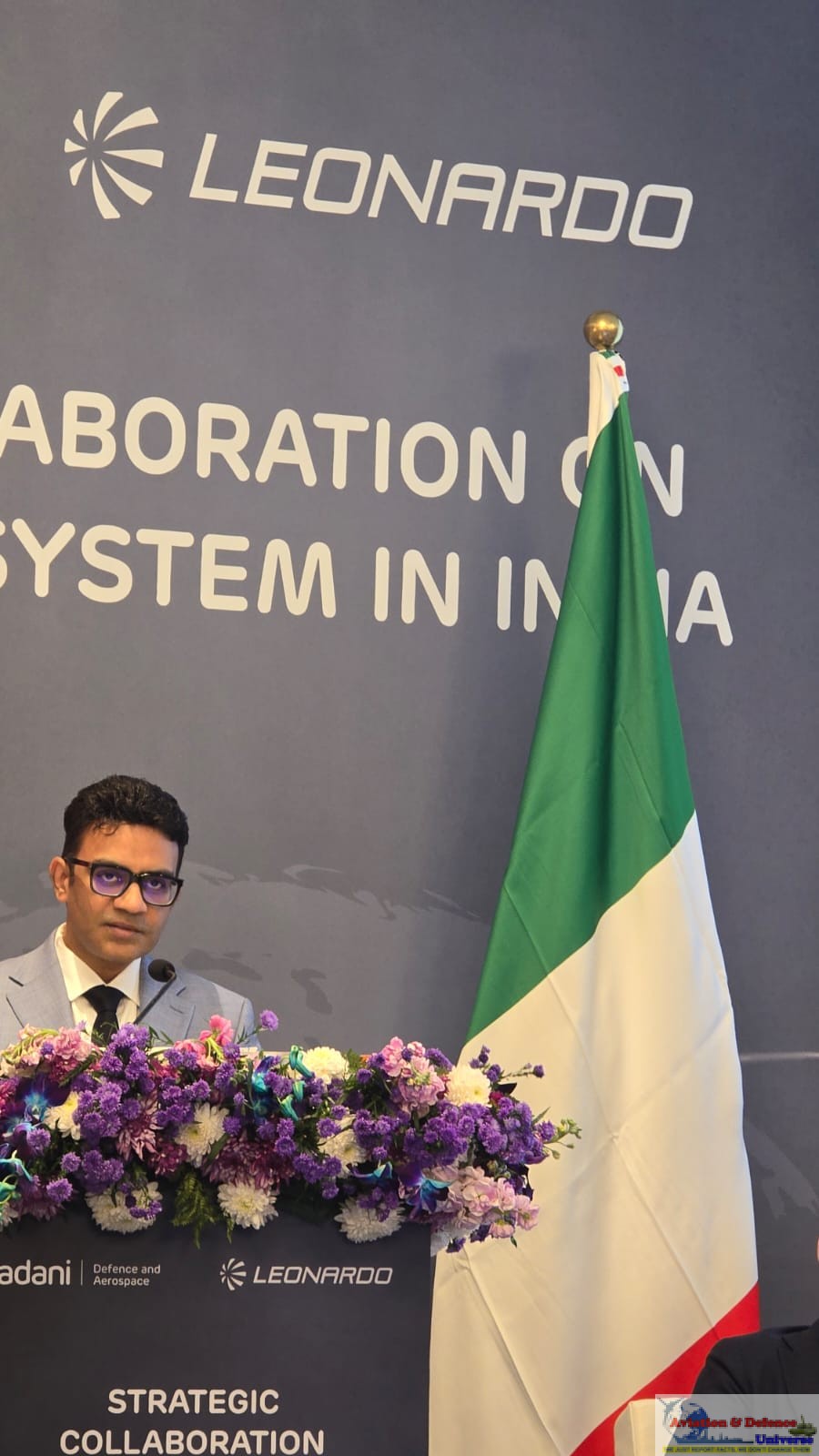 Ashish Rajvanshi, President & CEO, Adani Defence and Aerospace stated, “India’s piece of the pie, just 2% today, but it’s going to hit over $2.8 billion by 2034, growing at 7.8% year on year. Military modernisation and our civil aviation boom are going to make this happen.” Highlighting the larger vision, he said, “With our partners Leonardo, we are building an ecosystem where India doesn’t just fly, India builds the sky.” He underlined the self-reliance aspect, adding, “These are not imported machines, they’ll be done in India by Indian hands for India’s future.” Referring to the roadmap ahead, he noted, “With Leonardo, we are launching a complete ecosystem starting with AW169 and AW109 tracker, scale and drive.”
Leonardo’s helicopter portfolio spans a broad mission set across military and civil users, with platforms designed for everything from city-to-city connectivity and EMS to offshore energy, utility lift and defence missions. Its light and intermediate models—such as the AW109 and AW169—are often positioned for rapid-response, policing, corporate/VIP and short-haul utility roles, while larger workhorses like the AW139 and AW189 are widely associated with offshore transport, search-and-rescue and multi-mission public service operations. Across these families, the company highlights “safety by design,” advanced avionics and mission systems, and an end-to-end approach that pairs aircraft capability with training, support and lifecycle services.
Cesare Caccia Senior Vice President, Leonardo Helicopters remarked, “This cooperation builds upon two major pillars. One is the India-Italian cooperation that has been growing on the strategic partnership that does extend to many fields, including defence and security.” Speaking about Leonardo’s design philosophy, he said, “Safety by design is the mantra that led us and paved the way to the design of our helicopters.” Outlining the partnership approach, he added, “The idea is to start with the assembly of the helicopter, providing services to support the fleet, train the pilot, create the ecosystem little by little.”
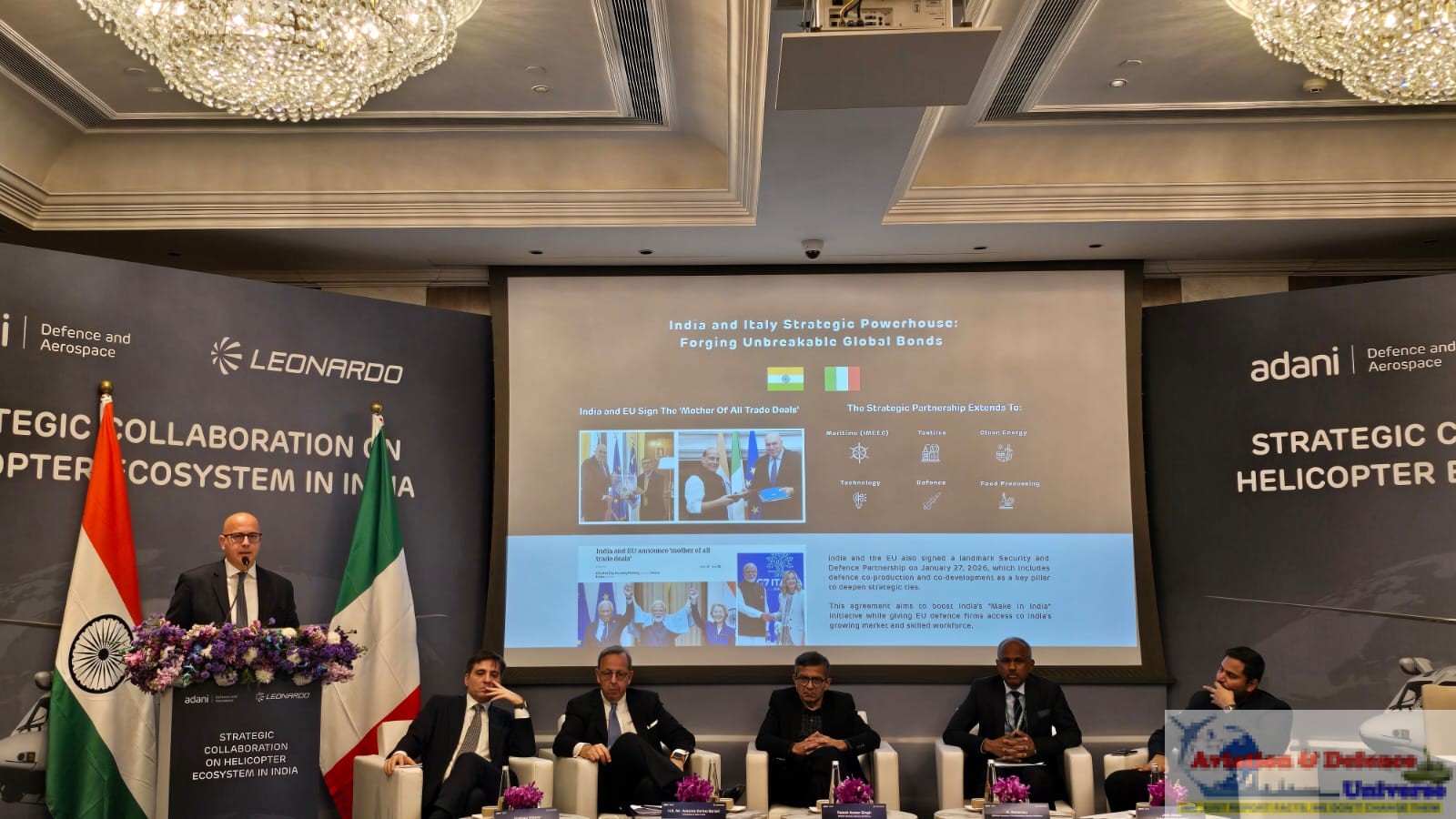 Leonardo’s “export chart” story is essentially a global-footprint narrative: a worldwide network built around partnerships, service centres, joint ventures and training capabilities, with operational presence and support reach extending well beyond Italy. In the remarks shared at the event, the emphasis was on scale and credibility—platforms flying internationally, backed by robust maintenance and repair capability, pilot training, and a global ecosystem that helps operators keep fleets mission-ready. The goal of that export-led model, as described, is not only selling aircraft, but also exporting an integrated value chain—support, spares, MRO capacity, training and mission-readiness—into the markets the company serves.
Adani Defence and Aerospace’s foray into aerospace is being framed as an ecosystem build rather than a single-product play—leveraging industrial bases in Hyderabad, Bengaluru and Hosur for avionics, electronics, unmanned systems and helicopter MRO, and then layering partnerships on top to scale capability. The group has signalled intent to stitch fixed-wing and rotary-wing pathways into one integrated national capability, pointing to collaboration with Embraer as part of that broader aerospace arc, alongside its helicopter-focused collaboration with Leonardo. Put together, the strategy reads as “manufacture + MRO + training” with partnerships accelerating technology access, supply-chain depth and platform readiness—positioning India not only to operate aircraft, but to industrialise the support and build ecosystem around them.
The Adani–Leonardo MOU is far more than a business agreement. It represents the convergence of policy reform, diplomatic trust, industrial ambition and technological partnership. As India revises its Defence Acquisition Procedure, expands capital outlays and prioritises domestic procurement, such partnerships are poised to shape the future of rotary-wing aviation in the country. For India and Italy, this marks the beginning of a deeper, more resilient defence-industrial relationship — one built not merely on procurement, but on co-creation, capability building and long-term trust.