













- Breaking Protocol, Building Strategy: Modi Receives UAE President at Airport
- Brief in Time, Broad in Impact: The Geopolitical Significance of the UAE President’s India Visit
By Jai Kumar Verma
 New Delhi. 5 February 2026. The UAE President’s recent visit to India, though lasting only a few hours, carried strategic weight far beyond its brief duration. At a time of shifting geopolitical equations in West Asia and South Asia, the stopover signalled deepening trust and convergence between New Delhi and Abu Dhabi. More than a routine diplomatic engagement, the visit emphasised expanding cooperation in trade, energy, defence, and technology, while also sending nuanced messages across the region. Its ripple effects were felt not only in bilateral ties but also in Pakistan, Saudi Arabia, and broader debates around emerging Islamic security alignments.
On January 19, 2026, Sheikh Mohamed bin Zayed Al Nahyan, President of the United Arab Emirates (UAE), made a highly unusual, about 3-hour official visit to New Delhi. Despite its brevity, this visit was significantly more than ceremonial, it sent strategic signals about shifting geopolitical alignments in and beyond South Asia. Prime Minister Narendra Modi personally receiving UAE President at the airport was a deliberate and symbolic departure from established diplomatic convention. Typically, visiting heads of state are received by a designated minister or senior official, especially during short stopovers. A prime minister’s presence at the airport is reserved for moments of exceptional strategic importance or personal rapport. By breaking protocol, Modi signalled the extraordinary value India places on its partnership with the UAE and emphasised the deep personal chemistry between the two leaders. The gesture conveyed trust, respect, and strategic intimacy, elevating the visit beyond formality. Internationally, it sent a strong message that India views the UAE not merely as a regional partner but as a key pillar of its West Asia strategy, reinforcing perceptions of a mature, high-priority relationship grounded in long-term geopolitical convergence rather than transactional diplomacy.
In recent years, India and the UAE have deepened economic, strategic, and political ties through successive agreements under the Comprehensive Economic Partnership Agreement (CEPA) and related dialogues. This visit added further momentum. The rivalry between the UAE and Saudi Arabia played a significant contextual role in shaping the strategic significance of UAE President’s visit to India, though it was not the sole purpose for the visit itself. A rift is deepening between Abu Dhabi and Riyadh over conflicting interests in Yemen and Sudan, including disputes over support for rival factions.
The other significant reasons for the visit were that both the countries wanted to strengthen economic partnership, hence both nations agreed to double bilateral trade to $200 billion by 2032. At present the bilateral trade is about $100 billion. During the visit, discussions focused on deepening economic ties by expanding commerce and enabling MSMEs to access global markets. Both sides emphasized digital and physical trade enablers such as the Virtual Trade Corridor, which simplifies cross-border trade through paperless customs and logistics, and Bharat Mart in Dubai, a dedicated hub for Indian exporters. These initiatives aim to position the UAE as a gateway for Indian MSMEs to West Asia, Africa, and Eurasia, leveraging UAE’s logistics strength. Together, they support trade diversification, reduced transaction costs, and the shared goal of significantly scaling bilateral trade.
India and the UAE signed a $3 billion, 10-year LNG agreement under which ADNOC Gas will supply 0.5 million metric tons of LNG annually to India from 2028. The deal strengthens India’s long-term energy security while reinforcing the UAE’s role as a reliable strategic energy partner.
The signing of a Letter of Intent to develop a Strategic Defence Partnership framework marks a significant deepening of India and UAE security ties. The proposed framework goes beyond traditional buyer and seller relationships and focuses on defence manufacturing, technology transfer, joint research and development, training, and cybersecurity cooperation. This aligns with India’s Atmanirbhar Bharat vision while enabling the UAE to diversify its defence capabilities through collaboration with a trusted partner. Joint R&D and technology sharing also signal growing strategic trust and a shared interest in addressing regional and emerging security challenges, including cyber threats.
In parallel, leaders agreed to significantly expand cooperation in technology, space, artificial intelligence, and digital infrastructure. This includes collaboration in cutting-edge areas such as space technology, advanced computing, AI-driven governance, and secure digital systems, including innovative concepts like digital embassies. Such initiatives reflect both countries’ ambition to be leaders in future technologies and digital public infrastructure.
On the investment front, the UAE expressed strong interest in partnering with India on large-scale infrastructure and industrial projects, including the Dholera Special Investment Region (DSIR), covering smart cities, ports, and airports, as well as expanding collaboration in global financial and technology hubs like GIFT City. Taken together, these developments reflect a partnership rooted in long-term strategic, economic, and technological convergence, well beyond routine diplomacy.
The UAE President’s visit to India has been widely viewed as a diplomatic and economic setback for Pakistan. Shortly after the visit, the UAE reportedly withdrew from a proposal to operate Islamabad International Airport. While not officially linked, analysts and media narratives interpret this development as reflecting the UAE’s recalibrated economic priorities and its deepening engagement with India. The episode reiterates Pakistan’s diminishing attractiveness as an investment destination amid economic uncertainty and highlights the relative momentum of India–UAE ties, particularly in trade, infrastructure, and long-term strategic cooperation. For Pakistan, this represents a dilution of diplomatic leverage and reduced visibility in Gulf economic planning.
More broadly, the episode points to a geopolitical recalibration in the Gulf. Pakistan has traditionally relied on Gulf states, including the UAE, for investment, financial support, and diplomatic backing. The UAE’s increasing strategic focus on India, at limited political cost to itself, signals a shift in priorities that weakens Pakistan’s standing in regional alignments. While Islamabad is strengthening defence cooperation with Saudi Arabia as part of a broader bilateral engagement, the UAE’s move highlights diverging Gulf approaches toward Pakistan’s regional role. Overall, the impact on Pakistan is less about confrontation and more about gradual erosion of influence, underscoring its vulnerability to changing Gulf strategic calculations.
The UAE’s deepening strategic and economic engagement with India highlights shifting Gulf priorities and reiterates that Gulf cooperation is not monolithic. While Saudi Arabia has strengthened security ties with Pakistan through a 2025 Strategic Mutual Defence Agreement, the UAE’s pivot towards India reflects a strategic divergence in foreign policy approaches. Abu Dhabi appears to prioritize economic diversification, technology, and partnerships with rising global powers, whereas Riyadh places greater emphasis on security-based alignments. For Saudi Arabia, growing UAE–India cooperation serves as a reminder to diversify partnerships and balance influence amid regional tensions and evolving geopolitical competition, illustrating the increasing complexity of intra-Gulf diplomacy.
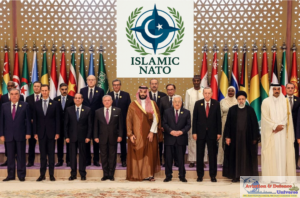
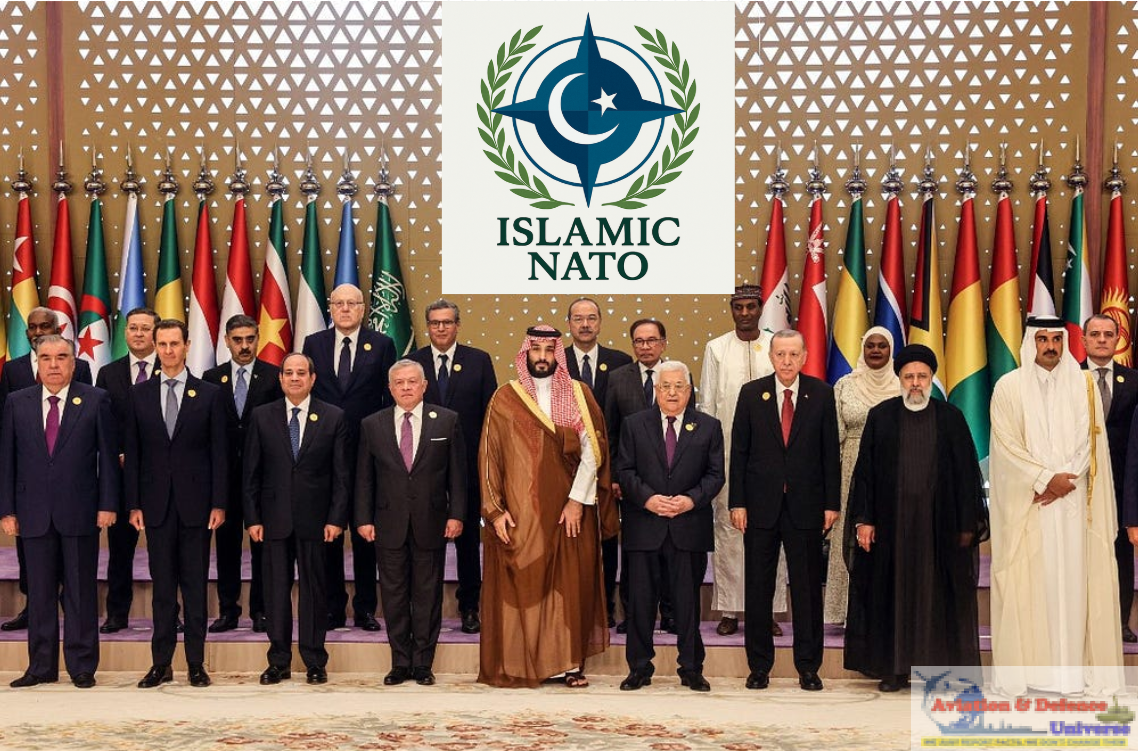
The notion of an “Islamic NATO” has gained attention following the Saudi–Pakistan defence agreement, but analysts stress that it remains largely rhetorical rather than operational. Unlike NATO, it lacks a unified command structure, integrated defence planning, common rules of engagement, or a shared strategic culture across member states. Regional countries face divergent threat perceptions, political priorities, and alliance preferences, making deep military integration unlikely. The UAE’s independent defence engagement with India further reiterates this fragmentation, showing that Gulf states are pursuing pragmatic, interest-based partnerships rather than aligning behind a single Islamic security bloc. Instead, overlapping and flexible alignments now define the region’s security landscape. (An article on ‘Islamic NATO captioned as “Power, Politics and Perception: The Rise—and Limits—of an ‘Islamic NATO’” can be seen on following link https://www.aviation-defence-universe.com/power-politics-and-perception-the-rise-and-limits-of-an-islamic-nato/.)
India’s expanding engagement with West Asia strengthens its regional profile by deepening ties with Gulf states across energy, defence, trade, and technology, positioning India as a key strategic actor in a region vital to global security and migration flows. Economic interdependence—driven by a large Indian diaspora in the Gulf and robust commercial links—creates resilience against political volatility and challenges narrow geopolitical interpretations. The visit also signals a recalibration of geopolitical trust, highlighting the growing strategic confidence between India and the UAE. This is significant given the UAE’s traditional dependence on U.S. security guarantees, underscoring India’s rising credibility as a reliable partner.
During the visit, India and the UAE moved beyond symbolic diplomacy to concrete outcomes, with leaders endorsing a set of high-level agreements spanning economic cooperation, energy security, defence collaboration, and technology partnerships. The brief, tightly choreographed nature of the visit itself carried strategic significance, signalling urgency, alignment, and a shared focus on navigating regional uncertainty. Analysts view this as deliberate diplomatic messaging amid heightened volatility in West Asia. Discussions also addressed broader geopolitical developments and emerging regional security frameworks, reflecting a convergence of long-term policy visions. Overall, the visit blended substantive deal-making with calibrated diplomatic signalling, underscoring a deepening and more strategic bilateral partnership.
Although brief in duration, the UAE President’s visit to India carried substantial strategic weight. It reaffirmed a multi-dimensional partnership spanning economic cooperation, energy security, defence collaboration, and emerging technologies. Beyond bilateral gains, the visit contributed to a subtle recalibration of Gulf–South Asia dynamics, constrained Pakistan’s traditional diplomatic space, and highlighted internal divergences within Gulf foreign policy approaches. By challenging simplistic notions such as an “Islamic NATO,” the engagement emphasised a shift toward pragmatic, interest-based alignments. Ultimately, the visit reflects a broader 21st-century geopolitical reality—where flexible, diversified partnerships and focused diplomatic engagements can generate enduring strategic consequences well beyond their immediate timeframe.
(Jai Kumar Verma is a Delhi-based strategic analyst and Life Member of United Services Institute of India and The Manohar Parrikar Institute for Defence Studies and Analyses. The views in the article are solely the author’s. He can be contacted at editor.adu@gmail.com)