




- The 100-Seater That Flew In From Moscow
- HAL all set to make it in India
By Sangeeta Saxena
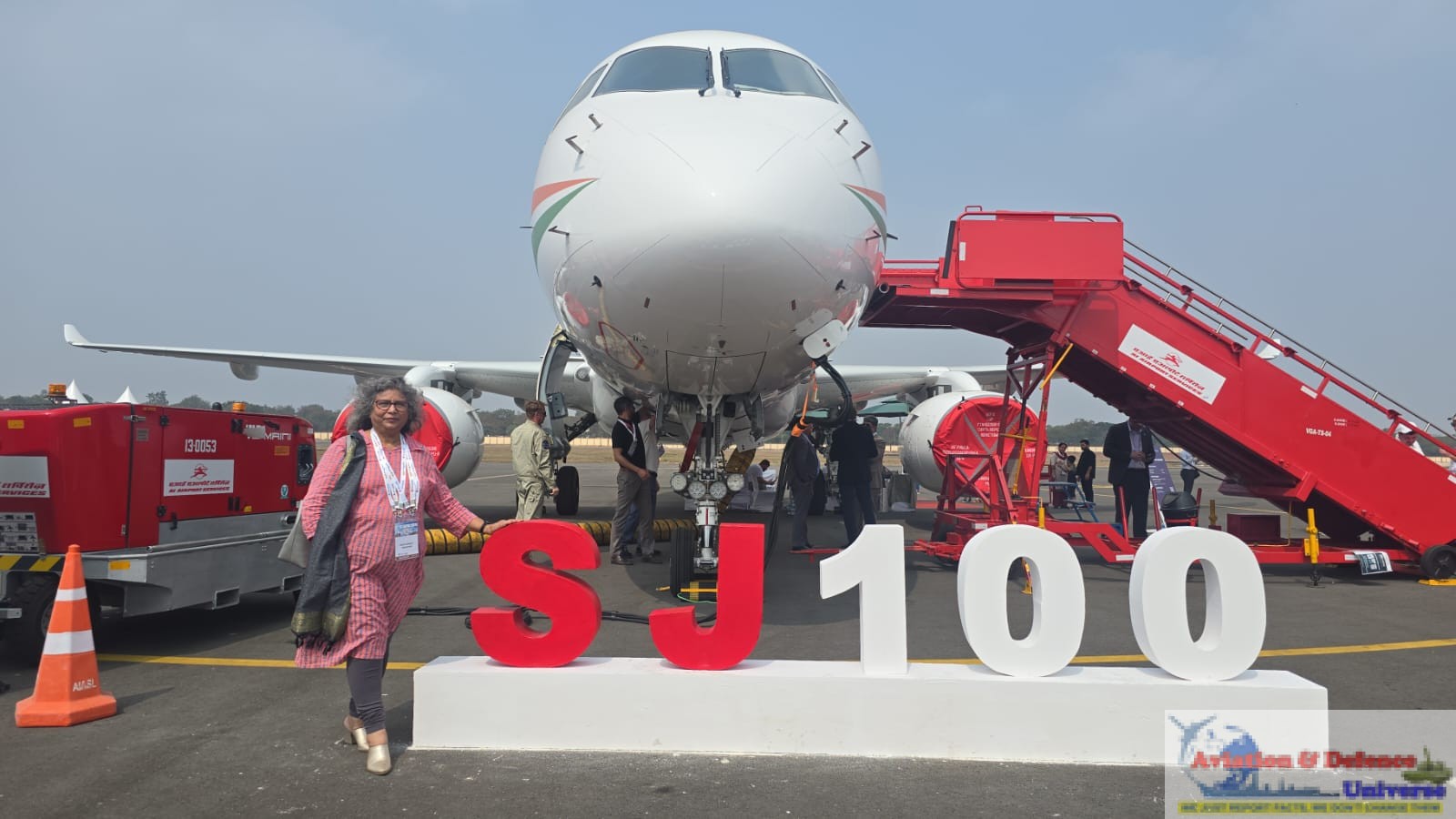
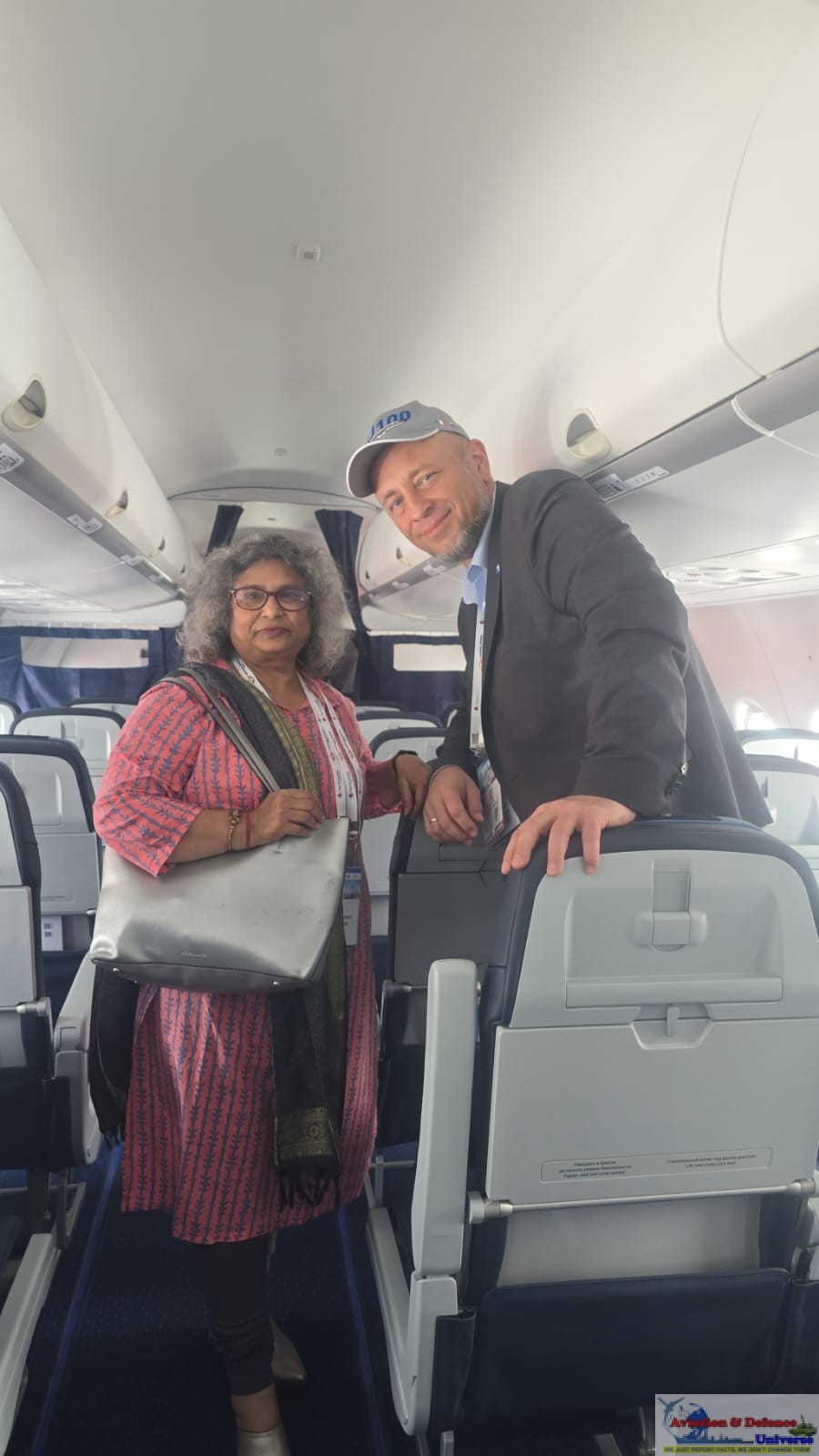
Hyderabad. 30 January 2026. Standing beneath the winter sun at Begumpet Airport, I stepped up the airstairs into a sight I hadn’t expected to feel this strongly about—a Russian regional jet wearing Indian colours and the HAL logo, parked proudly at the static display of Wings India 2026. Inside the Sukhoi Superjet 100 (SJ-100), the cabin felt familiar in layout yet distinct in story. This wasn’t just an aircraft on show; it was a conversation starter about supply chains, certification, technology transfer, and the possibilities of regional aviation for India.
 On 28 October 2025, India’s Hindustan Aeronautics Limited (HAL) signed a memorandum of understanding with Russia’s United Aircraft Corporation (PJSC-UAC) to manufacture the SJ-100 under license for Indian domestic customers for approving the production of the Indian made SJ-100 civil commuter aircraft parts. This collaboration is also expected to domestically make jets, marking India’s return to complete passenger aircraft manufacturing, and will be India’s second regional jet. The partnership marks the first time a complete passenger aircraft will be produced in India since 1988 after the end of production of the Avro HS748. Although no specific date was given for the start of production, HAL estimates a domestic market for over 200 such regional jets over the next decade after its introduction.
On 28 January 2026, an agreement was signed between UAC and HAL regarding cooperation on the production of the SJ-100 in India. The agreement stipulates that HAL would assist in the SJ-100 being granted a type certificate in the country. In return HAL would be granted a license to produce and sell the aircraft, including the production of parts necessary for repair and maintenance. UAC would assist HAL in preparing its production facilities through specialist consultants, design support and technical assistance.
The team on board explained the flexibility of the platform, “we have about 10 configurations that are mostly popular with airlines, from 75 to 100 people, business class, all economy, different versions.” The aircraft is powered by “an eight-tonne thrust engine totally Russian, including thrust reverser and hard part and software control,” produced within the Rostec ecosystem. On systems, they noted. “Avionics is made by our partner which is also a Rostec subsidiary, the engine is made by UEC United Engine Corporation, so more or less, it’s all within the house.”
A key point repeatedly emphasised was supply independence, “the supply chain is 100% Russian, so there’s no dependency on supply from anywhere.” On manufacturing depth with India, the message was unequivocal, “it can be 100 percent transfer technology – all Russian design, all Russian intellectual property, all Russian documents and software. It’s possible to do 100 percent manufacturing without any problem.”
Exciting journey the aircraft took from Russia to India. As I was told, “it’s come all the way from Russia, with a break in Tashkent,” and the crew added that the sector to India took “8 hours.” There was pride in the delivery – a new aircraft, long ferry and a symbolic arrival in Indian colours. The journey itself felt like a bridge—Moscow to Hyderabad, engineering to exhibition, possibility to discussion.
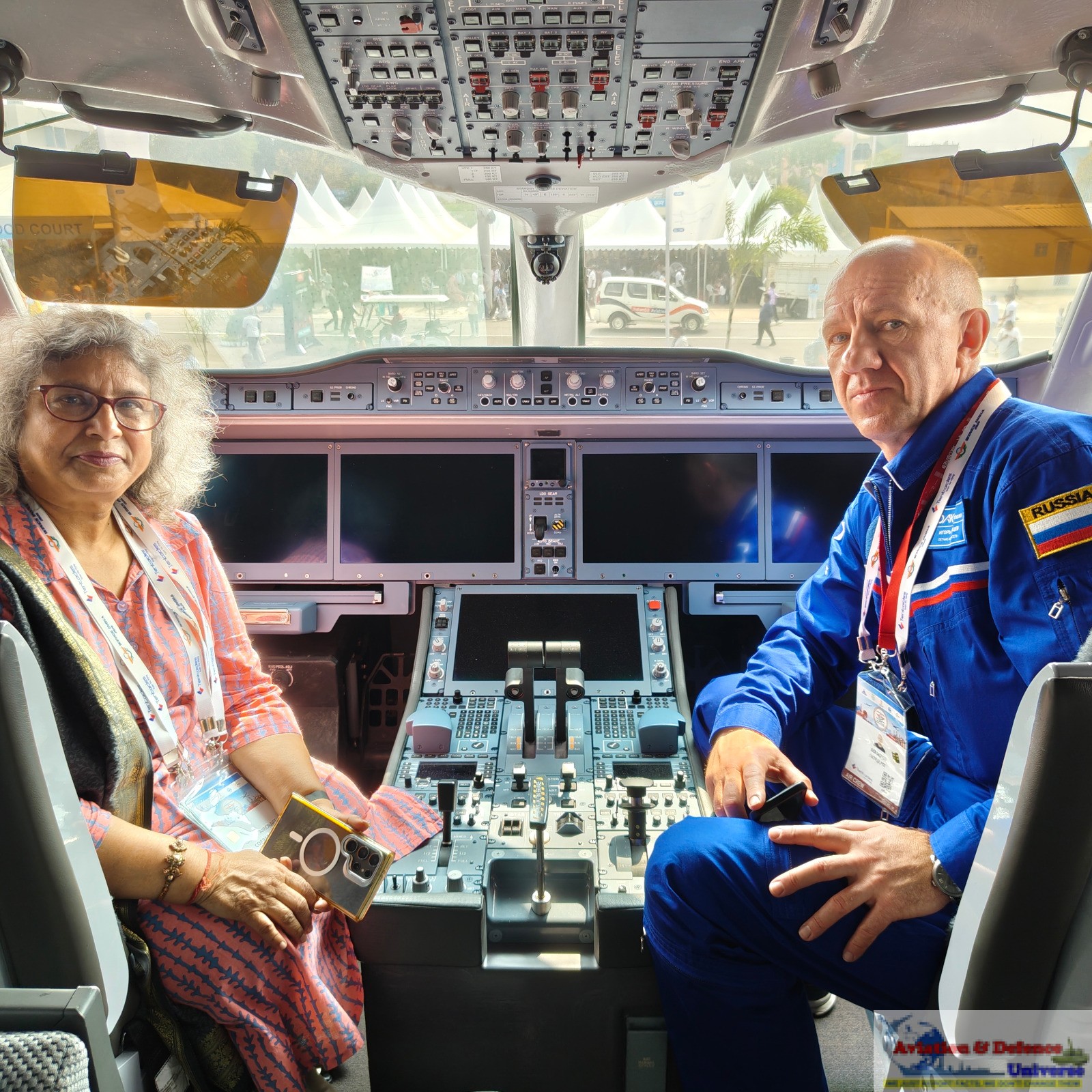
 On timelines, the officials were measured,“First we have to finish the Russian certification, which is hopefully by mid-year then we will start delivering it to Russian airlines.” For India, the pathway is collaborative, “we have signed a number of documents that allow us to move forward, we started a really close cooperation with HAL, we have a steering committee and we have working groups from both sides.”
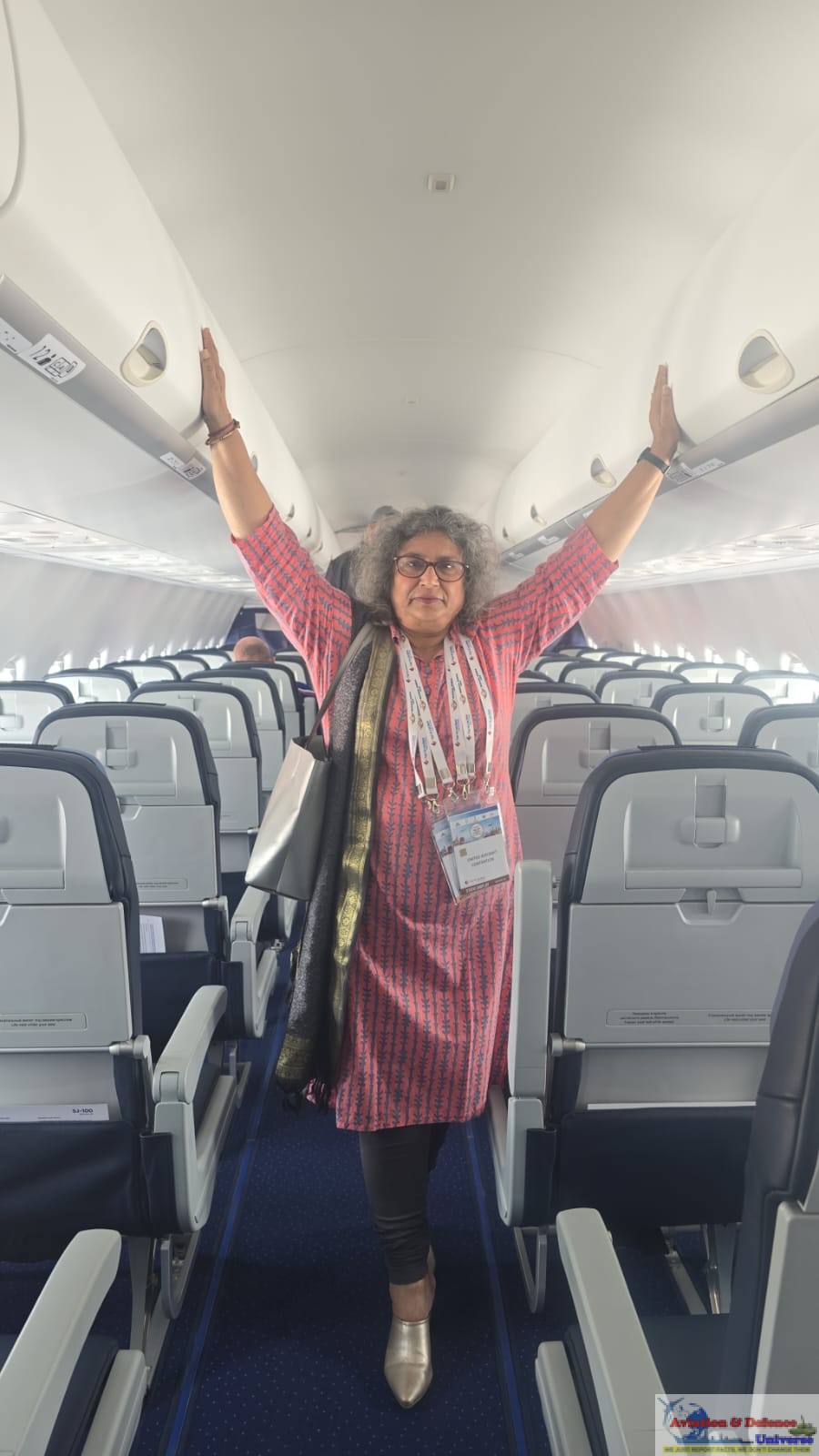
Walking down the aisle of the aircraft painted in Indian colours was an emotional, almost symbolic moment—one that blended national aspiration with long-standing friendship. Every step felt like a quiet affirmation of India’s manufacturing ambitions, made tangible through metal, wiring and design that spoke of a future taking shape on home soil. Knowing that this aircraft is destined to be made in India added a deeper sense of pride, as if the cabin itself carried the promise of self-reliance, skilled Indian hands and global relevance. The familiar tricolour hues against the fuselage transformed the aircraft from a static display into a vision of what lies ahead for Indian aviation.
What made the experience even more special was the fact that this aircraft is a product of India’s all-weather friend, Russia—a partnership forged over decades and sustained through trust, technology and shared strategic understanding. The aisle became a corridor of history and continuity, reflecting how Indo-Russian cooperation has quietly but steadily underpinned India’s aerospace journey. In that moment, the aircraft felt less like a machine and more like a bridge—connecting past collaborations with future capabilities, and symbolising how enduring friendships can power new chapters of growth, resilience and confidence in Indian aviation.
On HAL’s potential role, “With the interior, I think they can make some components and systems and it will be figured out how deep will it go? It can be 100 percent, basically, depending on the investment and we are ready to move here.” And on capability building for India, “of course, it would be good for India to increase the civil aviation capacity. There are some good competences and highly skilled workplaces and manpower.”
 On the Day1 of the show HAL CMD Dr. DK Sunil had informed at the press conference, “ It’s going to be a licensing agreement. Stage one where we do the final assembly and subsequently we go into the detailed manufacturing. We will probably plan to start manufacturing in the next three years. In three years after that we will do the rollout, bring all the assemblies, assemble it and fly it.” He referenced potential facilities and industrial participation. “We have a very large facility in Nasik and Kanpur, where we can do a lot of sub-assemblies. We have a huge vendor base from our military business and we will be using these Indian companies which are already part of our ecosystem.”
Explaining HAL’s sourcing strategy, he said, “Initially we will do this assembly, later we will go into the detailed part in a graded fashion.” He also emphasised the cost logic behind domestic production. “Fuel and maintenance are the two big cost drivers in the civil sector, we will produce this aircraft so that the availability of spares and the aircraft itself is going to be made within the factory so that the cost can be driven down. The cost of acquisition can be driven down as well as the spares.” He pointed to government receptiveness. “We have discussed with the Ministry of Civil Aviation and they are very positive that they will support us to make it happen that an aircraft of this size and capacity will be built within the country.”
As I stepped back onto the tarmac, the image stayed with me: a 100-seater regional jet in HAL colours, doors open to visitors, and conversations flowing about certification, localisation, and regional connectivity. The SJ-100 at Begumpet was more than a static exhibit—it was a live case study in how aviation partnerships might evolve. Whether HAL chooses partial or deep manufacturing, whether timelines turn optimistic or cautious, one thing was clear from inside that cabin: this aircraft had already travelled a long way to start a new dialogue in India’s skies.