
















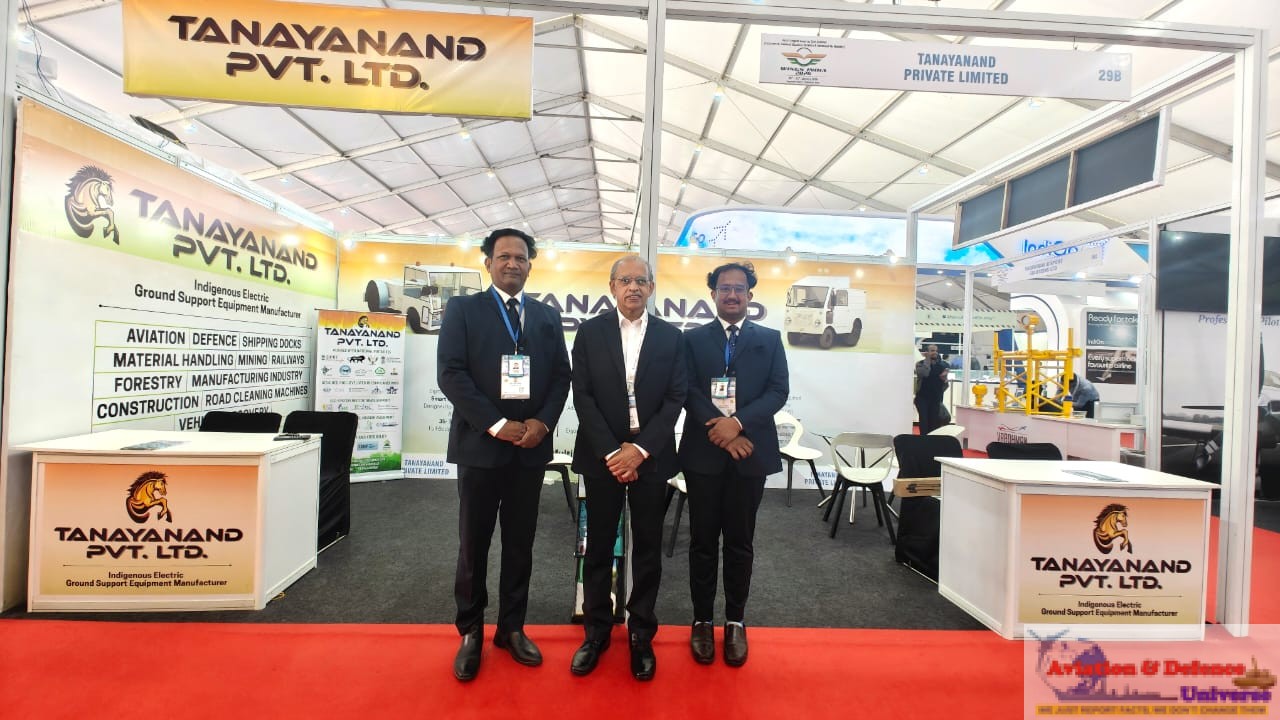
- Startup Energy Meets Defence Manufacturing in Nashik
- Nashik’s MSMEs and Startups Fuel India’s Defence Supply Chain Transformation
By Sangeeta Saxena
Hyderabad/New Delhi. 11 February 2026.
 Often recognised for its spiritual heritage and industrial base, Nashik is steadily emerging as a dynamic startup hub with growing relevance to India’s defence ecosystem. Backed by a strong manufacturing legacy, skilled engineering talent and proximity to key aerospace and defence establishments, the city is carving a niche in defence supply chain management and indigenisation. Nashik’s MSMEs and startups are increasingly contributing precision components, sub-systems, fabrication solutions and technology services to larger defence integrators, strengthening domestic value chains under the Make in India and Atmanirbhar Bharat initiatives. With its blend of industrial capability, entrepreneurial momentum and defence-linked infrastructure, Nashik is positioning itself as an important node in India’s drive toward self-reliant defence manufacturing and resilient supply chains. And our coverage of Wings India 2026 started with one startup which makes the city proud.
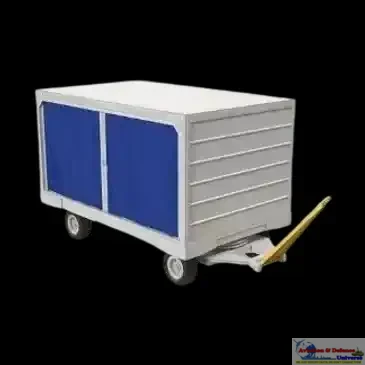 Often overlooked by passengers rushing through terminals, baggage dollies, cargo dollies and belt loaders are the silent warriors of modern air travel. Working tirelessly behind the scenes, they choreograph the precise movement of luggage and freight from terminal to aircraft and back again, ensuring tight turnaround times are met without chaos on the apron. Every suitcase that arrives on time, every cargo consignment that makes its connection, depends on this ground ballet of coordinated equipment and operators. These machines may not soar through the skies, but they keep the aviation ecosystem running smoothly, systematically and safely—proving that while aircraft capture the spotlight, it is ground support equipment that quietly sustains the rhythm of global air connectivity.
Amid conversations on fleet expansion and advanced air mobility, one Indian manufacturer stood out for focusing on what keeps aviation moving on the ground. TANAYANAND Private Limited is betting big on electric Ground Support Equipment (GSE), combining sustainability, operator safety and cost efficiency into a single platform. In an exclusive interaction, Amit Chitnis, Managing Director, and Ojas Chitnis, Technical Director, spoke about their flagship electric Universal Cooler and towing solution. Jayant Khedekar, Advisor, was also present during the discussion.
“We are manufacturers of electric ground support equipment,” said Amit Chitnis. “We have electric universal coolers starting from 35 tonnes and above, going up to 600 tonnes. We cater to almost all aircraft — from regional aircraft to cargo aircraft — including narrow-body and wide-body fleets.”
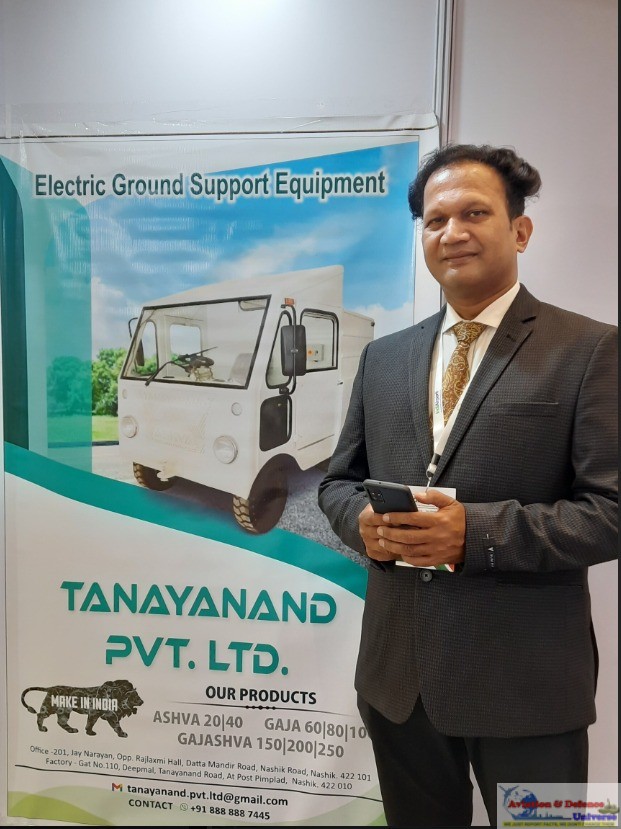 The system is not limited to aircraft cooling and towing. The company’s Universal Cooler can also tow baggage and cargo across apron areas. Additionally, it provides approximately 10 HP of auxiliary power for operating other equipment in remote aircraft parking zones — reducing dependency on separate power units.
Asked to describe what fundamentally differentiates their battery-operated GLC from others in the market, Amit summed it up in one word: versatility. “You have many options, many ways to use this equipment. It is highly capable, yet costs significantly less than what is currently paid in the market,” he said.
And another important takeaway was the Indian MSMEs believing in safety as a core design principle going beyond regulatory compliance—and faith that it shapes the engineering philosophy from concept to deployment. When safety is embedded at the design stage, every structural element, control system, visibility parameter and ergonomic feature is evaluated through the lens of risk mitigation and operator protection. This approach ensures stability under extreme conditions, structural resilience during impact, intuitive controls to reduce human error and protective enclosures that shield operators from environmental and operational hazards. By prioritising reinforced cabins, fail-safe mechanisms, enhanced visibility and advanced restraint systems, manufacturers not only safeguard personnel but also enhance operational reliability and asset longevity. In high-risk environments such as aviation, defence and heavy industry, designing for safety first ultimately translates into higher productivity, reduced downtime and, most importantly, the protection of human life.
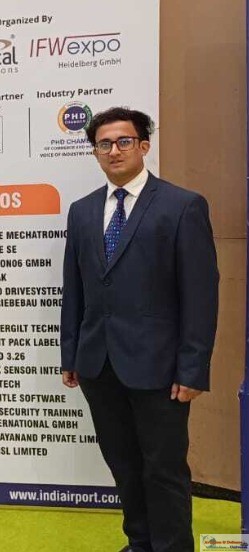 Technical Director Ojas Chitnis highlighted that operator safety was central to the product’s design. “We have prioritised safety in a way that this equipment has anti-topple characteristics, 360-degree visibility, a five-point seat belt system and a reinforced cabin structure capable of sustaining up to five times its own weight.” The enclosed cabin protects operators from jet blasts, dust and UV exposure — a significant improvement for apron conditions in India and particularly in high-temperature regions like the UAE. The company also offers an air-conditioned cabin, a feature rarely available in the current market. “The cabin is not likely to collapse in case of mishap,” Ojas added. “This dramatically increases the operator’s chances of survival.”
Another strong belief is sustainability with strong economics reflects a shift from viewing environmental responsibility as a cost burden to recognising it as a strategic advantage. When clean technologies are engineered for efficiency, lower operating expenses and faster return on investment, sustainability becomes commercially compelling rather than purely aspirational. Electric systems, energy-efficient designs and reduced fuel dependency not only cut carbon emissions but also significantly lower lifecycle costs, maintenance expenses and infrastructure requirements. By combining environmental performance with measurable financial gains—such as reduced energy consumption, minimal downtime and quicker ROI—organisations can align green objectives with business growth. In sectors like aviation and heavy industry, this balance between ecological responsibility and economic viability ensures that sustainable solutions are scalable, competitive and future-ready.
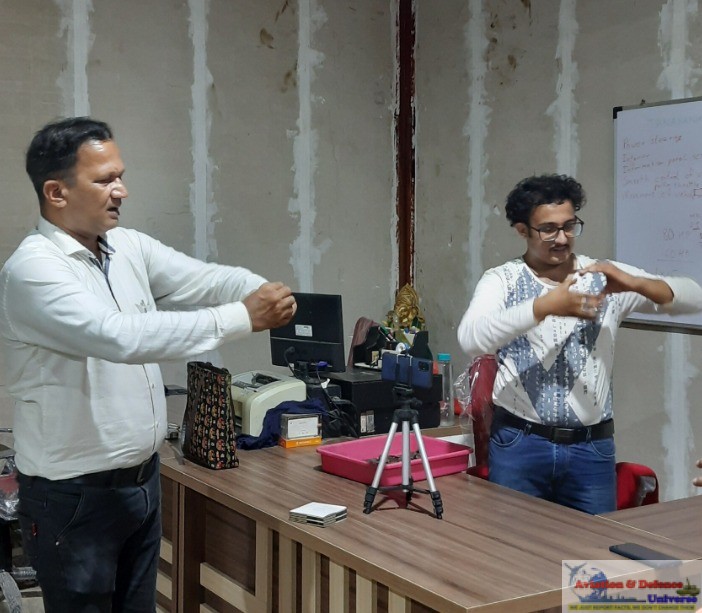 Beyond safety, sustainability is at the heart of TANAYANAND’s product philosophy. “This is a carbon-neutral machine,” Amit explained. “It reduces the required infrastructure at airports. It has an onboard charger, so no additional charging infrastructure is required. It can also be charged using renewable energy.” He contrasted it with traditional diesel tugs: “Earlier, a diesel tug consumed about six litres of diesel per hour. Our machine can be fully charged at approximately ₹180, can pull 35 tonnes and can run up to 150 kilometres. The return on investment can be achieved within one year.” With a 20 HP motor delivering 35 tonnes of cooling capacity, the company sees its design as a major research-led advancement in GSE.
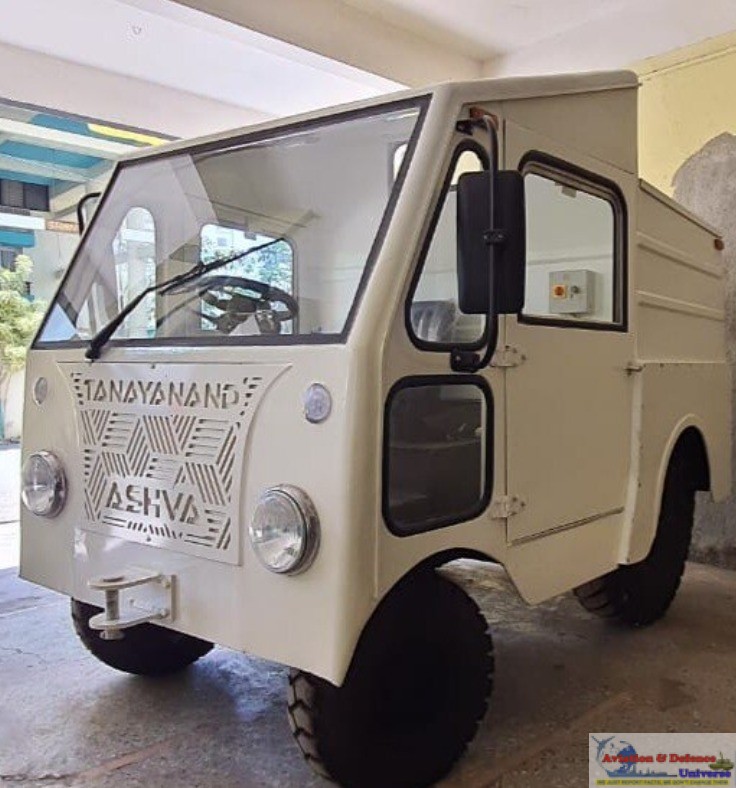 While aviation remains the immediate focus, TANAYANAND’s ambitions extend further. “Aviation is our primary sector this year,” Amit said. “But this machine can be used in 12 sectors — including defence, shipping docks, material handling, mining, railways, manufacturing industries, road cleaning and vehicle recovery.” Such diversification positions the product as a broader electric mobility and industrial support platform, not merely an airport solution.
On expectations from Wings India, Amit was clear, “We would like to reach out to ground handlers. We are very happy that many ground handlers appreciated this machine. There is wide scope in this area. Some airlines have also shown interest in collaboration.” For the company, Wings India 2026 represents a turning point. “For TANAYANAND Private Limited, Wings India 26 is a benchmark,” he said.
The company is optimistic about deployment opportunities at greenfield and sustainability-driven airports such as Bengaluru and Kochi, where environmental compliance and green initiatives are increasingly central to operations. The product also strongly aligns with India’s self-reliance push. “This product is 100% manufactured in India with 95% Indian content,” Amit stated. “We are contributing directly to Atmanirbhar Bharat and Make in India.”
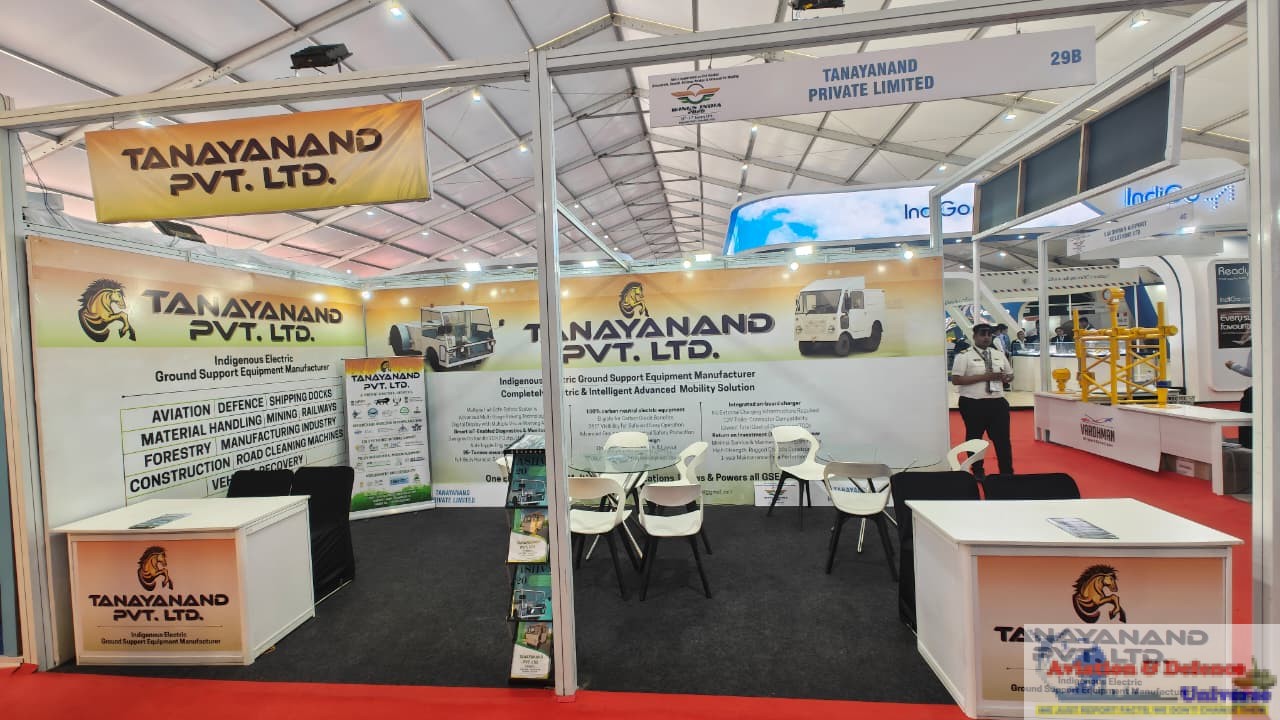 With commercial traction building and strong sustainability economics, TANAYANAND expects to see real-world deployment within the next 12 months. As electric aircraft and sustainable aviation fuel dominate headlines, TANAYANAND’s approach reminds the industry that the transition to green aviation must also happen on the ground — where efficiency, safety and sustainability intersect. If the response at Wings India 2026 is any indication, the next chapter for India’s electric GSE ecosystem may already be in motion.
Interview conducted by Shipra Sindwani