











- Reflects on Disruptions
- Unveils Simplified Product Strategy
- Reiterates it’s Policy, Connectivity & Hub-Building Angles
By Sangeeta Saxena
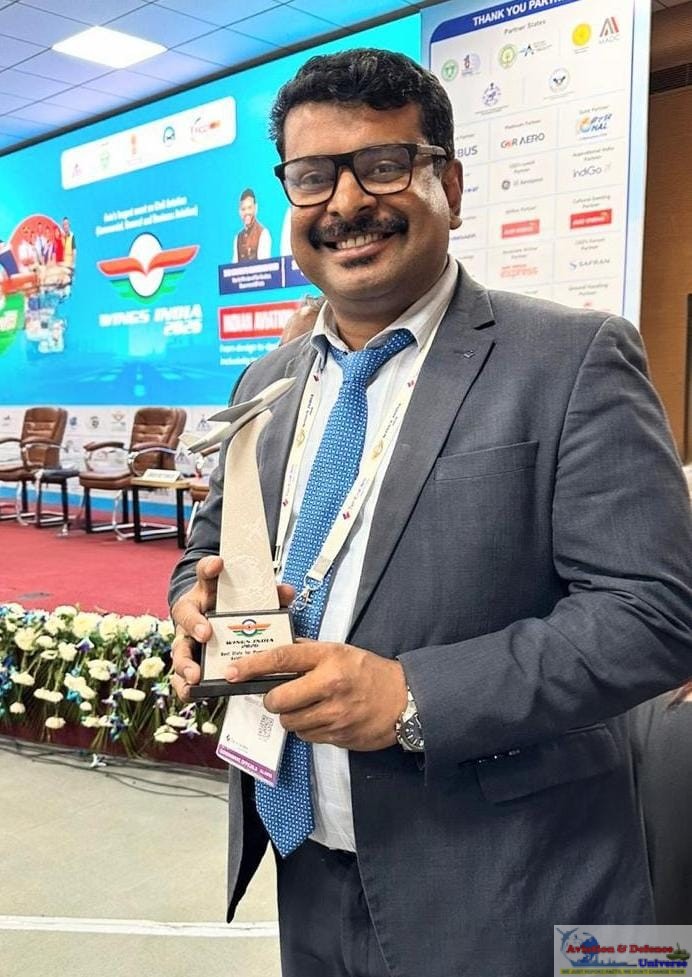
Hyderabad. 30 January 2026. IndiGo’s journey has never been about smooth skies alone. It has been about navigating turbulence with discipline, clarity and an unwavering focus on fundamentals. From pandemic shocks and supply-chain disruptions to engine challenges and volatile fuel costs, the airline has faced nearly every headwind the global aviation industry could throw up—yet emerged stronger each time. Addressing the media at Wings India 2026, IndiGo CEO Pieter Elbers reflected on this resilience, outlining how the airline has stayed the course, protected its core strengths and continued to grow with confidence, even as the industry around it grappled with uncertainty, outlining the airline’s transformation from a domestic low-cost carrier into a global aviation player, while candidly addressing recent operational disruptions, fleet expansion, international ambitions and a revamped customer product strategy.
 Speaking at an exclusive press briefing, Elbers described 2025 as a “landmark year” for IndiGo—defined by growth, learning and resilience—while positioning 2026 as a year of consolidation, internationalisation and structural strengthening. Reflecting on the airline’s journey, Elbers said IndiGo was approaching its 20th anniversary having “matched the aspirations of a growing India since 2006,” noting that India today is “no longer the same country it was 20 years ago—or even four years ago.” He highlighted India’s rapid aviation expansion, driven by rising middle-class demand, young aspirational travellers, infrastructure growth and increasing international trade linkages, including the recently signed India–EU trade agreement. According to Elbers, these factors collectively form the foundation of IndiGo’s long-term strategy.
Sharing performance highlights, Elbers said IndiGo closed calendar year 2025 with 124 million passengers, up from 113 million in 2024, operating 2,200 daily flights, serving 141 destinations, and flying a fleet of 440 aircraft. He noted that the airline crossed the milestone of becoming a USD 10 billion revenue company, placing it among the world’s seven to eight largest airlines by scale. Domestically, IndiGo now serves 96 Indian cities, compared to just 21 a decade ago, ensuring that 90% of India’s population lives within 100 km of an IndiGo-served airport.
IndiGo’s journey from its modest beginnings as InterGlobe General Aviation to becoming India’s largest airline is one of the most defining success stories in Indian civil aviation. Conceived by the InterGlobe Group with a clear focus on efficiency, reliability and affordability, IndiGo entered the market in 2006 with a simple promise—on-time performance, low fares and a no-frills approach tailored to the needs of a rapidly evolving India. At a time when the domestic aviation sector was volatile and overcrowded with struggling full-service carriers, IndiGo differentiated itself through disciplined cost control, a single-aircraft fleet strategy and an uncompromising focus on operational excellence. This clarity of purpose allowed the airline to scale steadily while building trust among first-time flyers and business travellers alike.
Internationally, Elbers said IndiGo has expanded from five overseas destinations in 2015 to 45 destinations today, with rapid route additions across the Middle East, Southeast Asia, Africa and Europe. In 2025 alone, the airline launched five European destinations in six months—Manchester, Amsterdam, Copenhagen, London and Athens—marking its first sustained presence in the European market. He pointed to Athens as a symbolic launch, calling it “a tailor-made product” and noting that it marked the first-ever direct air connection between India and Greece.
 Elbers emphasised that IndiGo’s growth strategy is two-dimensional—scale and scope. While the airline plans to nearly double passenger numbers to around 200 million annually by the end of the decade, it is simultaneously broadening its offerings through international long-haul services, cargo operations, loyalty programmes and aircraft maintenance capabilities. IndiGo currently has 800 narrowbody aircraft, 60 widebody aircraft and 39 A321XLRs on order, with one aircraft being inducted almost every week. By 2030, Elbers said, around 40% of IndiGo’s network will be international.
Over the years, IndiGo’s growth mirrored India’s own economic and infrastructural expansion. From serving a handful of domestic routes, the airline aggressively expanded its network, connecting metro cities with Tier II and Tier III destinations, and democratising air travel for millions. Its fleet grew into the largest in the country, supported by a robust order book and one of the world’s fastest aircraft induction rates. IndiGo consistently strengthened its market leadership, capturing over half of India’s domestic market share, while maintaining profitability in an industry known for thin margins. The airline’s ability to combine scale with reliability became its defining hallmark.
On product innovation, Elbers unveiled IndiGo’s simplified customer proposition, internally described as “3–2–5”—three route ranges (domestic, regional international and long-haul international), two cabins, and five fare products. These include Sabre, Flexi, Upfront, Stretch and Stretch Plus, designed to match varying journey lengths and customer expectations. “We are not low-cost or full-service,” Elbers said. “We are fit-for-purpose.” He added that the goal is to keep offerings simple for first-time flyers while catering to aspirational and business travellers through differentiated services.
 IndiGo’s transition from a dominant domestic carrier to an international aviation player marked the next phase of its evolution. Starting with short-haul international routes in South Asia, the Middle East and Southeast Asia, the airline gradually built a strong overseas footprint. Today, IndiGo operates a rapidly expanding international network across Asia, the Middle East, Africa and Europe, supported by strategic partnerships, codeshare agreements and the induction of long-range aircraft such as widebodies and the A321XLR. This shift reflects IndiGo’s ambition to align with India’s growing global connectivity needs—serving not just point-to-point travel, but also emerging long-haul demand driven by trade, tourism and a globally mobile Indian population.
Addressing the December 2025 operational disruptions, Elbers acknowledged that IndiGo had “let customers down” during what he described as three days of major disruption, followed by proactive cancellations as the network was reset. He explained that the crisis resulted from a compounding effect of multiple operational disturbances overwhelming a highly interconnected network. “Everything has to come together at the right place, at the right time,” he said, adding that once disruptions crossed a threshold, recovery became complex.
From its roots in InterGlobe General Aviation to its current status as a USD 10-billion-plus airline with global operations, IndiGo’s journey puts forth the power of consistency, execution and long-term vision. What began as a low-cost domestic experiment has evolved into a multi-dimensional aviation enterprise—one that is shaping how India flies, connects and competes on the global stage.
Elbers detailed the airline’s response, saying the immediate focus was on customer care, refunds, baggage recovery and communication, followed by rebuilding the network. He said full operational stability was restored by December 9, earlier than initially projected. While acknowledging regulatory observations regarding buffer capacity, Elbers said IndiGo’s board and management were taking “full cognisance” of DGCA feedback and would address it in a “timely and adequate manner.” He stressed that the disruption should not define an airline that has carried 850 million passengers in under 20 years, adding that learning from the episode would strengthen resilience as IndiGo scales further.

IndiGo’s codesharing strategy has emerged as its USP for international expansion, allowing the airline to rapidly extend its global reach without the immediate need for a large long-haul fleet. By partnering with leading global carriers, IndiGo has been able to offer seamless connectivity from India to destinations across Europe, North America, Africa and East Asia, while continuing to focus on its core strengths of high aircraft utilisation, cost efficiency and network depth within India and the surrounding region. Codeshare agreements enable IndiGo to feed international traffic into partner hubs and, in turn, bring inbound passengers onto its dense domestic and regional network, creating a mutually reinforcing ecosystem that benefits travellers through single-ticket journeys, coordinated schedules and smoother transfers.
On partnerships, Elbers said IndiGo has strengthened codeshare and connectivity arrangements, including with KLM, Japan Airlines and Aegean Airlines, enabling onward connections across Europe and Asia. He said discussions with other global carriers were ongoing, while reiterating that IndiGo’s widebody and A321XLR strategy would unlock new markets in Africa, Asia-Pacific and beyond.
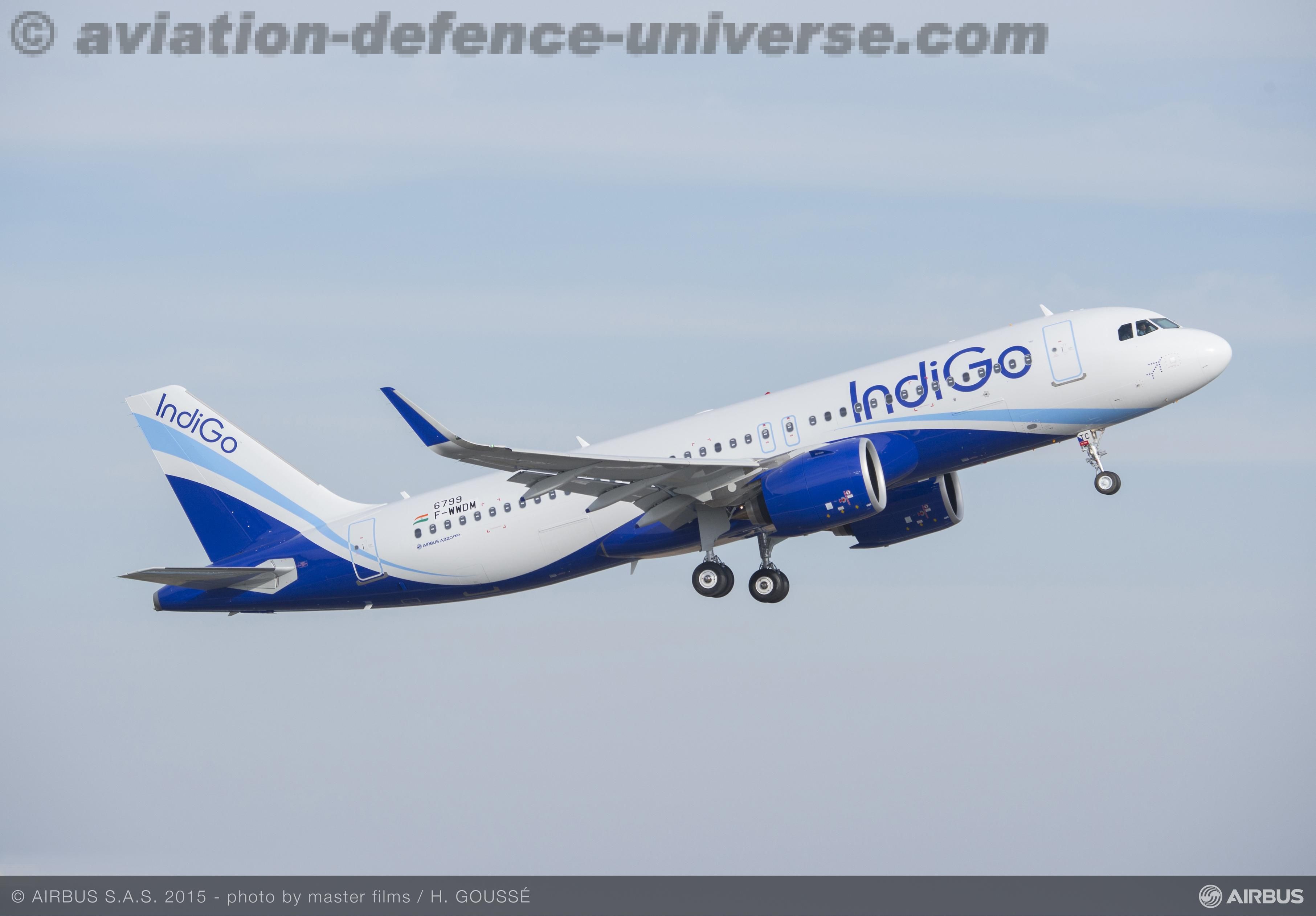 This approach has enabled IndiGo to scale internationally in a capital-light and risk-balanced manner. By leveraging codeshare agreements, the airline has strengthened its brand presence in key overseas markets, captured international demand, and supported India’s emergence as a major aviation connectivity hub—without prematurely committing to widebody operations. As IndiGo continues to build its long-haul capabilities, codesharing remains a powerful growth enabler, helping the airline increase global reach, optimise network economics, and sustain its position as India’s leading carrier with a growing international profile.
Looking ahead to 2026, Elbers said IndiGo will induct nine A321XLR aircraft, continue weekly fleet additions, expand international routes, grow its 10-million-member loyalty programme, and make major investments in in-house MRO infrastructure, including a new facility in Bengaluru. He reaffirmed that safety, reliability and operational resilience remain at the core of the airline’s strategy.
Closing the briefing, Elbers said, “If you believe in the story of India, you should believe in the story of IndiGo.” He added that the airline remains committed to rebuilding trust, strengthening systems and delivering affordable, reliable connectivity as it advances on its path to becoming a truly global aviation player.