


 Statement from IMOD: Israel and Greece have signed the massive “Achilles Shield” agreement










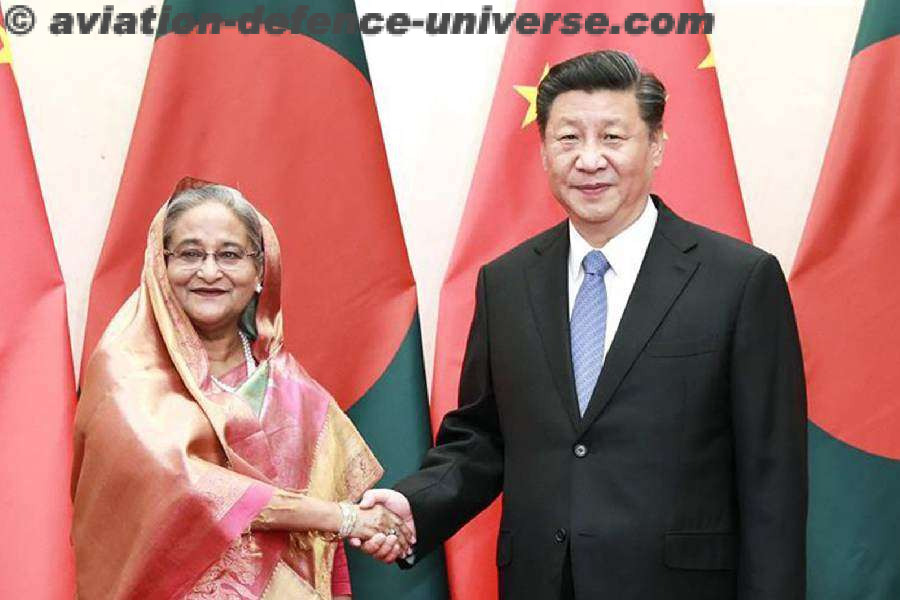
- Bangladesh Secures Strategic Partnership Upgrade with China
- China to provide economic assistance of $137 million to Bangladesh
- Bangladesh and China Sign Key Agreements Amid Unmet Expectations
By Jai Kumar Verma
New Delhi. 31 July 2024. During her recent visit to China, Prime Minister Sheikh Hasina of Bangladesh aimed to bolster bilateral ties and secure substantial economic assistance amidst challenging economic conditions at home. This marked her fifth visit to China as Prime Minister, underscoring the importance of the relationship between Dhaka and Beijing. The visit, however, was cut short, officially due to her daughter’s illness, though diplomatic insiders suggest other underlying reasons. Significant agreements were reached, including 21 agreements and the elevation of their strategic partnership to a comprehensive strategic cooperative partnership. Despite these achievements, Hasina’s trip was marred by unmet expectations and perceived diplomatic slights.
Prime Minister of Bangladesh Sheikh Hasina went to China on a four-day visit and was scheduled to return on 11th July, but she cut short her visit and returned back to Dacca on 10 July under the pretext to attend to her ailing daughter. However as per diplomatic belief she cut short her visit because of other reasons. The current visit was her fifth visit to China as Prime Minister of Bangladesh although this visit came after five long years.
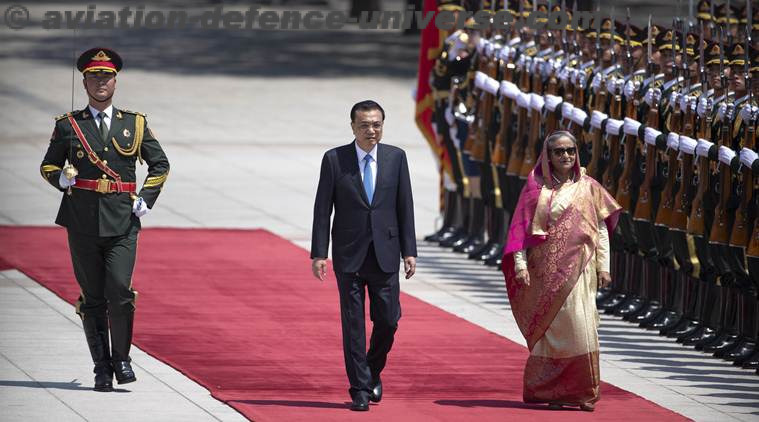
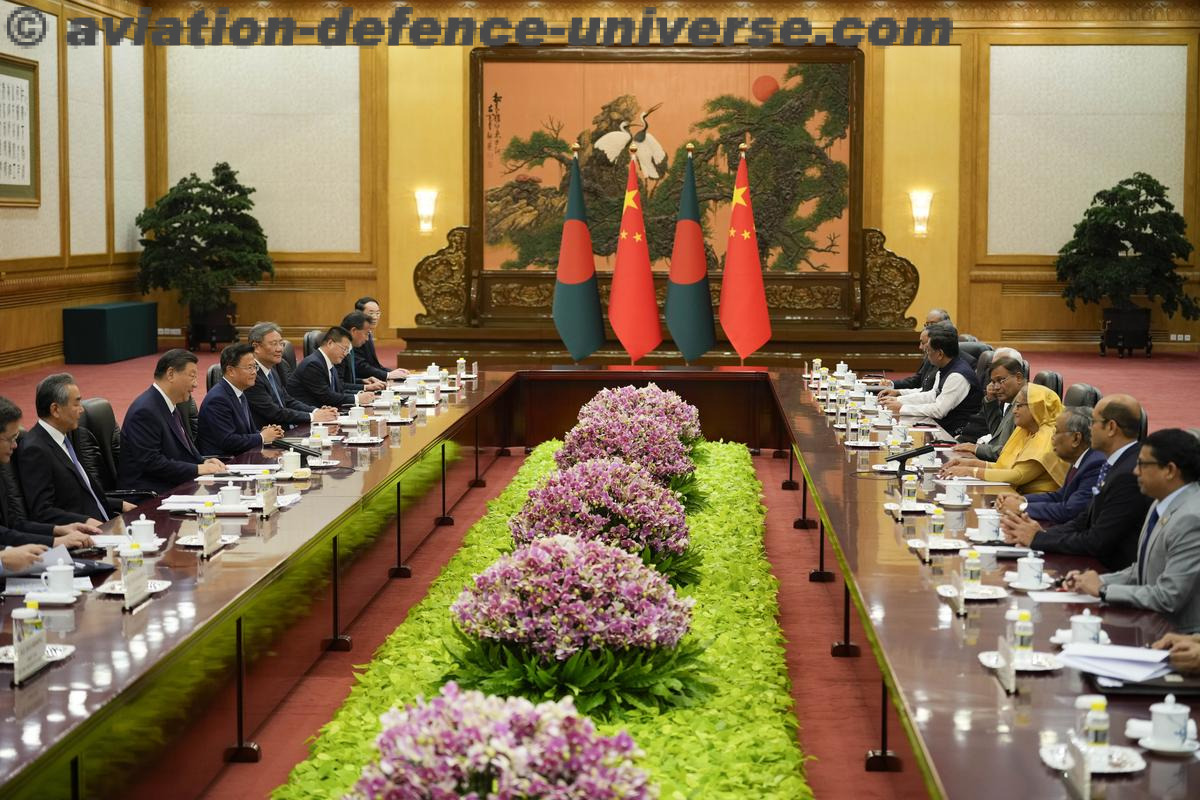
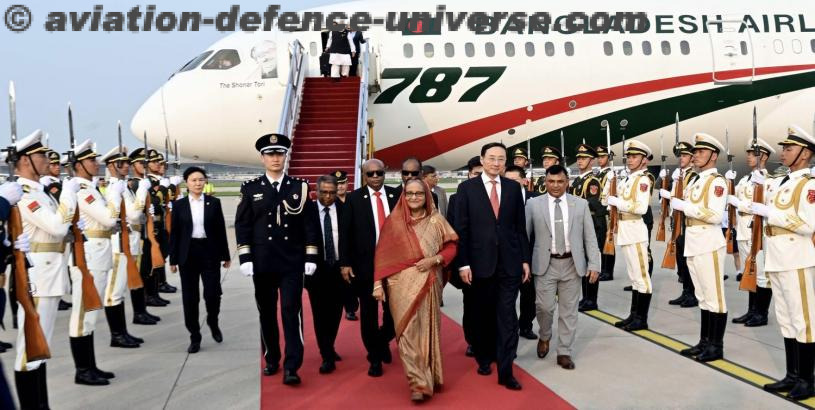 During the visit Sheikh Hasina met Chinese President Xi Jinping and Chinese Prime Minister Li Qiang. Both the countries signed 21 agreements including three Memorandums of Understanding (MOUs) and seven more projects were also announced. Both countries have raised the “strategic partnership” to a “comprehensive strategic cooperative partnership” level. After the talks delegations of both the countries signed the agreements in the presence of visiting Prime Minister and Chinese Prime Minister. Besides covering trade and investments the pacts also included the construction of 6th and 9th Bangladesh-China friendship bridges. The bilateral agreements also cover the export of agricultural products from Bangladesh, infrastructure development in Bangladesh and more people to people contact between both the countries.
Prime Ministers of both the countries discussed issues including bilateral trade which is extremely in favour of China. Between May 2023 and May 2024 Chinese exports to Bangladesh were $2.22 billion, while imports from Bangladesh were reduced to $77Million from $80.1 Million. Both premiers discussed Rohingya issue, investments and about strengthening of ties between both the countries. Both prime ministers also discussed regional and international issues. Bangladesh Foreign Minister Hasan Mahmud told the reporters that the meeting between Sheikh Hasina and President Xi was held in a “very cordial atmosphere “and it was “fruitful” and there were “very successful discussion”. Bangladesh foreign ministry mentioned that China agreed to provide economic assistance of $137 million.
Bangladesh and China has close economic cooperation as well as expanding defence relations. China is Bangladesh’s largest trading partner from last 13 years. Although U.S. is Bangladesh’s biggest source of foreign direct investment (FDI) but now China with investment of $3.2 billion has become the second biggest source of FDI. Not only this China constructed several important infrastructure projects in Bangladesh. The infrastructure projects include 12 highways, 21 bridges, 31 power stations and seven projects in the Railways. Dacca has joined Xi Jinping’s ambitious Belt and Road Initiative (BRI) in 2016. Both countries have strong defence ties and Beijing supplied submarines, tanks and fighter jets to Dacca. 74% of Bangladesh defence imports were from China. Not only this China stood firmly behind Sheikh Hasina when U.S. and European countries were pressurising her government to hold free and fair elections. Both China and Bangladesh would celebrate the golden jubilee of the establishment of their diplomatic relations next year.
However, in the current visit Sheikh Hasina was unhappy as she was expecting $5 billion loan and assistance while she got merely $137 million. Although before her visit long drawn discussions were held between Chinese and Bangladeshi officials and it was expected that during the visit China would announce a package of five billion dollars. Hasina in the anticipation of a big aid package went with a large delegation consisting of 196 members which included cabinet members, bureaucrats and other business persons to China.
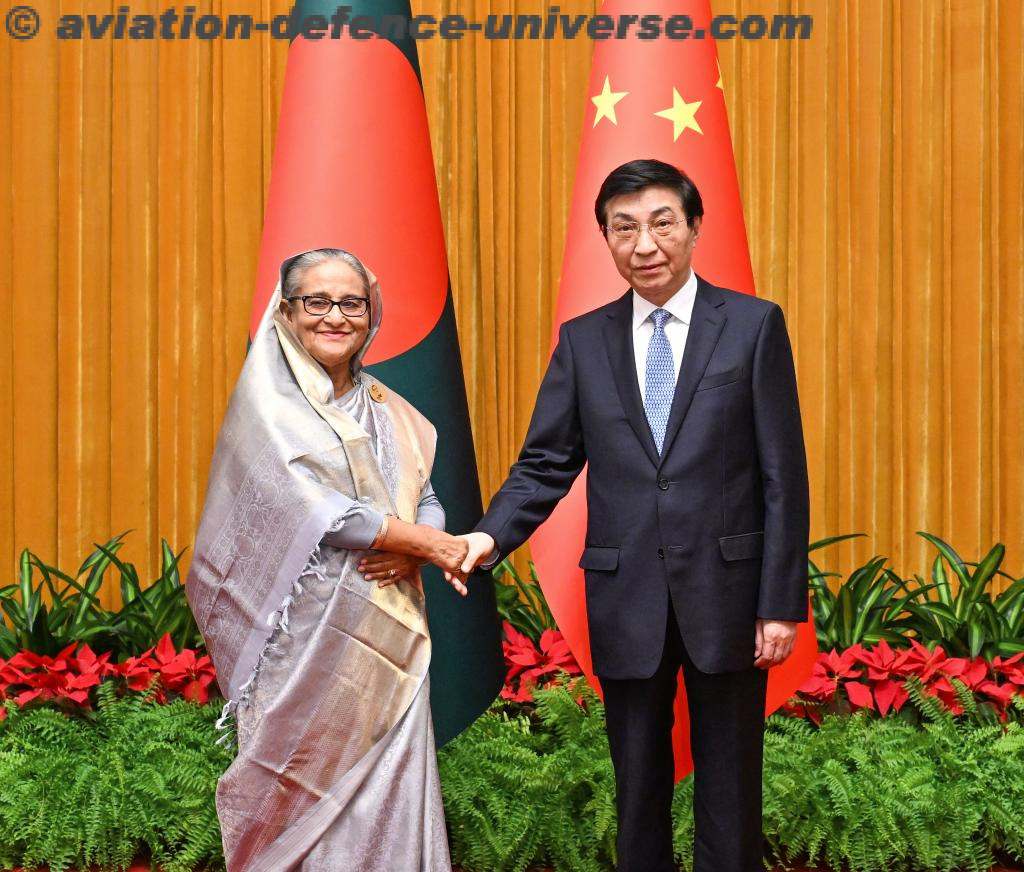 She was also upset as she felt that Beijing has not provided suitable protocol to her. Hasina was expecting a long meeting with President Xi, but he gave very less time and Prime Minister Li became the main interlocutor. Not only this Chinese foreign minister Wang Yi has not called on the visiting Prime Minister. Chinese media which is totally state controlled has also not given proper coverage to her visit. Hasina, who is a seasoned politician, got upsent and cut short her visit in the pretext of attending her ailing daughter. By cutting short her visit she also gave a stern message to China.
Bangladesh has close historical and cultural ties with India while Dacca wants to have good relations with Beijing which is not only the second economic power in world but also has deep pockets. China also gives loan to developing countries for construction of infrastructure projects. Although China lays “debt trap” and its rate of interest is more, and the loan has hidden and stringent terms. Sri Lanka and Pakistan both are suffering because of loan terms in Chinese agreements. China has offered loan but with higher rate of interest hence Sheikh Hasina who is a seasoned politician and a popular leader in the country has refused to accept these terms.
Hasina tries to maintain a balance between Delhi and Beijing. Both India and China have border disputes and in 1962 there was a war between both the countries and there were conflicts in between. In May 2020 there was clash at Galwan valley in which 20 Indian soldiers including a colonel were martyred although China has not disclosed their casualties but according to reports China lost 40 soldiers in the battle. Besides it China also wants to encircle India and tries to disrupt its economic progress.
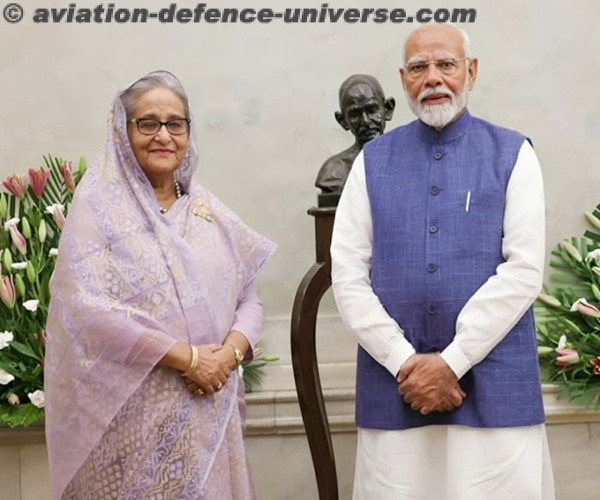 This time China became unhappy as Sheikh Hasina attended Modi 3.0 swearing-in-ceremony on 9th June and again made an official visit to India from June 21-22. Xi Jinping gave a strong message to Hasina that she should not keep close relations with India. There are reports that Hasina was informed indirectly by Chinese that she should not visit India before her visit to China. During her visit to India, she made several promises of bilateral commitments including rail transit to India from Bangladesh territory. She also agreed for the Teesta River Comprehensive Management and Restoration Project in collaboration with India which was disliked by China. Beijing has already allotted $1billion for this project as it wanted to come near Indian borders through this project.
At present the economy of Bangladesh is passing through a difficult phase and there is no sign of early recovery hence China backtracked from its commitment of massive economic assistance. At present Chinese economy is also in trouble hence Beijing avoided taking the risk of giving loan to Bangladesh.
 Hasina and her Bangladesh Awami League popularly known as Awami League (AL) projected her China visit as successful because several MOUs were signed, and Beijing promised the assistance of $2 billion. Free Trade Agreement was signed, China extended duty free facilities though now Bangladesh is not “least developed country”. Xi also promised to help Bangladesh in solving its Rohingya refugees’ problem. Awami League has to project the visit as successful because of the opposition parties and Dacca is in no position to annoy Beijing as it is still dependent on China on many essential items.
Besides this the country is passing through massive student agitation in which more than 174 people died including several police personnel. More than 2500 persons were arrested hence the party is trying to divert the attention of masses by showing that Hasina’s China visit was very successful, and Beijing has promised economic assistance.
 It appears that Sheikh Hasina by seeing the pitiable economic conditions of Sri Lanka, Pakistan and other African countries is leaning more towards India. The economic condition of these countries worsened because of loan taken from China on higher interest rates. The leaders of other countries are aware that China is an expansionist country while India is a friend which helps without any malicious intentions. Although Dacca cannot come out easily from Chinese debt trap, but it must try hard otherwise the economy of the country would further deteriorate. It is the success of Indian diplomacy that Bangladesh is trusting more on India than China although Beijing has stronger economic relations with it than India.
Prime Minister Sheikh Hasina’s visit to China highlighted both the strengths and strains in Bangladesh-China relations. While numerous agreements were signed and the strategic partnership was elevated, the visit fell short of her expectations, particularly regarding financial assistance. The lukewarm reception and the minimal economic aid package led to her abrupt return to Dhaka. Hasina’s balancing act between China and India remains delicate, especially given the complex geopolitical dynamics and Bangladesh’s economic challenges. The trip’s outcome illustrates the intricate dance of diplomacy and the economic realities that smaller nations must navigate between larger powers.
(Jai Kumar Verma is a Delhi-based strategic analyst and member of United Services Institute of India and The Manohar Parrikar Institute for Defence Studies and Analyses. The views in the article are solely the author’s. He can be contacted at editor.adu@gmail.com)





































































-A4-Size-(2)_page-0001.jpg)