












- Integrated Aviation Ecosystem: How CIAL Aero Park Is Redefining Kochi’s Aviation Future
By Anna Jordy
Cochin. 10 February 2026. As India’s aviation sector matures beyond airport-centric growth, the focus is steadily shifting towards integrated ecosystems that combine operations, maintenance, training, safety and technology. In this evolving landscape, Kochi has emerged as a quiet but strategic contender. The inauguration of Phase I of the CIAL Aero Park marks a defining moment in this transformation, formally positioning Cochin International Airport Limited (CIAL) as a purpose-built hub for MRO, aviation training and safety infrastructure. Leveraging its geography, operational scale and long-standing financial resilience, the Aero Park signals Kochi’s ambition to move from being a regional gateway to becoming a critical node in India’s aviation services value chain.
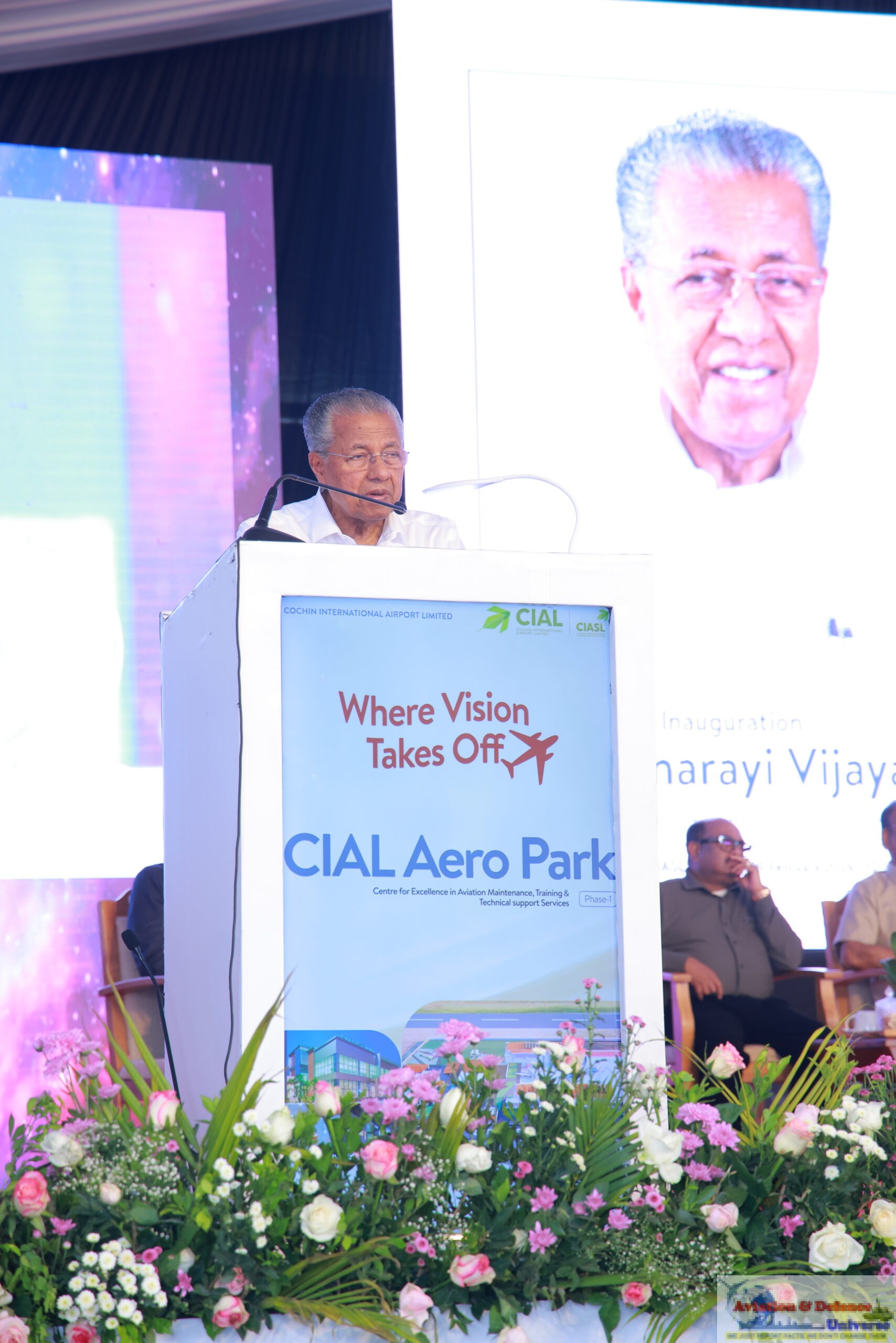 Pinarayi Vijayan, Chief Minister of Kerala inaugurated the facility and framed the project as a forward-looking response to global aviation trends. “The future of airports lies in creating integrated ecosystems. CIAL has always been strong in its ability to anticipate change and invest accordingly,” he said, adding that subsequent phases will see the park expand into an IT-driven aviation cluster and Aero City.
Located in a prime position along key east-west air routes, Cochin International Airport (COK) has always been a vital part of India’s aviation network. Kochi has evolved beyond a regional gateway into a natural connection for aviation services including South East Asia and Middle East, serving one of the country’s largest overseas populations and experiencing strong cargo demand and year-round international traffic. The inauguration of Phase I of the CIAL Aero Park formalises this evolution, establishing Kochi as a dedicated aerospace and aviation services hub.
Santosh J. Poovattil, Managing Director, Cochin International Aviation Services Limited (CIASL), emphasised the operational focus of the new facilities. He stated that “Our goal is to establish Kochi as a preferred destination for aviation professionals and service providers by creating globally benchmarked aviation service infrastructure, particularly in terms of safety, training and technical support.”
The importance of Cochin International Airport lies in its operational profile and geographical location. As India’s first greenfield airport to be built under a public–private partnership (PPP) model, CIAL has consistently demonstrated financial resilience, operational efficiency, and innovation. Kochi’s proximity to the Middle East, Africa and Southeast Asia means that it is within easy flying distance of major global hubs, making it ideal for functioning as a secondary transit and technical stopover point.
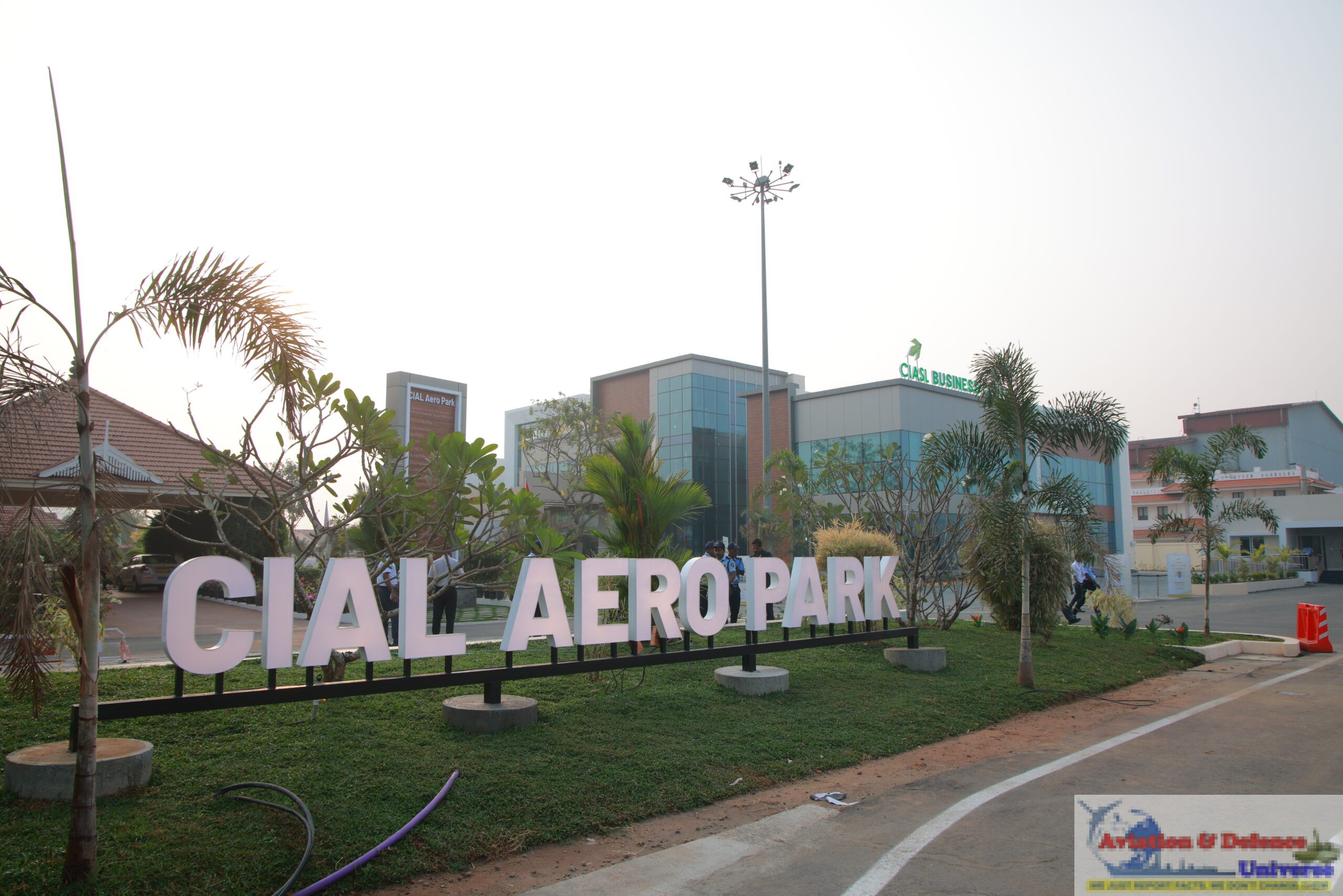 With a lot of widebody operations, a strong general aviation presence and increasing cargo volumes, Kochi has the traffic density needed to support maintenance, training and technical services. Industry observers are increasingly viewing Cohin International Airport Limited (CIAL) (IATA: COK) as a ‘mini transit hub’ for South India, large enough to sustain aviation services, yet less congested than metro airports.
Dr Jayathilak IAS, Chief Secretary, highlighted the strategic importance of these investments during the inauguarl ceremony. He stated that “Advanced training and emergency response infrastructure strengthen the entire aviation ecosystem. These facilities ensure not only that Kochi is prepared, but also the wider regional aviation network.”
The Aero Park has been developed as a purpose-built zone. It is for MRO, technical services and aviation training. The development has been supported by ₹101 crore in new infrastructure. Key assets include aircraft maintenance and parking bays, engine storage facilities and classrooms designed for advanced technical instruction.
One of the airport’s defining advantages is the seamless connectivity between the Aero Park, the airport’s airside operations and the city. This integration reduces turnaround times for maintenance activities, thereby enhancing Kochi’s competitiveness as a base for domestic and international operators alike.
A. Yusuff Ali, Director, CIAL pointed to the long-term opportunity. “India has the talent, traffic and strategic location to become a global aviation services hub. Through initiatives like the Aero Park, Kochi can emerge as a credible platform for maintenance, training and aerospace services.”
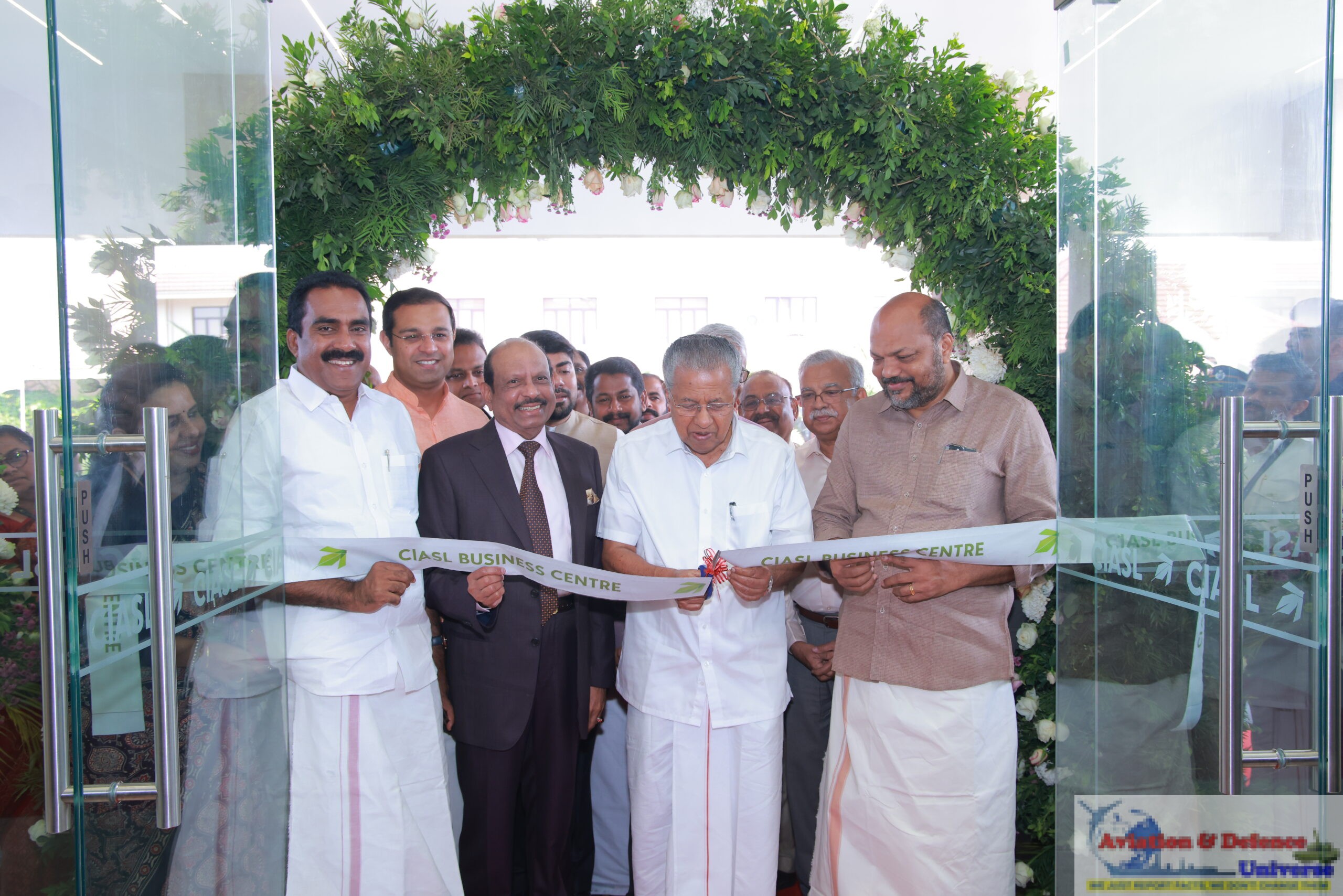
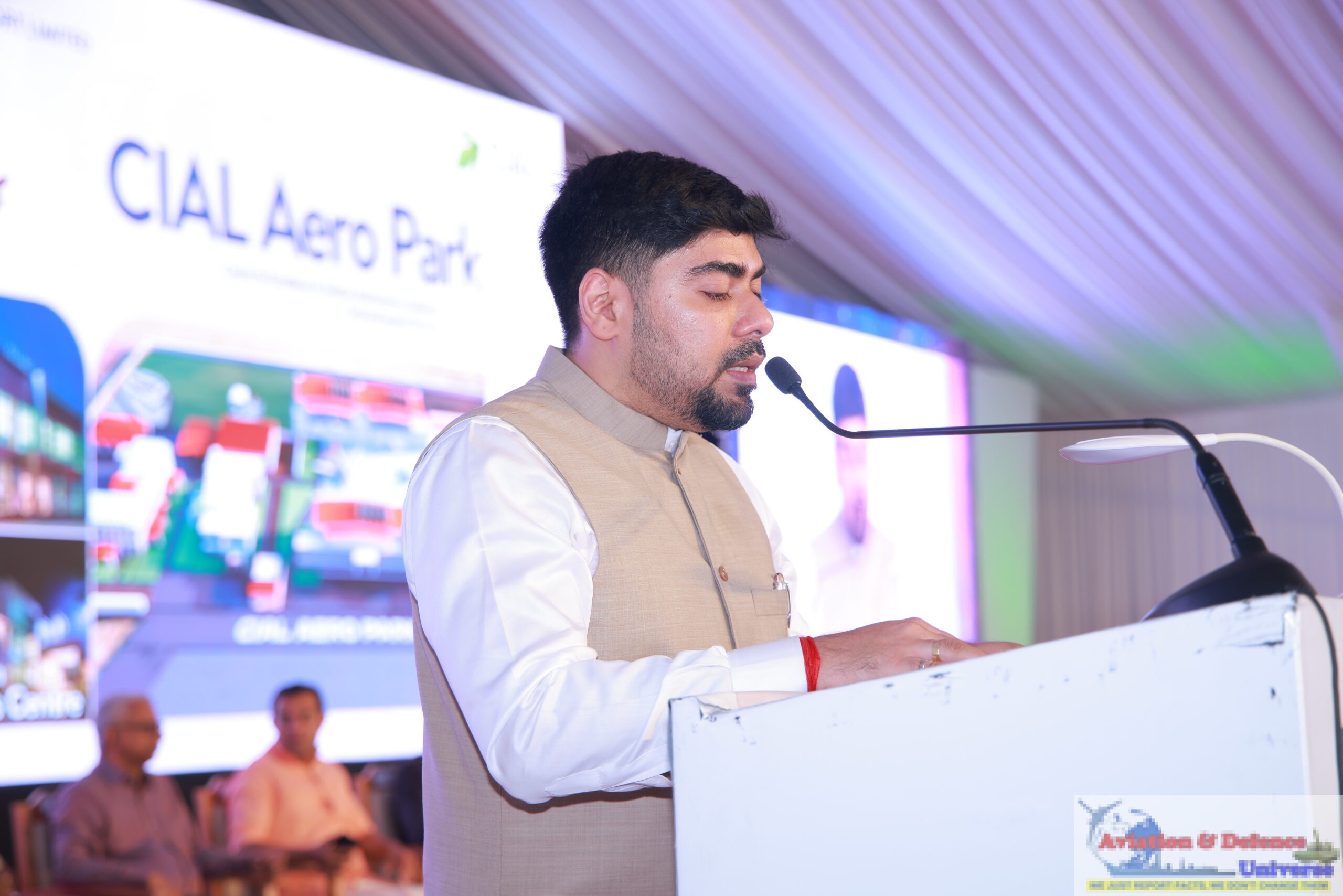 Aero Park was inaugurated alongside India’s largest Aviation Breathing Apparatus Training Gallery, which is intended for aircraft firefighting personnel, and a dedicated technical services facility designed to enhance airside operational safety. Construction has also begun on an aviation pressure-fed firefighting facility and an underwater rescue training facility, the first at an Indian airport.
With airlines and operators increasingly seeking cost-efficient, well-connected MRO bases in Asia, the Aero Park is positioned to capture demand that has traditionally flowed to overseas centres. The project is expected to generate around 2,000 direct jobs, predominantly in skilled technical roles, and significant indirect employment across the aviation supply chain.
For civil aviation, defence and aerospace stakeholders, the CIAL Aero Park represents a scalable platform capable of supporting MRO, safety simulation, training partnerships and future technology integration. As Phase II (IT Park) and Phase III (Aero City) developments take shape, Kochi is steadily transitioning from a successful international airport into a comprehensive aviation and aerospace ecosystem. The Aero Park, industry analysts note, is not merely an infrastructure expansion it is a strategic move that reinforces Kochi’s role in India’s evolving aviation value chain.