


 Statement from IMOD: Israel and Greece have signed the massive “Achilles Shield” agreement
















By Commodore Anil Jai Singh, IN (Retd)
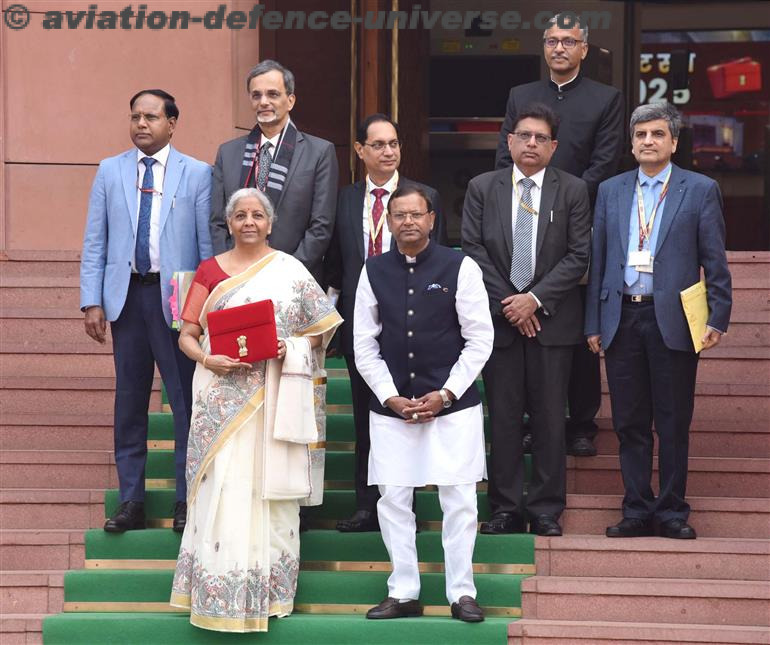
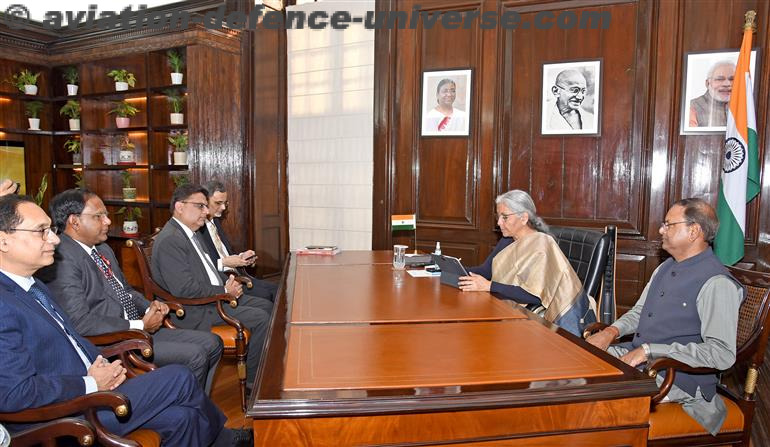
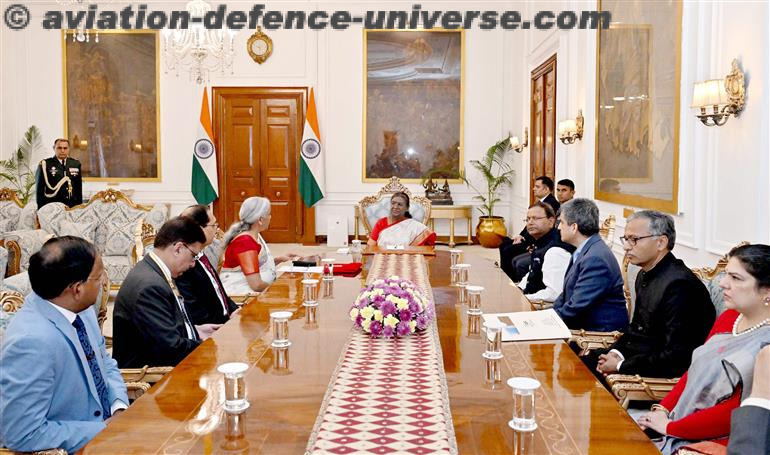
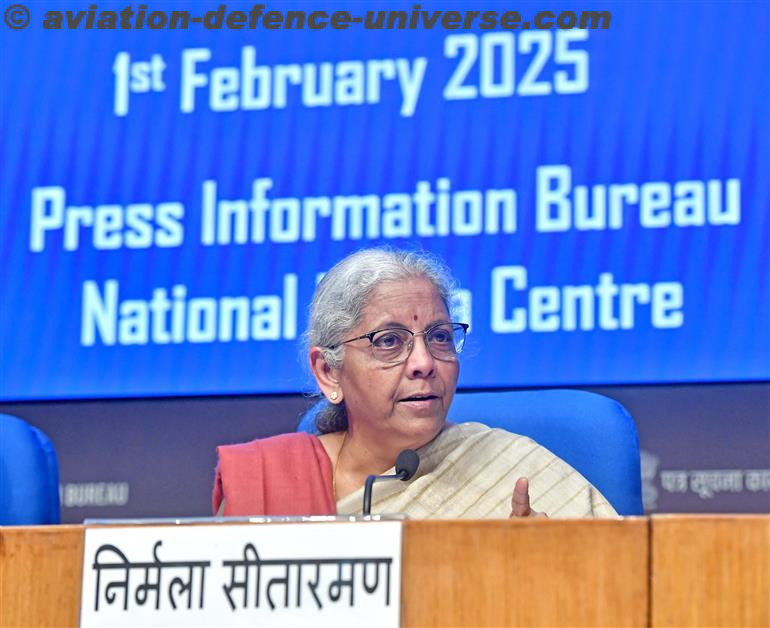
New Delhi. 01 February 2025. In the euphoria surrounding the Finance Minister’s announcement of increasing the tax exemption limit to Rs 12 lakhs for individuals, the more substantial budgetary allocations found little mention, either in her speech or the analysis that followed. The initial reactions to the budget were predictable- the ruling dispensation hailed it as a game changer towards achieving the vision of a Viksit Bharat by 2047, and the opposition deriding it as a let-down for the common man.
The budget speech highlighted six drivers to achieve the vision. These included agriculture, MSMEs, investment, exports, reforms and fiscal policy. She made a special reference to the civil aviation sector and the imperatives of the maritime economy, but national security failed to find a mention, whether internal or external. Even the standard line that the country’s security will never be compromised was conspicuous by its absence.
In the reactions that followed, the Defence Minister Rajnath Singh hailed the overall increase in the defence allocation of 9.55 % over last year’s, and stated that the focus will be on modernisation, self-reliance ( aatmnirbharta) and welfare. In terms of numbers, a broad breakdown will reveal that the overall allocation this year is Rs 681,000 crores, as against Rs 621,000 crores last year. Of this Rs 681lakh crores, a sum of Rs 192,387 has been allocated as the capital outlay, an subtracting the share of the civilian establishment of the Ministry of Defence, a sum of Rs 180,000 crores is available for modernisation of the Armed Forces. This translates to a little less than 26% of the overall allocation.
Budget 2025 Halwa CeremonyThe revenue budget on the other hand has been allocated Rs 488822.65 crores, which includes Rs 160,795 crores for pensions, and always comes up for discussion to lament the inadequacy of the amount available to the military to meet its requirements. Incidentally this also includes the pension of the civilian establishment of the MoD. Ironically, the per capita pension of a defence civilian is higher than that of a military pensioner. In addition, another Rs 16,295.35 has been allocated for the civilian element. This leaves a revenue allocation of Rs 311,732.30 with the Armed Forces for their day to day operational and logistic requirements, which amounts to about 63.7% of the overall revenue budget and about 45.8% of the overall allocation.
Ideally the gap between the capital and revenue budgets should be narrower to maintain an acceptable ‘teeth to tail ratio’, but the operational commitment of the Indian Army in maintaining a constant vigil along the country’s long and troubled borders in unforgiving terrain and inhospitable climatic conditions is an expensive commitment. The navy on the other hand has been able to deftly manage a favourable capital to revenue ratio, and therefore has been able to keep pace with modernisation to a large extent.
The question therefore is whether this allocation is enough to maintain the warfighting preparedness of the Armed Forces. One would think not. Ideally, the defence budget should be around 3% of the GDP. While this may appear as wishful thinking in a country where the guns versus butter debate is an important consideration, the current allocation of less than 2% is clearly inadequate, and is leading to widening deficits in critical warfighting capabilities. This is in turn, leading to a cascading effect year after year, with no solution in sight. It may be recalled that a few years ago, the committed liabilities of the Armed Forces of previous years had exceeded the MoD’s capital allocation for the following year.
With the recent emphasis on indigenisation and self-reliance ( aatmnirbharta), the frequent promulgation of positive indigenisation lists, and with defence exports becoming a priority area in India’s external engagement with the region and the world, a robust defence industrial complex with adequate R&D capability is a strategic imperative.
 As India focusses its attention on indigenisation and self-reliance ( aatmnirbharta), with frequent positive indigenisation lists limiting the scope of imports, and defence exports becoming a priority area in India’s external engagement with the region and the world, a robust defence industrial complex with adequate R&D capability is a strategic imperative. India’s DRDO establishment, has consistently lagged in providing the miliary with state-of-the-art equipment, which is in no small measure due to insufficient budgetary allocations ( less than 4% of the defence budget) for investing in the development of cutting- edge technologies. Last year 75% of the capital allocation was earmarked for indigenous procurement. This is a laudable effort to promote indigenisation, but will be effective only if it is spent well and delivers the desired capabilities.
The growing restlessness on India’s borders with its neighbours, and the non-traditional asymmetric threat being ubiquitous across the length and breadth of the country, a robust internal security architecture is an important security imperative. A number of Central Armed Police Forces (CAPF), with their distinct roles and responsibilities, operate under the Ministry of Home Affairs which is responsible for internal security. The MHA received a budgetray allocation of Rs 2.33 lakh crores, an increase of Rs 14000 crores (6%) over last year’s allocation. Of this the CAPFs have been allocated Rs 160,391.56 crores with the largest chunk going to the Central Reserve Police Force (CRPF) and the Border Security Force (BSF) getting the largest share of Rs 35157 crores and Rs 28231 crores respectively.
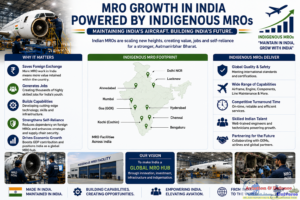
 It was very heartening to hear the Finance Minister making a special mention of the civil aviation sector and shipbuilding. Both these sectors offer a huge multiplier effect with one job creating anything from four to six jobs in the sector. The intention to add 100 more airports under ‘Udaan’ within the next 10 years, including heliports in hilly and remote areas of the country, and in the North-East of the country, as part of the focus on enhancing the country’s tourism infrastructure was a welcome announcement. The focus on improving the air travel connectivity within the country will also lead to the addition of many more fixed and rotary wing aircraft criss-crossing the skies, and would greatly benefit the support infrastructure in terms of MROs, airport infrastructure, skilled manpower and strategic access etc, all of which will benefit the country.
Similarly, shipbuilding is also a strategic sector. Presently, India’s share of the global shipbuilding market is less than 0.5%. Barely 10-12 % of Indian trade travels on Indian bottoms. This is a strategic vulnerability for a country like India with 90% of its trade (by volume), and over 80% of its energy travelling across the oceans from different parts of the world.
 Putting shipbuilding on the fast track was not only a part of the Budget speech but found special mention in the Prime Minister’s comments on the salient aspects of the budget. The maritime sector has been gaining a lot of attention with the recognition of its importance to India’s growth. Project Sagarmala and the Maritime Vision 2030 are being followed vigorously with well-defined milestones to develop this sector. Recognizing the long lead times in shipbuilding, the FM announced that the financial incentives and subsidies being provided will continue, to ensure a globally competitive industry. Ship recycling is another focus area of our circular economy. It will be similarly infused with technology and financial support to grow simultaneously and support the larger maritime eco-system in the country.
India is poised on the cusp of transformation, but this will not be without its challenges. It has a pivotal location in Asia and in the Indian Ocean, and with its growing stature as a regional power, it must ensure that it has the necessary hard power to influence the outcomes in the emerging Great Power contestation in the region, and not allow itself to get shaped by them.
(The author Commodore AJ Singh is an ex-submariner of the Indian Navy and a defence expert. He is the Vice President at Indian Maritime Foundation. The views in the article are solely the author’s. He can be contacted at editor.adu@gmail.com)














































































-A4-Size-(2)_page-0001.jpg)