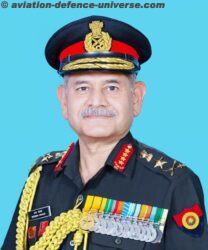












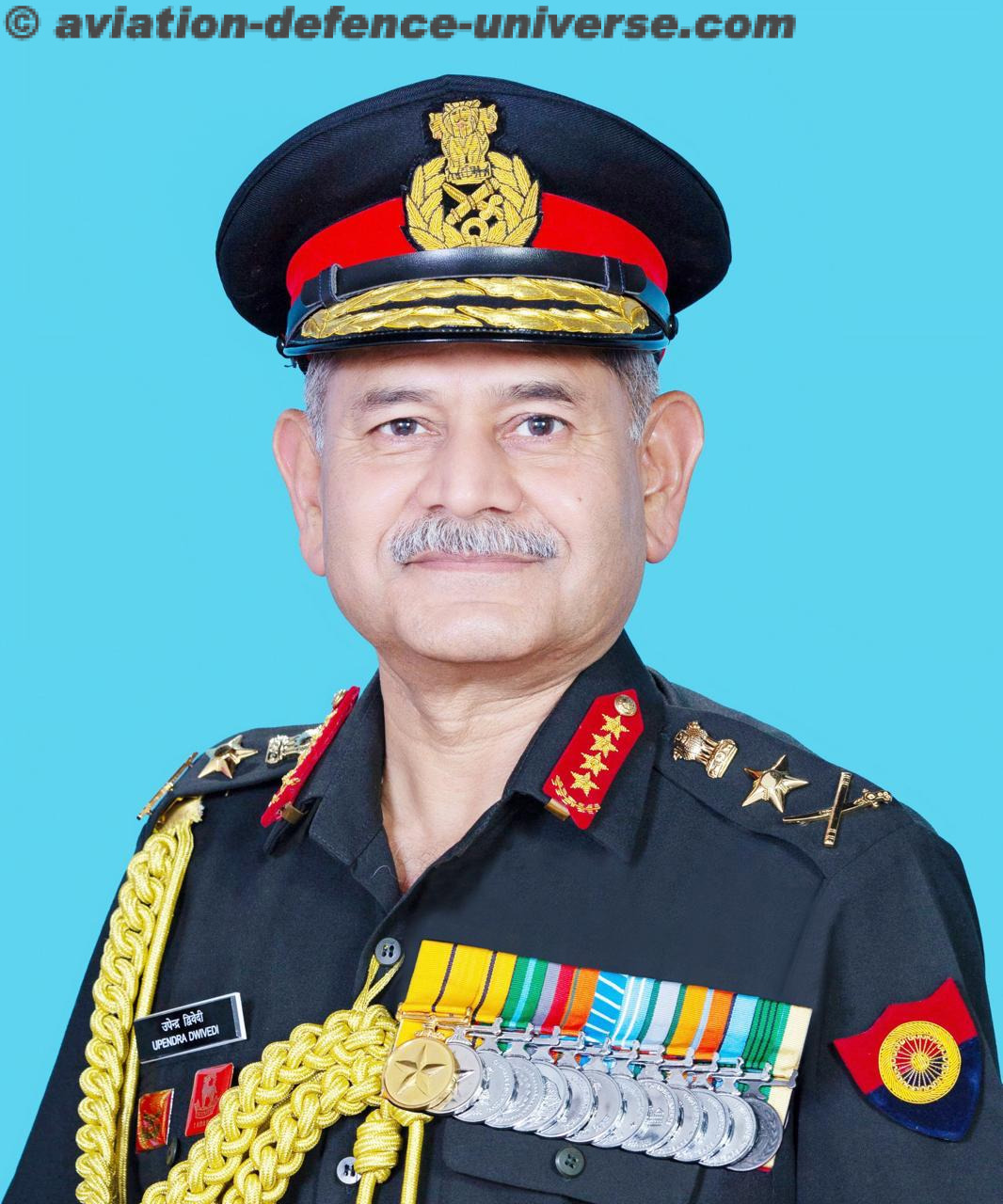
New Delhi. 25 December 2025. “Our focus is on building credible deterrence by modernising our Fleet with capable multi-dimensional platforms, while also integrating emerging technologies to monitor and secure critical sea lanes of communication, and maritime choke points. The Indian Navy remains a ‘Combat Ready, Credible, Cohesive and Future Ready’ Force committed towards ensuring safe seas and secure maritime environment in consonance with our Hon’ble Prime Minister’s Vision of MAHASAGAR ,” stated Chief of Naval Staff, Indian Navy, Admiral Dinesh Kumar Tripathi, PVSM, AVSM, NM, ADC while speaking exclusively with Aviation & Defence Universe (ADU) in an interview on Navy Day 2024.
 ADU. How is the Indian Navy evolving its operational doctrine in light of emerging threats across the Indo-Pacific and the Indian Ocean Region?
CNS. IN is committed to a free, open and inclusive Indo-Pacific, which is vital for global trade and regional security. Our efforts are not aimed at any specific nation, but rather at ensuring the security of India’s maritime interests, and contributing to a stable and prosperous Indo-Pacific.
We are enhancing our operational reach and Maritime Domain Awareness (MDA) through Mission Based Deployments (MBDs) across the region, in order to protect and safeguard our national maritime interests. These deployments have facilitated mission-ready ships and aircraft in continuous or near continuous presence in critical shipping lanes and choke points across the Indian Ocean Region.
Our ships on MBD are also prepared to meet any eventuality across the spectrum of operations, ranging from anti-piracy to Humanitarian Assistance and Disaster Relief missions. Partnerships through bilateral and multilateral exercises, such as RIMPAC, MALABAR, MILAN; and initiatives like IONS, help strengthen collective maritime security, and ensure the free flow of trade.
 Our focus is on building credible deterrence by modernising our Fleet with capable multi-dimensional platforms, while also integrating emerging technologies to monitor and secure critical sea lanes of communication, and maritime choke points. The Indian Navy remains a ‘Combat Ready, Credible, Cohesive and Future Ready’ Force committed towards ensuring safe seas and secure maritime environment in consonance with our Hon’ble Prime Minister’s Vision of MAHASAGAR.
ADU. How is the Navy preparing for future multi-domain operations under the envisaged theatre commands?
CNS. India is a maritime nation with multifarious maritime interests spanning the Indian Ocean Region. Addressing vital interests and challenges in the maritime domain necessitates an integrated approach and high levels of synergy, in terms of strategy, planning and application of force. This would require a robust integrated force structure, which would amalgamate core competencies of the three Services and Coast Guard in the maritime domain.
As far as multi-domain operations are concerned, the maritime battlespace has traditionally entailed surface, air and sub-surface domains. With time, this battlespace has extended to space, cyber and cognitive domains, which today are as important as the other three. In keeping with this expansion, warfare at sea has become more distributed and networked than before, mandating advanced and robust networking to converge effects across domains.
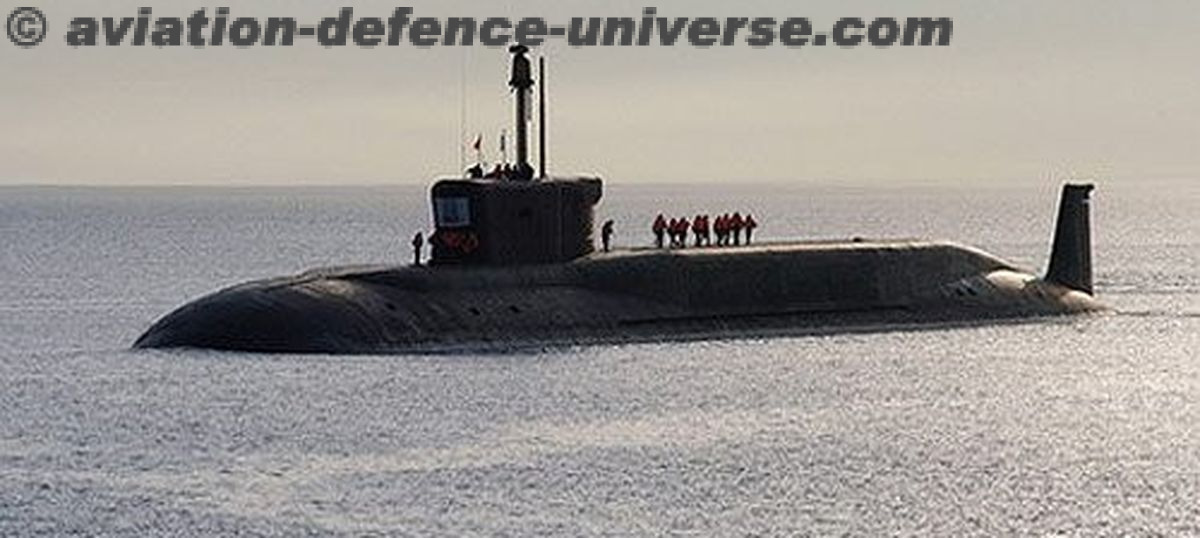 IN capabilities and force levels are being progressively augmented to realise a balanced fleet, with a judicious mix of warships, submarines and aircraft of varying sizes and capabilities, in a balanced manner, for conducting missions across the spectrum of naval warfare. At the same time, we are also inducting autonomous systems in these realms. Apart from these platforms, the Navy aims to be a front-runner in space-based communications and data exchange networks that allow us to undertake real-time multi-domain operations. The launch of the GSAT-7R satellite last month, with significant enhancements to bandwidth and networking capabilities, is a step in this direction. We have also developed the requisite in-house capability to suitably address challenges in the cyber domain. The development and acquisition of these technologies and systems is aligned with the national vision of ‘Aatmanirbhar Bharat’.
ADU. How is the Indian Navy balancing capability enhancement with indigenisation goals under the ‘Aatmanirbhar Bharat’ vision?
CNS. The Navy had nurtured an indigenous shipbuilding programme since the 1960s, when INS Ajay, the first indigenously built ship, was delivered by GRSE, Kolkata. Since then, the Navy has transformed from a ‘Buyers Navy’ to a ‘Builders Navy’ with an aircraft carrier, destroyers, stealth frigates and other vessels being constructed indigenously. With impetus on indigenous production of Naval equipment and platforms, Indian Navy is committed to become fully ‘Aatmanirbhar’ by 2047.
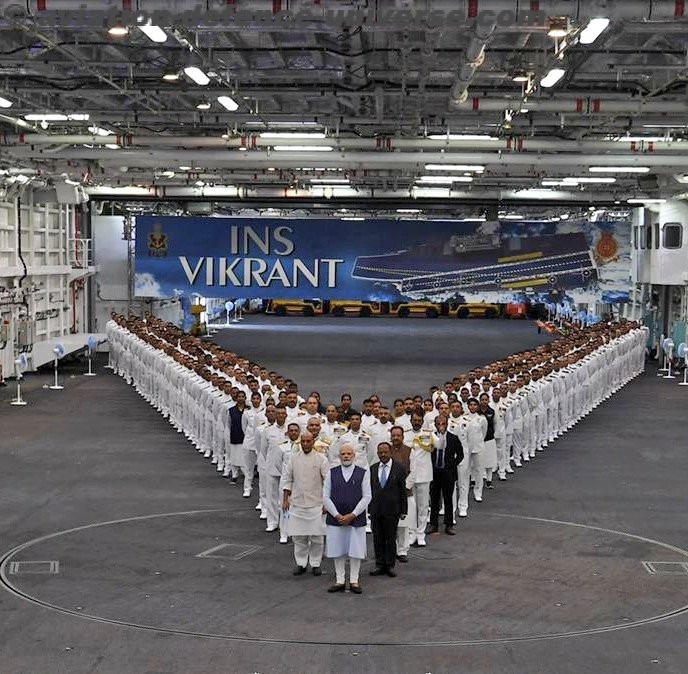 The Indian Navy has been a frontrunner in various indigenisation schemes of GoI and has significantly contributed to increasing ‘self-reliance in defence production’. This is evident from the fact that till date over 140 ships have been built and commissioned in India. It is notable that all 51 ships under construction today are being built by Indian Shipyards. Also, the ships commissioned recently have a near 80% indigenisation content, which is a significant figure. This includes approximately 90% indigenisation in the Float segment, 60% in the Move segment, and 50% in the Fight segment.
The Government has taken significant steps to promote self-reliance, and the Indian Navy has actively embraced various national Make-in-India initiatives. These include schemes such as Make under Defence Acquisition Procedure, Technology Development Fund (TDF), and Innovation for Defence Excellence (iDEX), all of which have played a pivotal role in transforming the Indian Navy into a technologically advanced and self-reliant force.
ADU. With warfare becoming increasingly tech-driven, how is the Indian Navy leveraging AI, quantum tech, big data, and cyber warfare capabilities?
CNS. As modern warfare increasingly becomes technology-driven, the Indian Navy is taking comprehensive steps to integrate artificial intelligence, quantum technologies, big data analytics, and advanced cyber warfare capabilities into its operational framework.
Artificial Intelligence and Machine Learning Integration
The Indian Navy is currently progressing numerous AI projects and initiatives encompassing autonomous systems, language translation, target identification and classification from imagery, sensor enhancement, predictive maintenance, inventory management, maritime domain awareness and decision-making, among others. These AI initiatives are designed to deliver both strategic and operational level impact across the spectrum of Naval operations. To institutionalise AI capabilities, IN has also established a Centre of Excellence for Artificial Intelligence at our training establishment, INS Valsura in Jamnagar.
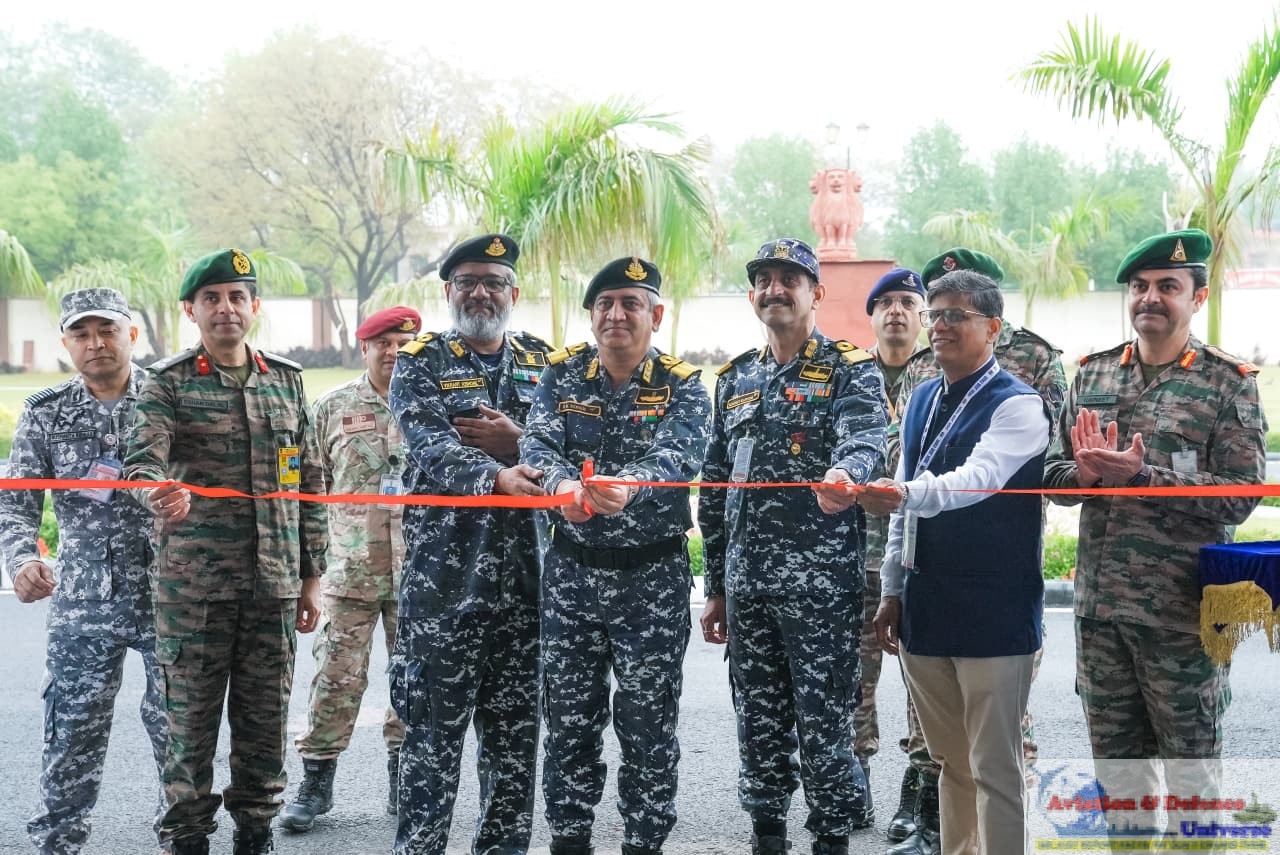
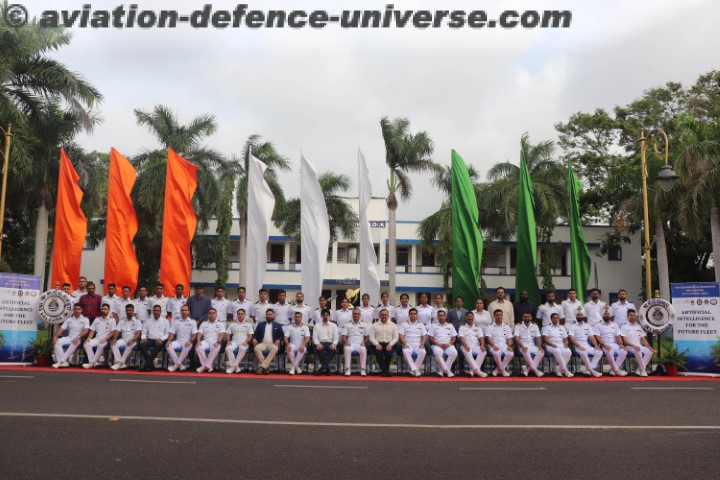 In 2025, the Indian Navy’s first dedicated Al Data Centre and Lab – Computational Resource for Artificial Intelligence Testing and Learning (CRYSTAL) – was inaugurated at the Indian Navy Incubation Centre for Artificial Intelligence (INICAI) in Bengaluru. CRYSTAL provides in-house, high-end computing power for developing niche Al solutions and serves as a test bed for MSMEs and technology start-ups, advancing IN’s vision of AI technology infusion and Aatmanirbharta. AI applications developed at INICAI and through IDEX routes are being progressively deployed on Naval networks and platforms.
The Navy is also pursuing a well-planned AI Training Roadmap to ensure an AI enabled workforce. We conduct comprehensive training in AI/ ML across all specialisation levels for officers and sailors, both within Naval training schools, and at premier IITs and other national institutes. A significant number of personnel have undergone Al-linked courses and workshops over recent years, building the human capital necessary for AI-driven operations.
Quantum Technology for Secure Communications
The Indian Navy has partnered with premier research institutions to develop quantum-based secure communications to leverage quantum cryptography, to create resilient communication channels – a critical capability, as cyber threats become increasingly sophisticated. The Indian Navy has partnered with premier research institutions and Indian deep-tech companies to develop quantum-based secure communications, leveraging quantum key distribution to create communication channels hardened against cyber threats. This includes an MoU with Raman Research Institute’s Quantum Information and Computing lab for secure maritime Quantum Key Distribution (QKD), and a contract with Indian quantum-cybersecurity startup QNu Labs to deploy QKD-based “Hub and Spoke” systems, towards ensuring secure communications.
Further, under the iDEX ADITI 2.0 defence challenge, Indian quantum deep-tech startup QuBeats has been awarded a Rs 25-crore grant to develop an indigenous Quantum Positioning System (QPS) for the Indian Navy, aimed at facilitating accurate navigation in GPS-denied environments, for ships and submarines.
Big Data Analytics and Enterprise Networks
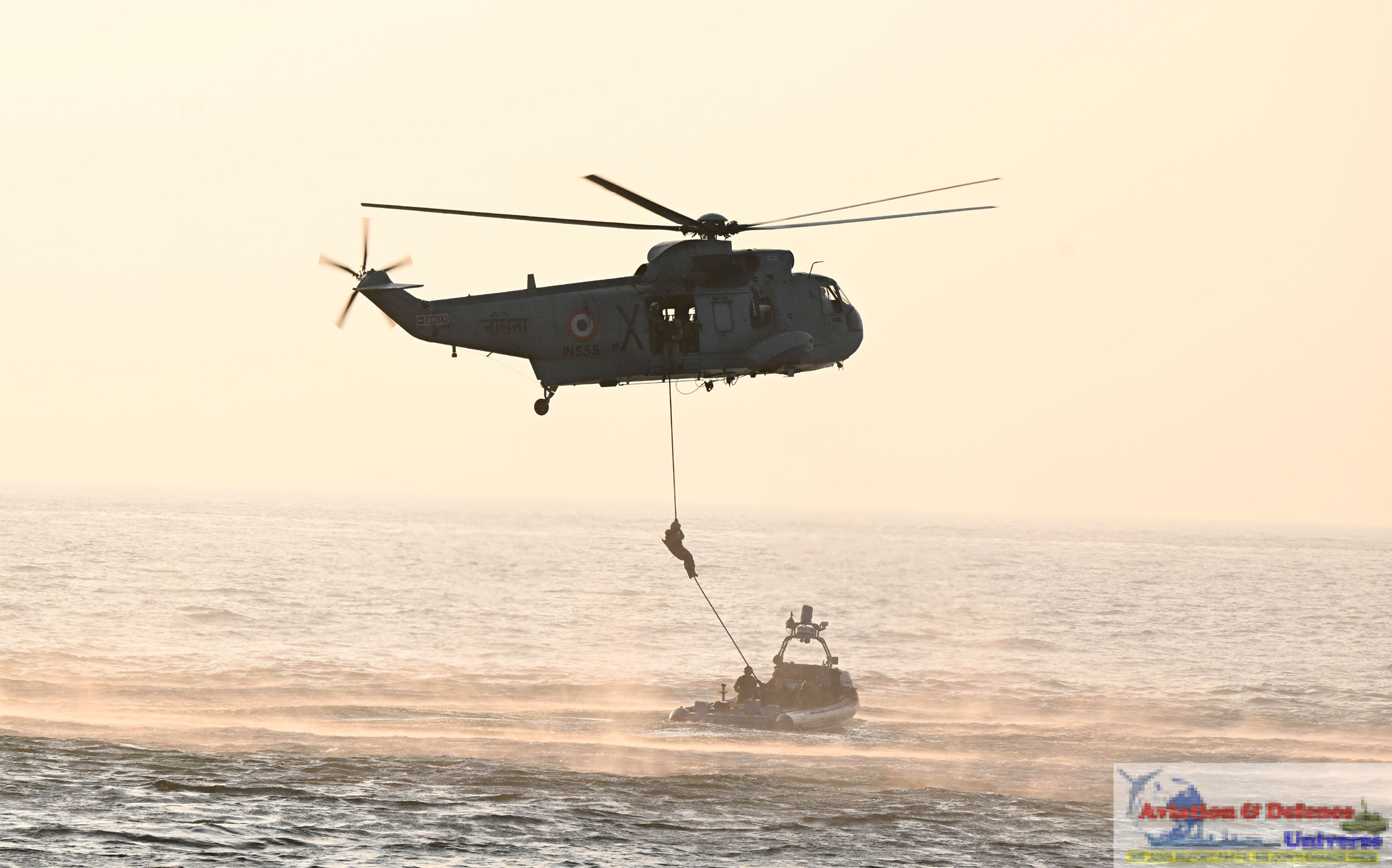
IN has taken steps in terms of Big Data Analytics to process vast amounts of operational data for intelligence analysis, logistics optimisation, predictive capability development, and cyber security threat detection. We are actively unifying and reorganising our enterprise data, recognising that data is the fuel for all AI engines. A host of applications have been developed to leverage this data in the operational, maintenance, logistics, HR and administrative domains. These applications have remarkably improved efficiency, transparency and decision making, and efforts in this direction will continue.
Cyber Warfare Capabilities
Indian Navy has a well-established Incident Response (IR) mechanism, which responds to all cyber security incidents in an institutional manner, to mitigate any observed vulnerabilities and ensure protection of information. IN’s dedicated Computer Emergency Response Team (CERT) operates in consultation with CERT-India and other Govt Cyber security agencies for real-time threat information sharing and mitigation.
 To bolster the cyber posture of the Indian Navy, cyber teams/ personnel are periodically benchmarked and updated through skill upgradation and induction of new technology, primarily through Make in India route. IN has also actively participated in multiple cyber exercises conducted at national and international level. Additionally, the last edition of Indian Navy’s Theatre Level Exercise, TROPEX-25, included cyber operations complementing conventional maritime operations. Moreover, WESEE, the Navy’s own R&D establishment, has already developed advanced cyber tools for secure and malware-free data transfer between networks and a quantum safe VPN, both of which were showcased at the Cyber Security Seminar conducted by the Navy on 16th October 2025.
ADU. Could you elaborate on the Navy’s plans for integrating space-based maritime domain awareness (MDA) and satellite surveillance capabilities?
CNS. The Navy’s integrated surveillance network enables comprehensive development and maintenance of MDA, which is a critical enabler for naval operations. Further, the Indian Navy is continuously strengthening its Maritime Domain Awareness capabilities through a range of initiatives, including the integration of space-based surveillance systems.
The Navy is consistently developing an integrated, multi-domain MDA network, towards a consolidated maritime picture. In the Space segment, the Navy has a well-established, dedicated SATCOM capability through the GSAT-7 satellite, which has been further augmented by the recently launched GSAT-7R satellite, and in addition, uses national and commercial Electro-Optical (EO) and Synthetic Aperture Radar (SAR) satellites for detection of Vessels of Interest.
 As part of the ground segment, naval projects like National Maritime Domain Awareness (NMDA), National Command, Control, Communications and Intelligence (NC3I) and Operational Data Framework (ODF) enable fusion of imagery, coastal radar pictures, AIS detections, and platform reports, into one consolidated picture. Incorporation of AI and ML enhances analytics and augments classification, identification, and anomaly detection.
Towards closer collaboration with our regional partners in the Indo-Pacific, the Information Fusion Centre – Indian Ocean Region (IFC-IOR), hosted by the Indian Navy, has established working-level linkages with more than 28 partner countries and 54 multinational constructs, thereby enhancing the shared situational awareness of all stakeholders. The end goal is persistent surveillance across the IOR, and faster decision-making during operations, through multi-sensor constellations, secure networks, and advanced analytics.

As told to Sangeeta Saxena