




















- From Precision Strikes to Production Lines: India’s Defence Story of 2025
- India’s 2025 Defence Timeline: Operations, Partnerships, DRDO Tests, and Theatre Push
- A Twelve-Month Defence Recap: How 2025 Reshaped India’s Military Posture
New Delhi. 31 December 2025. In 2025, India’s defence story was shaped by two parallel tracks: an accelerated push for self-reliance and jointness on the one hand, and a sharper, more kinetic security environment on the other. The defining inflection came after the April 22 terror attack in Pahalgam, which set off a fast-moving cycle of escalation and response that culminated in Operation Sindoor—a moment that reiterated how tightly national security, industrial capability, and operational readiness were now intertwined.
Operation Sindoor and the return of hard deterrence
India’s official position framed Operation Sindoor as a targeted counter-terror response, with the government stating that nine terror camps across Pakistan and Pakistan-occupied Jammu & Kashmir were struck on May 7, 2025, followed by a ceasefire understanding on May 10 after a brief but intense exchange of fire across multiple domains.
Independent assessments also suggested the episode marked a notable shift in the depth and scope of military action, with satellite-image analysis indicating damage to multiple Pakistani airfields during the May 2025 escalation, alongside acknowledgement of damage by Pakistan’s military.
Ministry of Defence: reforms, indigenisation, and industrial scale-up
Beyond operations, 2025 was positioned institutionally as a reform-forward year. The government described 2025 as the “Year of Reforms”, emphasising jointness, modernisation, and faster decision-making across the system.
On the industrial front, India leaned harder into Atmanirbharta: official releases cited record defence production of ₹1.27 lakh crore and defence exports of ₹23,622 crore (FY 2024–25 figures cited in 2025 communications), reinforcing the narrative that domestic manufacturing and export competitiveness were no longer side-objectives but core strategic tools.
Procurement and capability-building continued to be routed through structured mechanisms—ranging from indigenisation lists to approvals for capital acquisition—reflecting a broader attempt to convert policy intent into predictable demand signals for Indian industry.
Jointness and integration: moving from intent to architecture
Jointness remained a central theme in 2025, not only as an organisational ideal but as an operational necessity shaped by a two-front security reality. The year saw continued emphasis on tri-service alignment through doctrine, standardisation, and integration-focused reforms, with official messaging repeatedly tying readiness to interoperability and unified planning.
The Services in 2025: operational tempo + modernisation pressure
Indian Army (2025): The Army’s year was defined by sustained readiness in a volatile neighbourhood and the downstream demands of rapid capability absorption—drones/counter-drone, surveillance, precision, mobility, and networked operations. The operational lesson of the year was clear: high-tempo contingencies increasingly required not just manpower and platforms, but resilient logistics, contested-domain awareness, and quick repair/replace pipelines at home.
Indian Navy (2025): The Navy continued to operate as India’s forward stabiliser across the wider maritime neighbourhood, balancing deterrence, partnerships, and persistent presence. The year’s strategic undertone remained sea-lane security under global volatility—where naval diplomacy and interoperability mattered, but so did sustained fleet availability and maintenance capacity.
Indian Air Force (2025): For the IAF, the year reinforced the premium on credible air power—precision, reach, survivability, and rapid turnaround. The air domain’s centrality during the 2025 escalation also highlighted a practical truth: sortie generation and sustainment depend as much on domestic maintenance ecosystems and spares resilience as on frontline platforms.
The big takeaway from 2025
India’s defence ecosystem in 2025 looked less like a procurement pipeline and more like a capability engine—where operations, industrial depth, and institutional reforms all had to move together. Operation Sindoor sharpened the focus: deterrence is only as credible as the country’s ability to deploy fast, absorb losses, sustain tempo, and support systems domestically—with jointness and indigenisation increasingly functioning as operational enablers, not slogans.
Across 2025, India’s defence and security narrative moved on two parallel tracks: operational readiness in a volatile neighbourhood and a sustained push to build capability at home through indigenisation, reforms, and deeper international defence engagement. From the high-tempo events around Operation Sindoor to continued momentum in joint exercises, modernisation programmes, and DRDO-led testing, the year reinforced a simple reality—India’s military preparedness increasingly depended on speed, integration, and domestic resilience.
2025 timeline (January to December) — selected official highlights
January 2025
- The year opened with continued emphasis on operational preparedness and partnerships, with official messaging across ministries and services highlighting training intensity, capability-building, and international engagement as the strategic environment stayed tense.
February 2025
- Defence diplomacy remained active through routine engagements and cooperation formats, supporting India’s wider security posture and signalling continuity in collaboration with key partners.
March 2025
- The armed forces’ training cycle and capability initiatives continued, with recurring focus on readiness, modernisation and system upgrades through domestic and collaborative channels.
April 2025
- The operational environment sharpened further as the region remained on edge, and India’s security messaging increasingly emphasised deterrence, preparedness and rapid response options.
May 2025 — Operation Sindoor dominated the year
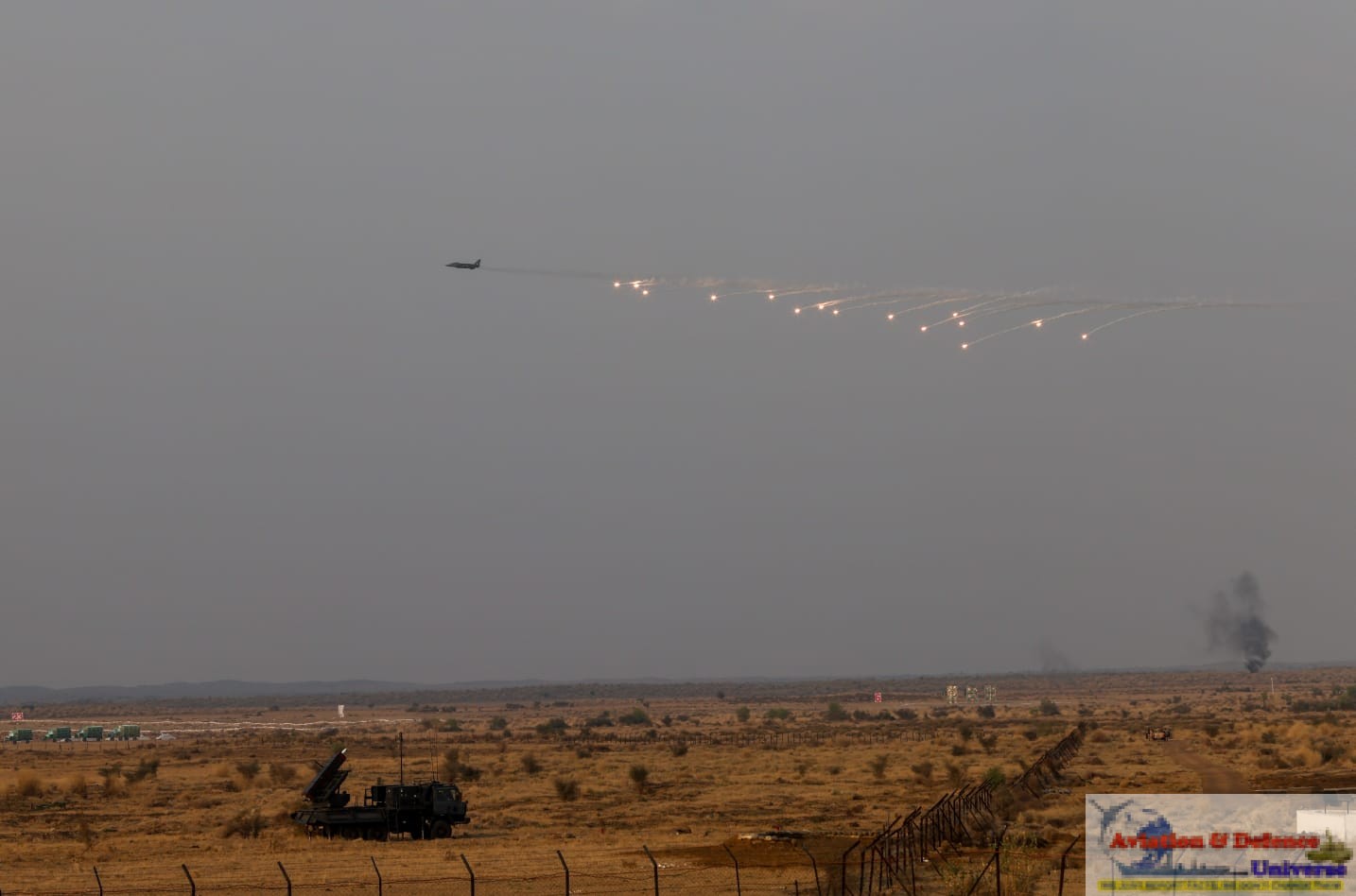
- A major inflection point came with Operation Sindoor, during which India and Pakistan experienced a brief period of active military confrontation.
- On May 10, 2025, India’s Ministry of External Affairs stated that the DGMOs spoke and agreed to stop firing and military action on land, air and sea effective 1700 hours IST.
- Independent assessments and analysis through 2025 treated the episode as a marker of the region’s escalatory risks and the importance of credible precision-strike and air-defence postures.
June 2025
- The post-operation period saw continued attention on readiness, intelligence, surveillance, and rapid coordination—areas that typically receive renewed emphasis after high-tempo episodes.
July 2025
- India continued strengthening interoperability through international exercises. The Indian Air Force’s participation in Exercise Indradhanush 2025 was among the notable mid-year engagement points highlighted publicly.
August 2025 — DRDO testing and indigenous capability
- DRDO activity remained central to the capability narrative. For example, DRDO conducted flight tests linked to the Pinaka weapon system, reinforcing the ongoing approach of iterative testing, validation, and upgrades within India’s rocket/artillery ecosystem.
September 2025
- Joint training and interoperability continued with key partners. Exercise Ajeya Warrior-25 (India–UK) featured among the publicly documented engagements, reflecting the steady rhythm of bilateral training and field-level cooperation.
October 2025
- As the year moved into its final quarter, the defence system’s focus typically converged on procurement execution, training culmination, and capability demonstrations, alongside continued diplomatic coordination.
November 2025
- Momentum on integration and jointness remained a prominent theme across defence discussions, reflecting sustained institutional focus on operational synergy and unified planning.
December 2025 — integration and structural reform focus
- By year-end, discourse around Integrated Theatre Commands and joint structures remained a visible pillar of the reform conversation, reflecting the continuing institutional effort to deepen tri-service coordination and operational.
In 2025, India’s defence story was defined by a hard operational reminder—Operation Sindoor—and a parallel, deliberate effort to strengthen long-term capability through testing, partnerships, and an integration-first approach. The year underlined that future readiness would depend not only on platforms and budgets, but on jointness, speed of decision-making, domestic sustainment, and resilient supply chains. The direction of travel was clear: operational credibility and self-reliance were becoming increasingly inseparable.