



























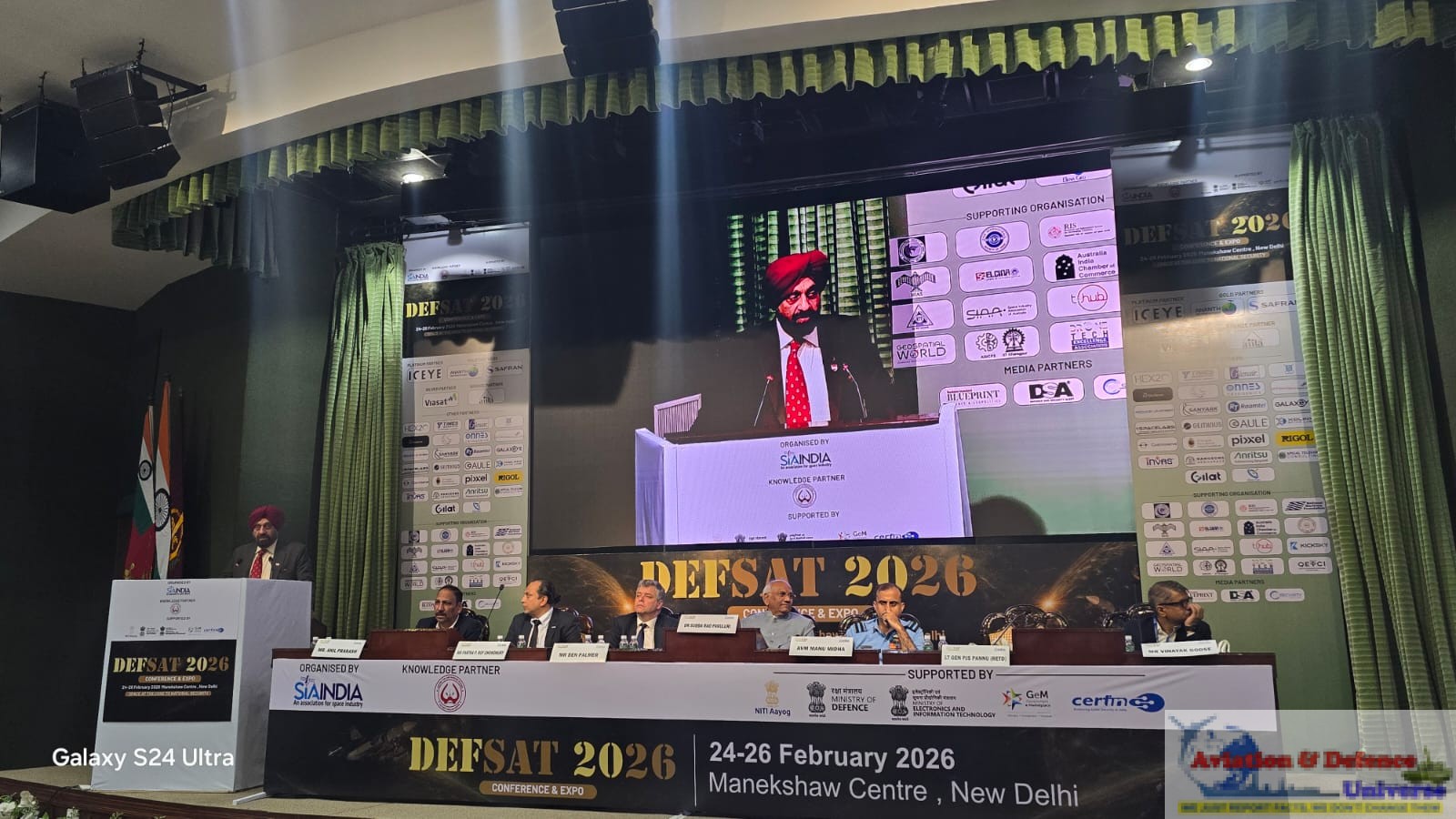
- Opens with Strong Call to Recognise Space as Critical National Infrastructure
- Space at the Core of National Security: Leaders Set the Tone
- Inaugural Session Highlights Space, Cyber and Data as New Pillars of Power
By Sangeeta Saxena
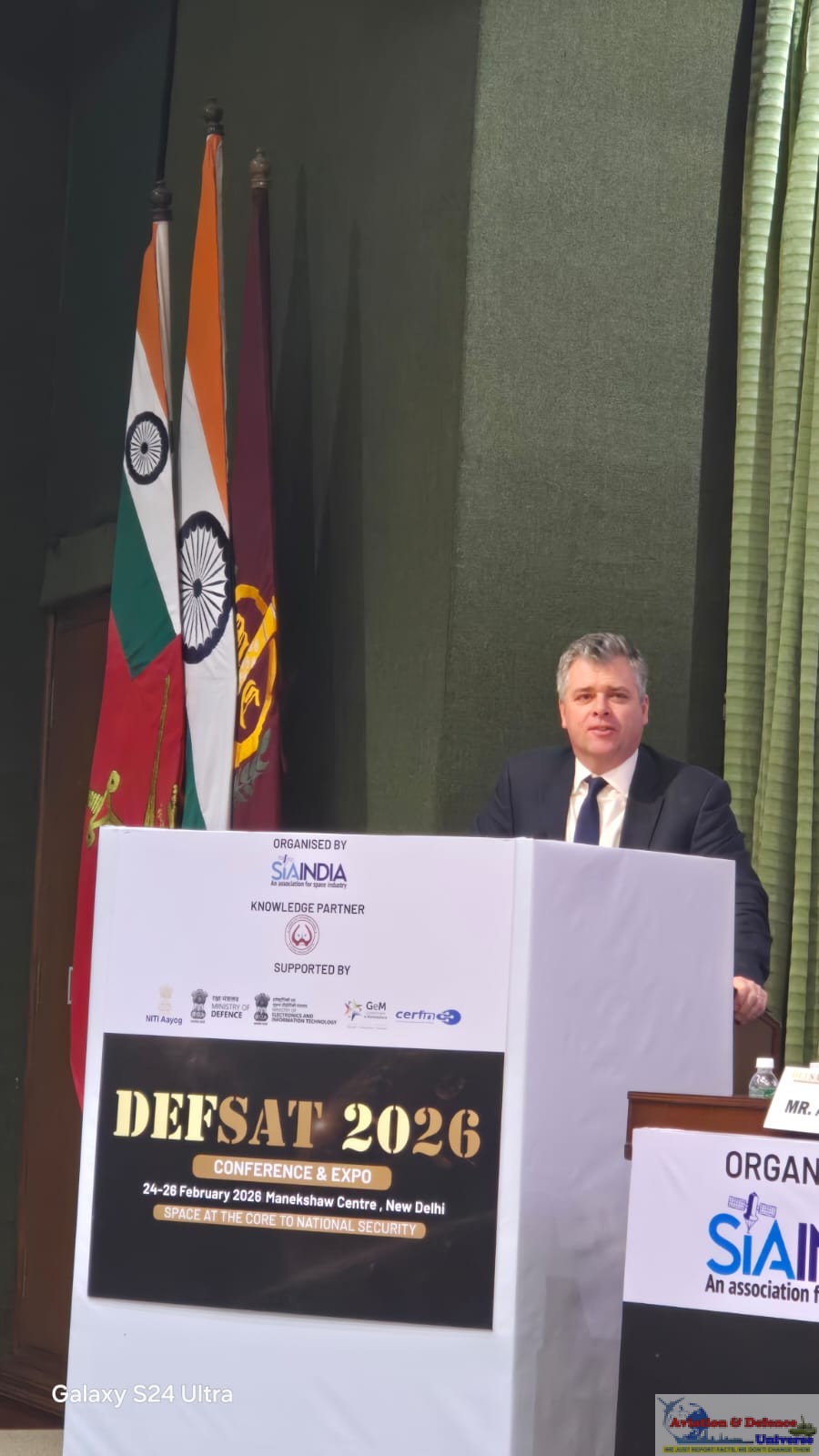
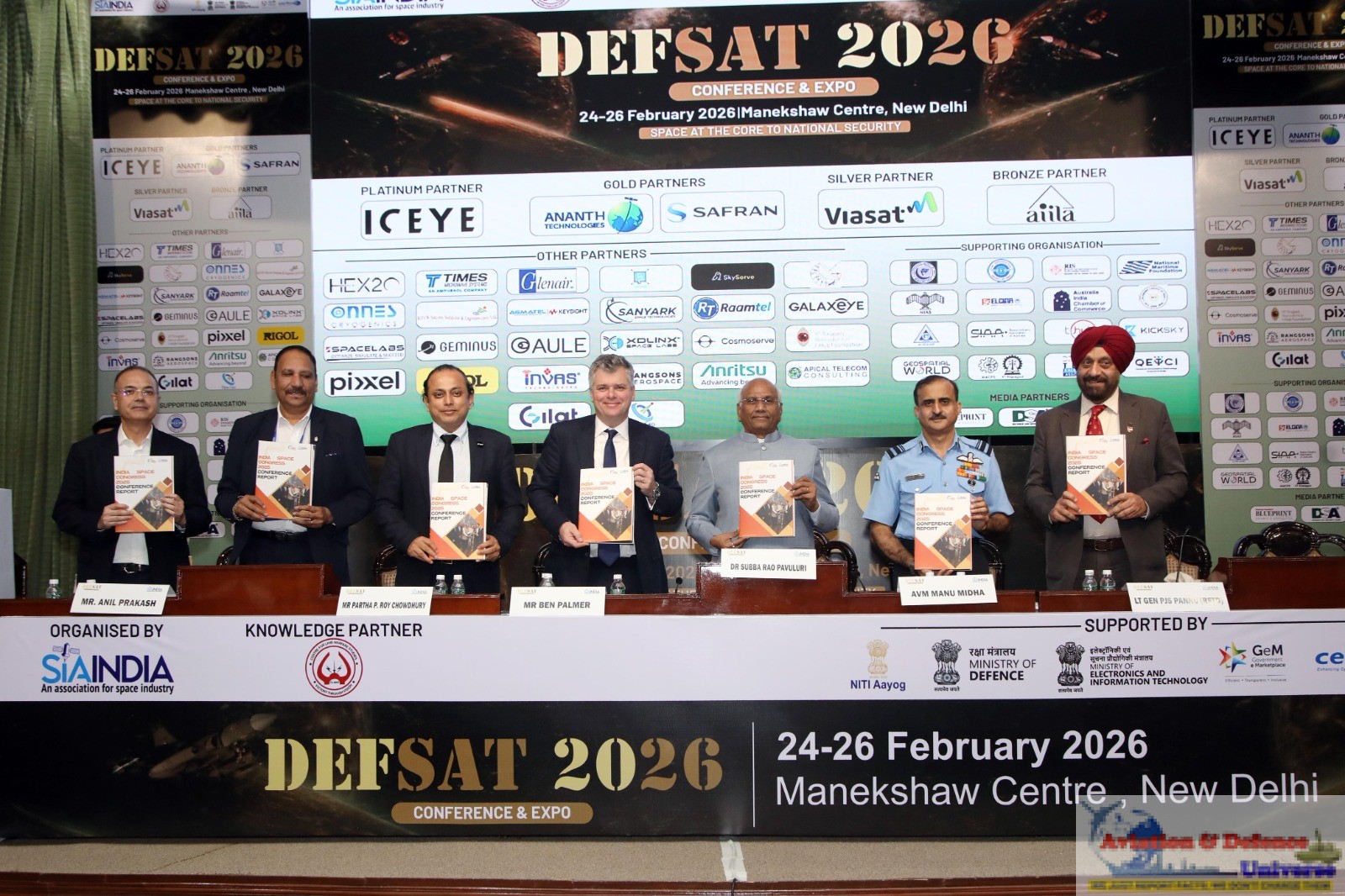
New Delhi. 24 February 2026. The fourth edition of DEFSAT 2026 commenced with a strong strategic message: space is no longer a supporting domain—it is central to India’s national security architecture. The inaugural session brought together senior military leadership, policymakers, scientists, industry pioneers and strategic thinkers to deliberate on the theme, “Space at the Core of National Security.”
 The inaugural session of DEFSAT 2026 brought together leaders from government, industry, cyber security, satellite intelligence and global communications to underline a defining message: space is no longer a standalone domain — it is deeply intertwined with cyber resilience, intelligence capabilities and national preparedness. From the democratisation of space access and the challenges of securing orbital assets, to synthetic aperture radar (SAR) intelligence systems and assured satellite communications in contested environments, the session reflected the widening arc of space-enabled security.
Delivering the welcome address, Dr. Subba Rao Pavuluri, President, SIA-India, described DEFSAT’s evolution from an idea into a national platform. He noted that India needed a structured and sustained dialogue at the intersection of space and security, and expressed satisfaction at the overwhelming participation this year. “What began as a conversation has grown into a movement,” he said, underlining that the convergence of space and national security is no longer optional in modern conflict scenarios.
Dr. Pavuluri emphasised that space infrastructure must now be formally recognised as national critical infrastructure, urging policymakers to treat orbital assets with the same priority as other strategic national resources. In an era of electronic warfare and emerging quantum threats, he said, resilience must be designed into systems from inception rather than added later. Referring to recent global conflicts, he observed that counter-space capabilities and grey-zone tactics are increasingly shaping strategic stability, requiring sustained investments and technological depth from India.
The thematic address was delivered by Lt Gen (Dr) P.J.S. Pannu (Retd.), former Deputy Chief of Integrated Defence Staff, who provided a sweeping overview of the changing global strategic landscape. He observed that while technology has advanced at unprecedented speed over the last five years, geopolitical relationships have grown more strained. Space, he said, has firmly established itself as the “final frontier,” closely intertwined with cyber capabilities. Space and cyber have come together not only to enable networks but to secure space assets themselves, he noted.
 “Over the last five years, the world has changed dramatically. Technology has taken a forward leap, but human relations have moved backward. Space has firmly established itself as the final frontier, and it is here to stay. It has been joined by cyber as both an enabler and a force multiplier. Together, space and cyber ensure not only that we build networks, but that we secure our space assets. In 2024, the global space economy stood at about 613 billion US dollars and is projected to rise to nearly 2 trillion dollars within a decade. Artificial intelligence has accelerated this growth, and data has become king. Today, the pillars of global security are energy security, nuclear deterrence and data sovereignty. Data privacy, security, management and analysis have become instruments of power. Data domination and data denial are now factors in warfare, and space enables this power by giving us persistent, global visibility,” Lt. General Pannu
According to him, in the last few years, India has witnessed quantum advancements, privatisation of space, reusable launch systems like Falcon 9, and the rise of private players dominating access to orbit. Command and control systems and even data centres may move into space. Space tourism will become a reality. India too has progressed with Chandrayaan, Mangalyaan, Aditya, Gaganyaan and participation in Artemis. The National Space Policy 2023 and future frameworks like DAP 2026 must enable both civilian and military space ambitions. However, terrorism has not stopped, proxy wars and grey-zone operations continue, and internal security agencies are increasingly dependent on space-based systems. The country is are also entering the ‘sixth domain’ — near space — bridging the gap between aircraft and satellites. Multi-domain operations today extend beyond land, sea and air to cyber and space, combining non-kinetic and kinetic warfare.
“If space is becoming all-powerful, then our space assets are also becoming vulnerable. The satellites we launch, the rockets we produce, the command and control systems we operate — all are potential targets. The United States, Russia and China have already declared space a warfighting domain. We cannot continue to view space as a purely peaceful resource; it is now a core component of national security and military capability. Space encompasses all other domains and shapes comprehensive national power. As we move forward, we must prepare not only for space-enabled warfare but for the possibility of space wars themselves. I hope that from tabletop exercises we graduate to full simulations, and that through forums like DEFSAT we grow together in understanding and readiness, firmly placing space at the core of national security,” he reiterated.
The inaugural session of DEFSAT 2026 brought together leaders from government, industry, cyber security, satellite intelligence and global communications to underline a defining message: space is no longer a standalone domain — it is deeply intertwined with cyber resilience, intelligence capabilities and national preparedness. From the democratisation of space access and the challenges of securing orbital assets, to synthetic aperture radar (SAR) intelligence systems and assured satellite communications in contested environments, the session reflected the widening arc of space-enabled security.
 Dr. Vinayak Godse, CEO, Data Security Council of India (DSCI) emphasised the rapidly evolving and increasingly digitised space ecosystem, noting that commercialisation, democratisation and technological acceleration have transformed the security landscape. “We know every domain we have seen until now is evolving rapidly. The ecosystem that is being built around space — commercialisation, digitisation and the broader economic framework — has created both opportunities and new security challenges,” he pointed out that space capabilities are no longer restricted to state actors.
As per him, the ecosystem is becoming democratised and participatory. Small start-ups, mid-sized companies and larger enterprises are building capabilities. Access is available for anyone to use. High-resolution imagery of any geography can be downloaded by anybody. When space becomes so participatory and digitised, the security challenges become very different. Dr. Godse highlighted orbital assurance as a critical component of national security preparedness. “As economies depend on connectivity and resilience layers, orbital assurance becomes a very important domain of national security. It is not just about securing space assets — it is about securing what space enables, ” he outlined the structural complexities of space security, including speed, lifecycle management and system interdependencies.
“Space assets move at speeds we cannot imagine. They are complex systems. Unlike IT systems that can be replaced in a year, space assets remain operational for 10 to 15 years. Security must be managed across the entire lifecycle. Calling for greater engagement from the cyber security ecosystem,” he added.
“India has over 650,000 cyber security professionals and more than 400 product companies. We are working to get them interested and engaged in space security. The challenges in this domain should attract the best cyber talent in the country. We did not pay sufficient attention to artificial intelligence and computing developments earlier. Today we are playing catch-up. We must think ahead — what does AI of 2028 or 2030 mean for security? AI can help identify vulnerabilities, but it can also help exploit them, ” concluding, he reaffirmed DSCI’s commitment, “We are working with NITI Aayog on frontier technologies and national security frameworks. We want to build a strong space security ecosystem in partnership with SIA and the broader space community.”
As the deliberations will continue in the next two days, the event will be seeing the small start-ups, mid-size companies and so many of these ecosystem which are trying to build those capabilities and make space an accessible to anybody to use it basically, right. So it is not only the challenges of securing the space, it is also the outcome that it gives basically which is very democratised and participatory in nature.