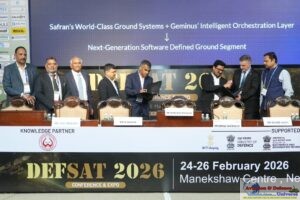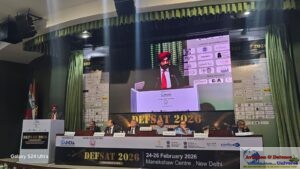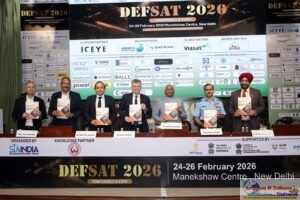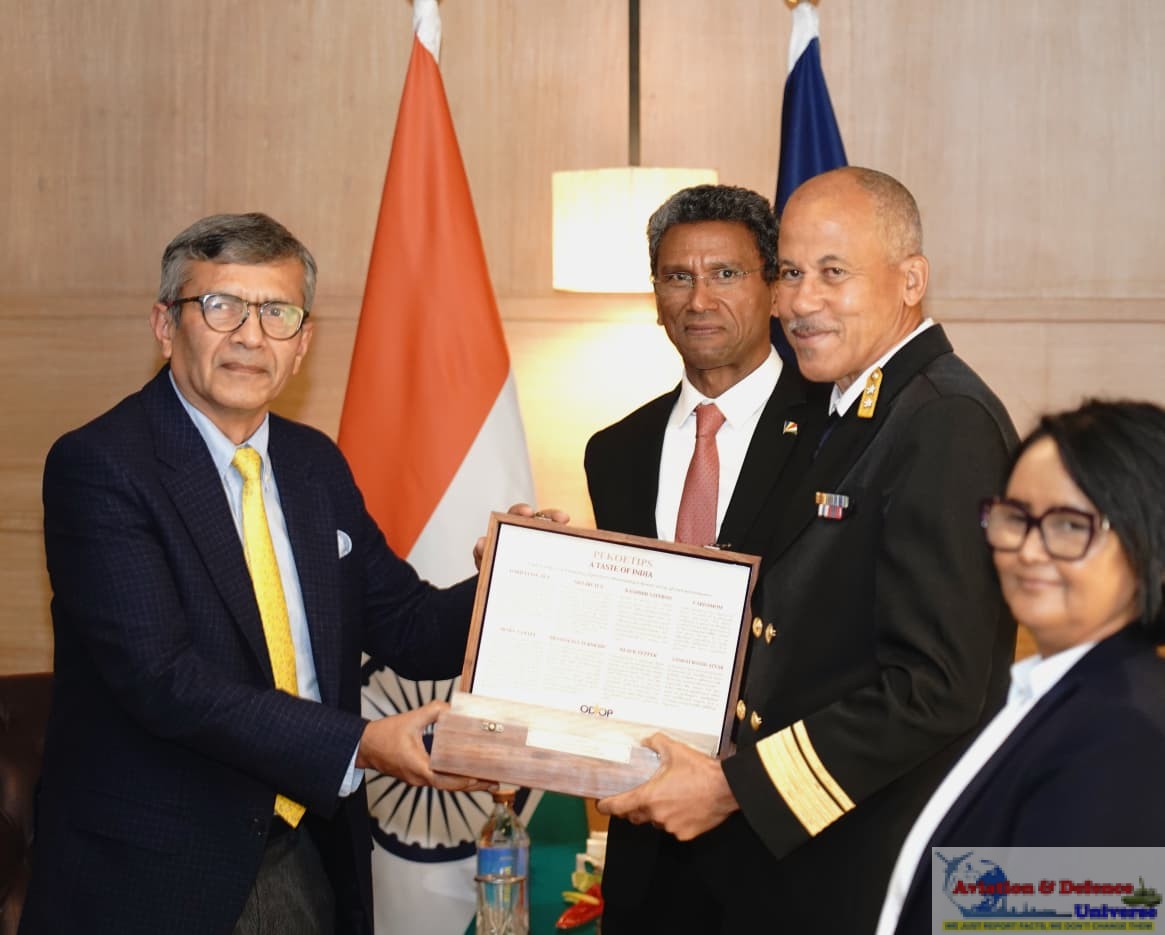



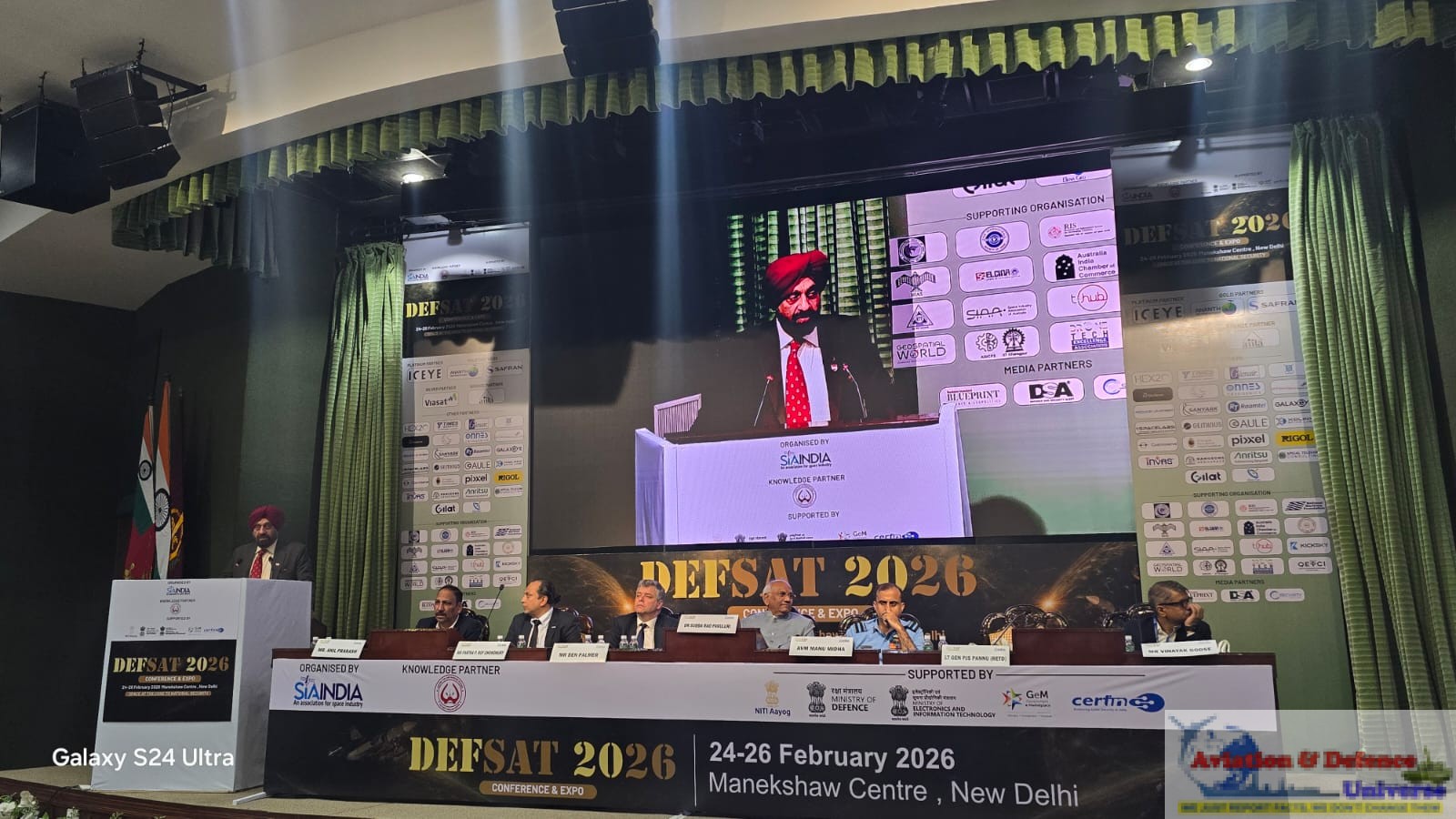
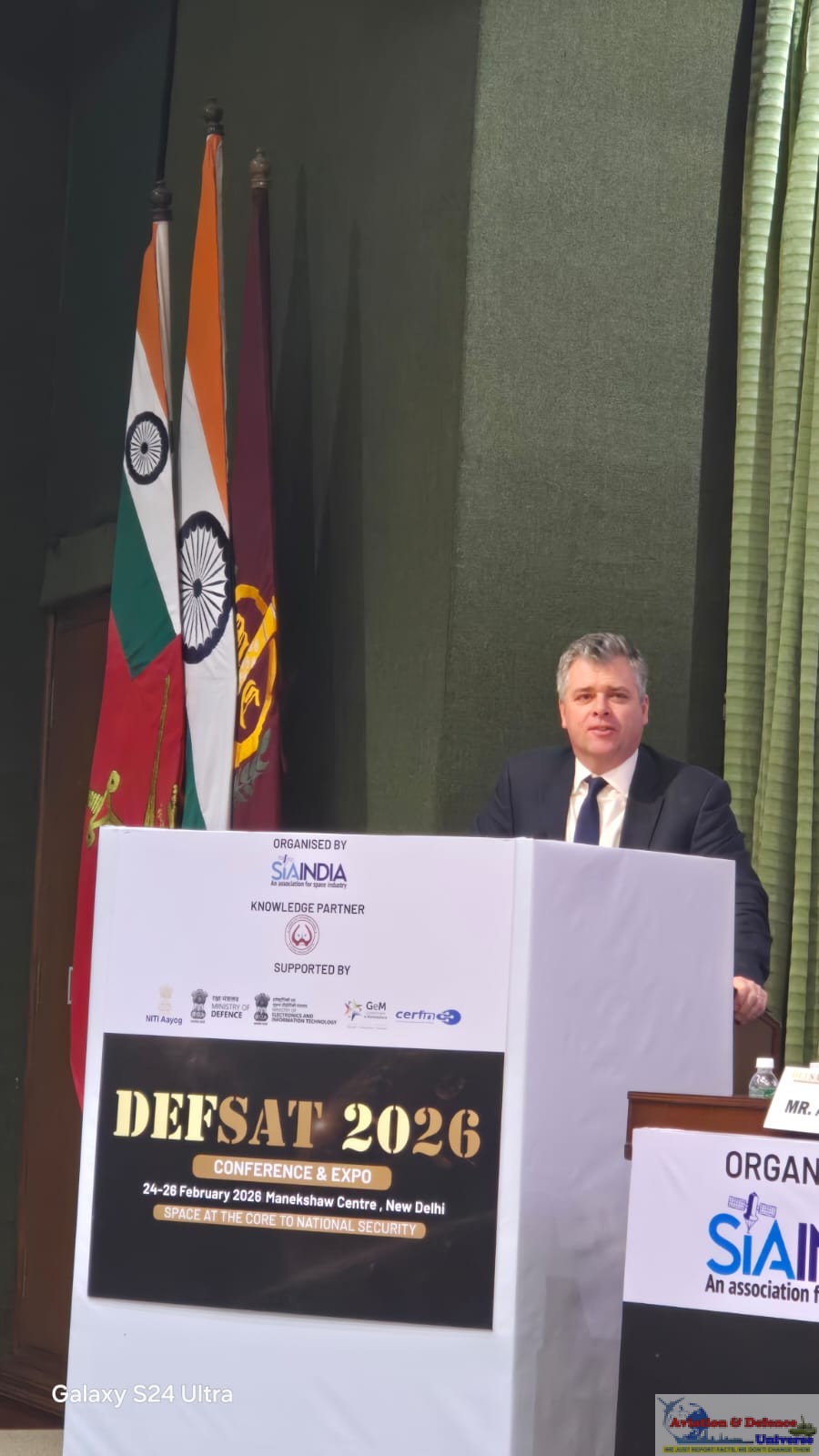






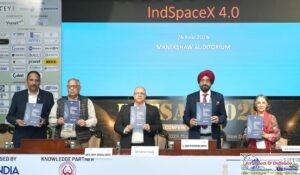
 New Delhi, India, 26 February 2026 — DefSat 2026 concluded on a high note with strong strategic momentum of over 600 delegates as the 4th edition of the IndSpaceX Wargame took centre stage, underscoring India’s growing focus on operational preparedness in the space domain. The final day also witnessed the release of a comprehensive Cyber Security Framework for Space and Satellite Communications, alongside key deliberations by the newly constituted Space Strategic Group (SSG) , signalling a decisive shift from dialogue to structured capability-building across India’s defence space ecosystem.
Over three days, DefSat 2026 brought together policymakers, defence leadership, industry, academia, and emerging innovators to deliberate on the evolving character of space as a contested and operational domain. The concluding sessions sustained this momentum, focusing on war-gaming simulations, institutional alignment, and cyber resilience as core pillars of India’s space security architecture.
Highlighting the depth of participation and the platform’s growing maturity, Dr. Subba Rao Pavuluri, President, SIA-India, stated:
“The strong participation over the past three days, particularly from industry, academia, and a young cohort of innovators aged 30 to 40, demonstrates that India possesses the technological depth required for defence space autonomy. What we now need is policy acceleration. With DefSat evolving from concept to platform, today’s war-gaming simulations will translate capability into doctrine and operational readiness.”
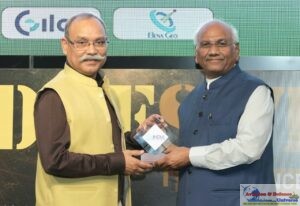 Cyber Security Framework for Space and SatCom Released with CERT-In
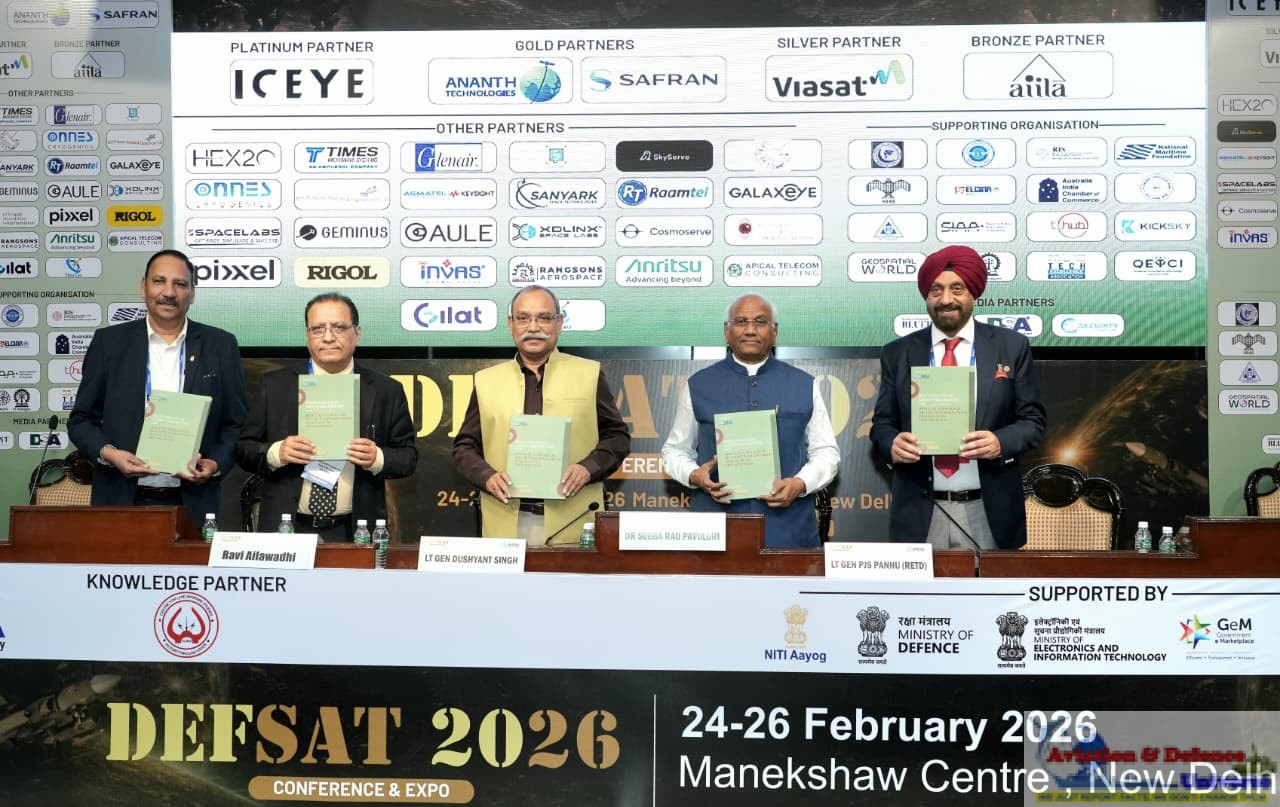
In a major development, CERT-In, in collaboration with SIA-India, unveiled a Cyber Security Guidelines to address an increasingly complex cyber threat landscape, the framework reflects a coordinated government industry effort to ensure that as India’s space capabilities expand, resilience and trust advance in parallel.
The framework serves as a foundational step toward strengthening cyber preparedness across the entire space value chain; including space assets, ground infrastructure, communication links, supply chains, and user segments. It promotes security-by-design in emerging missions, encourages coordinated threat awareness and response, aligns Indian practices with globally recognised standards, and supports the creation of a trusted and resilient space environment.
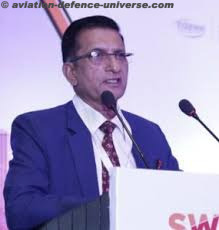
Dr. Sanjay Bahl, Director General, CERT-In, noted:
“CERT-In remains steadfast in strengthening the cyber resilience of all sectors across Bharat. Recognizing the strategic importance of space systems, including satellite communication networks, to India’s technological sovereignty and future growth, these comprehensive guidelines establish a unified and forward-looking framework by considering defense in depth, breadth and height to safeguard satellite networks, ground infrastructure, space related supply chains and space assets against the rapidly evolving and increasingly sophisticated cyber threat landscape.”
Space Strategic Group: Institutionalising Strategic Alignment
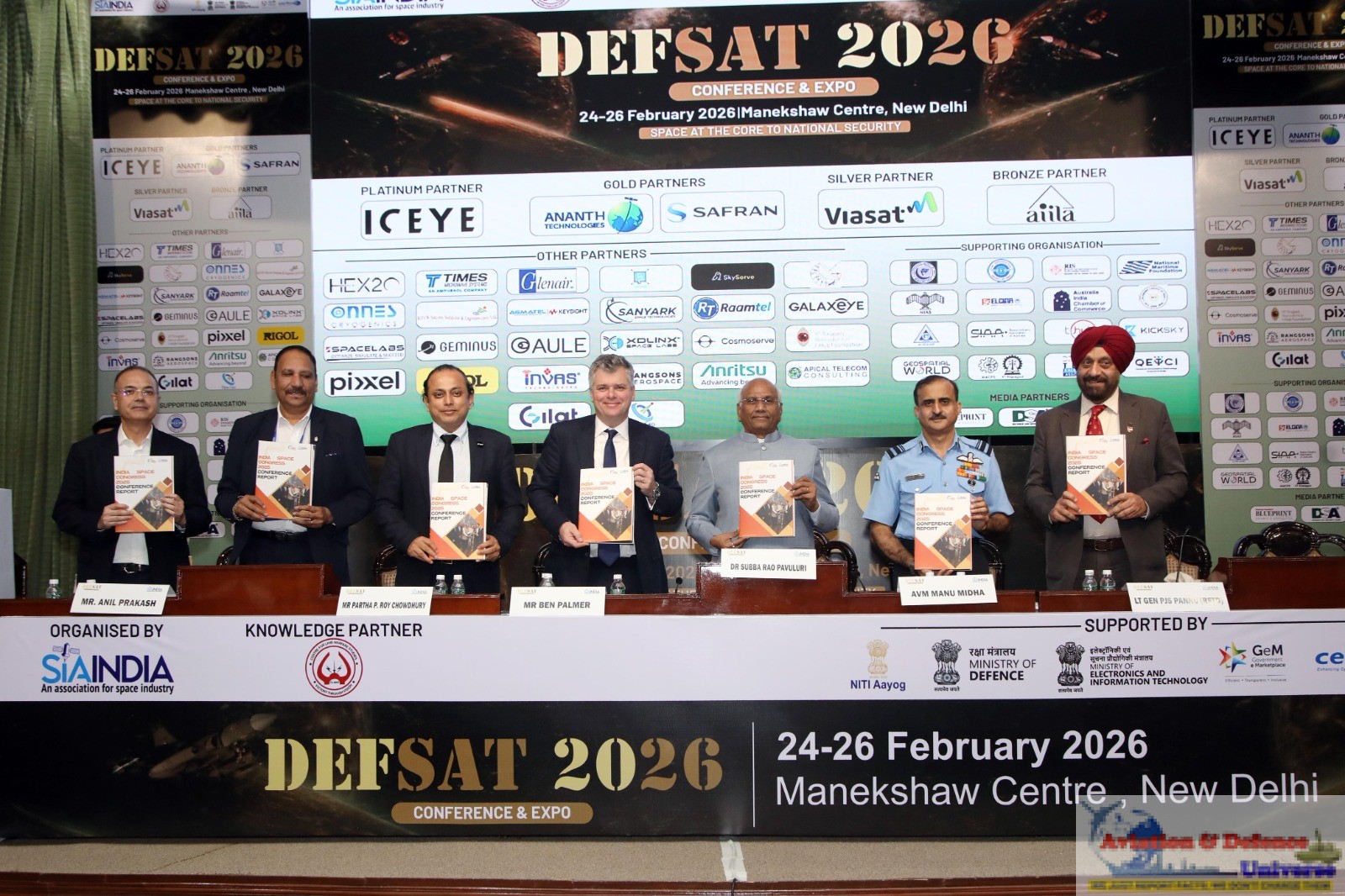
The formation and progress of the Space Strategic Group (SSG) emerged as another key highlight of the final day. Spearheaded by SIA-India in collaboration with the Centre for Land Warfare Studies (CLAWS) and the MERI Group of Institutions, the SSG has been established as a continuing national-level platform to align policy, operational requirements, technological development, and industrial capability in the space domain. Conceived as a structured forum for sustained engagement rather than episodic discussions, the Group aims to advance doctrinal evolution, strategic assessment, and coordinated responses to emerging risks. Highlights of its inaugural meeting and precursor roundtables were released during the concluding session.
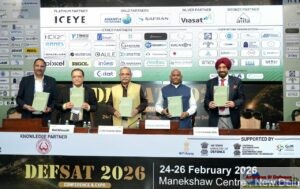 Emphasising the urgency of integrated preparedness, Lt Gen (Dr) PJS Pannu, PVSM, AVSM, VSM (Retd) Chairman of the Space Strategic Group and conductor of IndSpaceX 4.0 – observed:
“As satellite constellations expand across LEO, space is no longer a benign global commons; it is congested, contested, and increasingly conflict-prone. With superpowers declaring space a warfighting domain, India must align spectrum strategy, cyber resilience, ISR autonomy, and legal preparedness. Deploying fast, securing frequencies early, and integrating space with cyber command structures will determine whether we deter, deny, or are disrupted in orbit.”
Echoing the need for institutional evolution, Lt Gen Dushyant Singh (Retd), Director General, CLAWS, underscored:
“India cannot afford to repeat the jet engine story in space; starting strong, pausing, and losing decades. We were pioneers in the 1960s, yet slow to militarise and operationalise space power. With adversaries fielding integrated constellations and space stations, incrementalism is no longer viable. The moment demands a transition from a Defence Space Agency to a fully operational Space Command with autonomous ISR, PNT, and secure communications.”
Building Momentum Toward an Operational Future Summarising the outcomes and future trajectory of the platform, Anil Prakash, Director General, SIA-India, remarked:
“DefSat has firmly established itself as more than a conference, it is a strategic movement. The clarity of thought and actionable outcomes witnessed over the past three days reflect a maturing ecosystem that recognises both the urgency and the responsibility of securing India’s space future. As we conclude this edition, we are not closing a chapter, we are building momentum. The 5th edition of DefSat will look beyond frameworks and simulations toward deeper operational integration, sharper doctrine, and measurable preparedness in India’s journey toward a fully empowered space capability.”
With DefSat 2026 successfully concluded, the platform now moves toward its next edition with a sharper operational focus, advancing India’s transition from capability creation to doctrine, preparedness, and integrated space command readiness.