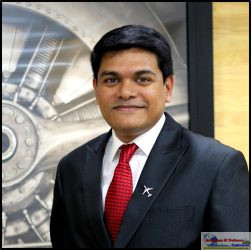










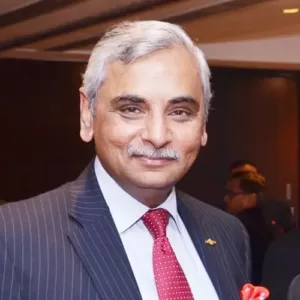




By Bharat Gite, MD & CEO, Taural India
 Pune. 26 November 2025. India’s defence manufacturing sector is undergoing a quiet but decisive shift. Beyond import reduction, this transformation signals a deeper push toward national resilience, strategic autonomy, and innovation in material science.
Historically, India, despite having one of the world’s largest armed forces has relied heavily on external suppliers for its defence needs. That dependency is now being actively rebalanced. The government’s policy frameworks such as Make in India and Atmanirbhar Bharat are no longer motivational slogans; they are enabling mechanisms to expand indigenous capability across land, air, and maritime domains.
This shift is reinforced by fiscal commitment. The Union Budget for FY 2025–26 earmarked ₹6.81 lakh crore for defence, the highest among all ministries. Of this, ₹1.80 lakh crore is allocated to capital expenditure, with 75% of that, or roughly ₹1.11 lakh crore, reserved specifically for domestic procurement. This clarity in long-term demand has given Indian manufacturers, particularly MSMEs, the confidence to invest in advanced infrastructure, build high-precision capacity, and co-develop solutions that meet evolving operational needs.
The agenda today goes beyond self-reliance. India is actively positioning itself as a global supplier in defence manufacturing. From under ₹1,000 crore less than a decade ago, defence exports surged to ₹23,622 crore in FY 2024–25, with a target of ₹50,000 crore set for FY 2029–30. These numbers reflect not just domestic ambition, but international trust in India’s evolving defence ecosystem.
This repositioning is happening against the backdrop of major global realignments. The Russia–Ukraine conflict, heightened tensions with China, and increased scrutiny of defence supply vulnerabilities have compelled many nations to reconsider their sourcing strategies. In this environment, India’s political stability, engineering depth, and cost competitiveness are making it a credible alternative – both for driving indigenisation and also as an active contributor to global supply chains. rather than a passive importer.
Central to this evolving role is materials innovation. Modern defence platforms increasingly require materials that are lightweight, mobile, and fuel-efficient–qualities that aluminium inherently offers. Its high strength-to-weight ratio, corrosion resistance, and design flexibility make it ideal for components that demand both durability and agility. Aluminium has become vital in systems where performance is directly linked to reduced weight such as tanks, missile launchers, artillery, and next-generation vehicles.
The domestic industrial base is adapting to the new defence priorities with precision. At Taural India, we are advancing the manufacturing capabilities using aluminium to meet these needs. A notable example of this progress is the development of the Cylinder Block Crankcase (CBCC) for the BMP-II Sarath Infantry Combat Vehicle, an engine component that had been imported for nearly four decades. Using legacy drawings, this critical component was successfully indigenized and localized through reverse engineering, contributing our expertise in high-precision aluminium sand casting. The project was recognized by the Ministry of Defence, Rajnath Singh, Minister of Defence, conferred us with an Import Substitution Award, not only leading to significant cost savings but also demonstrating the deep engineering capabilities now emerging within the Indian ecosystem.
We have been proud to be a part of this journey and playing a key role in solving a long-standing bottleneck through high-precision aluminium sand casting. Our efforts continue today, extending across other critical platforms, including propulsion systems for Coast Guard vessels and aluminium components for helicopters and aircraft. We are focused on going deeper where it matters most, contributing to a reliable, multi-domain supply base that supports all three wings of India’s armed forces, and aligns with the trajectory of future warfare.
The broader context also matters. According to CareEdge Ratings, India’s defence manufacturing sector is projected to grow at around 20% CAGR from FY 2024 to FY 2029. With rising investments in AI, unmanned vehicles, and hypersonic platforms, the demand for advanced materials and agile manufacturing partners will only intensify.
India’s defence readiness is no longer just measured by what it buys but increasingly by what it can build, adapt, and scale. Aluminium is enabling the platforms that make fighter jets, missile systems, and other critical military technologies operationally effective. India’s defence story is no longer confined to procurement lists or budget allocations. It is increasingly being written inside foundries, fabrication units, manufacturing plants, and design labs across the country. As India’s industrial backbone strengthens, the contributions of engineering-led, outcome-focused companies in manufacturing are becoming integral to a more resilient and future-ready defence ecosystem. At Taural India, we take pride in contributing to nation-building by offering sustainable solutions and world-class components, using aluminium.