















- Appropriate Infrastructure on ground paramount to a better sky travel
By Surabhi S
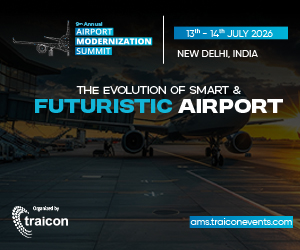
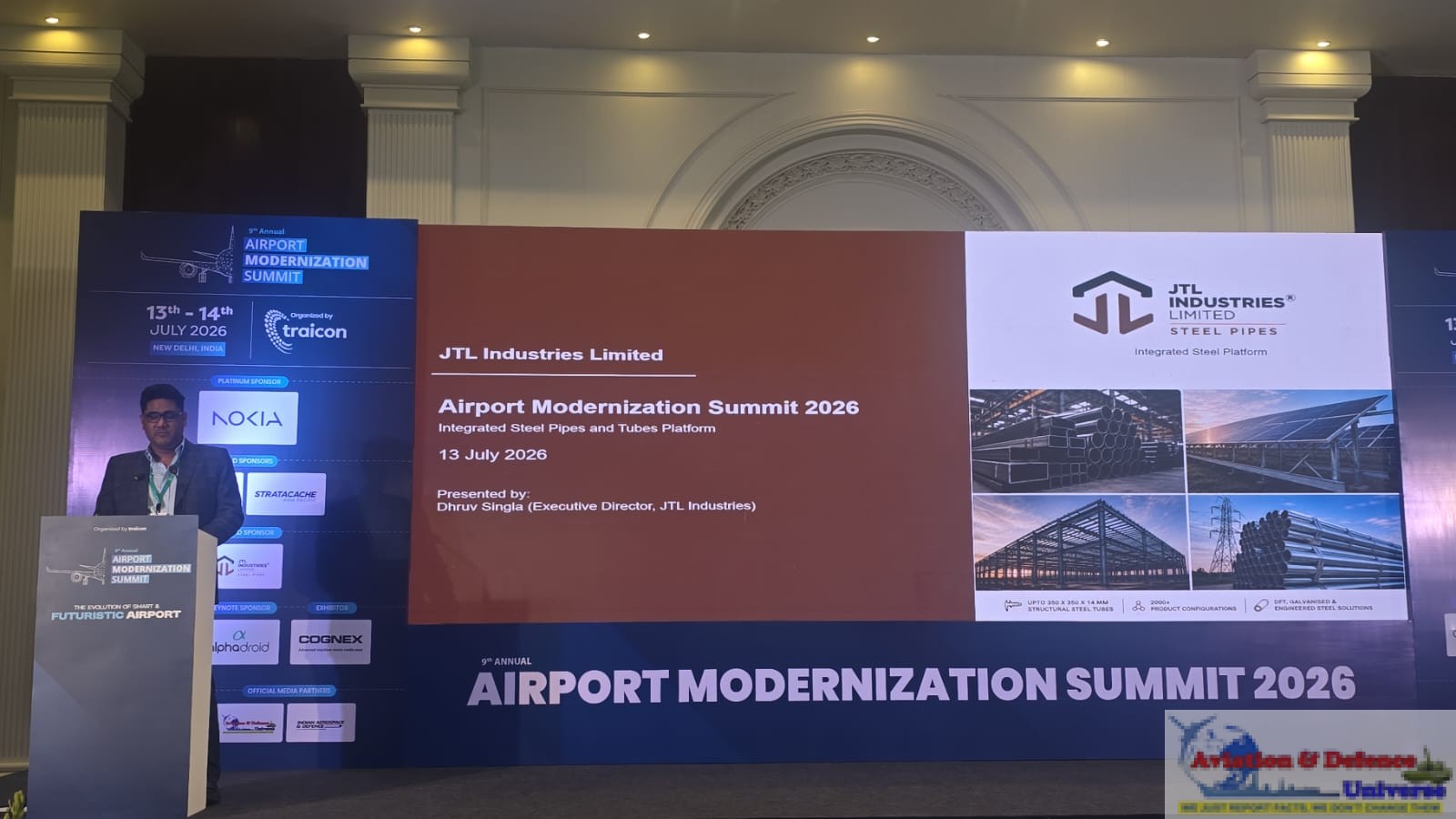
Bangalore. 18 August 2018. There is rapid development that is taking place in terms of technology and even the people. Everyone wants things to be swift, better and easy and this includes the airport and air travel experience. Traicon Events hosted its 2nd annual airport modernization summit where the aviation sector bore witness to the new inventions and massive strides.
The two-day summit started off with a talk from Cochin International airport senior manager, Dominic Fernandaz, who spoke about Profitable and sustainable airports and Cochin International airports which is paving way for development. Cochin airport which is world’s first fully solar-powered airport is planning for an expansion to terminal 4 by the year 2025.

Javed Malik, Chief Operating officer, Bengaluru International Airport limited gave insight about Digi Yatra, an initiative to make flying simpler for passengers with only the use of mobile phones and Aadhar card. He concluded with details about the changes in the offing at the BIAL airport by the year-end.
With a huge growth in the number of Airlines, India as a country needs to develop and expand its airports to handle an additional 500-600 million passengers by 2030. The 55 new airports that are estimated to be required by 2030 will need 150,000 to 200,000 acres of land to be allocated for their development. All of this will require USD36-45 billion of investment keeping in mind that the government will provide the land at a subsidized rate.
The session continued with a panel Discussion which included Nandita Bhatt, Manvi Hooda, Javed Malik, Daniel Goh, and Dominic Fernandaz, moderated by Gurumukh Singh Bawa. The panel discussed about building sustainable smart and iconic airports of the future. The panel also discussed about queues which are inevitable in an airport, how the structure of the airport plays a huge hand in the smooth running of queues.
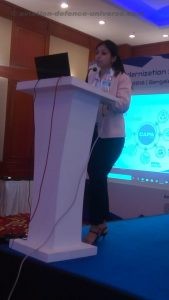
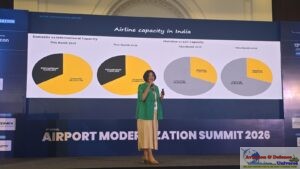
Goutam Mukherjee, director business development, SITA, spoke about the evolving airport experience with the help of technology. Manvi Hooda, Senior Manager and practice lead, CAPA, give a talk about CAPA India Outlook for airport capacity in India.
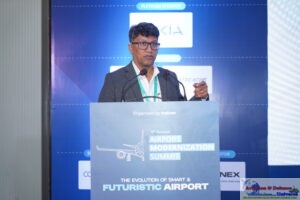
The second day of the summit began with a presentation by R V Sheshan, Chief executive officer, GMR Goa International Airport Ltd. spoke about the planning development and implementation of GMR Goa International Airport. Sheshan spoke about the plans to expand the Goa airport and converting it into an international airport.
 The Indian airport system is expected to exceed its maximum structural capacity by FY 2022 and this can only be achieved only if all the Airport development and expansion projects are completed on schedule. Hence, the Aviation sector is working on a number of privatization initiatives.The government is also developing a comprehensive 25-year master plan for airports developments in the country to keep pace with air traffic growth. The infrastructure at some of the top airports in the country is crippling while there has been a consistent double-digit growth in domestic air traffic for the past three years.
 According to a recent study by the Centre for Asia Pacific Aviation (CAPA), the country’s airport system is expected to exceed its maximum structural capacity by FY 2022.It has been noted that 10 aerodromes under the Airports Authority of India are already operating “beyond their design capacity”, while other aerodromes at Mumbai, Chennai, Delhi and Kolkata will reach their maximum capacity in the next one year to five years. As per International Air Transport Association’s (IATA) 20-year passenger forecast, it has been projected that by 2036 India will be the third fastest growing market with an expected addition of 337 million new passengers from 141 passengers in 2016.It has also been stated that the most crucial aspects are safety and security of airports and there can’t be any compromise on these two counts.
 A team of the International Civil Aviation Organization (ICAO) was in India between November 6 and November 16 as part of its universal safety oversight audit programme. The team appraised six different areas, including personnel licencing, airworthiness, operations, legislation and organisation. They visited Chennai, Mumbai and that Civil Aviation Training College in Allahabad to inspect implementation of safety procedures laid down by the ICAO and India’s aviation regulatory body Directorate General of Civil Aviation (DGCA). Satisfied with the safety system put in place by the safety regulator,” according to a statement issued by the Ministry of Civil Aviation. The audit involved verification of response provided by the DGCA to certain protocol questions sent by the ICAO.








































































-A4-Size-(2)_page-0001.jpg)