



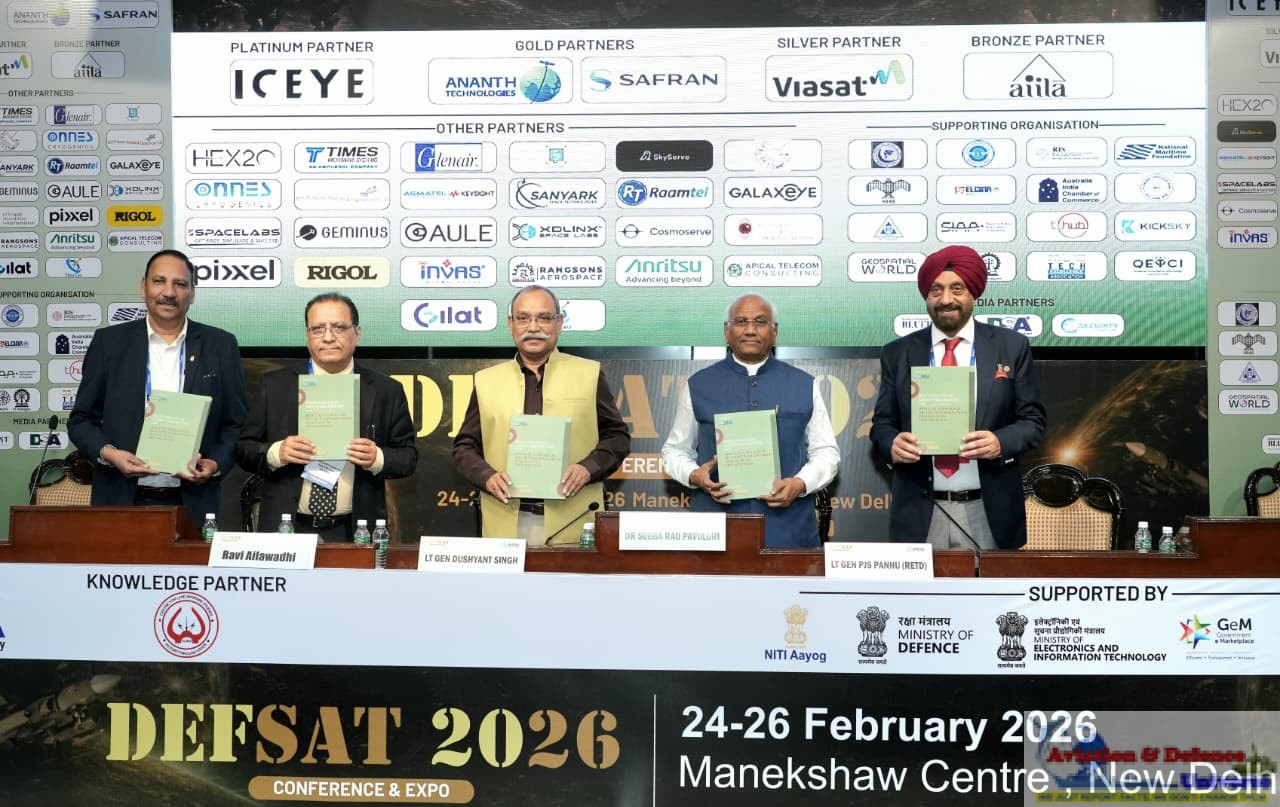
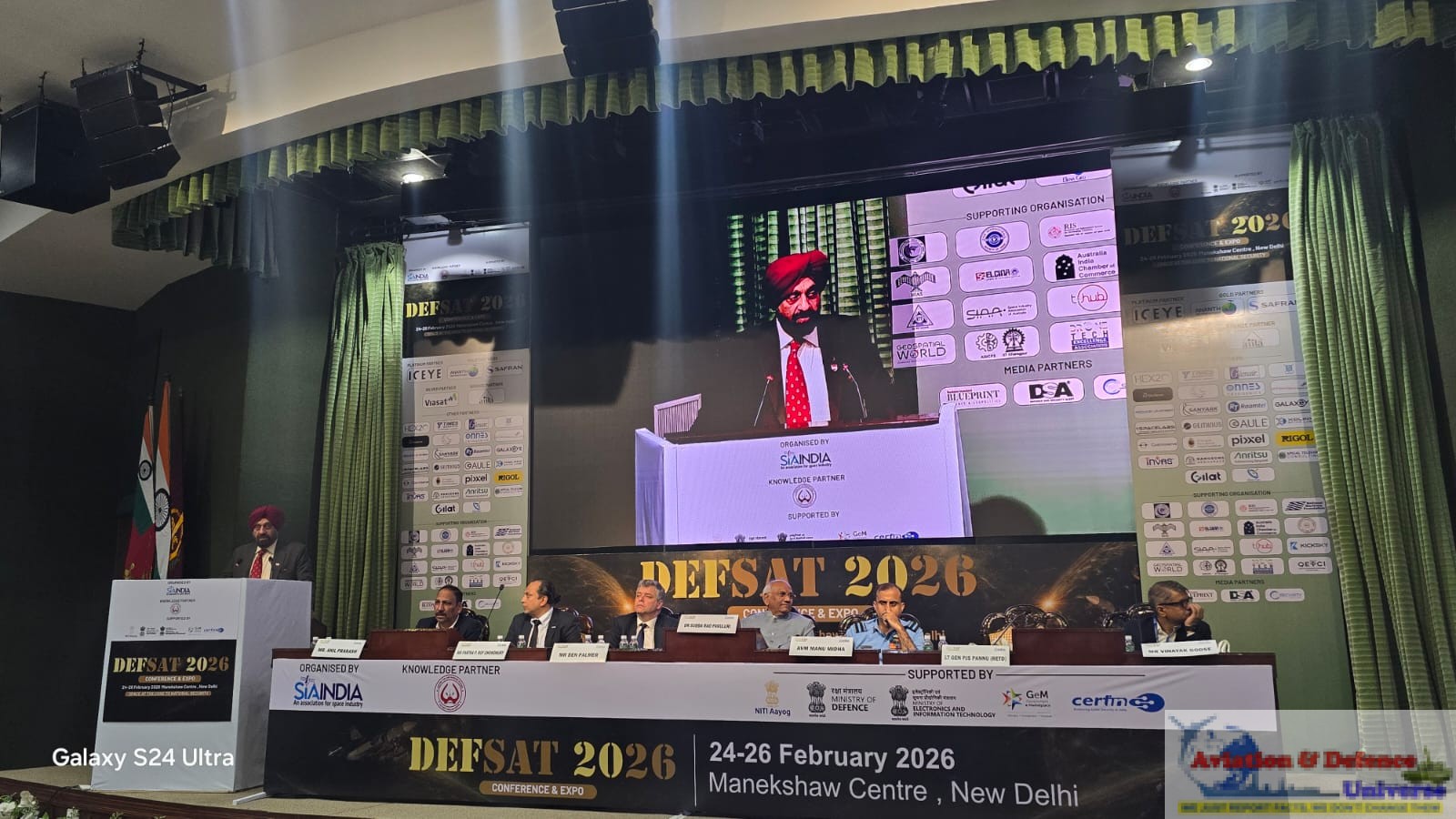
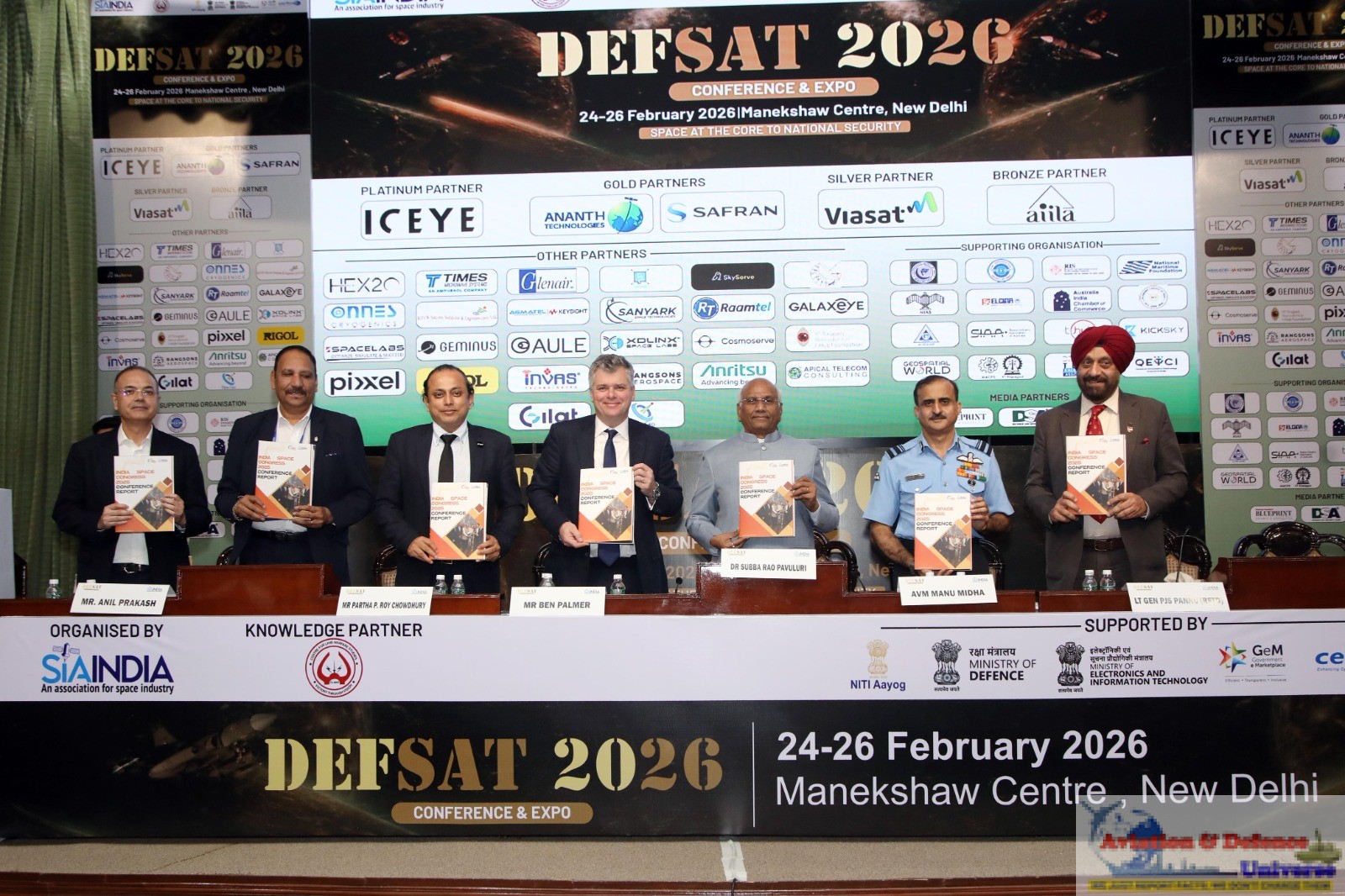

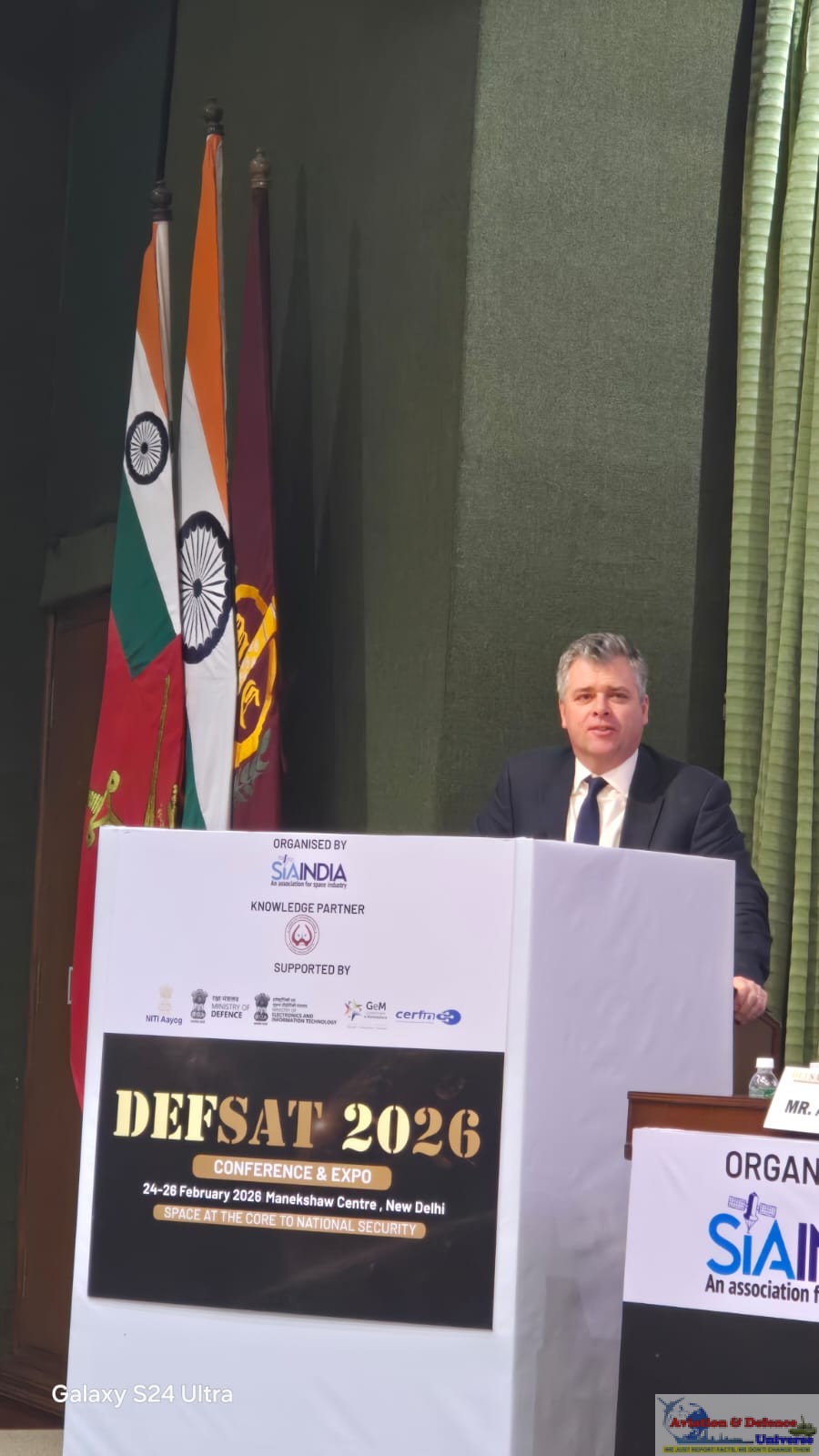











 New Delhi, 25 Feb 2026 | Day Two of DefSAT 2026 intensified the strategic dialogue on building India’s persistent and resilient defence space capability, against the backdrop of rapid global transformation in space-based military infrastructure. With 1,602 space-based ISR satellites projected to launch globally between 2025 and 2030, the sector is entering a phase of operational maturity, shifting from sporadic expansion to predictable, proliferated constellations designed for continuous coverage, rapid revisit, and real time analytics. The discussions underscored that persistent space capability is no longer aspirational but foundational to national security.
Setting the tone for the day, Dr. Subba Rao Pavuluri, President, SIA-India, stated:
“India stands at a decisive inflection point. Scale without coordination is aspiration; scale with alignment becomes capability. As we advance toward Aatmanirbharta and aspire to emerge as a Vishwaguru in the space domain, unity of purpose across government, industry, and the Armed Forces will determine our strategic success. DefSAT is not a ceremonial platform, it is a convergence point where trust is built, alignment is forged, and execution begins.”
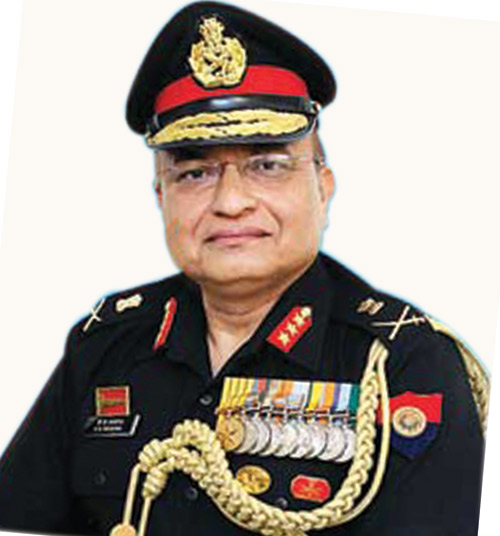
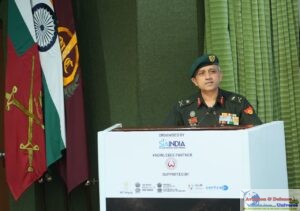
During the Inaugural Session, Maj Gen Neeraj Shukla, AVSM, SM, Officiating Director General (Strategic) Planning, Indian Army emphasised India’s responsible and civilisational approach to space:
“We are a responsible nation. Our approach to space must reflect our civilisational ethos — ‘Doham Karma Sansadhanam Na Kadapi Shoshanam, Lok Hite Bhutanam Sarakshanam Pratham’ — meaning responsible utilisation of resources, never exploitation, for the welfare and protection of all beings. Space is not merely for defence dominance, but for sustaining the very civilisation we are sworn to protect.”
 He further noted that national security can no longer be viewed solely through a military lens but reflects the collective strength of diplomacy, information, military capability, economic resilience, political leadership, and indigenous technology. As AI, quantum technologies, cyber capabilities and space systems increasingly converge within operational platforms, securing every instrument of national power has become essential to safeguarding strategic autonomy.”
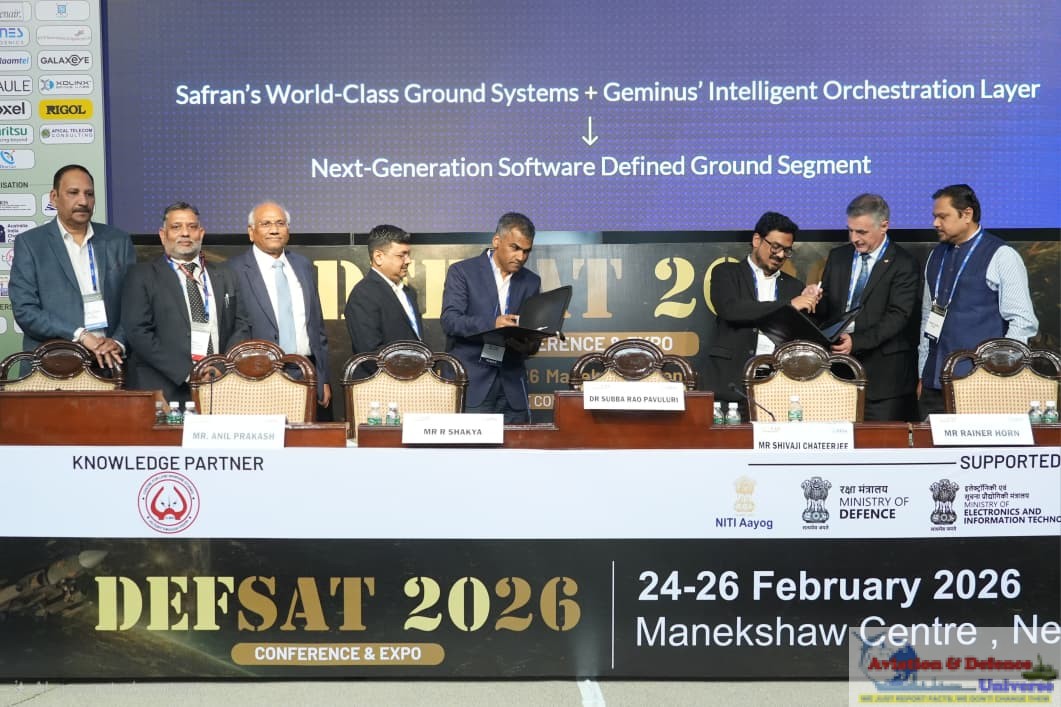
Day Two witnessed significant B2B momentum, with 6 MoU exchanges including Safran and Geminus Space; TakeMe2Space and Little Place Labs; and RedBalloon Aerospace with multiple organisations such as EON Space, Sanyark, Raudrane, and Andurax. These partnerships underscore the growing maturity of India’s private space ecosystem in delivering dual-use technologies, advanced analytics, and resilient satellite infrastructure, critical pillars of persistent space capability.
R. Shakya, Additional Director General Telecom, Haryana LSA, Department of Telecommunications (DoT), highlighted the operational indispensability of satellites in modern warfare: “Satellites today are not optional enablers; they operate parallel to telecom and form the nervous system of modern warfare. Tracking alone is insufficient — we need real-time monitoring, real-time information sharing, and resilient constellations. With thousands of commercial satellites in low Earth orbit providing centimetre-level resolution, vulnerability has increased exponentially. Power in space is now synonymous with national confidence and strategic autonomy.”
 Former Ambassador Rakesh Sood contextualised the evolution of India’s space doctrine:
“India’s space programme began as a vehicle for socio-economic development, not strategic deterrence. Defence space has emerged more recently, and in the Indo-Pacific only a handful of nations possess comprehensive capabilities. Our cooperation must therefore be calibrated, government-to-government with trusted strategic partners, and increasingly private-to-private, where startups can drive innovation, scale, and sustained space surveillance capacity.”
Providing a leadership perspective on the industry-defence interface, Anil Prakash, DG, SIA-India, noted:
“Our collective goal is to translate strategic intent into operational reality — by empowering innovators, strengthening capability pipelines, and embedding space-centric thinking into our defence ecosystem so that India is better prepared, better protected, and more confident in its space-enabled defence posture.”
Addressing the strategic defence space dialogue on the Indo-Pacific, AVM Manu Midha, DG, Defence Space Agency (DSA), observed:
“In today’s multipolar Indo-Pacific, space dominance is no longer aspirational — it is foundational. As orbital congestion grows and intent becomes harder to distinguish from accident, stability will depend on structured communication, interoperable technologies, shared operational doctrines, and complementary capabilities. The future of space security will be built not in isolation, but through resilient partnerships and agile innovation ecosystems.”
In light of the recently introduced Defence Acquisition Procedure (DAP) 2026, a dedicated session examined innovation-driven pathways such as iDEX, ADITI, and the Technology Development Fund (TDF). The deliberations focused on accelerating prototype-to-induction timelines, strengthening testing and validation ecosystems, enhancing procurement agility, and ensuring predictable policy frameworks to support emerging defence space technologies.
As Day Two concluded, a clear consensus emerged: India’s ability to secure strategic autonomy in an increasingly contested and congested orbital environment will depend on building persistent, distributed, and resilient space architectures, supported by trusted partnerships, indigenous innovation, and sustained institutional alignment.